How to drive people crazy

In his Conscious Business audio book, Fred Kofman lays out the steps to drive people crazy based on prior research on schizophrenia. The steps are as follows –

1. Start by establishing that the other person is dependent on you. Make it clear that the other person would not be able to fend for themselves without you (this is effectively the first step to the bullying)

2. Phase I of the “double bind” – establish an objective and a consequence. An example objective consequence would be – “I want you to take more risks. You play it too safe. If you don’t do that, I will <insert consequence>.”

3. Phase II of the “double bind” – establish a contrary objective with a consequence.” The example here would be – “I want you to not fail. Your failure costs you and us so much. If I find you failing, I will <insert consequence>.”

4. Phase I of the myth of discussion – make it clear you aren’t willing to discuss any objection to your contrary goals. The moment they bring up the apparent contradiction, refuse to discuss it by becoming angry and blaming it on them. “This is exactly what you always do – you always cause trouble and ruin the peace.”

5. Phase II of the myth of discussion – pretend that everything can be discussed. At the same time, pretend that you are always open to discussing things. “In our family, everything can be talked about in the dinner table.”

I took away a few notes from this –

1. The research on schizophrenia shows that the environment plays a big role in the condition. Typically, it is caused by people around the victim who engage in the pattern of behavior described above.

2. Why do people put up with this clear contradiction? It takes maturity to step up and say – “Hey, what you’ve told me makes no sense as they contradict each other.” It feels obvious from the outside but it isn’t.

3. I say this because I spent some time in an environment that was very similar. And, yet, as obvious as it might be now, I didn’t have the courage to stand up and call it out.

4. When we read notes on extreme behavior like this, we tend to file it away as “not relevant.” However, it is likely that every one of us has worked in a company that has exhibited this behavior. That is why I picked the “Take risks.. but don’t fail” example. It is very common. Fred Kofman calls this “organizational schizophrenia.”

drive people crazy, contradictions(Thank you Dilbert!)

5. The principle behind this is the power of inconsistency of messages to mess with our minds. Something for us to keep in mind as leaders, managers, parents and teachers. Or, as Fred Kofman puts it, now that you know what it takes, don’t do it. :-)

When is it your responsibility

The best proxy to our real age – not the number we get when we subtract our birth year from this year – is to observe when we consider something to be our responsibility.

If we can never find it in us to own up to a problem that affects us, we’re still where we were when we were children. It is anybody’s fault but ours.

If we understand we should take responsibility but don’t want to, we’ve hit our teens but haven’t quite made it past them.

Adulthood begins the moment we accept that anything that affects us is our responsibility. It doesn’t mean that we need to respond to everything that happens and make it our problem. It simply means that we are aware that it is a situation where we have the ability to respond and where we must choose whether or not to do so.

As an added bonus, taking responsibility for what happens to us is a big part of being mindful/conscious because consciousness is simply being aware of our choices at any given point of time. And, of course, the choices arrive the moment we decide to take responsibility for what happens to us…

responsibility, consciousnessImage Source

Little strokes of luck

I asked myself a question the other day – do I pay attention to little strokes of luck?

I was hoping for a package to arrive by 4:30pm as I needed to collect it from location A. I was planning on collecting some stuff from location A at 4:30pm anyway- so, this would be very convenient. If it didn’t arrive, I’d have to travel to location A again and lug that package.

It turns out the package arrived at the very moment I was about to leave. I was able to request the UPS person (despite his grumbles) to wheel it to the car so I wouldn’t have to push it all the way.

It was a small stroke of luck – but it worked out. And I was very grateful.

We all pay attention to the big strokes of luck in our lives. We clearly remember those times when, against all odds, things worked out. We also tend to vividly remember when luck deserted us.

When it comes to the small things, however, I find that our memory can play tricks with us. We remember those times when our queue took so much longer. But, we regularly forget when the little things work out. Or, at least my mind tends to do that. This incident was a nice reminder to be thankful for those small strokes of luck. As Richard Wiseman’s experiments on luck demonstrated, being open to the possibility of being lucky is a big part of being lucky. And, being grateful when things work out is a nice way of making sure we remain aware of and open to the possibility of getting lucky.

little strokes of luckImage Source

What is the problem?

I visited a Dermatologist in India a few years back about a skin problem. Once we were taken in, she got straight to business with a question. She asked –  “What is the problem?”

I had some black-ish skin near my forehead. I was trying to understand what the problem.

“Yes,” she said – “But, what is the problem?”

So, I explained what the issue was again – in slightly different language.

“Yes, but what is the problem?”

At this point, I wasn’t really clear if this was a visit to a dermatologist or a psychiatrist. So, I took a crack at explaining what I thought might have  been the cause of the marks. I had played soccer a couple of years back in the afternoon sun and had felt my skin burn. But, I hadn’t done anything and, over time, these marks appeared.

“Yes, but what is the problem?”

A couple of “what is the problem” questions later, we reached a dead end. I was frustrated. So, she wrote down a couple of creams that she thought I should take and let me out. To compound all this, she also had a 3 minute timer she kept resetting. Time was clearly money in her world. So, she was clearly making an effort to keep it top of mind.

The creams turned out to be useless.

A few months later, I visited another Dermatologist. I showed him my black-ish marks. He asked a few questions, explained the likely cause and gave me a couple of creams that actually did make it much better. My mother still imitates the “what is the problem” as it cracks both of us up.

So, what was the real problem?

My diagnosis is that you cannot be an effective problem solver if you ask those you interview what the problem is. This applies if you are a doctor, a sales person, a user experience researcher or a management consultant. The reason you exist is because people don’t know what the problem is. Finding the problem is where post of the hard work lies. The solution is an after thought. That’s not because the solution doesn’t matter. But, if you know what the problem is with certainty, then you know that it is only a matter of time before you find an answer that works. You just have to test and persist. But, if you aren’t sure what the problem is, you are shooting in the dark.

As a result, asking someone “what is the problem” when you are in a problem solving role is possibly the worst question you can ask. Instead, you are better off taking some time to understand the facts before coming to an informed conclusion on what the problem is.

The key – in problem solving roles, we need to view ourselves as problem finders more than solution finders.

Image Source

Consciousness and creativity

Let’s say you own a store. Let’s now use Fred Kofman’s definition of consciousness – it is the ability to be aware and to choose.

As you are conscious within your store, you become acutely aware of the process you use to check customers out. It could be faster, much faster. But, you’re not able to think of a better solution now.

However, you’ve planted the seeds for subconscious processing. As you take a walk a few days later, you suddenly remember the checkout at process at a tourist spot the other day that you thought was incredibly efficient. What was the principle at place? Ah – they had a single queue instead of multiple queues. It just worked a lot better and seemed to eliminate customer frustration. You had some space constraints in your store. So, a single queue isn’t probably all that practical.But, wait – you could do 2 queues instead.

You try it out. It works much better already. But, you soon realize that you’ve now found the next bottleneck. The process thus continues.

The ability to make those disparate links is creativity. However, creativity wouldn’t be possible if you weren’t acutely conscious in the first place. To know what to change, you must know what is. And, to allow yourself to make those connections, you must allow for your subconscious to kick in. That can only come after consciousness.

A Buddhist monk once described the essence of zen to be the ability to focus on one thing at a time. That is the principle of consciousness at play.

With consciousness comes creativity…

consciousness, creativity, mindfulnessImage Source

Invite the rub

We like to imagine relationships that are friction-less and, hence, have zero rub.

The rub is annoying – it is uncomfortable because it signals differing perspectives and, in some cases, differing values.

But, here’s the problem – relationships without differing perspectives and a few differing values teach us absolutely nothing. We don’t get pushed. We don’t need to reflect. We don’t grow.

You might ask – why do relationships need growth? Don’t we just need happiness?

That’s a good question. But, the deal works this way – speaking of love and growth or happiness and growth are effectively speaking of the same thing. Without growth, there is no love or happiness.

So, when you experience the rub in a relationship, welcome it. Too much, of course, is generally best avoided. However, too little is too.

After all, nothing would move if it wasn’t friction.

Knowledge to skills and learning to insight

There are two capabilities that play a big role in determining our value to society – our ability to transform knowledge to skills and our ability to transforming learning to insight.

Knowing how to swing a tennis racket by watching a video of Roger Federer on YouTube is one thing. Swinging it the right way on the court in a game is another. Similarly, having a collection of lessons learnt from an experience is one thing. Extracting insight from it is another.

The key in this conversion process is developing mental models that help you make sense of what you are seeing. This mental model development is how you “learn to see.” When you learn to see like a venture capitalist, you develop models which help you see things in a pitch meeting that an ordinary observer wouldn’t notice. When you learn to see a board like a chess player, you clearly understand what to do next. The pieces make sense as a whole.

So, how do you learn to see? Or, even better, how do you develop mental models?

I think of the flow as in the image below. Your knowledge gets converted to a model via deliberate practice. You then keep practicing till you develop skills which, in turn, further develops your mental model. This is what Anders Ericsson, the father of deliberate practice, has covered in his book “Peak“. Thanks to his work, we finally understand what must have seemed like alchemy or magic in the years before him. It, thus, makes sense that we tend to attribute a certain mystical quality to talent.

mental models, learning to insight, knowledge to skills

I think the process of converting learning to insight is one that is much less discussed. It still has a somewhat mystical element to the uninitiated – we, thus, often attribute it to genius. My thesis is that we develop mental models by reflecting deeply on what we learnt (note that learning, in the first place, requires some base level of reflection). These reflections generate our first mental models. Over time, however, these mental models help us cut through the noise and synthesize lessons into insights. This, in turn, keeps improving our mental models.

How do you get started with developing mental models? Copy shamelessly from people who operate better than you. If you want to learn how to play tennis, spend time with the best tennis player you know and imitate them. If you want to learn how to market products better, spend time with the best marketers to understand how they see the world. Once you understand their process (effectively the equivalent of “deliberate practice”), you can then create basic mental models that will, in turn, help you understand what behaviors you need to repeat or how you need to think about synthesis to develop skills and insights.

This is all about process. Good results, in the long term, will follow good processes. And, how we approach one thing will be how we approach everything. Excellence, as Aristotle observed, is not an act, but a habit.

The erase or dwell response problem

For most of us, an unpleasant situation typically results in an “erase or dwell” response. Here’s an example – I was recently reminded of a small incident that felt unpleasant. Now, I could choose to do one of two things – erase it from my memory and aim to completely forget it happened or dwell on it for a long time.

I’ve come to find that this choice is one we generally make based on our personality. The more extraverted folk tend to erase while the introverted ones typically tend to dwell on it.

The two approaches have one thing in common – they both suck. That’s because erasing an unpleasant memory implies we walk away without learning anything from it. And, on the other hand, dwelling on it for long periods of time mean we make ourselves very unhappy by regularly making mountains out of molehills.

Here’s a suggestion – replace the “erase or dwell” response with a question – “What did I learn from this?” Then, if you feel like taking it a step further, write or type down what you learnt.

This simple question solves both problems with the erase or dwell response. First, it helps us squeeze the learning(s) out of an unpleasant situation. The general rule here – the more unpleasant the situation, the more there is to learn. Second, processing the learning helps bring closure and allows us to let go. Writing/typing it down helps greatly with the closure.

Unpleasant situations, even minor ones, are generally filled with learning – both about ourselves and others. Learning to not waste them is critical to our growth. And, just focusing on the learning enables us to look forward and learn to let go. That, in turn, is critical to our happiness.

Image Source

Penny saved is worth more than a penny earned

We’ve all heard the adage – a penny saved is a penny earned. While it is normally attributed to Ben Franklin, it turns out that the real author is likely 17th century Welsh poet George Herbert.

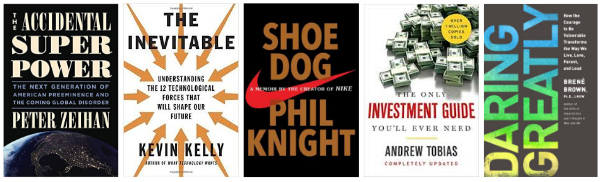
The important thing, however, is that the adage is flawed. As Andrew Tobias explains in his excellent personal finance book “The Only Investment Guide You’ll Ever Need,” these were written at a time before taxes were institutionalized. Now, a penny saved is worth a lot more than a penny earned because you’ll need to earn much more than one penny to ensure you save as much after taxes.

After some financial mismanagement in my undergrad period (that had knock on effects until 2 years after I graduated), I worked hard to be very diligent about spending a lot less than what I earned. It has only been 6 years since but it has enabled me to pay my way through business school without any debt. And, my learning from that is that saving is just part of a conscious lifestyle where you are mindful about every expense. A couple of ways I improve consciousness is by taking note of all expenses manually into an app called “Envelopes” – I still don’t use Mint as it is all too automatic for my taste. Every weekend, I transfer these expenses to a Google Doc that tracks my expenses – again, manually. I wrote about this process back in 2011 and it is one that has worked well for me. Given how much convenience credit cards and frictionless payments have brought to my life, I do go out of my way to ensure there is some friction at least when I’m accounting it.

All this doesn’t mean all saving and no fun. There are three areas I’ve found to be wonderful uses of money – spending it on experiences versus things, spending it on people you love and spending it on people you don’t know. I’ve come to realize that how you define experiences is a personal thing. For some people, driving every day is an experience. It matters a lot which car they drive. For us, we realize that living in a nice home is an experience because we spend a lot of time on weekends at home. Others would rather allocate that money to activities over the weekend. It matters that we allocate some of our money for “guilt free spending.” But, that can only come after we make sure we’ve saved.

Many of these lessons on personal finance are in an infographic/”learnographic” a friend and I created a couple of years back on personal finance.

penny saved, personal finance, money

Personal finance thoughts aside, simple insights like this one repeatedly demonstrate the power of books to change our lives. In the four weeks since I’ve read the book, I find myself repeatedly remembering the fact that dollars saved are worth more than dollars earned as I make spending decisions.

It is an incredibly valuable reminder… literally.


HT: Seth for the book recommendation

Finding cousins – The DNA journey

Danish travel site “Momondo” teamed up with a DNA testing service “AncestryDNA” focusing on a group of 67 diverse people who all were very patriotic and had strong views about their heritage and of other countries and cultures.

The video is 5:16 long. I will still be here once you are done watching it.

[embedyt] http://www.youtube.com/watch?v=tyaEQEmt5ls%5B/embedyt%5D
(Thanks Adweek)

There is a beautiful moment at the end when one of the participants is told that she actually has a cousin in the audience.

cousins, dna, momondo, world

There are a couple of messages that make the video powerful. First, it seeks to make a point that there would no such thing as extremism if people really knew their heritage. After all, every one of us has more cousins than we know. It then drives home the idea that an open world begins with an open mind. It beautifully illustrates that you have more in common with others in the world than you think. That is so true.

I have been away from home for 10 years now. I have found family in most of these places who share similar values and aspirations. We just have to make the effort. Humans in the hunter gatherer era needed to form groups in “we’re better than you” contests for survival. We are still stuck with that natural reaction (why else do we like following sports teams as much?) – even though we will be better served collaborating rather than competing for resources. There’s plenty out here for all of us. And, if it isn’t out here yet, there’s plenty among us who can invent ways for us to get will be necessary. The nature of politics, however, is to divide and conquer. And, we are at a time when there is a massive amount of hate and xenophobia.

As this video shows, we are more similar than we think. It is up to us to accept it and act like it.