For a few years, my desktop wallpaper was one of these two quotes –
“Doing one thing at a time is how one Zen master described the essence of zen.”
“Expect problems and eat them for breakfast.”
They are no longer my wallpapers. But seeing them every day for long periods of time ingrained these ideas in my head.
And it occurred to me today that my growth and happiness over the years have been directly proportional to the percentage of time I put these ideas in action.
We have a lot of valuable information about ourselves stored online and it helps to take steps to ensure we’re staying safe. There are two categories of steps we can take – ideally with an annual reminder to check in on them:
(1) Reactive: Set up a security / breach monitoring services – services like SpyCloud, CreditKarma, Lastpass offer this for free – notify us if our credentials were found in a breach or on the dark web. Signing up for 2 or 3 of these (or similar) services will help ensure our reactive game is strong.
(2) Proactive:
(a) Password managers help us get ahead of problems by helping us generate strong passwords/set better passwords and notifying us when our passwords need to be updated*. In the grand scheme of things, it doesn’t matter if you use LastPass or 1Password or some other manager. All of these will work better that saving these passwords on a napkin or on Passwords.txt as these apps also ensure these passwords are easily accessible on our phone.
(b) Set up 2 factor authentication as often as possible – for every service that matters at any rate.
(c) Finally, avoid clicking on random links that ask you to input your password/credentials and be suspicious of any inbound phone call asking for such information. And, needless to say, avoid responding to emails from Nigerian princes who promise to wire you a million dollars.
These steps are similar to setting up an alarm system and keeping our doors and windows locked when we leave our home. The most determined/sophisticated burglar will still find their way in. But, it will deter or prevent everyone else.
*Typically a premium feature. I use a premium Lastpass account for this ($36/year) and am a fan.
We had a fascinating conversation about money the other day. An idea we kept coming back to was – how much do we think about money relative to how much we want to?
I kept coming back to this note from Morgan Housel –
“A thing I’ve noticed over the years is that some of the wealthiest people think about money all the time – which is obvious, because it’s causation. But it’s an important observation because most people, despite aspiring to become one of the wealthiest, actually want something different: the ability to not have to think about money.
It’s a different skill, but it’s powerful when you make it work. A person whose expectations relative to income are calibrated so they don’t even have to think about money has a higher form of wealth than someone with more money who’s constantly thinking about making the numbers work.“
There are two powerful ideas in here. The first is about being intentional about our relationship with money – by defining how much we want to think about it.
The second is about calibrating our expectations relative to our income.
I’m excited to think about both questions as part of my annual review in the coming days.
We watched The Rescue recently (on Disney+). It describes the daring rescue of the Thai soccer team trapped deep within a flooded cave in Northern Thailand in 2018.
In one word, the documentary is incredible. A must-watch. Over the course of the 2 hours, I was struck by the…
…courage and compassion of the cave divers who chose to transform from hobbyists to heroes. A special hat tip to John Volanthen and Richard Stanton for their exceptional leadership.
…bravery and cooperation among the Thai Navy seals, the American army, the cave divers, and the thousands of volunteers who showed up to help.
…ingenuity of the human mind. As an example, the network of dams and equipment rigged up to drain water from the caves made the rescue possible.
…thoughtfulness and commitment of the Australian doctor cum cave diver (Dr Harris) whose expertise made the final rescue possible. The boys had to be sedated by his fellow cave divers for the rescue. And, even though he hated the plan, he realized that it was the only one that had a chance of working.
…importance of risks, leaps of faith, and luck in any challenging endeavor.
I could go on.
But, amongst the many amazing moments, there was one that stood out. After rescuing 8 boys in the first 2 days, the rains arrived again on the night before the third day. This downpour made for very unsafe diving conditions.
So, the pre-dive briefing in the morning understandably involved folks asking the “should we be going in” question. At the same time, a few of the others felt postponing could be fatal. So, before the discussion could further, that group just walked toward the cave. Everybody else followed.
That turned out to be an important moment as the downpour never stopped. It was eight months before the cave became accessible again.
I was reminded of a story about a person of power I knew growing up. He was a wonderful human being. It was fitting, then, that he always had a group of friends join him on his morning walk. They seemed to enjoy the walk and conversation.
I had asked about the morning walk routine a few years ago. It turned out that the group of friends stopped joining him on the walk. This disappearance coincided with his retirement.
It reminded me of another story I think about from time to time – the one about the styrofoam cup shared by Simon Sinek.
I heard a story about a former Under Secretary of Defense who gave a speech at a large conference. He took his place on the stage and began talking, sharing his prepared remarks with the audience. He paused to take a sip of coffee from the Styrofoam cup he’d brought on stage with him. He took another sip, looked down at the cup and smiled.
“You know,” he said, interrupting his own speech, “I spoke here last year. I presented at this same conference on this same stage. But last year, I was still an Under Secretary,” he said.
“I flew here in business class and when I landed, there was someone waiting for me at the airport to take me to my hotel. Upon arriving at my hotel,” he continued, “there was someone else waiting for me. They had already checked me into the hotel, so they handed me my key and escorted me up to my room. The next morning, when I came down, again there was someone waiting for me in the lobby to drive me to this same venue that we are in today. I was taken through a back entrance, shown to the greenroom and handed a cup of coffee in a beautiful ceramic cup.”
“But this year, as I stand here to speak to you, I am no longer the Under Secretary,” he continued. “I flew here coach class and when I arrived at the airport yesterday there was no one there to meet me. I took a taxi to the hotel, and when I got there, I checked myself in and went by myself to my room. This morning, I came down to the lobby and caught another taxi to come here. I came in the front door and found my way backstage. Once there, I asked one of the techs if there was any coffee. He pointed to a coffee machine on a table against the wall. So I walked over and poured myself a cup of coffee into this here Styrofoam cup,” he said as he raised the cup to show the audience.
“It occurs to me,” he continued, “the ceramic cup they gave me last year . . . it was never meant for me at all. It was meant for the position I held. I deserve a Styrofoam cup.”
“This is the most important lesson I can impart to all of you,” he offered.
“All the perks, all the benefits and advantages you may get for the rank or position you hold, they aren’t meant for you. They are meant for the role you fill. And when you leave your role, which eventually you will, they will give the ceramic cup to the person who replaces you. Because you only ever deserved a Styrofoam cup.”
A wonderful reminder of just how much life changes when we acquire or lose money/ power/privilege.
“Consider all the technology intended to help us gain the upper hand over time: by any sane logic, in a world with dishwashers, microwaves, and jet engines, time ought to feel more expansive and abundant, thanks to all the hours freed up.
But this is nobody’s actual experience. Instead, life accelerates, and everyone grows more impatient. It’s somehow vastly more aggravating to wait two minutes for the microwave than two hours for the over – or ten seconds for a slow-loading web page versus three days to receive the same information by mail.”
I started reading “Four Thousand Weeks” by Oliver Burkeman. In the first chapter, he makes good observations about how time management techniques focused on a pursuit of efficiency have failed us.
And, yet, given our life spans are likely to last for just about four thousand weeks, time management is the essence of life.
Four thousand weeks.
It isn’t the first time I’m hearing that number. But every reminder makes me pause. As it should.
I need more of them.
PS: This first chapter is titled “In the long run, we’re all dead.” Definitely my kind of morbid reminder of the brevity of life. :-)
I have great memories of McDonald’s breakfasts from my time as an undergraduate student. Ordering McDonald’s breakfast at 3:45am was a tradition on weekends and during study weeks. For ~10 Singapore dollars, I’d get a sumptuous breakfast and enough calories to take me through most of the day.
Those memories take me back to McDonald’s from time to time. Every time I dig into my McBreakfast, I feel that flood of great memories join me.
Yesterday’s trip was made extra special, however, thanks to a complete absence of plastic cutlery. I’ve since learnt that McDonald’s has been at work (example) attempting to replace all plastic cutlery, straws, and packaging with sustainable materials (more). They’re also going to be testing fiber lids, reusable cups, and the like with the goal of being 100% sustainable by 2025 – with strong progress made so far.
This is huge.
Here’s why – when McDonald’s introduced apples into the “Happy Meal” for kids in the early 2000s, the chain instantly became one of the largest buyer of apples on the planet. Decisions made by a behemoth like McDonald’s shapes entire industries and has ripple effects everywhere. Industrializing sustainable cutlery could make it possible for smaller chains to switch too.
It is awesome to see the McDonald’s team play a leading role here. I’m hopeful we’ll see a lot more progress in the coming months.
In his newsletter, author Steven Johnson shared a thought provoking post on the topic of “Getting to Scale.”
A lot of what I’ve written about the pandemic has focused on the things that we have managed to get right, compared to past outbreaks: the speed with which we identified and sequenced the genome of the virus, the miraculous development of safe and effective MRNA vaccines, the fact that billions of people around the planet made profound adjustments in behavior to flatten the curve.
But the rise of Omicron and the imminent FDA approval of the Pfizer antiviral Paxlovid are, in slightly different ways, reminders of something that we should get much better at—namely, the hard logistical and operations work of scaling. We have miraculous vaccines, but the longer it takes us to vaccinate the entire planet, the more opportunities there will be for new variants to emerge.
And while Paxlovid looks to be the most significant new advance in the fight against COVID since the vaccines, its production ramp is not going to be fast enough to have any real impact on the Omicron wave.
As Matt Yglesias wrote a few weeks ago: “Pfizer says it’ll have about 180,000 packs of Pavloxid by the end of 2021 and then a very rapid ramp up to 21 million in the first half of next year. Those are large numbers, but they are not that large relative to a world population of seven billion or even the 630 million people worldwide who are over 65.”
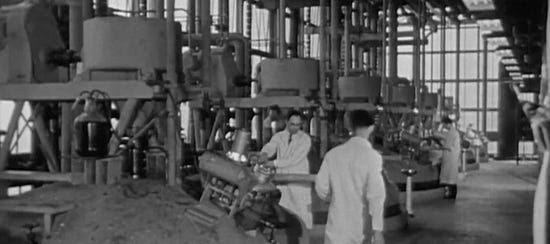
In last week’s post about serendipitous discovery, I wrote a little about the classic story of Alexander Fleming, accidentally discovering penicillin after leaving a petri dish exposed on his desk during a two-week vacation. I briefly touched on the Fleming story in the book version of Extra Life, and my co-host David Olusoga did a wonderful recreation of it in the TV version. But in both the book and TV show, we emphasized a completely different part of the penicillin story, one that generally gets far less coverage than Fleming’s Eureka moment at the workbench: the extraordinary multinational and multidisciplinary effort to scale production of penicillin in time to get it to soldiers on the frontlines of WWII.
I’ll spare you the details of the story, but suffice to say that it was a far more complex and heroic task than simply stumbling across a curious mold in a petri dish. It involved creating crazy, jury-rigged production systems to test the drug on a single subject; a daring flight across the Atlantic with most of the world’s supply of penicillin in a single briefcase; squads of soldiers dispatched around the world to find other molds that might reproduce more efficiently; a team of agronomists in Illinois who were experts at growing mold in corn steep liquor; and Pfizer’s mass production facilities in Brooklyn. All leading up to one extraordinary result: In 1941, there wasn’t enough penicillin in the world to keep a single human suffering from a bacterial infection alive; and yet just three years later, when Allied soldiers landed on the Normandy beaches on D-Day, they were carrying penicillin packets as part of their standard gear.
It’s an amazing story, and one of the things that struck me researching it is how strange it is that the Fleming narrative is vastly more familiar to most people. And I think that’s because we romanticize—and thus invest in—discovery, and tend to ignore—and thus underfund—scaling.
I thought it was striking that Operation Warp Speed—which did a superb job at developing effective vaccines, and a terrible job of actually getting them to people—was originally dubbed MP2, shorthand for Manhattan Project 2.0. According to Politico, then HHS Secretary Alex Azar rallied the troops by saying, “If we can develop an atomic bomb in 2.5 years and put a man on the moon in seven years, we can do this this year, in 2020.”
As is so often the case, when we reach for examples of heroic scientific achievement, we turn to the familiar legends of military breakthroughs or space travel, and not the far more relevant example of actually making a drug that saved millions of lives. If they’d code-named the vaccine crunch P2, after the penicillin project, it might well have reminded them that inventing a life-saving medical invention is only half the job; you need to get it into people’s arms or mouths on the scale of millions for it to make a difference.
So to my mind, one of the lessons of this pandemic is that we need as much innovation in the approval/production/distribution side of the equation as we do in the lab science that conjures up mRNA vaccines or antivirals like Paxlovid. There are many potential ways of doing this, from challenge trials during the early days of development, to a more aggressive use of the Defense Production Act, to investing in excess production capacity that can be switched on for future crises—to other ideas that no one has thought of yet.
And if we’re going to have role models for what we’re trying to do, much better to lean on stories where we mass produced millions of drugs, instead of making a handful of bombs or sending three guys to the moon.
Steven Johnson makes a powerful point about the importance of scaling. As more new data about Omicron trickles in (confirming (a) its insanely fast spread, (b) lower severity, (c) strong booster protection), I find myself feeling grateful for the creation of the vaccines.
Clearly, I need to be just as grateful for all the work done to scale production and distribution.
A good friend observed that it is easy to deprioritize self-care because of an absence of immediate/short-term consequences.
This is true for many of the most important things in this life.
That, then, is the question we all need to answer in our pursuit of a good life – how do we ensure we prioritize stuff that matters – even when there are no immediately observable consequences?

/cdn.vox-cdn.com/uploads/chorus_asset/file/11676477/THAI_CAVES_stretcher.jpg)