SonoSite resources – The 200 words project

Here’s this week’s 200 word idea thanks to How will you measure your life? By Clayton Christensen

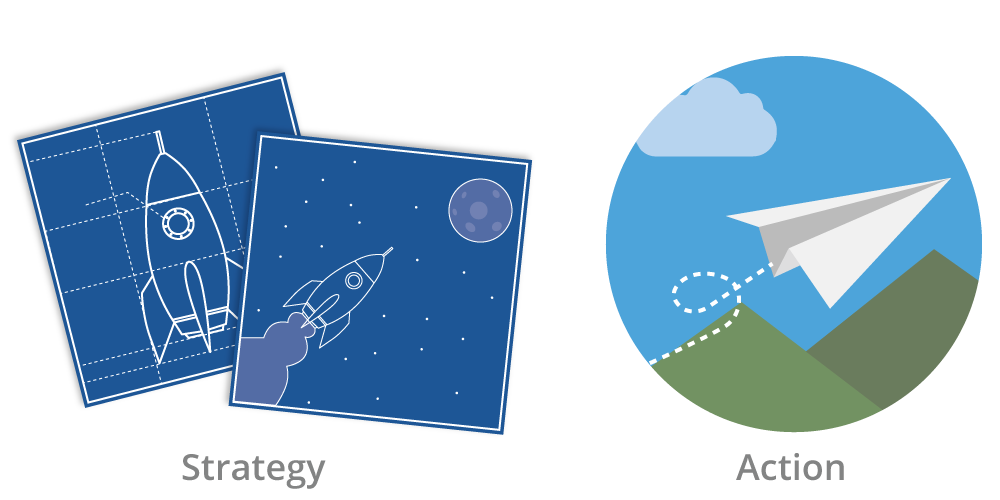
Kevin Goodwin, the CEO of SonoSite, knew that Sonosite needed to sell their portable, but less sophisticated ‘iLook’ product over the more powerful and profitable ‘Titan’ before a competitor came in and disrupted them. But, SonoSite’s salesmen completely ignored promoting the iLook, even though it was a strategic priority for SonoSite.

Goodwin couldn’t understand what was happening and went along with a sales team member to understand if this was because of negative customer reactions. He realized immediately that the problem was that the sales team were not even showing iLook to the customer. Their commissions based on the total value of their sales and gross margin dollars. And, Titan was a more lucrative product.

Clay Christensen draws an analogy for life – “You can talk all you want about having a strategy for your life, understanding motivation, and balancing aspirations with unanticipated opportunities. But ultimately, this means nothing if you do not align those with where you actually expend your time, money, and energy. In other words, how you allocate your resources is where the rubber meets the road.”
SonoSite resources

Source and thanks to: www.EBSketchin.com

Watch where your resources flow. If they’re not supporting the strategy you’ve decided upon, then you’re not implementing that strategy at all. – Clayton Christensen

Listen to everyone…

… then, forge your own path.

And, when you do so, do so with conviction. Just because a certain approach worked for someone else doesn’t mean it will work with you. Very few people rarely know better. Those who do have just gotten to be good at guessing. And, they’ve gotten to be good at guessing by making many bad guesses.

So, things will definitely not work as per plan. But, it is better to be sure, wrong and open to change than to be perennially in doubt.

At any rate, you’ll become a better guesser..

Integrity in work

Everyone knows integrity should be in mission statements. Very few know why. Most know integrity is a trait that good people exhibit. Very few again know exactly what that means.

So, let’s break it down – integrity derives its roots from integer. Instead of referring to a “whole” number, we refer to people who are “whole” or consistent. People who are whole or consistent walk their talk. Or, in Stephen Covey’s words, they make and keep commitments. There is no other trait that characterizes good character as well as integrity.

Today, however, I’d like to focus on integrity at work. Every project we work on should have a one-line goal. This goal explains why we’re doing it and what our desired outcome is. If we’re working on five projects, each of them should have a one-line goal that makes sense. You can term it the mission statement of the project. But, since mission statement often requires explanation, let’s just term it a one-line goal. In a well-run company, all of these projects will further the company’s mission as well. So, if one of your projects is to invest in your development, that would further the company’s goals of retaining people. If a project doesn’t have a one-line goal, shelve it. It isn’t important.

Once you understand the one-line goals for each of your projects (and this often takes a bit of work and thought), priorities should emerge. It should become obvious as to which project will create maximum impact. Depending on the goals of your group, this could be a long-term bet or a shorter term move.

And, once you understand the one-line goals and the priority, you are now ready to do something very simple – attribute colors to your priorities on your calendar. So, if you spend an hour working on priority one, mark out an hour and color it red (for example). If you took a meeting on priority three, color it green, etc.

At the end of the week, sum up the number of hours you spent on each of your priorities. While you are at it, also sum up the number of hours you spent in meetings vs. doing solo work that made the meetings productive. Ideally, 2 things should emerge –
1. You have invested time in accordance to your priorities
2. You have spent at least as much time solo time on your most important priorities as you have spent in meetings

When you show up at work, you implicitly commit to furthering the company’s goals. You do this by committing to furthering your goals. Every minute spent on your most important goals is productive. Everything else is gravy. The more time spent productively, the more time you spend exhibiting integrity in your work.

And, integrity, both in work and life, is a sight to behold.

Not easy to measure

I’ve been using the excellent Headspace meditation app over the past 3 months. Unlike my last tryst with the app 2 years ago when I repeatedly fell asleep (!), I feel things are going much better on the whole. However, I found myself wondering this morning as to whether I was making any real progress. As I did that, I stopped myself.

There are many metrics that are easy to measure – money, promotions, number of friends on Facebook etc., number of gym memberships – and, for every one of these, there are metrics that are hard to measure – success, impact, depth of relationships, fitness. I am reminded of Clay Christensen’s anecdote about parenting. While it was easy for him to measure success in his career, he found it very hard to gauge if he was doing well as a parent. It is only after his kids turned 20 that he finally felt satisfied that he’d done a good enough job. Even if there are many apps that make it easy to quantify aspects of life that were not quantifiable before, many of these ideas will continue to be hard to measure.

My experiences have taught me that the actions with metrics that are hardest to measure are often the most worthwhile. These are the sorts of investments you make in yourself and others which, for the longest time, don’t seem to have any impact you can see or feel.

Until they do..

Growing up

Borrowing a framework from Stephen Covey, we move through 3 stages in our lives – Dependence -> Independence -> Interdependence. The Dependence years are marked by childishness, the independence years are marked with rebelliousness and the interdependence years mark adulthood.

There are 2 phrases that best mark the transitions between the stages.

Stage 1 to 2: “I can’t blame other people for where I am. I need to take responsibility for my own life.”

Stage 2 to 3: “I can’t do this alone. I need to work with and give to the people around me to build my family/career/community/life.

If we can’t accept responsibility, we are no better than kids. If we don’t realize that this is all about building things together, we’re no different from adolescents. These stages have little to do with age. Dependence alone is guaranteed with birth. The rest totally depends on emotional maturity that we choose to acquire over the course of our time on this planet.

Age advancement is guaranteed. Growth is not.

Checklists for all small wins

I have a simple checklist item on my to do list in gray (gray = no pressure) that I see every morning. It just says “charge phone.” There is the rare day when my morning reset hour gets disrupted. But, that aside, for the most part, I typically see that checklist item and put my phone on charge.

I am a huge fan of checklists for repeatable tasks. Items like “Blog,” “Read feedly,” “Clear email” are examples of gray checklist items. These items ensure I start the day with a consistent clean slate. I’ve just moved to a new location as of yesterday and I can definitely feel myself still getting into the groove – evidence of that is in the morning list as I only managed to get through half of what I’d like to get through yesterday and today. I’ll get into routine soon enough.

These simple small wins at the start of the day always bring happiness with them. They make for an easy check on the to do list as I ease in. And, they also give me the feeling that I am ready to dive into the day without little worries such as whether my phone is charged. And, most importantly, they reduce variability. Feeling disorganized and unsettled is a real barrier to a clear mind. And, all good things start with a clear and focused mind.

Jony Ive on a focus lesson from Steve Jobs

When every bone in your body wants to do it because it is a great idea, when you even wake up thinking about it – and still say no because you are focused on something else. That’s focus.

We see Steve’s relentless focus again in the next lesson that Ive shares. Steve is so relentlessly focused on the product that he gives up his (and most human beings’) desire to be liked.

The latin root of “decision” is derived from “to cut” or “to kill.” Focus and great decision making go together.

Focus as a verb or noun – The 200 words project

Here’s this week’s 200 word idea thanks to Essentialism by Greg McKeown.

When Bill Gates first met Warren Buffett, their host at dinner, Gates’ mother, asked everyone around the table to identify what they believed was the single most important factor in their success through life. Gates and Buffett gave the same one-word answer: Focus.

In his book, Greg McKeown dives into the nuance and depth behind the word. He explains that there are two kinds of focus –
Focus as a Noun. When people speak of focus they usually refer to the noun – having a single goal. So, focus is thought of as a static thing that you have.
Focus as a Verb. However, focus is also something you do. This type of focus is an intense, dynamic, ongoing, iterative process that explores what is going on and what the (noun) focus should be.

Professor Henry Mintzberg taught that there are two sources of strategy: deliberate strategy – where leaders develop a clear vision and map this to goals (noun focus), and emergent strategy – where people respond to unanticipated problems and opportunities (verb focus). It is the disciplined pursuit of both of these approaches that best enables us to focus on what is essential.

FocusSource and thanks to: Greg McKeown on LinkedIn

A sign of mastery..

.. is noticing things others miss. The master chef notices the presence of an extra ingredient that makes the dish special, the master footballer understands the power of that extra touch, and the master presenter observes the little things that help make the presentation a hit.

I think the same applies to those who master living well. They notice the little things that make days great, they really appreciate people who make their lives better and, most importantly, they learn how to listen to themselves and interpret the signs their gut, heart and mind sends them.

Mastery begins with learning to observe deeply.