Scma and phishng

I’ve noticed a common theme among emails that are scams and/or phishing. They often have an obvious typo somewhere – it could be in the body of the email or the URL. Either way, there’s a fairly obvious tell.

I’ve wondered why that is. The default explanation is that it is either (a) written by a native English speaker or (b) useful to get past spam filters. Both are plausible.

Another theory – on that I subscribe to – is that it is done to filter out people who pay careful attention to these details and, thus, are less likely to be scammed. Scamming people takes time and optimizing the funnel to make sure scammers are only spending time on people most likely to fall for the trap is a powerful strategy.

It is why we are trained to take care of the little details on a presentation or document we write. A typo here or there can raise questions about our ability to pay attention to the details.

And details matter.

PS: I write my posts the previous night and realized I scheduled yesterday’s post for today by mistake. 2 posts today as a result!
The toothpaste tradition

There’s a longstanding tradition in our household involving toothpaste. As a tube of toothpaste becomes empty, my wife and I try to not be the person who needs to replace it.

It isn’t because the replacement is located far away – it is just to test who manages to continue squeezing out toothpaste from the tube after the other thinks it is impossible and “admits defeat.” :-)

It is one of those traditions that always inspires a chuckle. But as I was reflecting on it recently, I realized that another side effect of this “practice” is that we end up using the tube significantly longer than we otherwise might have. Our latest run has extended its life by more than a week.

It got me asking – what other experiences in life would benefit from similar diligence?

There are probably many – particularly experiences I learn a lot from. There’s probably more learning to be squeezed out of such experiences than I realize.

LDA, PCS, BSM, PBD

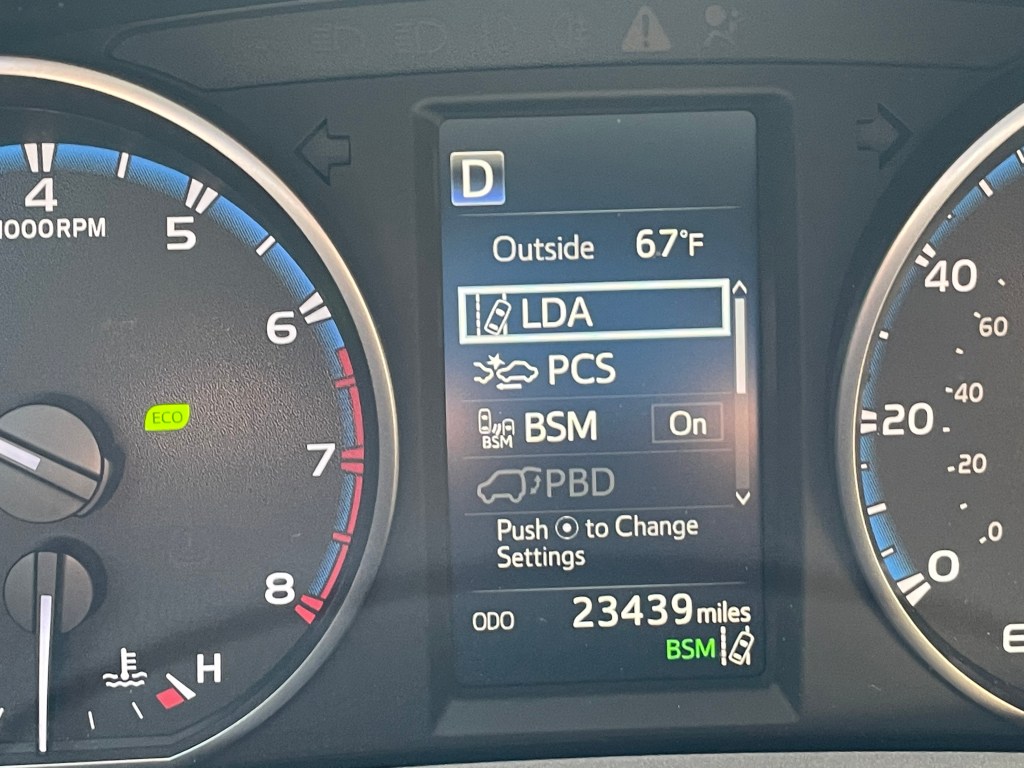
I rented a car recently that had the following on its dashboard – LDA, PCS, BSM, PBD.

I’m sure they all reasonable explanations – for example, I assume LDA is some form of Lane Assist. But, in the absence of an easily available explanation or an obvious icon, they exist to confuse.

While we can debate how they could have better represented these settings, the key question is – does the driver need to even see this?

They could, for example, have picked the most useful default (e.g., lane assist = on) and simplified the entire user experience.

But that is always hard to do. Our natural proclivity is to use the space we have available.

But empty space is powerful.

And simple is hard.

Getting marked as spam on my own email

An email from this blog got marked as spam on my Gmail. A true “facepalm” moment for the Gmail spam algorithm.

To add insult to injury, the explainer message said it resembled other spam emails. Yes, similar to emails from Nigerian princes. Somehow, e-commerce subscriptions never make it to my Spam filter. Go figure.

As many folks more articulate than me have written about the issues with Gmail’s algorithms moving subscriptions to blogs to the Promotions folder (and now spam), I’m not going to attempt to do that.

Instead, based on what I’ve learnt about this, the only fix is when the algorithm gets enough strong signal that something is not spam.

To that end, I have a request – if you read this post via email, I’d appreciate if you could spare 10 seconds of your time to take these 3 simple steps –
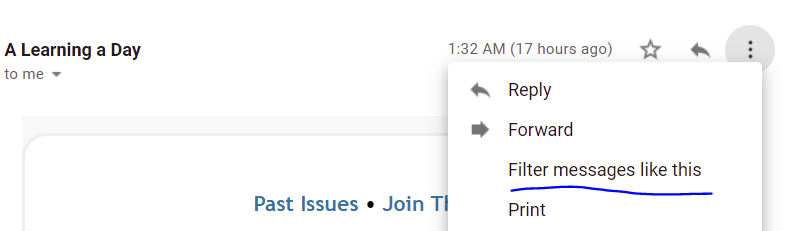
(a) Open the email, click on the three dots, and choose “Filter emails like this.”

(2) The from will auto-populate, click Create Filter.

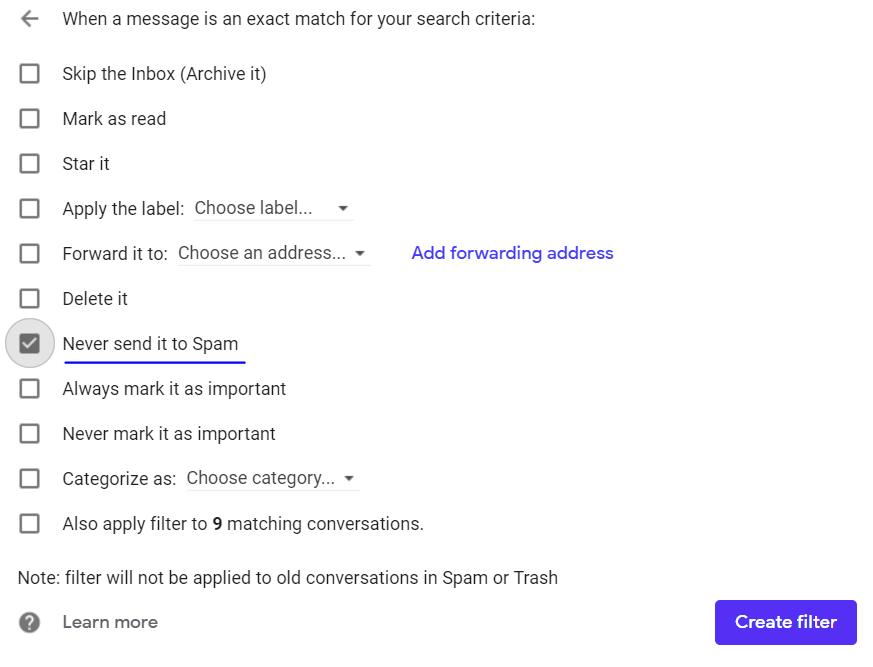
(3) Then choose Never Send to Spam and Click Create Filter.

Thank you in advance, I appreciate it.

Where perspective begins

Perspective begins at “I’m lucky to be alive.”

That one sentence changes everything. It transforms us by resetting our expectations and reminding us that this experience and these puzzles that we get to solve are all… upside.

We can choose to do our best to make it count. Or find the many reasons – and there always are many – to pretend like we don’t care.

Choosing to make it count will mean rowing upstream, confronting obstacles, and finding courage in unlikely circumstances. It will mean caring when we’ve been hurt, stepping into the fire when we’ve been burnt, and consistently doing that little bit more than we thought we could. It will also mean dealing with the skeptics and critics – including the one staring at us in the mirror.

And, most of all, it will mean realizing that we never know if a good day is a good day. In the long run, the only thing that will matter is that we chose a direction, kept focus on the process, changed course when necessary and kept plugging away, refusing to be disappointed or shaken in our desire to make things better.

Because it is all upside.

Because we’re lucky to be alive.

Notes on cold emails

In response to my post from day before yesterday on writing better copy for cold emails, Seth shared a thoughtful and passionate response –

“Cold email pitches are a trap.

Personalizing is different from personal.

Pretending that you’ve used someone’s software, listened to their podcast or used their onesie on your kid is a way of telegraphing your selfishness in just one sentence. 

Email costs nothing to send and a lot to read. When you (send a) cold pitch in email, you’re stealing–time, attention and trust.

Sorry, but the right advice is: don’t send cold email pitches.

Don’t build a business that depends on them.

You can do better.”

I reflected on this response and realized I had a couple of questions. The first – Cold emails are a key part of a growth marketer’s playbook. While I agree that we shouldn’t build businesses on these, aren’t they a key tool? And since so many of them are sent out, wouldn’t it be better if we learnt how to do them right?

To this, Seth shared that the difference in his mind was in whether this was in the context of a business or a person. There is no such thing as a cold email to a business as it is someone’s job to find the right products/services and respond. That is not the case when it comes to people. So, we’re better off making something people choose to talk about.

This distinction cleared it up in my mind. In case it was on your mind as well, I hope it clears it up for you too.

Some of the enduring lessons from writing this blog over the years have come from such exchanges and notes from you. So, to everyone who takes the time to write and add your own spin/perspective, I appreciate it. :-) Thanks for this one, Seth.

PS: While some of what I learn from Harry’s work on “Marketing Examples” is specific to certain kinds of advertising or marketing, most of my salient takeaways over the past 2 years has been in writing simpler copy. “Be plainspoken. Then write like you speak” is a lesson that never gets old.