Observation: The secret to fulfillment and happiness isn’t the pursuit of less work or no work.
Instead, it is the pursuit of better work – the kind that we choose to do for causes that are bigger than ourselves.
Observation: The secret to fulfillment and happiness isn’t the pursuit of less work or no work.
Instead, it is the pursuit of better work – the kind that we choose to do for causes that are bigger than ourselves.
I rented a car recently that had the following on its dashboard – LDA, PCS, BSM, PBD.

I’m sure they all reasonable explanations – for example, I assume LDA is some form of Lane Assist. But, in the absence of an easily available explanation or an obvious icon, they exist to confuse.
While we can debate how they could have better represented these settings, the key question is – does the driver need to even see this?
They could, for example, have picked the most useful default (e.g., lane assist = on) and simplified the entire user experience.
But that is always hard to do. Our natural proclivity is to use the space we have available.
But empty space is powerful.
And simple is hard.
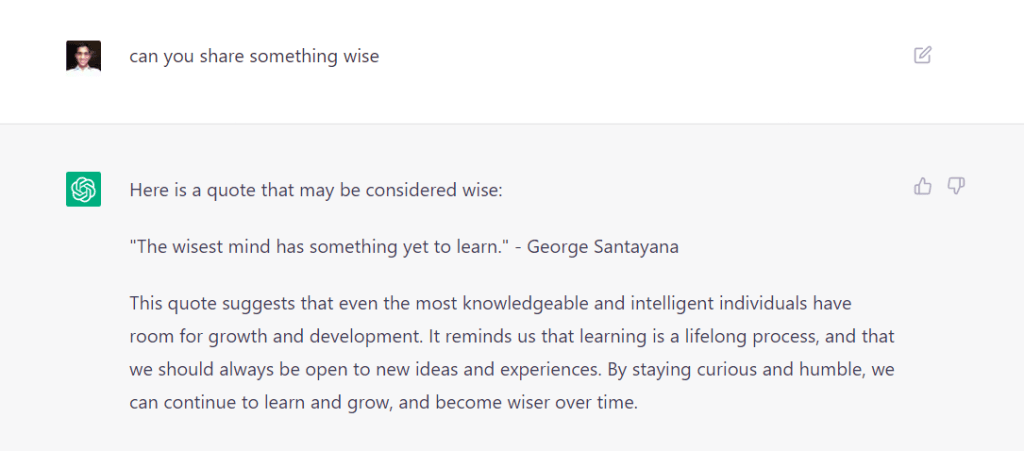
A few years ago, I came across an insightful quote – “There are 7 billion people on this planet. Don’t let one ruin your day.”
I found myself reminding myself of this idea recently.
In doing so, I realized that it is another one of those wise quotes that is easier said than done.
Ergo, it is worth remembering and applying.
There are two kinds of problems.
The first kind are the ones we face when we know what we want but don’t know how to get it.
The second kind involves not knowing what we want.
Generally better to be dealing with the first kind.
An email from this blog got marked as spam on my Gmail. A true “facepalm” moment for the Gmail spam algorithm.
To add insult to injury, the explainer message said it resembled other spam emails. Yes, similar to emails from Nigerian princes. Somehow, e-commerce subscriptions never make it to my Spam filter. Go figure.
As many folks more articulate than me have written about the issues with Gmail’s algorithms moving subscriptions to blogs to the Promotions folder (and now spam), I’m not going to attempt to do that.
Instead, based on what I’ve learnt about this, the only fix is when the algorithm gets enough strong signal that something is not spam.
To that end, I have a request – if you read this post via email, I’d appreciate if you could spare 10 seconds of your time to take these 3 simple steps –
(a) Open the email, click on the three dots, and choose “Filter emails like this.”

(2) The from will auto-populate, click Create Filter.

(3) Then choose Never Send to Spam and Click Create Filter.

Thank you in advance, I appreciate it.
Perspective begins at “I’m lucky to be alive.”
That one sentence changes everything. It transforms us by resetting our expectations and reminding us that this experience and these puzzles that we get to solve are all… upside.
We can choose to do our best to make it count. Or find the many reasons – and there always are many – to pretend like we don’t care.
Choosing to make it count will mean rowing upstream, confronting obstacles, and finding courage in unlikely circumstances. It will mean caring when we’ve been hurt, stepping into the fire when we’ve been burnt, and consistently doing that little bit more than we thought we could. It will also mean dealing with the skeptics and critics – including the one staring at us in the mirror.
And, most of all, it will mean realizing that we never know if a good day is a good day. In the long run, the only thing that will matter is that we chose a direction, kept focus on the process, changed course when necessary and kept plugging away, refusing to be disappointed or shaken in our desire to make things better.
Because it is all upside.
Because we’re lucky to be alive.
In response to my post from day before yesterday on writing better copy for cold emails, Seth shared a thoughtful and passionate response –
“Cold email pitches are a trap.
Personalizing is different from personal.
Pretending that you’ve used someone’s software, listened to their podcast or used their onesie on your kid is a way of telegraphing your selfishness in just one sentence.
Email costs nothing to send and a lot to read. When you (send a) cold pitch in email, you’re stealing–time, attention and trust.
Sorry, but the right advice is: don’t send cold email pitches.
Don’t build a business that depends on them.
You can do better.”
I reflected on this response and realized I had a couple of questions. The first – Cold emails are a key part of a growth marketer’s playbook. While I agree that we shouldn’t build businesses on these, aren’t they a key tool? And since so many of them are sent out, wouldn’t it be better if we learnt how to do them right?
To this, Seth shared that the difference in his mind was in whether this was in the context of a business or a person. There is no such thing as a cold email to a business as it is someone’s job to find the right products/services and respond. That is not the case when it comes to people. So, we’re better off making something people choose to talk about.
This distinction cleared it up in my mind. In case it was on your mind as well, I hope it clears it up for you too.
Some of the enduring lessons from writing this blog over the years have come from such exchanges and notes from you. So, to everyone who takes the time to write and add your own spin/perspective, I appreciate it. :-) Thanks for this one, Seth.
PS: While some of what I learn from Harry’s work on “Marketing Examples” is specific to certain kinds of advertising or marketing, most of my salient takeaways over the past 2 years has been in writing simpler copy. “Be plainspoken. Then write like you speak” is a lesson that never gets old.
“I always thought burnout happened when you work too much. Now I get it. It’s investing emotionally and then not getting a return on that investment.” | Clint Byrum
This beautiful definition of burnout resonated.
A newsletter I learn a lot from is “Harry’s Marketing Examples.” Every couple of weeks, Harry shares a collection of marketing and copywriting tips that are that nice mix of insightful and funny. Below are two examples from the latest edition.
| 1/ My favourite cold email pattern |
| Personalise. Pain point. Pitch. |
![]() |
| 2/Write with conviction |
| • Don’t say “a” say “the” |
| • Don’t say “help” say “how” |
| • Don’t say “alternative” say “replaces” |
![]() |
Thank you, Harry, for sharing these. You can subscribe to his newsletter here.
Every time you build something new or different, you’ll encounter skeptics. I’ve learned over time that most of these skeptics come at this with nothing but good intentions. All they see, however, are the problems.
It is easy to find yourself getting angry, disappointed, or annoyed at the skepticism. But these are the useless default reactions.
Once we get past that, pay attention to the signal in their feedback, and use it to make our ideas better, we’ll find that our ideas are better for their skepticism. It just requires us to get over ourselves, focus on what they’re saying, and ignore how they’re saying it.
If you manage to get through this process (and I hope you do), you’ll find that the same skeptics will become the biggest believers.
Every good idea has skeptics.
It is just on us to follow our conviction, to stay focused on making our ideas better, and to do the work.