IKEA

Clay Christensen pushes product creators to look at their products as a vehicle to get a particular job done. FedEx, for example, fulfills the job of getting a package from here to there as fast as possible. Disney does the job of providing warm, safe, fantasy vacations for families. Great businesses get this concept. And, IKEA is a great example of a great business that does.

On first glance, IKEA is just a simple furniture store. Why hasn’t someone just copied their product line and catalog? IKEA focuses on the job it is hired to do while its competitors define their businesses by product or customer segments (high end, low end, etc.). IKEA gets hired to quickly furnish or re-furnish a house. So, they are designed for just that. For example, furniture is easy to carry, deliver home, and assemble. There is a kids area so parents can focus on the shopping. Furthermore, there is even a restaurant so you don’t worry about your next meal. Finally, lest we forget, they are also very affordable.

My wife and I have been IKEA shoppers since we left home for university ten years ago. So, this isn’t just a cool case study. We’ve visited IKEA in every place we’ve lived – typically within the first week of getting there. Seeing products with Swedish name tags around our home is normal for us. The table and chair I’m using to type this has Swedish roots. I know furniture connoisseurs scorn their furniture. But, we love it. And, here’s hoping we never get too fancy to continue loving it.

IKEA released a beautiful one minute ad about a mom taking her son shopping.

[embedyt] http://www.youtube.com/watch?v=4V1V7aToJR0%5B/embedyt%5D

It is a beautiful example of being “on brand.” They get what customers come to them for and keep things simple… consistently. It shows.

Field of Dreams fallacy

“The Field of Dreams” was a movie from 1989 that made the line “If you build it, they will come” famous. It is a beautiful line. There’s only one problem – it is almost never true.

This is a hard lesson for most people to grasp. It certainly was the case for me. But, building a product alone doesn’t guarantee success. Even a product as irresistible, in hindsight, as Facebook, had some savvy marketing behind it when it launched. And, we call the most successful books “best-selling,” not best-written.

Products rarely sell themselves. Perhaps one product in a million manages that. They almost, always, need a story. It is generally too late if you are stuck crafting a story after the product is made. So much better to build the product and the story together. In the long run, the product is the strongest part of the marketing. In the short run, you need to build a story that makes the product desirable in a manner that is consistent to what it is really about.

Don’t fall for the “Field of Dreams” fallacy. Don’t build it and wait for them to come.

Plan for them to come. Tell a story. Make them come.

Compounding

Compounding is a simple and powerful concept.

A $100 saving compounded at 10% per month gives us $110 in month 1.
In month 2, compounding doesn’t just give us $10. It also gives us 10% of the $10 we earned in the previous month to a total of $11. Now, our amount at hand is $121.
The following month, we receive interest on the $100 and then the $21 to a total of $133.1.

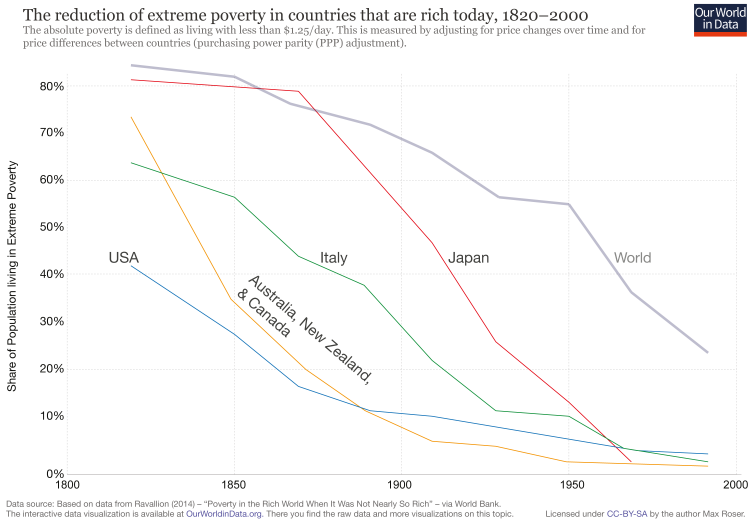
Compound interest starts off as pocket change but soon becomes the primary value of the saving.

9062942Thanks to source for the image

Here’s the kicker – compounding doesn’t just apply to money.

My hypothesis is that everything worth developing or learning compounds. Fitness, self control, initiative – you name it and it likely works that way. Heck, even learning compounds.

Every trait that makes us better people is hard to develop at first. Start exercising today and it feels hard. The results either feel negligible or absent. But, climb up that curve and suddenly things feel different. There’s a momentum where there never was one. There’s an understanding of how pieces tie in together.

So, if you are aiming to get started on a habit that you think will make your life better – start today. Compounding is more powerful when you start earlier and do it for longer. And, for those of you who feel stuck after putting in effort for a while, push through. Keep at it. It is tough at first.

But, it’ll get easier. And, most importantly, it’ll be worth it.

On brand

There’s something beautiful about watching behavior that is “on brand.”

A brand, as the tradition definition goes, is a set of associations. Amazon conjures up associations of “value” or “fast,” Ritz Carlton points to “luxury”  and so on.

Another way to think about brands is to equate them to integrity – or the ability to make and keep commitments. When an organization makes a commitment to quality and keeps it, it builds a brand around quality. When a person makes a commitment around enthusiasm, he/she builds a brand around it.

Regular readers here know how much I love “The Piano Guys.” My main association with The Piano Guys is “uplifting.” Their music, their themes, their ideas, their personalities – they are all uplifting. They all tell us to be our best selves – in one way or the other.

So, when The Piano Guys released the song “This is exactly what you want to hear today – Okay,” it was a perfect illustration of being on brand. It was uplifting. Integrity – check.

[embedyt] http://www.youtube.com/watch?v=5pBjopDymts%5B/embedyt%5D

Here are a few excerpts from the story behind the song


We’re all struggling with something – a debilitating weakness or illness. Or someone we love is barely holding on.

We watch the news. We see the tweets, the Facebook posts. The YouTube comments! We hear about hate, terror and despair. But just because what sells, what goes “viral,” or what gets attention may try to drown out the good in the world, it doesn’t mean that goodness is gone. Just because choruses of controversy and scandal shout louder than quiet symphonies of service, it doesn’t mean that inside most of us still genuinely want happiness not only for ourselves, but also our family, our friends, and our fellow human beings.

Media can make the world look bleak. They’ve given themselves this job description, in part because there’s a darker side on the surface of human nature that feeds on fear and cynicism. But deep down, we are beings of light. And in the end, since darkness is merely the absence of light, light will inevitably overcome dark.

This is the essence of hope. And the essence of this song. “No matter what you’ve been through, no matter if you think you’re falling apart, it’s gonna be okay.”


Do check it out.

And, of course, whatever you might be going through – it will, eventually, be okay. :)

Thank you, The Piano Guys.

Leadership and imagination

There’s an obvious application for imagination when you are leading a team. It is in imagining an inspiring vision. “Visionary” is often among the first words used to describe great leaders. And, the word “visionary” is associated with a leader’s ability to conjure a vision few others had thought of. However, there is another place where leadership and imagination go together. And, I’d argue that this place is just as important.

It is leading people with imagination. One of the biggest challenges for leaders is to manage people as they are but lead them as they could be. It is an important distinction. As you eke out efficiency from your team, you need to manage people by designing contexts that help people be productive as is. Helping your team be productive, in turn, helps them feel successful. And, this drives more learning and more productivity. The question that drives this is – “How can I help ___ be more productive?”

However, as you put on your leadership hat, it is vital you ask yourself – “What could this person be 5 or 10 years from now? And, what can I do to help this person be that best version of themselves?” The brightest, most precocious talents often threaten managers who don’t understand them or who don’t understand that they need to put on their leadership hat every once a while. People who aren’t understood can also be exasperating. It is easy to focus on productivity as it is somewhat measurable. And, we, as humans, gravitate to things we can measure. That’s exactly why leadership and imagination go together.

As you lead people, you have to imagine what might happen if all their hidden potential was harnessed. Your 21 year old analyst, in your eyes, shouldn’t be a 21 year old intern who doesn’t know how to do the basic things right. Your imagination must work hard to transform that 21 year old into a seasoned professional who is working her ass off to make a difference while living her life in a way that she describes as fulfilling. Seeing people in such light will transform both your relationship with her and how you treat her. You will still push her to deliver quality work on that next deadline. But, you will also engage her in discussions about her future and pull her into interesting discussions that are well above what she might think she’s ready for.

Manage people for who they are. Lead them imagining what they could be.

This is hard to do because it often doesn’t feel like it is paying off for the longest time.

Until it does.

Discussing ideas versus discussing people

Eleanor Roosevelt once said – “Great minds discuss ideas, average minds discuss events, small minds discuss people.” I think this is a great quote but it isn’t one that is easily understood. It seems to point to a choice between discussing ideas and discussing people. But, I think it isn’t about whether we talk about people, it is about how we do it.

We could talk about people when we discuss ideas, events and, of course, people. The small mind version of the conversation would be gossip. The average mind version would be about what they did. The great mind conversation would be about how they operate. This conversation inevitably is one about what we learn. These are often fine lines though and it isn’t easy to be objective about this. And, I think the reason for this difficulty is because we can often let get personal biases about someone get in the way of discussing how they operate.

I find it important to distinguish between 2 questions –
1. What can I learn from him/her?
2. Do I want to be like her/him?

We often conflate a learning discussion to one about whether we like their style or would like to adopt it. Separating our thoughts about these questions allows us to stay in the realm of ideas.

And, as a general rule, I’ve found it to be best to be liberal about who we learn from and to be very selective with who we emulate.

What’s the point

The path we implicitly sign up for in a professional career is one with continuous movement upward. A sign of progress is having fancier possessions and fancier titles every few years. With it comes an implicit promise of bigger impact. So, every once a while, I find it helpful to ask “what’s the point?”

Most of life’s pleasures are cheap or free. Sure, it is nice to splurge on a nice vacation every once a while. And, maybe some nice additions to our home would make life more convenient. But, for most of us, we probably have all the fundamental parts of Maslow’s hierarchy in place. Earning a lot more money isn’t going to step change our happiness. It might make things easier. But, since when has easy been better?

Furthermore, we learn, time and time again, that few things matter more than the people in our lives. And, again, for most of us, we don’t presumably make friends based on someone’s title. We make friends because they’re people we appreciate, learn from and enjoy spending time with. I have met with enough fancy titled folk over the years to realize there is absolutely no correlation between someone’s career accomplishments and my appreciation for them. The folks I’ve come to love are those who don’t care about any such race. They just deeply care about everyone around them, strive to grow through the daily struggle and work hard to make an impact.

So, what’s the point? If our fundamental assumption around progress is in question, where does that leave us?

My hypothesis is that asking this question can be incredibly liberating. We are surrounded by so much noise – none of which moves the needle in our happiness and fulfillment. And, most of this noise is surrounded with obsessing about our path forward.

So, here’s where I end up – never mind the future. Just understand which direction you are heading. Look at the map, but not too much. Look behind to learn from what happened – but, not too much. Enjoy the company of those who’re around you. Look them in the eye, smile and help them grow through the journey. Help those along the way who are less fortunate. And, critically, enjoy the now yourself.

In the final analysis, it is the happiness and impact you make during the journey that will matter. They aren’t waiting at a future stop.

Plant trees now

Plant trees now. Plant them well before you need the fruit.

If we aren’t careful, our life and careers can become an exercise of searching for answers to the question – “But, what can I do to make that happen now?” This could be about looking to build a strong collection of referrals to a job we want. It could also be about meeting the desire to work on a fulfilling side project. But, we can rest assured that the moment we ask the “But, what can I do now?” question, it is already too late.

It is impossible to find the perfect referral for a job we want tomorrow, unrealistic we will find a great story filling that gap in our application for our essays to university day after and unlikely we will get healthy enough to pass our annual physical in a week.

But, how could we have known?

By teaching ourselves to think longer term and continuously investing in ourselves and others. Every minute we spend thinking long term is a minute spent planting trees. Every minute we spend investing in our growth or that of others is also a minute spent planting trees. This includes all the time we spend studying, connecting, helping, thinking and working toward becoming our best self. This isn’t about moving toward specific goals as much it is moving in their direction. Want to be a healthy person? Start today by making small changes to your lifestyle. Want to work in virtual reality in year? Start today by connecting with people in Virtual Reality with no intention but to learn about what they do.

There isn’t a shortcut to this. There’s no point looking back at lamenting un-planted trees either. For a more healthy, fulfilling life, we need to plant more trees than we’ll ever need. As the Chinese proverb goes, the best time to plant them was twenty years ago. However, if we let that pass us by, there’s no point in fretting.

After all, the second best time is today.

Drinking enough water

Are you drinking enough water? A friend went down the path and stumbled onto something insightful – the more you drink water, the quicker you feel thirsty. Suddenly, drinking enough water becomes very easy.

I think this is the case with most things in life – both good and bad. It is how you’d describe addiction.

Sadly, the moment I said addiction – you probably pictured one of tobacco, drugs or alcohol. But, it need not be the case. Here are 5 alternative worthwhile addictions –

1. Enough sleep
2. Healthy food
3. Exercise
4. Journaling
4. Reading books

Somehow, we’ve come to associate the items with the list with that experience of eating greens as a child. But, all you need to do is give one of these a shot. For example, just try reading a great non-fiction book that you’d like to read this week. I’d be surprised if you aren’t already excited about the next.

When I started reading regularly a few years ago, I did it to check a box – read 30 minutes at least on 4 weekdays. But, then, a couple of books in, I could feel myself getting excited about the insights I was picking up. Suddenly, the world didn’t look or feel the same again. I wanted more. Years later, books still continue to deliver and continue to keep shaping how I think of the world. I just finished listening to “The Accidental Superpower” – a gripping book on Geopolitics. It has changed how I think about the world. I am also listening to “Shoe Dog” by Nike founder Phil Knight. It is as beautifully written, authentic and inspiring a listen as they come.

I can say this for every one of these addictions.

The friend who shared her water insight wondered why people don’t share that drinking enough water gets easier over time.

So, I thought I’d take a cue from her and do just that with you today. Doing the good stuff may feel hard at first. But, it gets easier. It also gets better. And, most importantly, it feels great.

And, if someone ever tells you otherwise, send me an email on rohan at rohanrajiv.com and I’ll help set that right.

PS: If you are ever wondering about whether you are drinking enough water, simply take a look at your pee.

Our body and science. Crazy awesome. I agree.

Dreams for granted

Look at your life right now. How much of your life is dreams you’ve taken for granted?

Maybe it is owning that nice car.

Or, perhaps, it is living with a partner you fell in love with.

It could also be that college education.

What about your job? Your kid? Your lovely home? Or, that neighborhood?

But, every time you realized a dream, you were probably off thinking about the next one. Got into college? Seems like we should think about getting that job. Got that job? Maybe it is time to start worrying about that career. It is a never ending cycle.

And, as we run like ferrets from one day to the next, it is easy to forget that most of what we take for granted today was the stuff of our dreams a few years ago. Now, there always is a reason to be dissatisfied. There is always someone around us with the fancier home and the bigger car. But, it is easy to forget that our biggest dreams as kids revolved around wanting to earn our own money and to make our own decisions. And, voilà! Look at how well that turned out.

There will always be that next dream. While pursuing these dreams makes our life what it is, just for today – let’s stop for a moment, look around, take a deep breath and give thanks to this life. Perhaps, as we look around, we’ll realize that we should stop spending as much time in the future that we’re dreaming about.

For, it is very likely that we are already living a life that is the stuff of our dreams.