An easy mistake to make as a manager is to assume delegation is management.
Finding a great candidate to run a portion of your portfolio isn’t the job. You need to then be able to influence this candidate to shape their thought process, improve their skills and ability to have an impact, and, where possible, provide wisdom and insight that helps them become more effective.
Learning to hire good people and then to delegate is an important step in the process of becoming a manager. But it is just one of many.
A colleague of mine always shows up with a smile on his face. In a recent conversation, I asked him how he manages that. He shared that he realized early in life that he hoped for 3 things –
(1) Good health
(2) Someone who’d love him as much as he loved them
(3) The ability to afford life’s “small pleasures” – a nice holiday, a lovely meal, a memory with family or friends
All 3 of these are part of his life now – so he has no excuses to not have a big smile on his face every day.
Hearing his story reminded me of two ideas.
First, happiness is reality over expectations. It helps to keep those expectations simple/low as it is much easier to shape our expectations vs. our reality.
And next, it isn’t happy people who are thankful. It is thankful people who are happy.
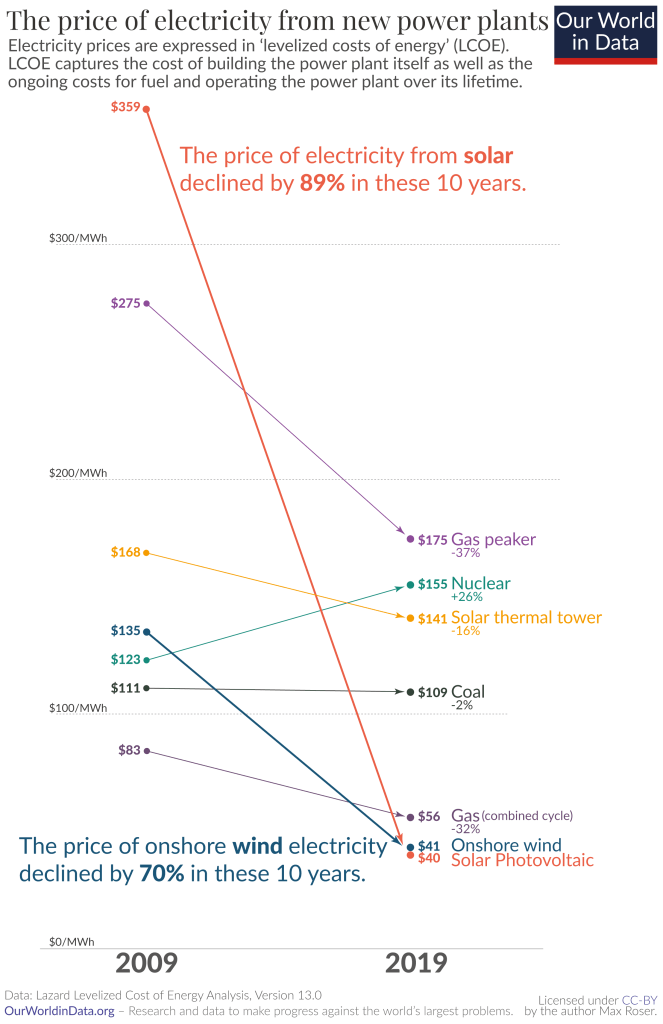
One of my favorite “Our World in Data” charts is the one that shows the massive shift in the cost of solar. It is already a no brainer to build a solar power plant in most parts of the world and we’re likely to see this get much cheaper as we make more investments (thanks to “learning curves“).
And it was nice to see this chart showing new electricity capacity additions. 15 years ago, ~70% of new capacity was fossil fuel based. In 2021, that number was 15%.
85% of the electricity capacity added globally came from renewable sources. That’s a mind-blowing shift in just 15 years. And solar’s share has grown a whopping 13x.
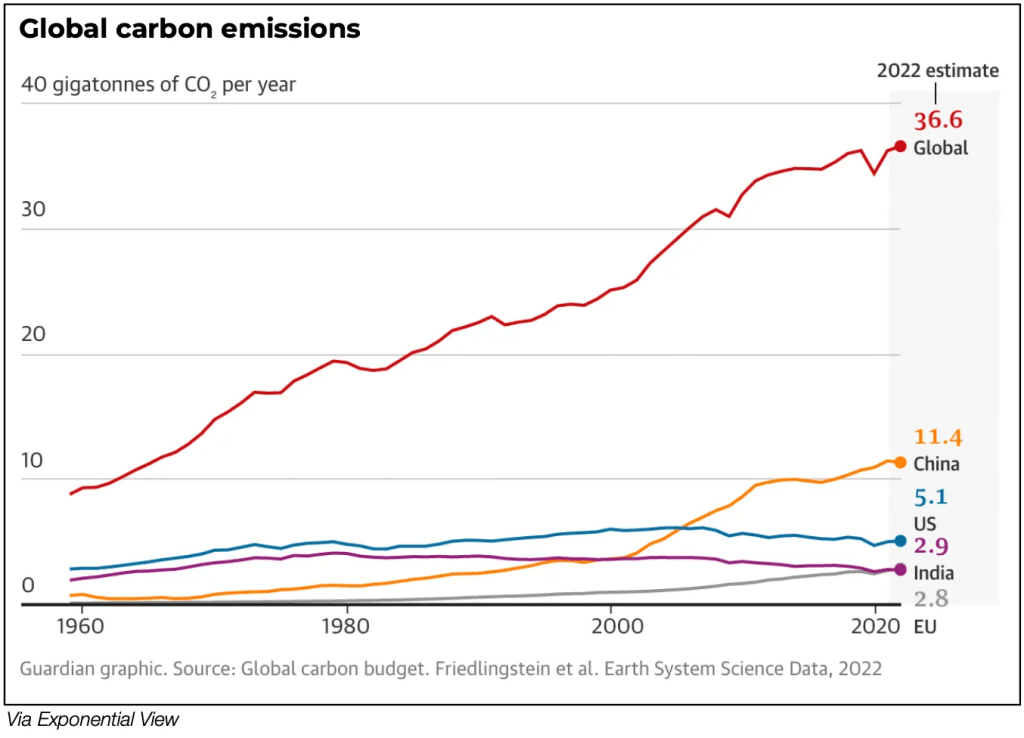
As global carbon emissions continue to be at record levels (have they begun to peak?), this shift can’t happen fast enough.
The key, as is always the case with the adoption of disruptive technology, will be cost. And it’ll be fascinating to see how much lower costs will go.
Regardless, 85% renewables is a big deal – it gives me hope we’ll get to 100% in the next 2-3 years. That’ll be an incredible milestone and a great reminder of the idea that we regularly underestimate the progress we can make over a decade.
I think the biggest execution challenge organizations face is a miscalibration across the organization on the sense of urgency required on a particular thing/topic.
Communication helps – the clearer leadership is about priorities, the better the situation will be. But it only solves 20% of the problem because priorities are dynamic.
It is why good leadership disproportionately impacts execution. Good leadership brings good judgment – and good judgment enables high quality decisions/responses to changes in the situation to ensure the right things have the right sense of urgency.
This is also why bad leadership is disastrous for execution. Not only does this mean teams don’t have the right sense of urgency on particular item, they’re often wasting energy by urgently moving on the wrong things.
Don’t waste energy worrying about something before it happens. Best to use our energy to focus on a creative, constructive, and corrective response.
Don’t spend time celebrating something before it happens either. Best to use our energy to deal with what is instead of dealing with the disappointment of what could have been.
For a brief moment, I considered titling this post “note to self.” Then I remembered that the entire blog is a note to self. :-)