Chatter and MYOB

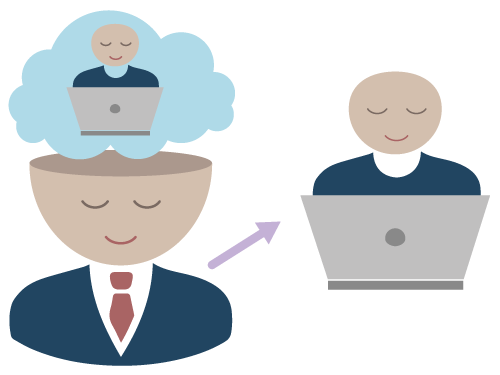
I reflected on a recent remark I heard about our age being the ‘age of chatter.’ Thanks to social media and the fact that every person has a megaphone and an audience (of sorts – depending on the medium), there is an unprecedented amount of talk about what’s going on in the present.

This presents a few challenges to people trying to get stuff done. For example, the start-up founder going through the struggle sees hundreds of reminders about fellow start-up founders who seem to be enjoying fame, glory and an abundance of venture capitalist attention. Some of these guys were his classmates at school and their lives seem ideal. Where did he go wrong?

The difficulty with all this chatter is that it is hard to differentiate between the signal and the noise. Additionally, even if some of these awesome success stories are accurate, they’re only accurate in the short term. The long game is a different matter altogether. However, as human beings, we are, on average, poor at thinking about the long term. So, some of this chatter can chip away at our self-confidence. And, self-confidence is a critical element of long term success.

The solution? MYOB – Mind Your Own Business.

Every person tends to have their own squiggly lined path to wherever they are headed. If they work well and hard, the squiggly lined path can generally be a little less squiggly. But, over time, things work out in one way or the other. And, if they don’t, we tend to learn something valuable – which isn’t a bad outcome. But, it is hard to keep this perspective if we try to process all the chatter around us.

So, it is vital we embrace MYOB. Keep calm, keep focused and keep plugging away. In the long run, good processes lead to good results.

Crazy odds and star stuff

It doesn’t really matter what you want to do – the odds are always crazy. Every time we move forward to accomplish something meaningful, we take on even crazier odds. Think about the entrepreneur who overcame incredible challenges to make a billion dollars. Did she stop then? No, she took on the challenge to do something even more worthwhile with that money.

If the odds of overcoming your next challenge are playing on your mind, just remember Carl Sagan’s note on the magic of this moment –

‘You are alive right this second. That is an amazing thing. When you consider the nearly infinite number of forks in the road that lead to any single person being born, you must be grateful that you’re you at this very second. Think of the enormous number of potential alternate universes where, for example, your great-great-grandparents never meet and you never come to be. Moreover, you have the pleasure of living on a planet where you have evolved to breathe the air, drink the water, and love the warmth of the closest star. You’re connected to the generations through DNA — and, even farther back, to the universe, because every cell in your body was cooked in the hearts of stars. We are star stuff, my dad famously said, and he made me feel that way.’

If the next challenge doesn’t quite work out, the one after that will. The odds will never get easier. But, as Carl Sagan points out, we are “star stuff.”

PS: An easy way to never forget we’re capable of magic – just give someone you like an unexpected hug and thank them for being amazing.

Selection bias and winners – The 200 words project

Here’s this week’s 200 word idea thanks to TimHarford.com, Lifehacker.com and Professors David Dranove and Brett Saraniti at Kellogg.

In 1943, the American statistician Abraham Wald was asked to advise the US air force on how to reinforce their planes. Only a limited weight of armor plating was feasible, and the proposal on the table was to reinforce the wings, the center of the fuselage, and the tail. Why? Because bombers were returning from missions riddled with bullet holes in those areas.

Wald explained that this would be a mistake. What the air force had discovered was that when planes were hit in the wings, tail or central fuselage, they made it home. Where, asked Wald, were the planes that had been hit in other areas?They never returned. Wald suggested reinforcing the planes wherever the surviving planes had been unscathed instead.

As blogger Tim Harford points out, this makes for a classic example of selection bias and also a great life lesson. It is natural to look at successes. But, if we don’t examine our failures, we may end up putting our time, money, attention or even armor plating in entirely the wrong place.

Abraham Wald planesSource and thanks to: Digitalroam.typedpad.com

‘The data that isn’t present may tell as important a story as the data that is.’

Digital workflow

First, I must say it is lovely to hear from you every time a post resonates with you. Whether it is via the comments or via the email, thank you so much for taking the time to write in. Your notes are much appreciated!

And, since a couple of you wrote in with thoughts on digital workflow in the past week, I thought I’d share my current digital workflow in rough order of where I spend most of my time (my combination is Lenovo Thinkpad Yoga, an iPad 2 and an iPhone 5) –

1. Microsoft OneNote (laptop) – This is where I organize my life. My OneNote has record of practically everything meaningful I’ve done in the past 6 years. It is an incredible tool. I find it a pleasure to use.

2. Outlook (laptop) + Sunrise (phone) – I’ve written about Outlook many a time. I prefer Outlook to Gmail. It just works for me. I’m less picky on the phone – just use the default Mail and Gmail apps. And, I use Sunrise as my calendar app on my phone. Sunrise doesn’t yet allow me to invite people on my Exchange server – but, aside from that, works really well.

3.. iTunes and iTunes Radio (laptop mainly). I have music on nearly throughout the day. And, I buy all my music on iTunes and enjoy listening to iTunes Radio when I’m in discovery mode. I like owning my music vs. renting it on Spotify.

4. Audible (phone) + Kindle (iPad). Awesome apps – this is how I do all my reading. Audible is for all non-fiction books and Kindle is largely for bed time reading.

5. Whatsapp (phone). Whatsapp is great – all my favorite groups are on Whatsapp and it makes for the best “keep-in-touch” tool for close friends.

6. Chrome + WordPress + Lastpass (laptop) – I am really liking WordPress after a few teething issues when I made the switch from blogger last year. And, Chrome and Lastpass are both awesome. If any website is important, it is on my bookmarks bar and the password is stored on my Lastpass.

7. Feedly (laptop) + Reeder (phone) – I use Feedly to aggregate my feeds. It works. And, I try and do most of my feed reading on Reeder. I love the Reeder app. It somehow makes reading news headlines, etc., feel easy.

8. Dropbox + Crashplan (laptop mostly) – All my files are on my Dropbox folder (I’ve accumulated 8.5 GB of free space and that works well). I back up my Dropbox stuff and my photos on Crashplan. Dropbox alone means I don’t ever have to worry about accessing a file – whether it is a document I’ve created or scanned copies of documents like my passport. And, Crashplan means I never have to back up anything on an external hard drive. That’s cool.

9. Google Drive and Microsoft Excel/PowerPoint/Word (laptop). Any team that I work with typically has a shared folder on my Google Drive. I also have a bunch of personal documents I keep on Google Drive. It just works and is great for collaboration. If I have to create documents, however, Microsoft Office is still my go to.

10. Envelopes (phone). To keep track of my finances. I use this along with Google Drive for budgeting.

11. FaceTime > Skype > Google Hangouts (iPad, Laptop). FaceTime is my favorite. Skype and Google Hangouts are used as and when necessary. I only wish FaceTime had conference facilities.

12. Facebook, Twitter, LinkedIn for different purposes (Laptop, iPhone). Facebook primarily for serendipitous staying-in-touch and sharing blog posts (Google+ too – though I’m not sure if anyone reads it on G+), Twitter for serendipitous checking to see what the people I follow are saying and LinkedIn as an amazing research tool before I meet anyone.

13. Google Authenticator. For 2 factor authentication. If you don’t have it, enable 2 factor authentication now!

14. Fitbit (pocket, phone). I’m not sure this counts as digital workflow but I enjoy carrying my Fitbit in my pocket. It has changed the way I think about walking and I push myself to hit the 10,000 steps / 8.7 kilometer mark at least 3 days in the week. I allow myself up to 2 Fitbit points out of my weekly exercise target of 7 for 2 days where I’ve hit the 10,000 steps goal.

That’s a wrap. As you can tell, I am more a laptop person than a phone person. I think I just prefer the big screen and I use my phone as a tool to get things done while I’m on the move / waiting.

Looking forward to hearing some of your workflows. Hope it helps.. and wish you all a great weekend!
The struggle and the road

There are many ideas that aren’t taught or discussed enough – personal finance, marriage, relationships, happiness, learning how to learn, and so on. In some way, the focus of this blog is about all these things (some more than others).

One such topic that I try to do justice to is what ex-entrepreneur and a16z venture capitalist Ben Horowitz terms ‘the struggle.’ I see the struggle as life’s way of testing our mental strength. And, mental strength is also one of those topics rarely discussed even if the idea of “grit” is beginning to surface in discussions around leadership and success. Ben describes it well.


The Struggle is when you are surrounded by people and you are all alone. The Struggle has no mercy.

The Struggle is not failure, but it causes failure. Especially if you are weak. Always if you are weak.

Every great entrepreneur from Steve Jobs to Mark Zuckerberg went through The Struggle and struggle they did, so you are not alone. But that does not mean that you will make it. You may not make it. That is why it is The Struggle.

The Struggle is where greatness comes from.


Ben describes it in the context of entrepreneurship. I think it is equally applicable to life. We’re all entrepreneurs and leaders of Me, Inc., after all. And, most of us have experienced the struggle at some point. And, if you’ve ever attempted to take initiative, start something, or ship something, you have definitely experienced the struggle. Once the romance of starting something new goes away, the struggle usually takes over.

The hard part about the struggle is that it is something you almost always have to face yourself. It is our customized mental strength regime – we just don’t know it. Yes, they often tend to be first world problems but that doesn’t make them any less difficult. Problems that test mental strength are often the hardest of them all. Depression and mental illnesses hit human beings regardless of their socioeconomic status.

Ben shares a few ideas in his post that might help. My favorite is “focus on the road.” He says – “When they teach you how to drive a racecar, they tell you to focus on the road when you go around a turn. They tell you that because if you focus on the wall, then you will drive straight into the wall. If you focus on how you might fail, then you will fail. Even if you only have one bullet left in the gun and you have to hit the target, focus on the target. You might not hit it, but you definitely won’t hit if you focus on other things.”

Thanks Ben, for sharing your wisdom. And, here’s to writing and discussing ideas that aren’t discussed enough.

Do defaults save lives? – MBA Learnings

A powerful study by Goldstein and Johnson in 2003 explored the relevance of defaults in organ donation. We discussed their findings and the implications in our class on “Values based Leadership.” Most countries have big problems with organ donations due to the large gaps between the number of donors and the number who need organs. However, this graph illustrating the difference in organ donation rates in the European Union is telling.

Organ donor consent rates

As you can see, countries like Denmark, the UK, the Netherlands and Germany average around 10% while the rest are close to a 100%. The difference? Defaults.

In the “default” countries, citizens see a checked box in the form they submit to sign their driving licenses (for example) that says they will donate their organs when they die. It is up to them to un-check the box. And, clearly, very few do. This idea has been documented in researcher Richard Thaler’s book, “Nudges,” which discusses how small nudges by policy makers can make a big difference in society. This is an example of that. And, Goldstein and Johnson’s research shows that defaults are a powerful way to influence people.

I think this research also speaks to the power of strong cultures. Strong cultures are built around defaults and the idea of “this is what people like me do.” Defaults may just be the closest shortcut to cultural change. Governments such as the UK have understood that and have been setting up “Nudge committees” to study areas where important policy can be nudged. The challenge, of course, is that people hate the government playing big brother. However, nudges and the idea of defaults are here to stay and it’ll be interesting to see how policy makers use these tools to influence us.

One such researcher who is working hard to change things is Dan Ariely. And, I am reminded of this comment from him when I interviewed him 2 years back.

“I look at the whole world, and then I say, “Is this a place that is the outcome of 7 billion rational people? If everybody was perfectly rational this would have been the best world imaginable. The conclusion very easily is no. In a couple of hours I’m leaving for Africa where there’s a tremendous amount of illness and poverty. There is also a tremendous amount of hope. If this world is not the outcome of 7 billion rational people, maybe we can do better.

It’s true that when you look at individuals, you can say for each individual, “I wish you were more rational in some ways.” But for the planet as a whole you say “My goodness the gap between where we are and where we could be is tremendous.” There are a lot of things to improve. I think we can do much more. That’s my hope. My hope is that as we’re learning more we will improve things. Both in terms of my personal life and in terms of my outlook on the world in general, it’s a good thing.”

Keeping perspective

The biggest challenge when things don’t work out is to keep perspective. And, here are 3 ideas that help me keep perspective –

1. Setbacks are as predictable as winters. Every “up” or few “ups” are followed by an inevitable “down.” Setbacks are guaranteed. We don’t always know their exact timings but, after a while, you pick up on the pattern. There’s no point being upset about winter. Put your winter clothes on and get to work!

2. You only need one thing to work out. Setbacks are often a matter of perception. We don’t need every element of our elaborately laid plan to work. Often, we just need one thing to work out – one venture capitalist to sign the term sheet, one opportunity to work on a cool project, etc. Hold out for that one thing.

3. You never know when it is a good day. This is my other favorite. It is hard to tell if a recent bad day was really a bad day. Things have a funny way of working out. And, looking back from a day in the future, a bad day could turn out to be the best thing that happened to you at that time. So, keep plugging away.

This definitely borders on the philosophical but I’ve found all too many times that you don’t get what you want. Instead, you get what you need in the end.

The message? Keep perspective when set backs happen. And, keep plugging away regardless..

Planting trees before you need the fruit

If you feel you need fruit 10 years from now, it is best to plant a tree today.

The trouble, though, is that you don’t often know what sort of fruit you’ll need. So, how do you strategically plant trees that’ll give you exactly what you need later?

While there might be minds who might be able to engineer such circumstances, an approach that might work better is to just plant trees anyway and tend them carefully as the years go by. Invest in people, in learning, in great relationships, in yourself and share what you learn on your journey. Create your own podcast, your own not-for-profit along the way, or join other creators who you feel are creating impact. And, no matter what you decide to do, approach it like a gardener would – plant, tend and nurture.

There is a chance that all the trees you plant will be useful. Most likely, it’ll turn out that a few are incredibly useful while many of the others aren’t. It really won’t matter. The journey would have been so much fun that the result will only feel like a small addendum. The truth about the final analysis is that there never is a final analysis. Any analysis is just a part of the greater journey.

And, as it turns out, it is rarely about the fruit. The fruit disappears in a few bites. The planting, however, lasts a lifetime. And, what a great way to spend a lifetime..

Why mobile and native ads are a big deal

There’s a lot of chatter about the mobile revolution in the mainstream press these days. In my views, the chatter isn’t nearly enough. Mobile is going to change how we do things at a fundamental level. To illustrate, I’d like to take a look at advertising – an industry that has changed a lot in the past decade. Advertising is also the engine that propelled Google’s incredible growth (and, given Google is the poster child of the modern day tech company, advertising is probably the engine for the web 2.0 as well) over the past decade. However, the very engine that propelled Google’s growth is is also turning out to be a problem thanks to mobile.

The other day, my wife was scrolling through her Facebook news feed to show me a video when we passed a native ad. She spent an extra second on the ad and continued to scroll down till we found the video.

Before we discuss it, let’s discuss what a native ad on Facebook looks like

Sidecar ad


And, now, let’s contrast it with a traditional search ad for the term “share car Chicago” – A Zipcar ad pops up.


Car Share search


The Zipcar ad on Google search takes up roughly 10% of my screen area while the Sidecar ad on Facebook takes up practically 100% of my screen area. In an age when attention is so precious, a native ad takes 100% of your attention for a few brief seconds.

The other interesting implication of native ads is the subconscious effect they have. My wife says she occasionally finds herself remembering a native ad she saw on Facebook and searching for more information. That’s not surprising.

And, finally, Facebook and the cookies on my browser have a ton of data on what I’m interested in, searching for, and shopping for and I’m sure these ads will get more relevant over time. This has equally big implications for niche social networks like LinkedIn (not sure 332M users is all that niche but let’s run with that), Twitter and Pinterest.

So, why is this a big deal? See this graph on Facebook’s mobile revenue growth from Statista.com

Facebook mobile revenue

Once Facebook flipped the switch on mobile in Q3 2012, they reached a run rate of about 1.5B dollars per quarter. Mobile devices are probably half of what they will be 2 years. Everyone at the Googleplex in Mountainview ought to be worried..

If that doesn’t feel a big enough deal, consider this – mobile is barely 10% of US ad spend. And, the US ad spend is worth $220B. Print ads still account for ~15%. This is changing, of course. And, this opportunity is going to be huge.

The Matt Damon method of finding help – The 200 words project

Here’s this week’s 200 word idea (and the first of the new year!) thanks to 99u.com, Nathan Kontny’s blog.

On his blog, startup founder Nathan Kontny explains that the best way to find help is to first become the person you seek. He observed that he regularly bumped into people seeking help from others in their projects or careers – like business people looking for technical co-founders or people looking for someone else to write a press release about them.

Kontny, instead, believes actor Matt Damon had it right. Instead of looking for some writer to give him a starring role, he just became the writer and wrote the script for Oscar winner ‘Good Will Hunting’.

So, Kontny’s advice is – if you’re a “business guy” stuck because you can’t find a technical co-founder, go become the technical co-founder. Go to some classes, conferences, meet-ups and read technical blogs and forums – do what you think a technical co-founder would do. And, you’ll be surprised that the action of trying to accomplish this actually puts you into the company of a great deal of people who would make… really great technical co-founders.

Matt Damon waySource and thanks to: www.EBSketchin.com

‘A funny thing happens when you do the work to become the thing you seek so much from others. You find it.’ | Nathan Kontny