Simple traditions

During a visit home 2 years back, my mom and I started a simple tradition – we go for a walk to a park nearby (pic below) every evening I am at home. This is, of course, great for conversation as well as for our health. But, the biggest benefit is that it is now “our thing.”

traditions, simple

Simple traditions such as this evening walk have a way of becoming special over time. I have a long list of these over the years – McDonalds breakfast at 4am after hanging out on Saturday night, lunches at a particular restaurant with a certain friend, catch up on Friday afternoons at a particular spot – that remain very close to my heart.

I look to create these traditions from time to time. As with most of my experiments, many don’t work. :-) But, some do.. and these end up becoming very memorable.

Books that made an impact – 2015

I’ve shared my favorite books in 3 of the last 4 years. I generally manage to read ~25 books per year. This number has effectively halved while at school given all the reading I get through for coursework. So, I’d predicted I’d read 12 books this year during my end of year review of books that made an impact last year. I managed 14 (woohoo!) and I thought I’d pick out 4 fantastic books.

Books, 2015, impact,

1. Mastery by Robert Greene. I read half this book in 2014 and half in 2015. Many of the lessons from this stuck resonated deeply. While I didn’t necessarily find many of the topics around deliberate practice and effort new, I thought Greene’s take on emotional intelligence and managing mentorship enlightening. The most powerful lesson for me was – “Don’t listen to what people say, pay careful attention to what people do.” This sounds pretty obvious. But, it came to me at a time when I really needed this advice.

Great book. A must read.

2. How to Fail at Everything and Still Win Big by Scott Adams. Another book that receives my highest recommendation. Scott Adams is smart, savvy and lives his life as an experimenter. I love and relate to his approach to life and I think he’s gotten the skill of living well down pat. He has plenty of practical advice about success and day-to-day living. There are many favorite lessons from the book. However, his theory on collecting many mediocre skills versus mastery in just one and his insistence of designing systems versus setting goals are my favorites.

3. The Innovators by Walter Isaacson. This book is a history of technology from the times of Charles Babbage and Ada Lovelace. I found this book both interesting and inspiring. It definitely helped solidify some of my thinking around the power of teams while also helping me understand the nature of innovation.

4. High Output Management by Andy Grove. I’ve written about this book in the past few weeks. A good part of this book wasn’t completely new to me as the wonderful Ben Horowitz’s “The Hard Thing about Hard Things” was clearly inspired by Andy’s style. But, Andy’s “tell-it-as-it-is” style combined with his piercing insight on the science of management make this a management classic.

As always, book reviews from all books this year and before are on my book reviews blog. The books are categorized into 4 priorities based on the strength of their impact in my life.

Here’s to more reading in 2015. And, just for fun, I’ll continue the trend of making predictions and predict 18 books read next year as I expect the number to go up once I’m out of school.

Happy reading!

Picking people

Every human being we closely associate with is a result of a conscious or sub conscious choice we’ve made. We pick friends, life partners, colleagues, and managers. We control the picking process more in some cases than others. In cases where we didn’t directly pick a person we interact with, it was likely a result of association. If our friends are accomplished athletes, it is very likely they brought in a new athlete into the circle.

In the final analysis, the depth of our relationships will likely determine our happiness. And, what’s more, our intelligence, fitness, maturity and wisdom will likely be the average of the people we associate with the most.

Life, as a result, is an exercise in picking people.

So, as we reflect this holiday season, let’s examine all the relationships we’ve picked in our life. Let’s be open to letting go of relationships that aren’t working as well as they used to (I’ve learnt that is more because of “bad fit” rather than because of “bad people”). These relationships are a great opportunity to fine tune our picking process.

And, after we do that, let’s make sure we take a minute or two to give thanks (or, perhaps, write a quick note?) for those relationships that make us happier, wiser and better. Those don’t come by often. And, for every one of those, congratulations to you on picking well.

picking people,, pick, relationships

The 10 question annual reflection form

6 years ago, I created a 10 question annual review form as a way to do a “look back and look forward” reflection exercise at the end of the year. Of course, ten questions isn’t perfect and longer forms might do a better job. But, I wanted the reflection to be short and fun rather than something that felt daunting.

Over these years, I’ve found myself spending lesser time on this review. That’s because the questions from the exercise, particularly the ones around the skills I intend to develop, have increasingly driven my thought process during the year. So, the reflection has become an ongoing process rather than a once a year thing. And, I think that’s exactly how it should work.

Review, reflectionI have shared the form every year on this blog and, keeping with tradition, I have the PDF and word versions of the review form for you. Please feel free to use as is or edit to develop your own. Aside from suggesting you take 15 minutes to do this, I would definitely suggest keeping these forms with you. Revisiting them in future years is not just fascinating.. it is fun. :-)

Happy reflection!

PS: If you’re having difficulty with the word version, please just send me an email on rohan at rohanrajiv.com

I’m in, now what – MBA Learnings

How can a relocation and a significant life move not be stressful and, instead, be a growth opportunity? This was the question I asked myself when I got my offer of admission for graduate school. I hate relocation. It was going to be a pain. But, I needed to figure out a way to make it better. Framing it this way appealed to me because there were likely a few more relocations coming up. This was how I broke it down.

First, deal with the 5 “big rock” questions. The “big rocks” are items that just have to be completed no matter what. My 5 big rocks for any move are –

  1. People: Have I got the important people in my life (family/partner) on board? Big step. Not much to discuss here. But, this should be the first step.

2. Work and living wrap up: What do I need to do to wrap up life here? At work, this meant communicating to my managers and colleagues and then figuring out my plan until my last day at work. I structured it such that I had a month and a half off before school and I was grateful for that time.

At home, this meant putting together a list of things that needed to be “closed” – home rental, all other contracts – phone, cable, utility, and bank account consolidation. As soon as I felt I had a complete list, I put together a plan to get all this done as I knew I’d have limited time to get all this sorted.

3. Flights and Visa: Do I have all my travel to dos in place? This is definitely a process – especially when you have a significant other who also needs to figure all this out. The main lessons for me were – relocate as early as is practically possible. In our case, we got in one week before major activities started and this was useful. If I was moving for work, I would try and do 2 weeks before at least. The early time helps set the foundation for a good start.

With visa, we had a few things to consider and decisions to be made. Our situation was particularly complicated because I was traveling for work until my last day. So, we did need things to be fairly well planned. In general, I’d recommend working through all of this as early as possible and have a plan in place.

4. Accommodation and basics: What will I need to start life there? In our case, this came down to 3 things – medical requirements, accommodation and a plan to get basics in place within our first week.

Medical requirements involved us getting the required blood tests and immunizations. After that, sorting out accommodation was a priority. This was a big part of why I traveled to the school’s admit weekend – to get a sense of what was out there. And, once we had that, we just put together a fairly detailed plan (of course) of what we needed to get set up in the first week in order of priority – mobile plan, bank account, home set up, and submit required documentation were top of the list.

5. FinanceWhat are my “chainsaw art” financial scenarios? Numbers matter. It is hard to get financial forecasts right, however. The approach I’d recommend is “chainsaw art” – sculpting with a chainsaw instead of a fine knife. This just means that you don’t sweat the small details and, instead, focus on getting the big buckets right. As far as expenses went, the buckets that I had were – Tuition, Accomodation, Necessities, Living, Travel, and Relocation. I made some fairly standard assumptions based on my research and had a rough budget worked out.

Once I’d put this part in place, the next big question was – how do I make sure I fund this? The way we approached that was to detail out 2 scenarios – a worst case and best case. The best case involved having a few moving parts in place and the worst case was what would happen if none of our assumptions worked out. We could have had a couple more granular scenarios but, instead, focused on “chainsaw art.”

As I worked through this process, I also put together a set of key principles – I thought I’d share those below along with the rough expense forecast. None of it was rocket science – it involved reminding myself that it was an investment, to live frugally and to work hard for the only scholarship I was eligible for as an International student. I hadn’t actually remembered doing this till I pulled up my Google doc now but I’ve always found laying out guiding principles to be an important part of the process.

relocation, finances, planning, preparation

As is the case with these things, the chainsaw art approach worked great. Sure, there are deviations in the numbers but, broadly, they were right. My approach to finances was to not define granular budgets but, instead, set clear guidelines (as you will see, this is a theme). This meant some differences in life style – I am likely in the bottom 25th percentile of people who travel while in graduate school, for example. But, that’s a trade-off I chose right at the start and it had a lot to do my fairly global work experience prior to school. We don’t monitor our budget strictly every month. Instead, we focus on the guidelines we laid out at the start – that has worked well for us.

Next, how can I be best prepared for school? This portion took a bit of work as I needed a way to frame this experience to help me deal with the seemingly overwhelming amount of detail. While I had some of the frame in place, it definitely became crystallized over time. The 6 priority frame is what I wrote about in detail in my letter to an incoming student. I’ll go through what I did for each of these 6 priorities (in some cases, I venture into what I would have done had I known better).

1. Career – quite a bit of action here. I took a very research based approach to figuring out my career question. I had been warned that graduate school recruiting starts very early and that it helps having a focus. There are 3 steps to finding a job –
i) Decide what you want
ii) Get an interview
iii) Prepare to do well at the interview

In this case, I spent my pre-business school time thinking about what I really wanted to do 5 years out. And, given what I wanted to do 5 years out, how did that translate to my post MBA role? I had written about this in my essays and I focused on validating my ideas and also making sure they were realistic given the visa requirements for an international student in the US. For instance, I believed I wanted to switch into technology. So, I used the admit weekend to spend 2 days in the Bay Area, meet people I knew / people they introduced me to at various companies and asked everyone I met for advice. This turned out to be a very useful exercise in deciding what I wanted. This plan underwent a few changes but, it worked well overall.

As far as ii) and iii) went, I figured I’d use my time at school for that. However, I will say that this 2 day trip helped greatly with all both as well. And, I spent a bit of time testing a few sources of technology news over the summer before settling in on a couple of sources that worked for me (Venture Beat, Benedict Evans’ newsletter). I have a post on lessons learned from internship recruiting if you’d like more detail.

2. Academics – quite a bit of action here. There’s a bit of personal history here – as I spent most of my undergraduate years working on a start-up, I didn’t feel I actually did justice to my undergraduate degree (Electrical Engineering). So, I didn’t attend my graduation ceremony. But, I told myself (and my mom – who was understandably keen to attend at least one graduation ceremony) that, if I were to attend graduate school, I would do it justice. It also helped that I was really looking forward to studying business fundamentals. So, academics was always going to be a high priority.

My main question was – how can I be best prepared? I ended up purchasing a couple of books on Finance and one in Accounting. I didn’t touch the Finance books. But, I did work through the Accounting book and it was a god-send. However, I understand most schools have moved to having pre-courses in accounting. So, if you have a pre-course, I wouldn’t bother. If not, understanding what debits and credits go a long way in making Fall quarter easier.

Aside from the Accounting book, I enjoyed reading a collection of Michael Lewis books before school. This was recommended by a Finance professor and I enjoyed diving into the various financial mishaps of the past two decades. Very enjoyable and recommended. As you can tell, I was over indexing on being financially literate. I was reasonably well positioned in other areas thanks to working as a consultant and didn’t do much. If you aren’t, a course in how to use Excel and PowerPoint would be very applicable.

The final piece of my preparation was reading a book by Cal Newport – “How to be a Straight A Student?” I know this sounds incredibly geeky. But, my rationale was straightforward – I hadn’t done much studying in undergrad. Now that I was committing to learning, I was curious about Cal’s insights (gleaned from various interviews) on how to do well. The book said 3 things in my opinion – study regularly, be very intentional about how you spend your time and maintain an excellent set of notes. This was very useful advice.

3. Extra-curriculars – very little action. Attending the admit weekend was very useful. I learnt that the frequent issue was that people who like to be involved over committed to extra curriculars in their first quarter. So, I just put together a list of clubs I was most interested in and left it at that. It was a helpful starting point. I began my first quarter fairly cautiously and took up leadership position in 2 clubs. Over time, I ended up doing a lot more than that as I got a better grasp of my commitments and capacity. But, I did it because I enjoyed it and got tremendous value out of extra-curriculars.

(In retrospect, extra-curriculars have turned out to be a wonderful investment of my time. I’ve learned some wonderful lessons on leading and managing teams (you don’t get to manage large groups of talented peers all that often) and have also found them to be the source of my richest friendships since I don’t enjoy the extraverted evening scene.)

4. Social – almost no action here. I am a believer in the idea that you attract people based on who you are. So, I didn’t worry about this till I got to school. Instead, I set aside some time after my first two weeks to re-evaluate how I was doing. In that time, I found a 2nd year friend whose approach I respected and followed that. Figuring out how to approach social was a process that evolved through school. I’ve written about this in my post on designing for introversion.

5. Framily outside school – lots of action here. I had been warned that the next 2 years would be very intense. So, I spent most of my pre-MBA free time here. I did 1:1 lunches/dinners with nearly every good friend. Most of these were very memorable and I remember the conversations to this day. I spent 4 weeks at home and that was wonderful, too. My framily always had a good sense of what’s going on and also had heads up that I might disappear for a few months as I worked to figure life at school out. I also set expectations for simple systems – regular calls with family, a whatsapp group that brought together close friends, a commitment to a half yearly Google hangout, etc. These little things were continuation of ideas I’d adopted while traveling for work. So, it was just a matter of continuing to make the effort.

6. Me (+partner – if applicable) – lots of action here. This was probably my number 1 priority. I spent a fair bit of time thinking about what I needed to be ready. The governing principle here was – what got you here won’t get you there. So, as I met people – especially for career related conversations – and gathered perspective, I tried to understand what life in an MBA program would look like. Thanks to this blog, I was already pretty intentional about how I approached life. However, this promised to be a great opportunity to re-think my systems and test out an approach that would last.

The biggest breakthrough here was a process I called “The Purpose process.” While this has iterated over time, thinking about this was the single best investment I made. It has resulted in a high quality of life throughout the past 15 months or so (8 hours of sleep nearly every day!) while keeping me focused on what matters. It also resulted in an initiative called “The Good Life Sessions” that has become a highlight of my time at school. The intensity of graduate school has been a fantastic pressure test for all these ideas.

Finally, a big shout out to partners/significant others. My wife and I spent a fair bit of time setting expectations. We knew this could potentially be a very rough period. It was also our first experience living together for an extended period of time. All those conversations helped a great deal. Consistent with the overall approach, we set guidelines and regularly revisited them. Graduate school is definitely a team game and none of this would be possible without my wife’s support.

Overall. The time I spent before school went a long way in defining my approach in school. Once I’d done the work, I just put together a simple 4-5 line strategy for each of these priorities and kept revisiting them from time to time. A final part of this process was setting “process goals” along with some “ideal result” goals. I wrote about most of this and included a detailed breakdown of how I spent my time in my post about “Digging into my first year process.”

In the final analysis, relocation did turn out to be a profound growth experience, after all. It underscores a principle that I’ve seen hold true for all things in life – it is what you make of it. The nice thing about having done this once is that I’m using the exact same approach and thought process as I think about my next relocation – into full time work after school. Yes, the 6 priorities change a bit and the relative importance of certain priorities change a lot. But, the frame largely works.

As always, I’ve tried to combine high level “structure” ideas with clear examples of how I approached it. This combination always results in absurdly long posts. So, as always, I hope it was worth the read.


Thanks to a close friend who recently got admitted into a great school and asked me the question that became the topic of the post.

Reflecting on my use of devices and media

Seth Godin got me thinking about my use of devices thanks to his post on “paying the smartphone tax.” As this is the perfect time of year for reflection, I began taking notes about my device use on a flight. I am glad I did it – I think this is the first time I reflected on my device use behavior as it is just something that has unconsciously evolved over time.

devices

In the short term, it led to an immediate reorganization of apps on my phone to maximize positive energy and minimize activities that reduce energy. The other effect is simply increased awareness. I’m not sure what changes this increased awareness and thought will drive. Only time will tell.

Rather than give you just the highlights, I thought I’d share my unedited version below. Sorry if it feels long and all over the place – it was a stream of thought. As always, I hope it helps.


Purpose of the mobile
1. Take care of myself – (Music, Headspace, Fitbit, Audible, Weathercaster, Envelopes)
2. People – Connect with and record memories with framily (FaceTime, photos, Whatsapp, iMessage, email)
3. Find/do stuff on the go (chrome, google maps, uber, Amex bill, AT&T, etc. )
4. Learn by healthy consumption of content (Economist Espresso, news over email)
5. Create content when possible
6. Enable occasional bouts of catching up on social (LinkedIn notifications, Facebook notifications)

Stuff that reduces my energy
1. A long feed reading list
2. Checking email when I can’t clear it
3. Checking social notifications to get to social inbox zero
4. Switching across various social apps
5. Meaningless messages on messaging apps

Guiding Principles
1. Use phone in accordance to values aside from on-the-go stuff – to take care of myself, to connect with framily, to learn and to have impact by prioritizing content creation over consumption
2. Engage when I want to and not because the option is available. If it isn’t a HELL YEAH, it’s a no
3. Set notifications based on priority – calls – keep phone on silent through work day, texts – keep vibrations and sound, whatsapp – no sounds or vibrations but allow badge icons (mute groups that annoy) and no notifications on all others – email, messenger, etc.
(Align home screen to priorities)

Other good phone habits
· Switch off background refresh
· Keep minimal number of apps open

Purpose of the iPad
1. Myself – Kindle, Music, Tabs
2. Framily – FaceTime
3. Media – Netflix, iTunes videos

iPad use – Overall, aligned and good. :)

Movies and tv shows
· Watch on Netflix
· Buy on iTunes

Purpose
· Relax! Especially when at home

General principles
· Avoid purchase unless you’re absolutely sure you will want to watch from time to time
· TV shows better value for money than movies
· Never ever feel pressurized to watch a movie/TV show. They’re great to pass time but don’t matter much in the big scheme of things. :-)
· Treat nature documentaries as educational :)

Music use
· Purchase and Listening: iTunes
· Discovery: Typically framily. Occasionally Shazam, iTunes Radio, Songza

General principle – have hardly ever regretted a music purchase. Great return for $0.99/$1.29

Books
· Audible – non fiction books only
· Kindle – fiction, fun, memory books :) and non fiction when unavailable on audible or when easier to read as a textbook
· Hardback – when note taking is necessary. Typically for dense topics / hard to follow books

General principle – never question a book buy. However, make sure you’re thinking about whether the format is right for that particular book.

Laptop –  organize, study/work, think, email

Stuff that reduces my energy
· Frequent checking of social media
· Using email to procrastinate

Productivity notes / choices
· Maintain inbox zero, social zero – use inbox/social as means to make serendipitous connections and help where possible
· Avoid phone/skype calls where possible (especially for random reach outs) – request email correspondence instead. Use email correspondences to create scalable content where possible.

Social rules of engagement
· Facebook, LinkedIn, Twitter – use is pretty healthy. Largely for blog sharing and connection with limited/no time on feeds. Buffer for sharing interesting content across networks
· Clean up LinkedIn contact list as necessary. General rule – only accept LinkedIn invites from people you know – unless there’s a clear message in the invite. Facebook invites can be more random as long as there are mutual friends. Revisit if there is trouble.

Saying yes, saying no – The 200 words project

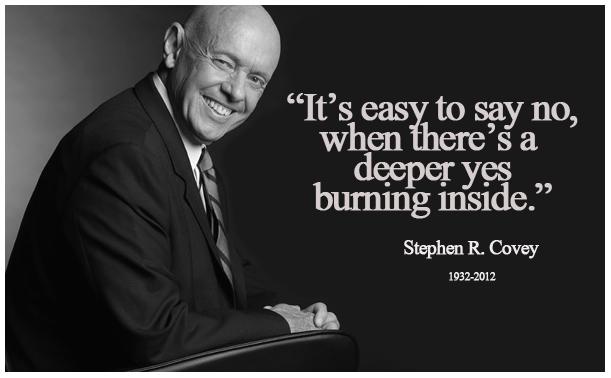
Cynthia once recalled an incident from when she was 12 years old. Her father promised to take her with him on a business trip to San Francisco. For months, they talked about the trip. “After his meetings, we planned to take a taxi to Chinatown, have our favorite food, see a movie, ride the cable car, and have a hot-fudge sundae. I was bursting with anticipation,” she recalled.

When the day finally arrived, Cynthia waited eagerly for her father to finish work. At 6:30pm, he arrived, but with an influential business client who offered to take them out for dinner. She felt her heart sink.

In a never-to-be-forgotten moment, her father simply said to his client: “I’d love to see you. But, my girl and I have planned a special evening to the minute.” So, together, father and daughter did everything according to their plans. “That was just about the happiest time of my life. I don’t think any young girl ever loved her father as much as I loved mine that night,” she says.

Cynthia’s father was none other than Stephen R Covey. Covey did put “first things first.” Here’s to all of us doing so over the holidays…

no, yes, stephen covey, prioritiesSource

Every time we say yes to something that doesn’t matter, we implicitly say no to something else that does. And, conversely, every time we say no to something that is lower priority, we implicitly say yes to something that matters. – Anonymous


Source and thanks to: Essentialism by Greg McKeown

Tension everywhere

For managers – between structure and ambiguity.

For CEO’s – between centralization and decentralization.

For survey creators – between question rich surveys that will yield many an insight and shorter surveys that will actually be completed.

For teachers and coaches – between the stretch zone and panic zone.

For us – between life, work and everything else we want to prioritize.

… and so on.

Tension is a key part of what makes anything great. It is impossible to get something “just right” without the right amount of tension. And, getting it “just right” requires us to accept the fact that it’ll exist, embrace the idea that we won’t always get it right and keep plugging away.
tensionTension accompanies us at every step and in every decision we make. Great strategy is making decisions with a clear understanding of the tension/trade-offs involved. As with most challenging life lessons, awareness is the first step.

Perfection worship

Perfection worship – there’s something about it that just feels right. The issue, as with any choice, is that there is a serious trade-off – the moment you choose to engage in perfection worship, you become an excellent critic, an accomplished talker.

The moment you see a problem or opportunity and roll your sleeves to take action, you learn that the first required step is to shun perfection. That’s because perfection doesn’t really exist. Every initiative that we lead is littered with our biases and reflects our values, character and personality. Perfect work doesn’t move people. Humane work does. Humane work, by definition, is full of heart and imperfection. It won’t work for everyone. But, it’ll move some and that will make it worth it.

Critics are fantastic problem spotters as they can always pick out the pieces that are imperfect. As a doer, you’re going to run into critics every single day of your life. Put yourself out there and there’ll be people who’ll tell you why they hate your work. Pay no attention.

If they care, they will attempt to fix it. And, when they do, they’ll realize your work was perfect all along – in ways they weren’t able to comprehend.

perfection, worship, imperfection, talker, doer

To Think List

First draft of my “to think” list for the next 2 weeks.

  1. A think-week tradition dedicated to my craft. Bill Gates used to take a week off to think about work. I’d love to do some version of the same. I had taken a few days last year to summarize my thinking on tech in 2014 in preparation for internship interviews. Perhaps I do another round of that?
  2. Re-evaluate my social media use and strategy. There’s a lot to think about here. Key questions are – how do I use the various tools?, how should I be using them?
  3. Re-evaluate my phone + laptop use and strategy. As above.
  4. Annual review – focused on getting prepared for re-entry into work. While the preparation for work has been in progress since August, 2015 was my full year as a graduate student. Looking forward to thinking about the next step.

Here’s to making headway down this list.

to think, list,