Climb a cliff to get to school

cliff

cliff

The Atuler village in Sichuan is located in a remote location – so remote that traveling around can be very stressful. To get to school, students with backpacks need to climb an 800 meter rock face on rickety ladders and claw over rocks. The descent takes 90 minutes and doing this right is a matter of life and death – small mistakes can be very costly. It is too dangerous to do this every day – so, students only visit their families twice a month.

Today is my last day at graduate school. I can think of many moments in this life when I have been thankful for a a dollop of extraordinary luck. But, none more so than when I received my offers of acceptance to college and graduate school. I know there are many who say education isn’t as valuable it once was – and that’s true in many ways. However, I am yet to find a good substitute for high quality education and, in my case, both these acceptance letters led to incredibly rich experiences that I am very grateful for.

While there are a few things beyond luck that may have contributed to these opportunities, it is hard to look beyond making it past the lottery of birth and being born in a place that didn’t require me to scale an 800 meter cliff to get to school. In the absence of climbing a cliff to go to school, we could focus on growing up in an environment that focused on learning and play. Context shapes culture and the “this is what people like me do” norms.

This post isn’t one about poverty. There’s a lot that can be written about doing our bit to improve the context and access of a large portion of the world’s population. Instead, it is a reminder for us. If you are reading this, you, like me, likely didn’t have to have narrow brushes with death to go to school. That is such a privilege. Are we making the most of all this privilege and living lives that add value to this world?

Making our time here count here is not a choice. It is a responsibility.

Your human-size life

Seth had a nice post on blogs yesterday where he explained that, as the internet focuses on clicks, Facebook and Google have been doing a lot to make reading blogs harder. He said something that rings very true – reading more blogs is one of the best ways to become smarter, more effective and more engaged in what’s going on. Blogs are so much better than the news in many respects – and I have an example to share that illustrates just that. (Also, thanks, Seth, for sharing this blog..)

Dave Winer is the authors of one of the internet’s first blogs. He had a fantastic post on “Your human-size life” in which he takes a philosophical look at a piece of controversy around Peter Thiel and Gawker media. In short, Gawker published an article in 2007 announcing Peter Thiel’s homosexuality before Thiel had begun talking about it in public. It turns out Thiel has been plotting revenge for many years and, recently, Thiel was found to be funding lawsuits against Gawker that threaten the existence of the company. There are many sub plots here and Gawker is by no means innocent either. But, at the end of the day, this is one of the world’s richest people extracting revenge on a media outlet that pissed him off.

I am going to pick out my favorite pieces from Dave’s post – but I encourage you to go over and read the post in full.


One of the biggest mistakes rich people make is to try to live larger than a single human being can. A mathematical impossibility. You can buy a big house, but you can only sleep in one bedroom at a time. You can own twenty fantastic cars, airplanes and yachts, but you can only be in one at a time.

And it’s even worse than it appears — the struggle to live more than one life will fail, and it will make you feel like a failure, just as you felt before you made the money! So being rich does not mean success if your goal is to achieve immortal super-human-ness.

You can see that horrific struggle in Peter Thiel’s actions and statements. He says he’s going to live forever, and so will today’s college grads. And I assume in the back of his mind he’s also going to solve the problem of just getting one body to use. He will persevere and find a way to sleep in his San Francisco mansion and his New York penthouse at the same time. But here’s the problem — even if he achieves these goals, and of course he won’t — he still won’t be happy.

I can say this with some certainty because I’ve been down the road he’s on, and I got off. And I just watched. Watched as the super-rich of my generation got old and their arteries hardened. They got used to talking to servants, and having their asses kissed at all times, and never having to listen to anyone tell them they’re full of shit. I’m a few years older than Thiel, and if he had seen what I have seen, he wouldn’t be so happy about living forever.

I think we all need a struggle, I think that’s where our creativity comes from. We need something that feels unattainable, but actually is not. But the struggle to rise above our humanity, that’s not going to happen for any of us. And the desire to have it robs your very human life of any value.

Joe had it right. Live a gentle human-size life. Go for a walk in your middle-class neighborhood and run into a friend of a friend and share what you see, and influence their life for the better. That’s the kind of thing a human can do. And it is, imho, where happiness comes from.


Wonderfully deep.

Thank you, Dave, for your generosity.

Image Source

Big Bang vs. The Drip Part II

I wrote about the idea of the big bang vs. the drip the other day.


…we greatly over-estimate the effects of the big bang versus the drip. We love thinking of the big product launch, the epic road trip with friends, the huge award, the incredibly viral post, the prestigious letter of admission and the all-important round of funding. However, as a close friend put it, it isn’t the big decisions that change things. It is the collection of many many small decisions.

Great companies, strong relationships and people of character are built with consistent daily effort.


The timing of that post couldn’t have been better as I had a nice “big bang” event to illustrate the difference. I shared the “Leadership in 1 page” post on LinkedIn Publishing and it went viral. I love LinkedIn publishing for the occasional post as it can reach a lot of people. I thought this post, given it was a synthesis of many years of work, deserved that opportunity. As I write this, the post is closing in on 100,000 views with a proportional number of likes, shares and comments.

While I do love the fact that the learning reached 100,000 people, if one of my objectives was to broaden this blog’s reach (for new readers, it hardly ever is :-)), that post did very little. There are too many big bang events out there. Doing another one just adds to the noise. But, on the other hand, if we take a moment to talk about the drip, that post wouldn’t have existed if it wasn’t for the effort that went into understand these ideas over the years. Nearly every idea on that post has been blogged about here – that was just a synthesis. The daily drip of effort or slow burn is incredibly powerful.

This isn’t just a marketing lesson. I was amidst a long conversation with a friend yesterday about building worthwhile habits in our life. The lesson? Go for the slow burn. Don’t expect a big bang event that will suddenly transform your life into the ideal one. Instead, focus on one habit at a time and aim for gradual, continuous improvement.

I said this last time and will say again – in the final analysis, the big moments may be worthy of a place on the highlight reel. But, it is the constant drip of effort that will determine how long the highlight reel is.. and, perhaps most importantly, how happy we are when we look back and take stock.

The destination matters – but much lesser than we think. The journey, on the other hand, matters a lot more than we think. And, the journey is all about the drip, the slow burn.

Image Source

MVPs and the cringe

There’s a great quote that says something to the tune of – “If you don’t cringe when you see the first version of your product (or your minimum viable product / MVP), you shipped too late.”

While this quote talks about start-up products, I would generalize and expand it to a much larger group. For example, I’d say the same about behavior, habits and philosophy.

Just yesterday, I had an MVP reflection moment that made me cringe. I stay in touch with people I’ve gotten to know and, in some cases, just met via the 200 words project. For a lot of people, the weekly email digest idea works really well. It has worked wonderfully for me as it forces me to synthesize lessons from books/articles I read. Also, there is something wonderful about a serendipitous email exchange with someone I’d lost touch with.

When I just started this process 7 years ago, I used to be generally add most folk I’d met on the list – instead of a goodbye, it’d be in the spirit of staying in touch. While this was occasionally nice when there was a real connection, there were cases when it really was overkill. I cringe every time I think of some of those additions to this least. Gradually, I became much more conservative in adding people to the list. However, for the longest time, I still largely had people opt out. Such a bad idea. Things finally came to a head 2 years back when I signed up a group of folk all together. I just felt horrible doing it and I decided I would shift to 100% opt in.

Every time I think of these decisions/moments, they make me cringe. But, I also realize that I wouldn’t have given these things any thought if I hadn’t gotten started in the first place. We owe it to ourselves to give ourselves the permission to learn and get better.

And, that can only happen if we’re willing to ship a product that is consistently work-in-progress. As novel as that might sound, it really isn’t. After all, we “ship” the current version of ourselves every day… and, if that isn’t an example of the quintessential work-in-progress product, I don’t know what is.

Cringe, MVPs, products(Talking about cringe worthy MVPs, I the first version of Amazon’s website. So glad Jeff and team just shipped and got better, relentlessly.)

Interviewing Dan Ariely

I had the privilege of interviewing the wonderful Dan Ariely in person last Wednesday. I had interviewed Dan three years ago over Skype and shared it here and the erstwhile “Real Leaders Project.” On an inspired day in January, I’d reached out to Dan if he’d be up for another Skype interview. It turned out he had planned a trip to Chicago in May and was planning to visit Kellogg. Voilà! We locked 2pm-3pm on Wednesday, May 25th.

Dan shared a few very personal anecdotes in the interview and requested us to not share the video in public. So, while I don’t have the video, I have my notes from the talk –

On the reproducibility crisis which is threatening to question the validity of many social science findings. As consumers of research, keep healthy skepticism. However, also dig deeper to understand what principles underlie the results being presented and whether they can be replicated in different environments.

For example, he conducted a study in a slum in Kenya testing various techniques to help people save. This included a variety of reminders, incentives and the like. The winner was a large fake gold coin which the participants placed in their hut and added a scratch mark every week they met their savings target. This large coin was a daily reminder to save and the principle here was to have frequent reminders around them to save. It worked great. But, how much of this would be replicable in a city? And, how many items in our home remind us to save?

Life is complex. So, when we go into a new environment, we need to understand the context and figure out which principles would work in that environment.

On how to think about the vast amount of social science research. One of the mistakes we make is hyperbolic discounting – over weighting the present. As we create more technology, we seem to find more ways to kill ourselves. Smoking, texting and driving, etc. The big question is how can we help people eat better, exercise more, sleep right, etc. We haven’t made progress on these. Instead, we’ve made better donuts and made Facebook more addictive.

When we seek to understand human behavior, a process that helps is to analyze people’s micro decisions in a day to look for patterns instead of trying to understand overall goals. Everyone wants to be healthier. But, what are the tiny decisions they make in a day that goes against that goal?

On applications of his work.  Particularly exciting when government does things like – making people sign at the start of the tax form versus the end (done in South America).

There are four factors that waste human capacity – health, time, money and hate. If we can do things to improve these four, it’ll be huge progress.

On political climate in the world. I love the definition of a just society by John Rawls – “If you knew everything about it, you’d be willing to join in a random place.” It is a beautiful definition.

In an experiment on ideal distribution of wealth, we found that people all around the world want a reasonably even health distribution. They just don’t know that the bottom 40% of people in the United States only have 0.3% of the wealth.

Much of the objective in politics is to get people to not think. So, we have slogans and ideology instead of thinking about where we are and what we want to be. What could we do to make sure people think once every 4 years? It is one area where we haven’t improved decision making at all.

On biases that get in the way of us being good leaders. A behavior that is hard to get over is to develop the courage to express your true opinion in a world that values political correctness. How can we as leaders encourage people who will disagree with us?
The academic process is pretty solid here – to get tenure, you need people from other universities to write letters. So, you can have very open discussions. While it is not possible to replicate this in corporates, this is something we need to be very mindful of.

Embracing failure. Experiments teach us humility. Understanding how often you are wrong is incredibly helpful. Doubting our intuition, keeping an open mind and experimenting is critical. It is shocking how many companies make decisions based on intuition. Intuit encourages “magnificent failure” with a prize of $1M every year and provides the creator 6 months off to test the ideas. Failing in a magnificent way means you tried, failed and learnt.

On ethics. I had an offer to speak to the management of a tobacco company for a large fee. So, I called the American Heart Association and asked – should I not go or should I donate the fees to you? They asked me to go. But, I decided not to because I don’t think the person I spoke to grasped the externalities of that decisions. Ethics are expensive. I think a lot about my own conflicts of interest. There is no easy answer.

On decisions. I think of 3 categories of decisions. Little decisions (e.g. buying a coffee or donut) – these I don’t pay attention to. Big decisions are those which we can do better at with a bit of effort. Then, there are habits – this, I do think about. If I set up a few good habits, then there can be huge impact in my life.

On heroes. Joep Lange, who was killed in the Malaysian Airlines flight that was shot down, single handedly worked to reduce AIDS in Africa. This required a rebellious nature, true dedication and single mindedness.

On how research has affected him as a parent. The environment is changing – not necessarily with your long term benefit in mind. Acting well is going to get harder with more interruptions from smartphones and other devices. So, we need to be aware of this.

As far as money goes, we give kids allowances and have them split into 3 buckets – for them, for people they know and for people they don’t know. Researcher Mike Norton has shown that people who aren’t happy with money are those who haven’t figured out how to give. In an experiment, people were given Starbucks cards and asked to use it on themselves or for other people. The people who bought coffee for others were much happier.

On one piece of advice. Take more chances. We are privileged to live long. Think of life as an opportunity for continuous learning. Education is never over. Keep on thinking of life as what we are going to learn and get better.

On an idea that inspires you that you’d like to share with us. A problem I am thinking about – how can we make side effects in medicine feel pleasurable? Cyclists enjoy the pain from cycling. If they don’t feel the pain, they don’t feel like they have done their job. We call this benign masochism. :-) Can we frame side effects as less negative? Could we make patients feel good about them? Could we increase adherence?
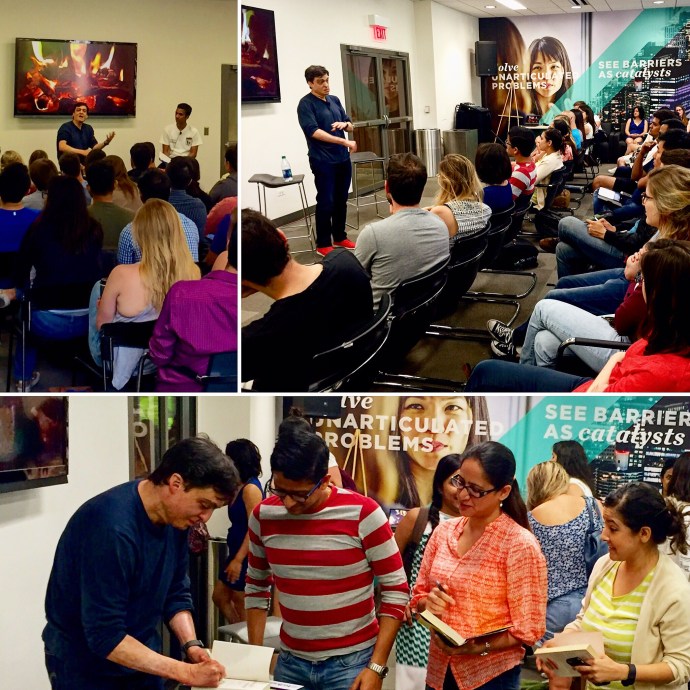
Dan Ariely, Kellogg

Failure and the social sciences – The 200 words project

(concluding the “why science is hard” series – Parts I, II)

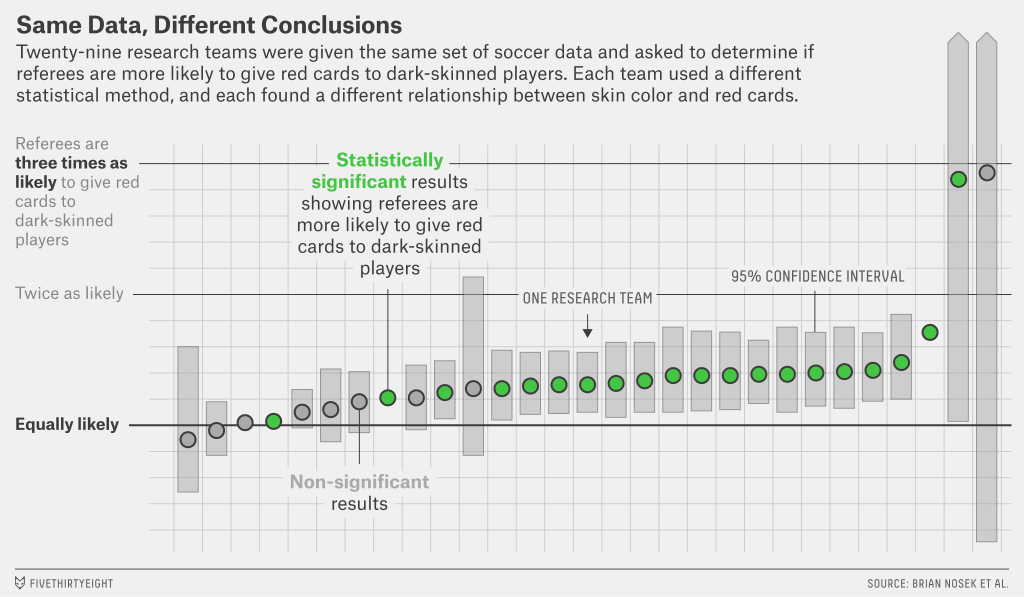
Recently, a few famous psychology findings were called into question by what some have called the reproducibility crisis. The reproducibility idea seems like common sense – take a study and do it again. If you get the same result, that’s evidence that the findings are true, and if the result doesn’t turn up again, they’re false.

Yet in practice, it’s nowhere near this simple. 3 reasons for this are –
1. Regression to the mean. Initial studies likely had a known bias toward overestimating the magnitude of an effect. So, it is natural that future studies will show a much lower effect.
2. Different design and analysis approaches. While researcher incentives can lead to certain questionable research practices, there is wide variance on design and analysis approaches even among the best researchers.
3. Hard to recreate the exact conditions. Finally, and this is especially true for “social sciences,” the human behavior and motives of the lab subjects is nearly impossible to replicate

So, how should we think of reproducibility? As with the soccer card study in part I, treat an individual study as a data point, encourage more studies and, taken together, we’re likely to get closer to the truth.

social sciences

Science isn’t broken. It’s just a hell of a lot harder than we give it credit for. – Christie Aschwanden, Lead Sciene Writer @ the excellent FiveThirtyEight


Source and thanks to: The FiveThirtyEight Blog – Failure is Moving Science Forward

Bittersweet

It is Game of Thrones season right now and is the time when I reflect on what it is that makes George R R Martin’s work so fascinating.

The lazy answer would be the sex and violence on display. Sure, HBO has done a good job using all that to good effect. But, while HBO’s show producers have done a fantastic job with the casting and cinematography, GRRM’s work is a great work of fiction for 3 reasons – morally grey characters instead of a traditional bad vs. good story, point-of-view storytelling and, thus, the lack of an omniscient narrator, and the complete lack of adherence to the normal hero’s journey.

To expand on that last idea, GRRM seems to be a big fan of a bittersweet story arc. He’s repeatedly stuck to that idea when talking about the end of the books.

People ask me how Game of Thrones is gonna end, and I’m not gonna tell them … but I always say to expect something bittersweet in the end,” he said. “You can’t just fulfill a quest and then pretend life is perfect.”

I think this choice points to something very powerful about what draws many of us to the story. We know how most normal movies end – the bad guy loses and the good guy wins. But, how often are the narratives that unfold in our real lives similar to that?

There is a case to be made that most real world story arcs are bittersweet and that the reason there is a lot of unhappiness in the world is because we expect the “end” to be perfect. But, of course, there is no perfect.

Maybe we’d all be a bit happier if we embraced bittersweet just a little bit more…

Obsessive people doing their thing

A good friend once said that his passion was working with obsessive people.

It is a line that has stuck with me. I absolutely love watching obsessive people doing their thing. Here’s why – the easy problems can be solved with a little bit of effort. But, the gnarly, hard problems require you to be consumed by them. This is along the lines of Albert Einstein saying that he wasn’t the smartest person alive, but that he just stayed with problems longer.

Here are a couple of examples of obsessiveness that I observed last month –

A teammate created a transition folder for an initiative we’d completed with every marketing email numbered chronologically. This folder, then, had one accompanying slide which explained the overall thought process and strategy. One look at both and you have everything you need to do it again, better.

For a workshop we led, we made sure we had asked the attendees for their favorite sweet and salty snacks. Then, a group within the team made sure we had 50 welcome packages with a sweet or salty snack matched to each attendee.
Another created a workbook on leadership where none existed and thoughtfully pieced together some of the best resources available to do so. She then personalized these workbooks with each attendees name to go with the welcome package and had every member of the team sign it.

Work examples aside, we had a friend decide to organize a night out at a a cabin after a hike. Every detail was worked out for us. And, I really mean every detail. All we did was show up and feel incredibly cared for.

These are just a selection of examples from the last 4-5 weeks. I have so many more.

The one true sign of leadership is deep care. And, I think deep care is best demonstrated by small things done with extraordinary love. And, I’ve found it hard to pour extraordinary love to those small things without having a certain amount of obsessiveness.

I don’t think I can ever say this enough – I am really grateful for the obsessive people in my life. I just love hanging out with them, learning from them and watching them do their thing.

The annoying commentator

There’s something very nice about listening to live sports with commentary. Despite the fact that all commentary isn’t good commentary, very few of us listen to live sports without the sound. Maybe the chatter adds a social event to watching sports? Or, maybe we just want to learn more about what’s happening.

While it is fantastic to listen to a commentator who knows what he/she’s doing, there is one kind of commentator that tends to exasperate me – the person who takes it upon himself to pick on the best teams/players. I am sure there is a market for contrarian advice. And, yes, these teams/players make mistakes. But, the annoying commentator takes it upon himself to question their thought process and judgment, repeatedly.

This is when I wonder – “If you’ve got this figured out, why weren’t you one of the world’s best players yourself?” (They generally weren’t)

Sports aside, we’ve got more commentary in our lives today than ever before. Do something and it is likely you have many willing to give you their opinion via news articles, blog posts, social media and the like. Sure, there’s a piece of all of this that is good feedback. But, it is worth remembering that it is very easy to sit by the sideline and give your opinion. I can’t tell you the number of time I’ve watched soccer and thought to myself – “Jeez, why didn’t he make that easy pass?” But, from my own experience playing, I realize that the simple stuff is so hard to do in a regular game.

That’s the beauty of actually putting yourself out there and shipping stuff. You become more tolerant of things done wrong as you’ve probably made those mistakes yourself. You begin to appreciate simple things done well. And, most importantly, you learn to respect folk who bring their A-game consistently.

So, don’t sit on the side and be the annoying commentator. Either go in and fix it or learn to shut up and let them do their thing.

And, if you are a commentator by profession, consider developing a deep understanding of what it takes to excel in the field you are covering. Probably most importantly, keep it as objective and possible.. and classy. We don’t need more commentary. We need better.

(A salute to Martin Tyler – who does a fantastic job as a commentator for the English Premier League and European Champion’s League)
Tweaking the environment

One of the more powerful things you can do as a leader is to pick an environment that encourages people to behave in a certain way. This is part of the sort of intention that is required to shape culture. For example, a meeting room with lots of opportunity to write will likely have more brainstorming. A meeting room with a lot of light will likely encourage more divergent thought. Ideally, you’d pick meeting places that are consistent with the culture you want to build.

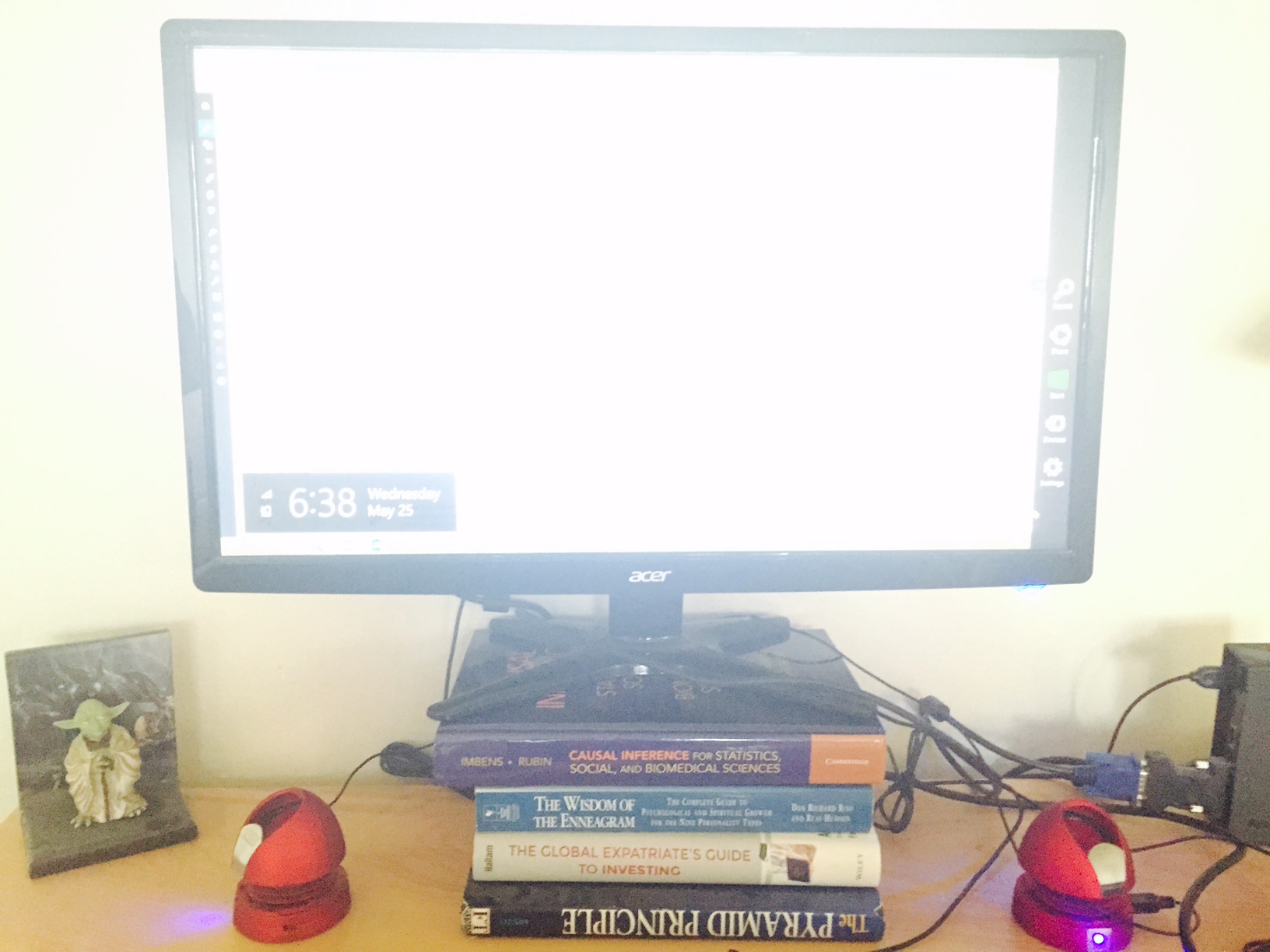
I was reminded of how powerful tweaks to your environment can be just a few days ago. The monitor I use to type these posts, for example, was supported by 3 books as its height isn’t adjustable. Even so, it was slightly shorter than the right ergonomic height.

So, every once in a while, I would slouch as I was working away on the laptop. A few days back, my wife took a photo of me eating breakfast while slouching and I found myself immediately attempting to correct my posture. But, as the immediate reaction is just one of instinct, I thought about the problem for a bit.

It was soon apparent that the fix was a simple – just add a fourth book.

environment

And, voilà, I slouch so much lesser now. The height of the screen makes me sit up straight – the environment shapes my behavior.

It is always interesting to look at our behavior (and, in some cases, those of others) and ask ourselves – what could we change about the environment to encourage different/better behavior?