70 year old selves – The 200 words project

Here’s this weeks 200 word idea thanks to To Sell is Human by Dan Pink.

How do you get people to save for retirement? Hal Hershfield from NYU conducted a series of studies which had two groups of participants allocate money between various buckets – a big expense now, other household expenses, and their retirement fund. Before doing so, group 1 was shown a picture of themselves now while group 2 was shown aged picture of their 70 year old self.

The 70 year old selves group allocated more than twice the amount for their retirement than the others ($170 vs $80). To test if this was a reaction to seeing older people, the researchers tried replacing photos of their aged selves with that of other older folk. This had no effect.

It turns out that our biggest barrier to saving for the future is forgetting that we will grow old someday. If we’re having difficulty making long term decisions like saving for retirement, perhaps we should experiment consider sticking a “photoshopped” picture of our older self on our wallets and internet banking dongles?

70 year old selvesSource and thanks to: www.EBSketchin.com

‘Do something today that your future self will thank you for.’ | Jeanine Jacob

Think-week – The 200 words project

I hope you’re having a nice weekend. Here’s this week’s 200 word idea thanks to Essentialism by Greg McKeown on Linkedin, Susan Heathfield on Humanresources.about.com (as a part of what seems to be Bill Gates weekend at ALearningaDay)..

Bill Gates has a bi-annual ritual called “think-week.” As Microsoft CEO, prior to each think week, Gates has his assistants collected papers “from every corner of Microsoft,” according to what they thought his priorities should be.

He would then spend a week in a cottage in the woods where friends and family were banned. And, he’d spend his days reading papers on proposals from Microsoft’s employees, studying technology and thinking about the bigger picture. The week was then followed by a flood of e-mail messages to his colleagues and employees about new ideas, old ideas, existing projects, and proposed ones.

He started this in the 1980s and stuck to it through the height of Microsoft’s expansion. No matter how busy or frenetic, he created time and space to seclude himself for a week to do nothing but read and think about the bigger picture. Today, he still takes the time away from the daily distractions of running his foundation to simply think.

As author Greg McKeown points out, “whether you can invest two hours a day, two weeks a year, or even just five minutes every morning, it is important to make space to escape in your busy life.”

Think-weekSource and thanks to: www.EBSketchin.com

‘I think that if we spend a little bit of time every day cut off from the noise – it could be walking, sitting in meditation, journaling, exercise, or just staring at the sky – just a little bit of time reconnecting with you without your title, your obligations, your responsibilities, the things that plague you all day long, that would enable you to build a foundation and then work your tail off.’ – Jerry Colonna on RealLeaders.tv

Viktor Frankl and Crabbing – The 200 words project

Here’s this week’s 200 word idea thanks to Viktor Frankl’s video on man’s search for meaning (HT to Vikram’s Learning Antenna).

The great holocaust survivor and logotherapist Viktor Frankl spoke of a flying lesson where his instructor taught him a concept pilots called “Crabbing.”

His flying instructor had said – “If you are starting east wishing to land at a point somewhere west and you have a cross-wind, you will drift and land in a different spot. So, you need to “crab” or head in the direction opposite to that of the wind so you land in the spot that you actually want to land at.” (illustration below)

Frankl explained that he felt this held for people, too. If you take a person as he/she really is, the default negative “crosswinds” in our mind make him/her worse. If we overestimate people, however, we promote them to what they really can be.

So, his advice for us? “Be an idealist, because, then you will wind up as a realist. As Goethe said, if we take a man as he is, we make him worse. But, if we take man as he should be, we make him capable of becoming what he can be.”

PS: Man’s search for meaning by Viktor Frankl is a wonderful wonderful book.

Viktor FranklSource and thanks to: Wikipedia

‘If you presuppose in a man – whoever it may be – that there must be a spark of a search for meaning, you will elicit it from him and let him become what he is capable of becoming.’ | Viktor E Frankl

Find your Herbie – The 200 words project

Here’s this week’s 200 word idea thanks to The Goal by Eliyahu M Goldratt

Alex Rogo was taking a long hike with his son’s boy scout group. He noticed that, while everyone seemed to be moving as fast as they could, they weren’t really making progress as a group. He was reminded of his Operations mentor’s advice – “find the constraint.” Constraints are obstacles that hold the whole system back – e.g, in a manufacturing plant, it is the machine with the biggest queue of materials behind it.

Alex soon realized that one boy, Herbie, was the slowest of them all. So, he moved Herbie in front of the group and forbid the others to pass him. This completely changed the dynamic – the group soon realized that any improvement with Herbie, however small, would improve the group’s pace. So, they divided everything in Herbie’s backpack between the boys and Herbie moved faster. The group made it to the camp in good time and Alex learnt a key lesson in improving productivity – take the time to identify and remove constraints. Every other improvement we make is non-essential.

HerbieSource and thanks to: www.EBSketchin.com

‘There is no one Herbie and finding one will create others.  The point is not to find him, but always look for him. So, clear your mind, find your Herbies and make them faster.’ | Sean Low on his blog

Ask others – The 200 words project

I hope you’re having a nice weekend. Here’s this week’s 200 word idea thanks to Stumbling on Happiness by Dan Gilbert.

Researchers conducted a study where the first group of volunteers would flip a coin. Heads meant a gift certificate to a local pizza parlor while tails meant nothing. The volunteers then recorded how they felt.

Group 2 were asked to predict how they’d feel if they didn’t get the gift certificate. Some of the group 2 were shown results from group 1 (“surrogators”) while others did so independently (“simulators”). They then performed the experiment.

The results showed that simulators felt much better than they predicted they would feel. They didn’t realize how quickly they’d rationalize it (“pizza is too fattening”, “I didn’t like that restaurant anyway”). But, those who followed the surrogators guessed this accurately.

The learning? We are terrible at predicting how we’ll feel about an experience. So, researcher Dan Gilbert suggests – “the best way to predict your feeling about an experience tomorrow is to figure out how others who are going through the experience are feeling today. However, you are probably very resistant to this because if you are like most people, then, like most people, you don’t like to admit you are like most people!’

Ask othersSource and thanks to: www.EBSketchin.com

‘Despite the third word of the title (Stumbling on Happiness), this is not an instruction manual that will tell you anything useful about how to be happy. Those books are located in the self-help section two aisles over, and once you’ve bought one, done everything it says to do, and found yourself miserable anyway, you can always come back here to understand why.’ | Dan Gilbert :-)

The $4000 false decision – The 200 words project

I hope you’re having a nice weekend. Here’s this week’s 200 word idea thanks to Decisive by Chip Heath and Dan Heath..

Zappos.com prides itself on world class customer service. So, every hire into Zappos (including a Chief Financial Officer or Head of IT) goes through Customer Service training in their first week. In their second week, they have a person walk in and give them a unique offer. “If you don’t feel Zappos is the right place for you, let us know and we’ll pay you $4000 to quit.”

Why does Zappos do this? Because the offer prods employees to carefully consider the commitment they are making. The misfits (2% of all who get hired) take the $4000 and walk away. Zappos is relieved about this as the cost of a bad hire is much higher than $4000. And, the fits fully commit to succeeding at Zappos. It is a false decision that makes all concerned happy.

Inserting false decisions/check points ensures we check our commitment from time to time and avoid going into “auto pilot” mode. Amazon has started doing the same in fulfilment centers via a Pay-to-Quit program where employees receive a note every year with an offer that starts at $1000 dollars. The headline – “Please don’t take this offer.”

4000 dollar false decisionSource and thanks to: www.EBSketchin.com

‘The $4000 really makes people think, is this the right role for me? Is this the right culture for me? Are these the core values I’m actually going to live by?’ | Jenn Lim, Zappos.com

Hygiene and Motivation factors – The 200 words project

I hope you’re having a nice weekend. Here’s this week’s 200 word idea from How will you measure your life? by Clayton Christensen, James Allworth, Karen Dillon..

Psychologist Frederick Herzberg noted the common assumption that job satisfaction is one big continuous spectrum – starting with very happy on one end and reaching all the way down to absolutely miserable. Instead, satisfaction and dissatisfaction are two separate, independent measures and are functions of hygiene factors and motivation factors.

Hygiene factors are factors like compensation, status, and work conditions. Bad hygiene factors cause dissatisfaction but having good hygiene factors alone do not make you love your job. They just stop you from hating it.
Motivation factors are factors like challenging work, recognition, responsibility, and personal growth. These factors are those that make you love your job.

The challenge is that motivation factors are hard to measure while hygiene factors (especially money) are relatively easy to measure. A lesson both for job seekers and job creators – create an environment high on motivation factors while ensuring hygiene factors don’t get in the way. Let it not be the other way around..

Hygeine motivation factorsSource and thanks to: www.EBSketchin.com

‘The point isn’t that money is the root cause of professional unhappiness. It’s not. The problems start occurring when it becomes the priority over all else, when you’ve satisfied the hygiene factors but the quest remains only to make more money. Herzberg’s theory of motivation suggests you need to ask yourself a different set of questions: Is this work meaningful to me? Will I have an opportunity for recognition and achievement? Am I going to learn new things?’ | Clayton Christensen

Someone’s dad or mom – The 200 words project

I hope you’re having a nice weekend. Here’s this week’s 200 word idea thanks to ‘From Values to Action’ by Harry Kraemer..

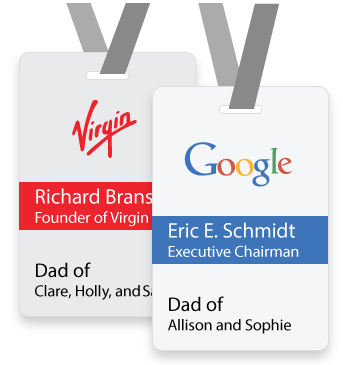
Early on in his career as an analyst, Harry Kraemer noticed a colleague who made an excellent presentation to senior management. He commented on what an excellent presentation it was. She then shared her secret – her father had been the Chairman of a very large company and regularly held meetings at their home. So, from a very young age, she thought of directors as “somebody else’s dad or mom.”

She never Iost that perspective as an adult and that meant she gave presentations to senior management just as she would give presentations to her fellow analysts or, in her case, her parents.

Harry Kraemer found it incredibly useful in a career that saw him make many presentations to the Board of Directors as CFO and then CEO of Baxter, Inc.

And, it makes for great perspective as we head into our next “big” presentation.

Someone else's dad or momSource and thanks to: www.EBSketchin.com

‘Often we allow ourselves to be intimidated by someone at a higher level in the organization, but with true self-confidence, we understand that we’re all just human beings.’ | Harry Kraemer

Do goals prevent success? – The 200 words project

I hope you’re having a nice weekend. Here’s this week’s 200 word idea thanks to Cal Newport’s Blog and Dr Saras Sarasvathy on Effectuation..

Dr. Saras Sarasvathy, of the Darden school of Business, conducted a study in 1997 with 27 expert multi-millionaire entrepreneurs from around the world. Instead of simply asking them their approach to business, she had each talk out solutions to a 17-page problem set containing 10 decision problems relevant to introducing a new product. The patterns she identified became “effectuation theory.”

In a nutshell, this theory notes that we’re used to thinking about problems by identifying a goal (e.g. sell 10 shoes) and then attempt to identify the optimal path to accomplishing this goal given our current resources. However, these entrepreneurs didn’t start with a final goal in mind. Instead, they began with what they had in mind (e.g. I have leather and a manufacturing plant) and allowed goals to emerge contingently over time (e.g. I could sell shoes or handbags or belts. I choose..).

This focus on the approach and process ensures that the entrepreneurs are open to changes in the environment around them and are optimizing for success given what they have rather than being stuck to a goal.

Do goals prevent successSource and thanks to: www.EBSketchin.com

‘Through their actions, the effectual entrepreneurs’ set of means and consequently the set of possible effects change and get reconfigured. Eventually, certain of the emerging effects coalesce into clearly achievable and desirable goals — landmarks that point to a discernible path beginning to emerge in the wilderness.’ | Dr Sarasvathy

Technical debt and management debt – The 200 words project

Here’s this week’s 200 word idea from The Hard Thing about Hard Things by Ben Horowitz.

Programmers refer to taking coding shortcuts or “quick fixes” that prove to be very expensive in the long run as “technical debt.” As CEO of Opsware, Ben Horowitz referred to shortcut decisions companies and managers make as “management debt.”

He gave a few examples of management debt –
– Offering an employee a very good raise because he/ she receives a better offer from a competitor. Very soon, everyone threatens to quit to get a raise
– Rewarding low performers because it ruffles fewer feathers
– Avoiding an important difficult conversation with the team because it is, well, difficult

Ben’s experience taught him that these “quick fix” decisions always needed to be repaid with very high rates of interest.

We face so many such choices in our daily lives too – spending on a luxury vs. saving, watching TV vs. exercising – I guess that’s why day-to-day living is probably the biggest challenge of them all. So, here’s to remembering Ben’s idea of management debt / “life” debt and getting past our next shortcut decision.

Tech debt and management debtSource and thanks to: www.EBSketchin.com

‘The chief cause of failure and unhappiness is trading what you want most for what you want right now’ | Zig Ziglar