
Good morning! A bit of wisdom to kickstart the day..! :)
Category: Everything else
On the day everyone is pleased… – Seth Godin
On that day, the day that everyone notices your work, approves and lets you know, then what will happen?
We spend an incredible amount of time and psychic energy planning and working for that day, but why? It will never arrive, and even if it does, it’s not clear that anything special happens.
Perhaps the approval of every person in the entire world doesn’t need to be the goal of your work.
—
Thank you, Seth Godin – for making blogging an art form.
‘Life is a grindstone. Whether it grinds us down or polishes us up depends on us.’
Unsurprisingly, I like this one. :)
Have a nice day!
Transition
New location.
Re-installed OS. (tons of issues accompanying it thanks to Google Desktop annoyances)
Tons of things to do.
Heavy work week ahead.
Trying to find some order amidst chaos.
Stopping and taking a break doesn’t seem to be an option.
Trying to remind myself that order and predictability is ahead.
I am probably kidding myself.
Reminded of Transitions..
‘At one point in your life you either have the thing you want or the reasons why you don’t.’
Happy Monday all!
On Simple Checklists
This week’s learning draws inspiration from ‘The Checklist Manifesto’ by Atul Gawande-
—
I had promised more Checklist learnings from the fascinating piece of work by Atul Gawande. So, here is another..
In 2001, Peter Pronovost, a critical care specialist at John Hopkins Hospital, became frustrated about the incidence of infections that arose after injections in intensive care. He came up with this simple checklist of the steps which had to be taken to avoid infections:
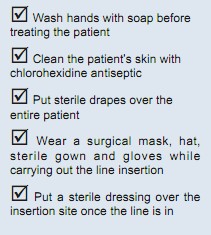
Many of our first reactions to this would probably be smiling at how basic this list is. Pronovost followed it up by authorizing nurses to stop doctors from injecting the patient if they skipped a point on the checklist.
The impact over 15 months?
8 Deaths prevented.
43 infections avoided.
$2 million saved.
“We don’t like checklists. They can be painstaking. They’re not much fun. But I don’t think the issue here is mere laziness. There’s something deeper, more visceral going on when people walk away not only from saving lives but from making money. It somehow feels beneath us to use a checklist, an embarrassment, It runs counter to deeply held beliefs about how the truly great among us — those we aspire to be — handle situations of high stakes and complexity. The truly great are daring. They improvise. They do not have protocols and checklists. Maybe our idea of heroism needs updating.” — Atul Gawande
A close friend and I are working on an app on iPhone/Android platforms for easy checklist creation. Will keep you updated!
Until then, hope you have fun making simple checklists at work this week!
‘Why does a slight tax increase cost us $200 and a substantial tax cut save us 30 cents?’ :)
Happy Friday! It’s hello Singapore!
‘The only difference between an extraordinary life and an ordinary one is the extraordinary pleasures one finds in ordinary things.’
So true!
1 day before the Royal Wedding and my last day for a while in London.
The Rice Cooker
Have you observed how a rice cooker works?
You put in grains of rice and lots of water. Then you heat it and the cooker gradually uses the heated water to cook the rice. Required amounts are taken in, the rest is thrown out.
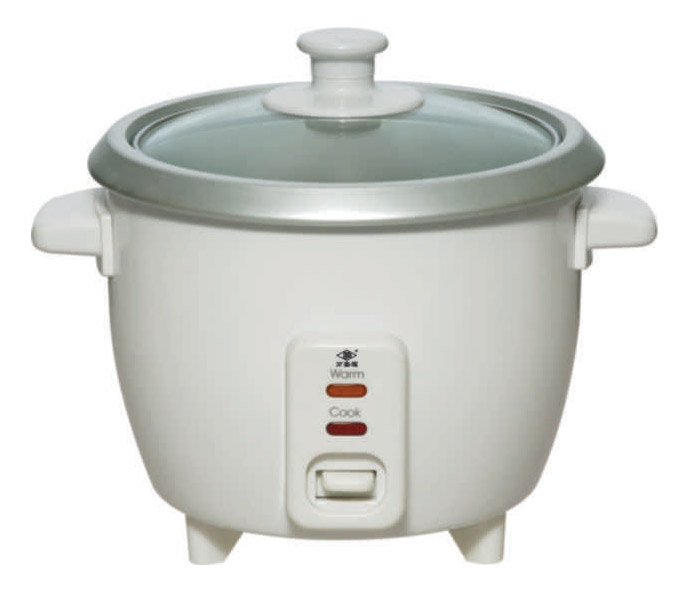
Isn’t it much the same with our days? All the stimulus that comes at us is the water i.e. colleagues complimenting us, colleagues dissing us, other good news, bad news and the like. The heat is similar to the pressure we have everyday to earn, to deliver etc. The rice is what we are building, working on..
We just need to be good rice cookers – take the useful water, throw out the excess/unwanted and become useful in the process.
‘There is a great difference between worry and concern. A worried person sees a problem, and a concerned person solves a problem.’
Happy mid-week!
 A Learning a Day