
Gunpei Yokoi and the Lefty Rx

Gunpei Yokoi, then a creative game designer working at Nintendo in the 70s (before he became a legend), wasn’t the sort of person who was at the forefront of technology. So, he focused on creating games with an approach he termed – “lateral thinking with withered technology.”

Since he couldn’t count on himself being cutting edge, he’d simply look to put commonplace technology in ways that made games more affordable for Nintendo customers. One such technology he was interested in was remote controlled cars – then an expensive luxury in Japan.

Since these cars were expensive due to all the functionality required to control the car, he decided to simplify things by launching a car with just one button that could only turn left – the aptly named Nintendo Lefty Rx.

Its price made it easily available to a massive customer base who enjoyed racing these cars across circular tracks. Even when there were obstacles, you could left turn your way out of it – only adding to the excitement.
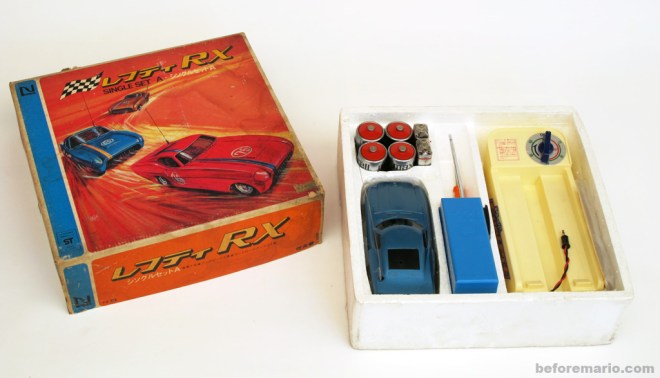
I love stories that demonstrate the power of simple, functional products that get the job done. The Lefty Rx is a great example of how simple can be very powerful.

Kobe and nuance

After a post about how the internet exploded into tributes for Kobe Bryant and Clay Christensen, Roy wrote in with a thoughtful note about his unwillingness to whitewash Kobe’s past – specifically about a time when he admitted to rape.

We exchanged notes on this as I explained it was the reason I wasn’t jumping in on all the adulation – at least not just yet. I shared that I’ve come to accept the fact that most reality is nuanced.

Thanks to his incredible work ethic, innate abilities, and a desire to make things, right, it is clear that his balance sheet is, for the most part, in the black.

He was an amazing athlete – but, he also made a bad mistake that caused a lot of harm when he was young. And, Roy shared a thoughtful post on the importance of acknowledging this nuance and contradiction.

When the media rewrites Kobe’s story to make him innocent, the media rewrites women out of the story. Kobe doesn’t need to be innocent to be loved. And his victim doesn’t need to be perfect to be believed. Kobe’s death is an opportunity for journalists to report difficult truths to readers and for moms to have tough conversations with kids.

Or, as another note nicely put it – “He deserves to be immortalized,” Dionne said, “but it’s also OK to say he did something that harmed someone else.”


Note to folks receiving this via email: I am aware that these emails are being sent twice over the past two days. I’m checking with Feedblitz and am hopeful the problem will get fixed shortly. Apologies for the trouble..

The windshield, mirrors, and the journey

There’s a reason the space occupied by the windshield in a car is significantly larger than the rear view mirrors – it is far more important to keep our eyes on what lies ahead than it is to constantly look behind.

There is an important life lesson in there.

It also turns out that there’s another powerful lesson to be learnt on this drive.

Even as we spend time looking at the windshield and rear view mirror, much of the joy from the drive often comes from acknowledging a few blessings present in the current moment – good health, peace of mind, and those who are on the journey with us.

It is natural to spend a lot of our time dreaming about what lies ahead and analyzing what happened. But, our happiness is proportional to our ability to take stock of the moment and remember to appreciate the many blessings we do have.

Here’s to doing plenty of that this weekend.

Work-life balance – 2 anecdotal observations

2 anecdotal observations about work-life balance post kids –

1. There isn’t work-life “balance” or “harmony” or whatever other nice-sounding word we choose as a substitute for balance. There are only work-life trade-offs… and those trade-offs are real and best made consciously.

2. When we find folks with young kids who seem to have their stuff together, we can deduce with 30%-40% certainty that they have a thing or two they can teach us about personal productivity. However, we can deduce with 80%-90% certainty that they have either a) an amazing childcare support system, b) an incredibly supportive partner, c) both or d) a great ability to appear as if they have their stuff together. :-)

Kobe, Clay, and kindness

Over the past days, it’s been fascinating to see the internet explode with tributes about Kobe Bryant and, among the more geeky crowd, Clay Christensen.

Folks from all walks of life came together to celebrate two human beings who made a lot of difference in many lives. It was wonderful to see these tributes transcend differences in race, political leaning, and even nationality.

Death is often considered a morbid topic. But, it is in times like this we realize that death is the ultimate leveler and giver of perspective.

More than anything, such experiences remind us that we’re not here for long… so, we might as well be kind along the way.

After all, at the end of the day, all we have is each other.

The 80% experience

A question that has helped point to better product design every time I remember to ask it – what is the experience 80% of the users would want to go through? 

When asked, that question first reminds us that we must let go of all the complexity we are likely to introduce as super-users of our own products.

It then pushes us to simplify our flows to the few things most users care by removing any detailed how-to notes, unnecessary choices/steps, and excessive copy.

And, out of this exercise emerges a principle that applies just as well to product or process design as it does to effective communication – focus on clarity over completeness.

Great customer service and lifetime value

The biggest benefit of investing in great customer service isn’t in its ability to reduce the number of upset customers or prevent bad reviews.

It does that.

But, by transforming bad situations into memorable ones, great customer service inevitably increases the lifetime value of a customer every time they experience it.

(Inspired by a recent experience with Anson Belts)

The Joneses

We were in conversation recently about a situation that involved folks making life decisions in an attempt to keep up with the proverbial Joneses. Around the same time, I was reminded of this note from a Dale Carnegie classic.

“People are not thinking about you and me or caring what is said about us. They are thinking about themselves—before breakfast, after breakfast, and right on until ten minutes past midnight. They would be a thousand times more concerned about a slight headache of their own than they would about the news of your death or mine.”

He exaggerates a bit to make his point. But, it is regardless a powerful point.

Eliminating the “but, what would people think?” question makes most decision making processes better.

Trial and error

Trial and error is a powerful way to learn. The quicker and cheaper our tests and iterations, the steeper our learning curve.

It is all well to desire a culture of experimentation. But, such efforts go sour if we say we encourage experimentation but make a big deal of every (inevitable) misstep.

Therein lies the catch – trial and error come as a package deal.

PS: It is also just as important to make a big deal out of every win. The best way to encourage a culture of continuous learning is to take both in our stride and keep plugging way.