Writing vs Speaking

Technologist and Essayist Paul Graham had an excellent essay on ‘Writing vs Speaking’ up on his blog. His thesis is a very good one – to be a great speaker, you need to have mastered the art of making the audience laugh/flattered.

Great content matters less when you’re a great speaker. And perhaps that’s why great speakers are called ‘motivational’ speakers. His first paragraph sums up his emotion.

‘I’m not a very good speaker. I say “um” a lot. Sometimes I have to pause when I lose my train of thought. I wish I were a better speaker. But I don’t wish I were a better speaker like I wish I were a better writer. What I really want is to have good ideas, and that’s a much bigger part of being a good writer than being a good speaker.’

I paused for a few moments when I read this. I am easily a better speaker than writer. The biggest reason for this is ‘deliberate practice’. I present a lot more than I write and I have spoken a lot more in public than I have written. And I tend to agree with him on all counts – it’s much easier to give a rousing speech than it is to write. It also reminded me of one of my favourite ever Seth Godin posts where he encourage us to ‘Write like you talk, often’.

When I say this, I am well aware of the fact that more people fear public speaking than death. That said, in my experiences, it takes lesser practice to master the art of presenting and speaking than it does writing.

Writing is a puzzle. It’s a puzzle I set out to solve nearly every day. The questions are always the same.

What is the central idea that I am going to develop?

What is the best way to communicate it?

Are there stories/analogies?

As I write, more questions pop up as more ideas surface –

Is this too long? How can it be more concise?

How can I structure it better?

Are there too many ideas?

It’s not gotten easier yet. I struggle with length every day, for instance. And you can clearly observe differences in class. Seth Godin, for example, conveys more in two lines than I convey in 2 paragraphs.

The good thing, though, is that deliberate practice is changing this. Slowly. And I am enjoying the process of learning to be a better writer. It’s hard work as there are many days when I long for that extra half an hour of sleep early in the morning.. but I guess it wouldn’t be fun if it wasn’t.

Work Hacks Wednesday: Use ‘15s’ to Make Your Colleagues/Boss More Productive

When you just get started on any new assignment, it’s common to have tons of questions. Especially when you have the luxury of having experienced people around you whose experience you can tap.

First up, let me clarify upfront that questions are good. It’s probably among the biggest benefits of having youth – the curiosity helps re-clarify the need for many a thing that has ‘always been done a certain way’. Curiosity helps, a lot!

The big issue here is that it’s terribly unproductive for people around us if we kept interrupting them with questions. The side issue is that the luxury of knowing that we can ask questions at any time can make us lazy problem solvers. Comfort is no good when it comes to finding solutions.

The Hack: Mark Suster wrote a great post about a point sheet where you collect 7-8 issues before going to your boss. It’s definitely a worthwhile read.

I would do it slightly differently. I would schedule 15 minutes every day, preferably sometime in the afternoon so you have time to work before and after clarifying your questions, and fire away during that time. (I call my 15 minute slots R15)

This way, you keep it quick and most importantly, stick to what’s most important. The natural process of being forced to work through these problems for a long period is that we automatically find most answers ourselves. And, the questions that remain are likely to be the ones where we would most need some insight.

Besides, no one ever objects to 15 minutes! :-)

Giving People the Benefit of the Doubt

In the last week, I received a couple of emails that annoyed me. As with these things, the reaction was mostly visceral/emotional and in general, devoid of too much logic. Of course, as we know very well, when our elephant does have a strong emotional reaction, our rider readjusts the logic to suit the emotion.

I tried analyzing what caused such a reaction and soon found the reasons. And then, I did the first sensible thing – I waited a couple of days before replying. I am very glad I did that. It’s taken me about 3 years to be able to develop this part of the self control muscle and not react on impulse. Anyway, I figured out that one email hit an insecurity and the other felt unexpected. Fair enough.

It still didn’t solve the annoyance problem, of course.

That’s about when a big learning about written communication came to mind. The big trouble with written communication is that anything that can be misconstrued will generally be misconstrued. And I’ve had my own emails, posts misunderstood more than a couple of times.

For that one moment, I put myself in the shoes of the email writer. And I realized what I would have liked most was to have been given the benefit of the doubt.

But, here I was – on the other side now and at the brink of reacting in a way I would have deemed unfair myself.

Big moment.

I decided to let the emails pass and give the senders the benefit of the doubt. And I’m glad I did. I’m better for it. And, needless to say, happier and able to focus on things that matter.

We often think of saying No’ and focus as the ability to say no to external projects and commitments.

Perhaps the biggest recipient of ‘No’ should be our own mind so we stop treating molehills like mountains and really focus on doing work that matters.

Frédéric Mazzella, Founder of BlaBlaCar: Interview XVII – Real Leader Interviews

The credit for today’s interview goes to close friend and RealAcader Baptiste Picard. I’d asked Baptiste a few weeks ago as to whether he had any interesting entrepreneurs in mind for a Real Leader Interview. And he immediately wrote to an entrepreneur he knew –  Frédéric Mazzella.

Thankfully, Frédéric responded with a yes! And before we knew it, we were interviewing in his lovely article with an incredible view of Paris! Both Baptiste and I had a lot of fun interviewing him and I must apologize in advance for the ‘oohs’ and ‘aahs’ you will hear once a while on video. It was a great experience..

About Frédéric: Frédéric is the co-founder of BlaBlaCar (Covoiturage.fr in France), a ride sharing service that now has more than 2 million users in France, UK, Italy and Spain. Accel Partners led a $10M round in BlaBlaCar in January 2012.

BlaBlaCar – Company bio

BlaBlaCar is a new community-based travel service. Of course, we could call it a “ride sharing website” but it really is a travel revolution. We really think of it as a new social, low cost and environmentally friendly way to travel. The service has initially begun under the name Covoiturage.fr in France and has been a phenomenal success amongst drivers and passengers alike who are hard hit by increasing petrol prices and rising public transport costs. The site was founded in 2006 and already gathers over 1.8 million drivers and passengers in Europe. The community is growing by over 80,000 new users every month. BlaBlaCar is the largest European social ride sharing network with presence in the UK, France, Belgium, Spain an Italy. It has offered already more than 10 million trips since its beginning which represents more than 1 billion miles shared between drivers and passengers.

image

More on Frédéric’s background is covered in the interview.
RR: Can you tell us about your story?

I grew up near the Atlantic coast in France. I came to Paris to study Piano in the conservatory when I was 17. And then I studied Mathematics and Physics. I went to Stanford to study virtual surgery. It was a joint project between NASA and Stanford. It existed to train the surgeons who could go on long space missions. I studied computer Science after that and then worked for a small American company in Paris. I learnt a lot from customer support to project managing. That’s when I had the idea for BlaBlaCar.

I realised I needed a business background to launch a company and improve BlaBlaCar from just a website concept to a business. So, I decided to go to INSEAD for a full-time MBA. I used BlaBlaCar as an example for ALL my projects at INSEAD! By the end of the year, all the students knew the project because they had seen it in one class or the other! Also, this helped me gather about 500 questions about the project and I had to have an answer for every one. It strengthened the idea a lot!

BP: How did the BlaBlaCar idea originate?

The idea came during Christmas. I was to take a very early train to get home. I had to wake up at 3 am to get it. I know there would be other people who were going to my place for Christmas too. So I could pay them for a ride instead of taking the early train. I could not sleep for 72 hours after that! I was wondering how the idea did not already exist. It was already existence in Germany for instance but they did not use the internet. They used information in train stations to share car rides. In the US, for example, there are special car pool lanes but no network!

That’s when I began looking for other solutions and that’s when the idea came to me. And I have been working on it for years now.

RR: Who were the investors in the company? How did it work? 

Jean-David Chamboredon (ex 3i investor) and Pierre Kosciusko Morizet (Founder of Price Minister now Rakuten Europe) of ISAI and Luis Martin Cabiedes of Cabiedes & Partners (Spain) were our first investors. We then raised money from Philippe Botteri of Accel Partners who is based in London. We were very lucky because they their contacts and experience helped us and they keep bringing opportunities and connect us to the right people.

The first step was setting up and proving that the concept works and then it was about expanding the business.

BP: How did the jump to entrepreneurship feel? What were the defining moments?

I did not realize that developing a company would turn out this way. At the beginning, it was just me and then I had to work with other people. I started working with a good friend, Damien, initially. It’s comforting to have a partner encourage you when you feel ‘down’. I did work alone a lot. You have to switch between all the kinds of work in a company from selling to coding. I was lucky that my background helped me with both.

There was Francis Nappez – CTO (Previously at Free & Meetic) who joined the company full-time. He structured the entire architecture so were available both on the web and on mobile and made it robust, ergonomic and scalable. It also became much faster. Francis took care of all the technical part of the company, which was the most time consuming part. It helped me focus on the other components. We then got our first office and employee. I still remember having to clean up my apartment to make space!

We raised our first round of capital in June 2009 and continued to grow. Nicolas Brusson – COO (Previously in the VC industry at Amadeus Capital) joined us. We had studied at INSEAD together in 2007 and Nicolas helped the company a lot in raising capital during both our funding rounds (€600k in 2009, €1.25M in 2010 with ISAI and $10M in 2012 with Accel).

It’s hard to identify a turning/switching point. I did not realize I was going to be an entrepreneur. Once I did take the step, I did realise that I would never want to get out of this! I have found my ideal role. Its what I am best at and I know this after trying out research and also being an employee. Initially, I did not know that entrepreneurship was even an option. I thought it would either be teaching or research. So, it was a surprise discovery !

RR: What has your experience with investors been?

You get good advisors (and money) with good VCs and investors. That’s what one should be looking for. I’ve met people with money but with an old-fashioned way of thinking – a combination that does not work out today. It’s quite difficult to make a decision about choosing your investors. It took me a LOT of time.

In a critical mass market, bootstrapping is not always possible and that’s also why VC’s like critical mass markets.

When I first set out to raise money, I thought it was just about investors taking shares and trying to control the company! I didn’t realize the added value of having clever and informed people should be around you to guide you and help you not make mistakes i.e. the board. The board is very helpful to the entrepreneur.

Even if the board does control the company, it doesn’t mean anything is imposed. In fact,, they tell you what is important and shape the path forward. It is a good thing to accept people to drive with you. And that’s why it’s important to choose carefully and this can hence take a long time – 2-5 years even! You aren’t just getting money. You are choosing a partner, an associate and it takes time. With an investor, making mistakes is costly as it could be too late to fix an error.

RR: Where is the service located today? Where do you see this service in ten years from now? And how does it work?

As of today we are based in UK, France, Spain and Italy. It’s an activity that can be developed everywhere. Its not interesting enough in the US now, because owning a car is cheaper and gas is cheaper. We hope to grow outside France for now in Europe and later in other places. Now, we have 2 million in the network. By 2015, we hope to grow to10 million people and then to 30-50 million. There are so many people with cars and many who are looking for rides all the time. There is hence a lot of exchange to be done. On any given day, we have 15000 people travelling with BlaBlaCar.

They pay online; we take the commission and transfer the rest to the driver. Typical rides are between 300-500 kms.

BP: In the past 3 years, what were some of the big learnings?

That money is the by-product of a good product. Make a good product and money will follow. Our focus was on making the best product. It is lucky in a way for us that we can test our product pretty easily. We are ride sharers ourselves and all 40 of us test our platform all the time. We are lucky we can actually try our product out very easily.

We realised that when you try it out, you are not the same person as when you conceive it. You need to shift your mindset to that of the consumer and that’s how we make improvements to our product.

RR: What is your take on competitors?

It’s a ‘winner takes all market’ by nature. A part of the value you propose to the members is the number of ads. This means that eventually there will only be one network per country. People will see the advantage of being part of the biggest network. Of course, this means that different countries can have different services.

Within Europe, France and Germany are already taken (Covoiturage in France).  There is lots of opportunity in the other markets and that’s why we are expanding fast.

BP: How do you organise your day? Do you have any routines for productivity?

Part of the job is to be able to work anytime anywhere on anything. If you see something and say ‘I know its useful but I don’t want to do it’, its never going to work. You have to be in good health. If you cannot work 90 or 95 hours a week, it’s going to be difficult. At one point, I used to sleep 5 hours a day during weekdays and 12 during the weekends, totalling up to 50 hours a week. It used to work well!

There’s always an opportunity to be productive. You can take calls when walking and clear emails on the train. Some times, stopping and thinking can make a huge difference too!

You might have 156 things to finish. That’s probably when it helps to pause and think about everything before doing it.

RR: What would your advice be, for the next generation of leaders and entrepreneurs?

You cannot become an entrepreneur if you are not passionate. It’s SO lot of work that if you aren’t driven by passion, it’s likely to be very hard. I know there are different kinds of entrepreneurs – lifestyle entrepreneurs, money entrepreneurs, ‘make history’ entrepreneurs.

By all means, you can have your own motivation. But, whatever it is, it better be strong.


I watched the interview twice myself as there were so many great takeaways.

Thank you Frédéric, for taking the time! And thank you Baptiste, for making this happen.

Looking forward to your thoughts and feedback in the comments!
The Real Leader Interview Team – DhanyaEB and yours truly.

On 30 Day Money Back Guarantees

This week’s book learning is from ‘Predictably Irrational’ by Dan Ariely.

George walks into the furniture store to buy a sofa. He sees a few that he likes but is not convinced.

“We have a 30 day money back guarantee sir.” – the smiling sales person tells him.

“That’s a cool deal.” George says to himself. “I’ll take it and try it. If I don’t like it, I can always return it..”

George takes it and never returns. He is not the first and won’t be the last.

Why?

What George doesn’t take into account is how much his perspective will shift once he does put the sofa in his living room. Ten days later, giving the sofa up would be a ‘loss’ and we all know how viscerally we react to the prospect of losing something..

The 30 day money back guarantee is a great metaphor of course. Often, we test something out and it soon takes hold of us – ideas become ideologies, a few data points become conclusive proof, the idea of a jump in lifestyle is one takes us from an affordable house to a very expensive one..

Dan Ariely cautions that our only way to not fall into the lure of such ‘guarantees’ is awareness.

Where have you noticed ’30 day money back guarantees?’

Midnight in Paris

I’m told there’s a famous movie by the name and thought it would be a fitting title for the post.

I am visiting a dear friend who lives bang in the centre of the city. So, we went for a walk around the Louvre area last night and as we crossed a bridge to the south bank, we passed a couple who were sharing a passionate kiss right in the middle of the bridge overlooking the Seine.

Fitting, I thought.

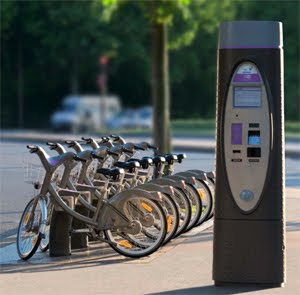
And today’s day was packed with lots of little things we had planned including an exciting interview that will hopefully be out on Monday with a wonderful French entrepreneur. And the highlight for me was roaming about in the French version of Boris Bikes.

This friend put it best when we were discussing the feeling of going running or biking in a city. There’s a certain feeling of belonging when you do that. You feel part of the action, the energy, the vibe..

And what is life without a feeling of belonging..

Feel Good Friday: Caine’s Arcade – Best 11 minutes of the week

Maybe you’ve already seen the now famous Caine’s Arcade video. After putting it off for 2 weeks, I finally got to watching it this week. And I was close to tears around the 9th minute. If it wasn’t for the fact that I was surrounded by people, I might not have held them back.

The word that came to mind when I saw this was sincere.

I learnt a few things from the video –

– True builders are motivated by their art. Customer feedback is good but that’s not what motivates.

– Parents play a massive role in any child’s development. Role models matter. Encouragement matters, a LOT.

– Persistence. Is there any other way?

– One happy customer is all you need.

– And isn’t his use of square root checking adorable?

Thanks to the power of social media and YouTube, this video and campaign by Caine’s happy customer has raised $200,000 for his college fund. Seth had a very interesting take on what this means for the book industry.

I generally don’t post videos longer than 3-4 minutes if I can help it. But, this is special. Hope you take time to watch it.