“One of the things the professional artist gives up is the thrill of the manic high. I used to be manic, about twenty years ago, when there was a sliver of something working. Things were really brutal at work, with rejections and near-business-death experiences coming daily, and I grabbed hold of any positive feedback really tightly.
Now, I’m delighted to say. not so much. Which means the highs aren’t as high. The successes are about the privilege of doing more work, not about winning. When my Kickstarter project for this book met its funding goal in less than three hours. I didn’t do the line-kicking dance reserved for TV celebrations. Instead. I took out my laptop and got to work. That is the greatest privilege I can imagine.” | Seth Godin, The Icarus Deception
I thought about this paragraph today. It is tempting to think of life as a quest to keep notching up wins.
In truth, life is just an infinite game. The greatest gift is to just play, follow a great process, and remind ourselves that happiness doesn’t lie in the destination but the journey.
The highs then cease to be as high and the lows stop being as low. After all, it’s just about plugging away and doing our bit to make this world better. This is easier on some days and harder on others. It’s a gift to just be able to play. Let’s do it well and have fun while we are at it.
Growing up in the Indian school system, we were typically taught hacks to do better at composition. Some of these were –
– Use connecters like “however,” “moreover,” “furthermore,” etc., at the start of a paragraph – Write neatly. – Use at least 3 paragraphs. – Use good language and throw in a rare word every once in a while
That’s about all I remember right now but I’m sure you get the drift. We were never taught that writing is all about ideas. We never really appreciated great writing. Our goals were limited and our learning followed the same limitations. If you had a good vocabulary, you learnt, over time, to hide behind it.
But, when you begin to share your writing with the world, you realize very quickly that flamboyant language doesn’t do much if you don’t have a point to convey. That’s probably the best thing about writing – no amount of language can save you if you haven’t developed the ability to frame and structure what you want to say. You eventually get found out.
Most things are like writing. In the long run, hiding doesn’t help. The more elaborate the plot, the quicker it unravels. Don’t waste energy hiding. Use it to get good instead.
We interviewed Morgan Housel, columnist at “The Motley Fool,” after reading his excellent post – 140 things to know about investing. As many of you who read this blog know, I have a lot of energy for increasing financial literacy and I really appreciate folks like Morgan who’re focused on doing just that.
About Morgan Housel
Morgan Housel is a columnist at the Motley Fool. He is a two-time winner of the Best in Business award from the Society of American Business Editors and Writers and was selected by the Columbia Journalism Review for the Best Business Writing 2012 anthology. In 2013 he was a finalist for the Gerald Loeb Award and Scripps Howard Award. He holds a B.A. in Economics from the University of Southern California.
My favorite bits –
“What’s really interesting about finance – and I think this is true for a lot of fields whether you’re in physics, math, chemistry, history, or whatever it is – the more you learn the you more you realize how little you know.”
“If you really just started in investing, what’s really important is not necessarily when you’re young the investment decisions that you make. It’s saving as much money as possible rather than getting caught up in the details about the different kinds of investments that you’re making.”
“I think if you’re the kind of investor who really has no interest in business, finance, or the stock market, just investing in a low cost index fund, dollar cost averaging so you’re putting in the same amount of money every month over time is really a smart approach for most investors that don’t want to spend a lot of time doing this or are really not interested in it. “
“I really think that people who are interested in business, commerce, and economics, but not necessarily interested in trading or the stock market, are the people that I think can really do well for themselves over the long run – over the course of 20, or 30, or 40 years – by investing in really good high quality companies that they feel confident about. They can do well by investing in a good diverse mix of companies that they plan on holding for a long period of time.”
“I think a home makes a good place to live in, and that provides value for you of course. You’ve got a great place to live in, spend the holidays with your family, have a barbeque with your friends, and that’s great. The idea of the home as an investment, there’s really not much evidence backing that up.”
“Almost invariably the best investors are the people who have control over their emotions. Why do some people survive and other people perish? The common denominator in survivors in these extreme situations is that the survivors did not panic when everyone else did.”
“In today’s 24 hour news cycle, where we have so much information online – Yahoo Finance, CNBC, and whatnot – it’s tempting to look at your portfolio all day long, minute by minute. I think that’s very dangerous for a lot of people. Most people should be looking at their portfolio once a quarter, four times a year.”
“The most important thing to know when you look at long term financial history is that volatility in the stock market is perfectly normal. It’s the equivalent of having summers every year. If you look historically, the stock market falls 10% basically once every year. If you go back through more than 100 years of data, it happens almost every year. You get a 30% crash basically once a decade. You get a 50% crash 2-3 times per century.”
“The single most important variable for how you’ll do as an investor is how long you can stay invested. I’m always astounded when I think about compound interest and the power that it has for investing. Time is massively powerful. That’s my secret to investing. That is the most powerful concept in investing. It’s very importantly the single most over-looked aspect of investing as well.”
Here’s this week’s 200 word idea from Anything You Want by Derek Sivers.
At a conference in the pre-iTunes era, somebody asked Derek Sivers, founder of CDBaby.com – “What if every musician just set up their own store on their website?” CDBaby.com was then the primary place for independent musicians to sell their music.
“Well, if musicians don’t need CD Baby any more, CD Baby would shut up shop and I would just get back to making music.” – Derek replied to general astonishment.
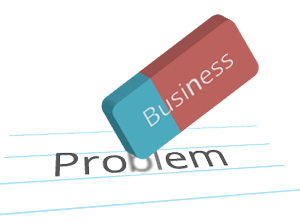
Derek’s view was simple – a business is started to solve a problem. If the problem is solved, the business is no longer needed. Businesses are often guilty of keeping the problem around so they can continue solving it. But, these businesses die eventually – think businesses like Kodak and Blockbuster which refused to accept the onset of digital photography and the internet.
The best businesses, in fact, are adept at cannibalizing themselves. More on that in next week’s idea.
Imagine you’ve just started a leather trading business. As it is normal practice to offer discounts to customers, you decide to offer a flat 10% discount to all customers. This is against the norm of more complicated seasonal discount schemes that your competitors offer. You decide to get rid of the complexity, figure out their final discount amount, and just offer this flat rate. Feels fair, right?
Well, it will feel until a customer placing a one million dollar order watches you provide a 10% discount to somebody who buys a thousand dollars worth of leather. Why should the thousand dollar guy receive the same % discount?
This illustrates the power of implicit choices to wreck the intent of original choices. By choosing to give a flat 10% discount, you implicitly backed your smaller customers and alienated your big customers. A “fairer” way to support your big customers would be to offer the million dollar guy 10% discount and the smaller guy a 5% discount. I’m guessing you’ve spotted it now but, here again, you have implicitly told the smaller guy that you like bigger customers more.
There are 2 interesting learnings here –
1. Life’s bad decisions are most of all a result of implicit choices. You haven’t explicitly decided to become unfit when you picked up your daily evening soap opera habit. But, well, it happens.
2. You can’t please everybody. Your choices will upset groups of people – it is better to clearly evaluate who your choices are meant to please (it could just be yourself). What seems fair will have a bunch of implicit repercussions – might as well be intentional about them.
A couple of friends and I had asked if a taxi parked near a lane in Mumbai would take us to a location about 10 mins away the other day. The taxi driver said yes. As we walked around to the taxi, we realized that he had just refused an elderly couple for no apparent reason. We weren’t sure if this was because of us and immediately asked the elderly couple to go ahead.
They nodded at us, smiled and said – “Don’t worry. This happens. Go ahead” A passing taxi stopped just then and they got in. Once we got in, my friend commented “How obnoxious of this guy.” I nodded but didn’t say or do anything.
I thought about that moment a couple of times. I don’t know where my head was at when that happened. I don’t know if it was just that I wasn’t thinking or whether I had just shrugged and accepted the taxi driver’s obnoxious behavior. What I feel I should have done is taken a stand and walked away from that taxi.
I believe it is moments like this that really test our character and what we believe in. And, in this instance, I failed that test. I didn’t take the stand and it’s bugged me since. I will do my best not to let that happen again. There are no small decisions when it comes to our values – I’ve realized that much.
This may not be a quote you associate from reknowned social scientist “Mihaly Csikszentmihalyi” but it is one I’d like to share from our conversation this morning.
As I’ve gotten into the habit of giving previews of upcoming Real Leader interviews, this is an interview I am very excited about. Prof Mihaly was a treasure trove of insight around the topics we discussed – flow, happiness, skill, and intrinsic motivation. In some ways, you might say it is expected. Almost every psychology, behavior, and social science related book cites Prof Mihaly’s work.
So, why the quote? I had another Real Leader interview technology bad hair day. This happens roughly once every 6-7 interviews. I guess it is because of the enormous resources it takes (Skype video + screen recorder + audio recorder for back up) and I ended up wasting 15 mins of Prof Mihaly’s time as I had to restart my computer twice. Then, 5 mins into the interview, my screen froze again. It was very embarrassing.
But, these incidents are such amazing learning moments. Prof Mihaly was kind, gracious, and humorous. When I expressed how embarrassed I was, he said “technology exists to embarrass” and we continued our conversation.
Prof Mihaly is 80 years old now. He’s started the world’s first Doctoral program in Positive Psychology at the Claremont Graduate University. He is trying hard to be less productive but, next month, he will be traveling to Kazakhstan, Australia, the Netherlands, and Russia. He is a legend in his profession and, yet, took time to take this call. He was patient, gracious, and humorous when things didn’t work and full of wonderful insights and learning from his career. He is happy (from a lifetime of practicing flow, perhaps?), energetic and keen to teach and share.
There was an hour’s hailstorm near where I am last week. It was on the news and a couple of friends and I were discussing it. While it was normal for them, I was still surprised. The weather has been getting hot lately and a hailstorm was among the last things I expected. We discussed the hailstorm for a few minutes and moved on.
I conversed with an acquaintance who also owns a farm yesterday and asked him about the season. He said that things were a disaster for him and all the farmers in the region. The one hour hailstorm had wrecked their crops, destroyed their fields, and ensured they would have no harvest for the next six months. Following last year’s bumper year, many farmers had invested heavily into this season and were facing huge losses.
The same event can have very different implications on others. For us, the hailstorm was just a discussion topic. For others, it turned out to be an event that defined the year. There’s not much either could do about it – the weather is what it is. But, understanding this can go a long way in helping us develop a bit of empathy and think about others as we celebrate or as we mourn; and, hopefully, help us get over ourselves a bit. The same incident can mean different things to different people.
1. Living well every day is the single hardest challenge. I aspire to be “the best I can be.” Easier said than done. I can think of stretches of time when I was far from the best I can be. Thanks to various reasons, I was largely irritable and wrapped up within my own problems. I know I didn’t turn out my best work on those days and neither did I give energy in my personal relationships.
In our lives, there are definitely more failures than successes. This makes living well every day as big a challenge as any. I’ve learnt to accept bad days but I’m still not at peace with bad weeks – that’s on the “take control and don’t let it happen list” for next year.
2. “And, whether or not it is clear to you, the universe is unfolding as it should.” This has been a lesson I’ve been internalizing very slowly over the past few years. It is an important one. I have struggled with impatience for as long as I can remember. And, at times, it is this line from “Desiderata” that has reminded me to keep calm and carry on.
And, there’s another line that I’m beginning to internalize – You don’t know if a good day is a good day. Both of these have helped me keep perspective when the chips are down.. and it feels like that has happened often this year. And, in that spirit, if you struggle with being hard on yourself and keeping perspective, marry someone wiser. :)
3. Work hard to create memorable moments. This is a learning that I’ve written about a few times here. As I think about the year right now, many moments pass by as snap shots. As time passes, I find more members of the framily scattered all around the world and it gets harder and harder to get everyone together to celebrate being together. But, it’s worth planning for these and it’s worth working hard to make these reunions happen from time to time.
I’ve also realized that even the seemingly mundane can be memorable. A simple moment at home can so easily become memorable with a bit of impromptu song and dance, a casual evening with friends can become memorable when you put yourself out there, and every meeting can be made special with a tight hug.
It’s our responsibility to make it meaningful and make it count. And what a great responsibility it is..
Seth Godin’s post today talks about confidence being a choice, not a symptom.
The batter has already hit two home runs. When he gets up to bat for the third time, his confidence is running high…
It’s easy to feel confident when we’re on a roll, when the cards are going our way, or we’re closing sales right and left. This symptomatic confidence, one built on a recent series of successes, isn’t particularly difficult to accomplish or useful.
Effective confidence comes from within, it’s not the result of external events. The confident salesperson is likely to close more sales. The confident violinist expresses more of the music. The confident leader points us to the places we want (and need) to go.
You succeed because you’ve chosen to be confident. It’s not really useful to require yourself to be successful before you’re able to become confident.
I couldn’t agree more. I’d like to extend his message to say that most good attributes are by choice and are not symptoms. It is easy to be kind, forgiving, and empathetic when everything is going great. The real test is how we behave when the chips are down.
The best way to get out of a negative spiral is by being good, kind, forgiving, and confident. This relationship between success and good behavior is a classic case of chicken and egg.
And it is of course easier to start with good behavior rather than wait for success..




 A Learning a Day