Nobel prize winners and stupidity – MBA Learnings

In our first Microeconomics class this quarter, our professor spoke of her experiences presenting research to audiences that included Nobel prize winners. She noticed that the Nobel prize winners were most often the ones who raised their hands and asked questions. Some of these questions might even have been perceived as “stupid” questions as they occasionally sought to clarify some of the most basic concepts of the discussion.

When she observed this pattern repeat over and over again, she realized that it was that willingness to learn and dig deep that made the Nobel prize winners special. You see, they might have been stupid when they started but they saw to it that they didn’t stay stupid for long. And, her message to us was to make sure we asked questions about any concept we didn’t understand in class.

This is my third iteration of being a student and, in my quest to learn how to learn, I feel like I’m finally begin to understand and internalize lessons like this. This is a trait I observed in top executives from my time as a consultant as well. They were very willing to look stupid and ask questions around the underlying assumptions. And, these questions often unearthed real insight.

This lesson reminded me of the Mark Twain quote – ‘ A person who won’t read has no advantage over one who can’t.’

You don’t often control your current level of stupidity. But, staying at your current level of stupidity is entirely your choice. If you find yourself wondering if your question is a stupid question, remember the Nobel prize winners..

(Thanks Professor!)

The perfect spaghetti sauce

What is the perfect spaghetti sauce? How spicy, salty, or thick would the perfect spaghetti sauce be?

Howard Moskowitz’s breakthrough insight here was that there is no perfect spaghetti sauce. Instead, there are many different kinds of perfect spaghetti sauce that suit different kinds of people. Starbucks wouldn’t exist if there was a perfect cup of coffee. And, Earl Grey certainly isn’t everyone’s favorite cup of tea.

The best products, services, and businesses don’t attempt to be everything to everybody. There’s a simple and important reason for this – the best products stand for something. The moment they make that choice, they lose people who don’t agree with what they stand for. A multi-millionaire may scorn Ikea’s philosophy but, for every one of those, you’ll find ten 20-somethings who will swear by it. That’s part of the game. You can’t win them all. In fact, I’d go far as to say you don’t really want to win them all.

It is much the same for us as people. If we attempt universal popularity, we will almost certainly lose what we stand for. Unlike in the case of a product or service, that means more to us than a decline in sales. It is the difference between a life and a life well lived.

The stakes are much higher. Forget about choosing wisely. First, we must choose.

Immortalized through music

I am a quirky music lover. I don’t go out of my way to discover new music and, instead, rely on serendipity. But, once I discover a song I like, it goes onto my iTunes list – this is an eclectic yet carefully curated list that has grown with time. I buy my music because it solidifies this deep emotional connection with it. The other quirk is that I have music on through 60-80% of the time I work. Since my high school days, I’ve just gotten used to having music in the background. It suits my kind of ADD for some reason.

Now, the reason for this post is that the music I listen to often has some really powerful memories associated with it. There are songs that remind me of certain times in the last 12 years – some good, some tough, and some fun – and then there are many that remind me of people. In some cases, it was because a close friend loved it and, in other cases, it was because we listened to it on repeat during a memorable moment. These people and moments become immortalized in my memory through music.

Just this weekend, I heard a song that nearly brought tears to my eyes. The funny thing is that I didn’t even know the lyrics – it was just the “feel” of the song.  There’s something about it that makes me want to pause, take stock and reflect. I’ve been listening to this song often these past few days – my wife’s normal question when I go through the ‘listen-to-a-new-song-often-phase’ is – “are we listening to this on repeat today?” (I clearly have a long list of music quirks :-))

As I explained to the friend who shared this song, music is my favorite kind of gift and she’s been immortalized in my memory through this song.

This is an unusual mid-week post but, as I woke up this morning, I reflected on what’s been a busy few days. And, I felt I needed to take some time this evening to stop, reflect, and take it all in. But, as I started writing today’s post, I played the song and realized that the mini-moment of peace would go a long way in making sure I start the day in the right mindset. So, I deleted what I began writing about and thought I’d just share the song with you.

Maybe you might find it helps too. Here’s to a bit of pause, a bit of reflection, and a bit of peace this mid-week.

Building great teams

I’m making slow progress through “The Innovators” by Walter Isaacson. The book is a nice walk down technology memory lane starting from when Charles Babbage and Ada Lovelace first conceptualized the computer.

The learning from the book that stands out most to me is the sheer importance of great teams in every technological innovation. Media and culture celebrate great individuals but history makes it apparent that it is teams that succeed. Taking the Tolstoy logic of “all happy families look the same,” I noticed 2 common traits of great teams through the book so far –

1. A mesh of individual and collective genius. Every team somehow managed to encourage individual skill while ensuring a collective ownership of the end product. Some of the biggest breakthroughs were indeed made by individuals. But, they wouldn’t have happened if it wasn’t for the rest of the team. That’s a powerful idea for us as team members and team leaders. We need to be able to encourage individual skill while, perhaps, making sure everyone on the team has a collective ambition. The collective ambition is what allows for true collaboration.

2. Complementary skills, similar dreams and a lot of trust. Every great team had a mix of personalities with complementary skills – the founding team of Intel is a great example of this with Robert Noyce being the visionary, Gordon Moore being the innovator and Andy Grove being the manager who got things done. Despite these differences, they were united by similar dreams. When dreams or values differed, these teams disintegrated. But, when they aligned, it gave rise to great trust and chemistry stemming from a deep understanding of each others’ strengths and weaknesses.

For me, it goes back to the idea that teams are not people who work together, teams are people who trust each other. Yes, we all work in teams in our jobs and assignments, but, how many of those are real teams? How many times do we, as team members, make an earnest effort to get to know each other? We don’t need to be leaders to build great teams. We just need to care enough about collective success and want to really get to know our teammates. Understanding follows knowledge and trust follows understanding.

The days of the lone inventor are long gone. Science and business innovation builds on those of previous generations. And, it is my belief that, today, more than ever, the future belongs to those who can build great teams.

Looking for the next mountain

Life has a way of making sure we face a continuous stream of ups and downs. It is akin to mountain climbing. If you are on top of the mountain right now, you’ve probably endured a lot of hardship as you made your way uphill these last weeks. And, if you’re currently enduring hardship, you’ll be at the top in due time.

The wise realize this and ensure they don’t get too high when they reach the peak and feel too low when they’re stuck in the weeds. This perspective keeps them focused on the bigger picture. The important thing is to keep climbing.

The one trait I have observed in people who seek to make a dent in the world is that they don’t wait around for life to hand them the next mountain climbing assignment. Instead, they go look for it themselves. They take up new responsibilities, start projects, attempt to drive change and make things happen. This means they sign themselves up for more intense climbs than most and fail to reach the peaks they want more regularly than most.

But, as you might have gathered, it isn’t in the peaks that life is lived, but in the climbing. And, people who make a dent go out of their way to find new mountains and keep climbing. Yes, they fail. But, yes, they also learn how to be relentless in their pursuit of the next thing.

And, it is thanks to that relentlessness that great things happen.

Someone’s dad or mom – The 200 words project

I hope you’re having a nice weekend. Here’s this week’s 200 word idea thanks to ‘From Values to Action’ by Harry Kraemer..

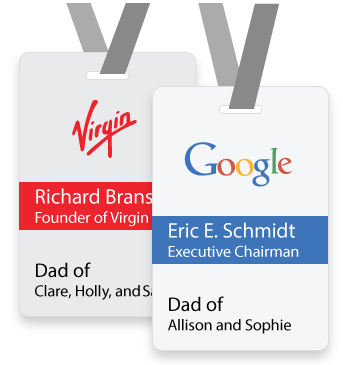
Early on in his career as an analyst, Harry Kraemer noticed a colleague who made an excellent presentation to senior management. He commented on what an excellent presentation it was. She then shared her secret – her father had been the Chairman of a very large company and regularly held meetings at their home. So, from a very young age, she thought of directors as “somebody else’s dad or mom.”

She never Iost that perspective as an adult and that meant she gave presentations to senior management just as she would give presentations to her fellow analysts or, in her case, her parents.

Harry Kraemer found it incredibly useful in a career that saw him make many presentations to the Board of Directors as CFO and then CEO of Baxter, Inc.

And, it makes for great perspective as we head into our next “big” presentation.

Someone else's dad or momSource and thanks to: www.EBSketchin.com

‘Often we allow ourselves to be intimidated by someone at a higher level in the organization, but with true self-confidence, we understand that we’re all just human beings.’ | Harry Kraemer

The truth about admissions and hiring

Thanks to the MBA learnings series, I’ve been hearing from many who’re going through the business school applications process. In these exchanges, I always try to make sure I share 3 points that I find helpful.

1. After a point, it becomes a crap shoot. I’d highly recommend taking a couple of minutes to read Seth Godin’s excellent post on ‘The truth about admissions‘. Here’s my favorite excerpt –

Worth saying again: In admissions, just as in casting or most other forced selection processes, once you get past the selection of people who are good enough, there are few selectors who have a track record of super-sorting successfully. False metrics combined with plenty of posturing leading to lots of drama. 

The winter and spring quarters are internship recruiting seasons here in school and it is easy to spot similar dynamics. I remember asking a friend how he thought HR picked cover letters out of a competitive pool. He imitated a person throwing a dart on the wall. That’s not to say it is completely random but, echoing Seth’s view, I think there’s a fair bit of pseudo science at play once you cross the threshold of competence.

2. It is a tough process and one that never fails to touch our insecurities (“Am I not good enough?”).  That’s just part of the process. We just have to expect it and be aware of it when it happens. In some ways, we’re always going to have such questions pop up when we ship. It gets easier when we’re shipping a product we designed vs. ourselves though. But, it is a worthwhile process and can be educational if we treat it as such.

The one thing that does help here is to be a bit self centered and just focus intensely on your own process. We’re all on different paths fighting different sorts of battles. Focus on what you need to do and make sure you ask for as much help as you need. These sorts of challenges are hardly ever overcome alone.

3. You only need one to work out. A close friend gave me this perspective and it is one that has stuck with me. Whenever we get started on a job search-like process, we always begin by pinning our hopes on a number of options. And, as these begin to disappear, we get disheartened. The only perspective we need to maintain here is that all it takes is for one to work out. Ideally, it’ll be the one we want. My experience has shown that it almost always is the one we need (and, every once in a while, the two intersect).

All the best. And, if I can be of help in any way through your search processes, do send me a note (rohan at rohanrajiv dot com) and I’ll do my best to be of assistance.

The tension between who you are and who you want to be

One of the fascinating tensions I observe with in myself is the tension between who I am and who I want to be. I spent between 2011-2013 largely pushing to understand myself – this meant reading as much as I could on psychology, the brain, happiness, behavior and understanding personality types via books like Gifts Differing by Isabel Briggs Myers. On the other side of this effort, I feel l understand who I am and what drives me a lot better than I used to. The benefit of this is in my slightly improved ability to understand which self improvement projects are a waste of time.

I have observed that the tension between who we are and who we want to be is one of the most difficult challenges we face in our lifetime. We aren’t fit vs. we want to be fit, we don’t read vs. we want to be the sort of person who reads a lot, we don’t spend time with our family vs. we want to be “family” people, etc. We’re constantly faced with this tension.

There are 3 lessons that have stuck with me (in case you are wondering why I always do 3, it is not because there are 3. There are many more than 3 – I just do my best to boil it down to the 3 most important lessons.) –

1. Your greatest strengths are also your biggest weaknesses. If you are a great thinker, it is likely you think too much. If you are a great doer, it is likely you do too much. You can’t look at weaknesses in isolation. In cases like this, I find it best to think about it as a balancing act. You won’t ever fully conquer that demon but, with enough self awareness, you can keep it at bay. So, as you get started, pick your self improvement projects carefully.

2. Understand why you want to change. Are you changing for yourself or because you want to be liked/popular? Changing for someone else is futile. At the end of the day, this tension is between you and the person who looks back at you in the mirror. If the two of you don’t feel it is worth it, it is not going to happen. That doesn’t mean you can’t change something about yourself to become more likable. You’ve just got to believe in it yourself.

3. Change projects are best taken up one-at-a-time over long periods. The biggest reason self improvement projects fail is because they’re taken up wholesale after an “aha” moment (usually new year’s day). There is NO way you can create sustainable change in one shot. It is a gradual process and you have to keep that perspective and be patient with yourself.

This isn’t a 3 day battle, it is a lifelong war. That said, it is definitely a war worth fighting consistently and well.

Being human

There are so many things we want to be at a given time. We’d love to be awesome, to be competent, to be skilled, to be impressive, to be right, and so on.

It is, therefore, really easy to forget the one thing that is most important – to be human.

We’re just bags of chemicals with ideas and purposes. We’ve not got this all figured out and we’re definitely learning as we go. Our life, in some ways, is just a giant collection of experiments. And, that means they’ll come with setbacks, problems and failures. We all have some really big strengths that we need to take time to discover. These strengths often moonlight as our biggest weaknesses – we can’t have one without the other. We also have insecurities. An understanding and appreciation of them helps a lot as they give us the drive to make an impact. Confidence gives us the ability to act despite them.

It is okay if we screw up. We’ll say and do the wrong thing every once a while. Sometimes, we’ll just be in the wrong place at the wrong time. We will be misunderstood. And, not everyone will like us. That’s part of the game.

The good news? We’re alive, kicking, and have an opportunity to put that ding in the universe. Our effort doesn’t guarantee that it will happen. But, it matters that we try. If not us, who? If not now, then? In the really long run (i.e. generations later), almost no one will remember us or know we existed anyway. What really matters is that we live a life that means something to us and brings us happiness. There’s nobody else we really need to please. So, let’s be ourselves, and always remember… to be human.

Are you failing enough? – MBA Learnings

I thought about this morning’s post a few times. I had a learning in queue that I had been thinking about from our Microeconomics class this week. But, I decided to shelve that this week and write about something that is top of mind – failure. That also leads me to the other related thought – when I’d first thought of the “MBA Learnings” series, it wasn’t just to share learnings from class. It was also to really touch upon life in business school and share my thought process as I approached it.

One of the questions I ask myself from time to time is – am I failing enough? I ask myself this question for a few reasons. First, it is because I think there is a strong connection between failure and learning. I have come to realize that the biggest by-product of success is self confidence. Yes, if you are smart, you will sit down and discuss what went well. And, yes, you will learn a lot from it. But, when you fail, you don’t have anything else to hold onto except learning. That’s powerful. Second, it is because failure helps guard against complacency. There is no mechanism that makes you eat humble pie as much as failure. I think that’s incredibly important because humility is what keeps us in touch with reality. And, it is people who really understand reality that are able to drive change and do something with it.

I received a few texts from a friend last night that I saw as I woke up. He shared that a project he’d been working on had failed. He said – “I couldn’t do it. We couldn’t do it.” I could feel his disappointment. But, I also thought that was a great way to think about it. Even if we’re working in a team that has a share in our failures, the best way to think about failure, in my opinion, is to start with the “I.” Sure, you can blame everyone and everything around you. Sure, the circumstances must have been extenuating. But, you played a part. And you have to own it.

I say this because I’ve spent the last two days reflecting on a project I consider very important. And, after a few weeks of intense effort, I feel I’ve made a large enough collection of mistakes to slow down and reflect. We’re in a creative stage of the process and I’ve enjoyed this stage and have experimented heavily. The nature of experimentation is that a few work and most do not. And, every once in a while, the collection of experiments that don’t work threaten to overshadow the ones that do. And, I think I am at one such point – a real learning moment. I woke up at 4 this morning and spent the last hour and a half putting these thoughts together. This isn’t the first such learning moment of course.

It made me remember a moment 5 years ago now when we were in the early stages of putting together a team for what felt like an audacious project as a university student – to put together a new university version of Britain’s Got Talent (inspired by the Susan Boyle moment) and to do so despite not having an assurance that we’d have enough funding to pull it off. We had only secured 30% of the funds required, had no venue, and had just begun putting together a small team. 2 weeks into working with the team, I received an email from one of the team members asking to withdraw. I went back to that this morning and thought I’d share a small part that I still remember –

Also the entire experience of working (together ?) in this student based team has not been completely great either. Yes, you might claim to model this on the real life workplace environment, but once again I fail to see true justifications for certain aspects. While I do understand from our brief interactions, that leadership skills are what are being aimed for by each of you, I have to admit, that I was not really motivated to look up to you as a person who could lead us to work for <> (maybe because I failed to see the part of ‘lead by example’ coming in anywhere).

Following this note, 2 others withdrew.  Oh, it hurt. There’s something to be said for moments when people around you look at you and say (either verbally or not) that you’re not deserving of their trust.

That definitely was a learning moment.

But, I also know now, with the benefit of hindsight, that, the eventual success wouldn’t have occurred without such moments. They’re painful in the short term but meaningful in the long term. And, five years later, I can say with a lot of certainty that I look back at these moments with a smile.

I find myself facing new kinds of challenges today. It has been a challenge finding the time to reflect amidst two packed days. This stuff doesn’t happen when you are sitting idle and looking for things to think about. I guess that’s what is great about waking up early and getting some time to yourself. After two days of thinking about it, I think I’ve finally understood where the problems lie. And, I realize I’m going to approach it as I normally do – own up to my mistakes, be open about my intentions and have a conversation.

That goes back to my original question – Am I failing enough? Before I answer that, I’d just like to say that this is what I’ve loved about the MBA experience. You have a huge number of opportunities to experiment, learn and fail. There’s only so much you can fail at work – there are way too many things at stake (most of all, your own job). But, I’m now in a place where I’m paying a couple of hundred thousand dollars to learn and I intend to make the most of that. The new Kellogg rebranding led to the “inspiring growth” tag-line. That’s easier said than done, of course. Growth can be painful because it requires you to experiment, fail and learn. But, is it worth it? Absolutely.

And, as of this morning, I definitely think I am failing. And, I am fortunate to be in an environment that allows me to fail spectacularly. It is occasionally painful but I’m glad for the opportunity.