But, I didn’t know

Too often, when we didn’t take the course of action we should have, our reaction is ‘But, I didn’t know..’

This begs the question – would you have done it if you knew? And, if so, why don’t you eat healthy, sleep enough, meditate, and exercise every day? For all our love for data, there’s more evidence about the importance of these habits than ever before. And, yet, we’re not much healthier.

That’s because it isn’t ‘I didn’t know’ that matters but ‘I didn’t feel.’ It is emotion that changes behavior.

So, as we prepare our next presentation in our attempts to inspire change, let’s take out all those charts filled with data that exist to educate. Instead, let’s use the most important data to stir emotions. The presence of data in itself isn’t the boon we think it is. It is up to us to use the data we have to create a compelling story. The data is the supporting actor. And, we have access to a better supporting cast than ever before.

But, as it has been the case through history, it is the story that is the star.

The skills we need

We spend a large portion of our lives selling – selling our customers that they ought to buy from us, selling our organizations on our ideas, and, as parents, selling our kids to listen to us. Being a bad salesperson is counter productive to leading a good life. Selling involves influencing and moving people without any authority. Nearly every job in the knowledge economy requires that skill.

As investors and managers of our own wealth, we need to understand basic principles of finance and accounting. It is impossible to make smart investment decisions if you don’t understand how the economy, investments, interest rates and taxes work.

Most things we do either further or destroy our brand. In that sense, we are all marketers.

In most of our jobs today, we see more data than ever before. Being able to make sense of them requires us to channel our inner statisticians and engineers.

And, every memo we create, event we organize, meeting we run, and product we ship showcases (or not) our design skills. We are all designers, too.

So, to say that we only need mastery in a skill or two to lead a successful life is a flawed belief. Masters, by definition, are cross functional because mastery requires a certain cross functional awareness that most do not access simply because they don’t make the effort. We don’t all need to go to business school or engineering school to learn basic principles. Education helps a lot, sure. But, real learning involves much more than having a professor stand up in front of you – it involves thinking, synthesizing and applying what you learn. Very few manage to take those leaps.

We’re never going to be “learned.” Instead, we’re best served to consider ourselves life-long students and apply the child-like curiosity we had as kids every time we get on a new project. There is a lot to be learnt and there are many skills to be mastered. And, if you ever feel like learning new things is beyond you, just take a look at Ben Franklin’s profile on Wikipedia –

A renowned polymath, Franklin was a leading author, printer, political theorist, politician, postmaster, scientist, inventor, civic activist, statesman, and diplomat.

PS: Ascribing Franklin’s incredible list of achievements to genius is just lazy. Any credible biography of Franklin describes him as someone who combined hard work with smart application. There’s definitely inherent ability in genius. But, it takes thousands of hours of work to make that inherent ability count.

Soldiers and generals

There was a period in the past decade when it was cool to be what I describe as being a “soldier” at work – work at all odd hours, sacrifice sleep, chug coffee and take naps in the office. We are at war, always. Over time, this approach to work has gone out of vogue. There’s been a lot of research on the importance of sleep and the “work life” balance idea is trending.

The way I see it, there are 2 ways in which you can operate –
– The soldier way is the path I’m referring to above. In this mode, you are constantly at war. You can’t afford to rest because your cause would fall apart without you. Boundaries are a bad thing.
– The general way is where you deal with the reality of war very differently. You take control of your work, actively set boundaries and expectations and learn to work with others (often soldiers :-)) to do what needs to be done. Being a good general requires a degree of calm, mindfulness and focus.

Here’s the catch – the soldier’s way is the default path. You need to be very intentional to change your mode of operation. And, if it isn’t obvious as yet, you can operate like a general even if you are a soldier by rank and vice versa. This isn’t about titles. This is all about how you work.

So, why does this matter? I find it worth remembering that it is soldiers who die in battle. Generals don’t.

SonoSite resources – The 200 words project

Here’s this week’s 200 word idea thanks to How will you measure your life? By Clayton Christensen

Kevin Goodwin, the CEO of SonoSite, knew that Sonosite needed to sell their portable, but less sophisticated ‘iLook’ product over the more powerful and profitable ‘Titan’ before a competitor came in and disrupted them. But, SonoSite’s salesmen completely ignored promoting the iLook, even though it was a strategic priority for SonoSite.

Goodwin couldn’t understand what was happening and went along with a sales team member to understand if this was because of negative customer reactions. He realized immediately that the problem was that the sales team were not even showing iLook to the customer. Their commissions based on the total value of their sales and gross margin dollars. And, Titan was a more lucrative product.

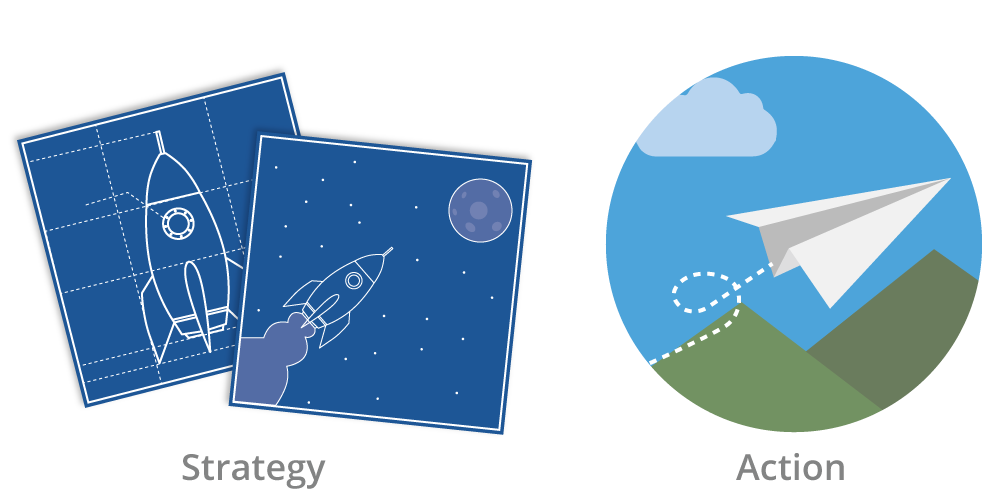
Clay Christensen draws an analogy for life – “You can talk all you want about having a strategy for your life, understanding motivation, and balancing aspirations with unanticipated opportunities. But ultimately, this means nothing if you do not align those with where you actually expend your time, money, and energy. In other words, how you allocate your resources is where the rubber meets the road.”

SonoSite resources

Source and thanks to: www.EBSketchin.com

Watch where your resources flow. If they’re not supporting the strategy you’ve decided upon, then you’re not implementing that strategy at all. – Clayton Christensen

Listen to everyone…

… then, forge your own path.

And, when you do so, do so with conviction. Just because a certain approach worked for someone else doesn’t mean it will work with you. Very few people rarely know better. Those who do have just gotten to be good at guessing. And, they’ve gotten to be good at guessing by making many bad guesses.

So, things will definitely not work as per plan. But, it is better to be sure, wrong and open to change than to be perennially in doubt.

At any rate, you’ll become a better guesser..

Integrity in work

Everyone knows integrity should be in mission statements. Very few know why. Most know integrity is a trait that good people exhibit. Very few again know exactly what that means.

So, let’s break it down – integrity derives its roots from integer. Instead of referring to a “whole” number, we refer to people who are “whole” or consistent. People who are whole or consistent walk their talk. Or, in Stephen Covey’s words, they make and keep commitments. There is no other trait that characterizes good character as well as integrity.

Today, however, I’d like to focus on integrity at work. Every project we work on should have a one-line goal. This goal explains why we’re doing it and what our desired outcome is. If we’re working on five projects, each of them should have a one-line goal that makes sense. You can term it the mission statement of the project. But, since mission statement often requires explanation, let’s just term it a one-line goal. In a well-run company, all of these projects will further the company’s mission as well. So, if one of your projects is to invest in your development, that would further the company’s goals of retaining people. If a project doesn’t have a one-line goal, shelve it. It isn’t important.

Once you understand the one-line goals for each of your projects (and this often takes a bit of work and thought), priorities should emerge. It should become obvious as to which project will create maximum impact. Depending on the goals of your group, this could be a long-term bet or a shorter term move.

And, once you understand the one-line goals and the priority, you are now ready to do something very simple – attribute colors to your priorities on your calendar. So, if you spend an hour working on priority one, mark out an hour and color it red (for example). If you took a meeting on priority three, color it green, etc.

At the end of the week, sum up the number of hours you spent on each of your priorities. While you are at it, also sum up the number of hours you spent in meetings vs. doing solo work that made the meetings productive. Ideally, 2 things should emerge –
1. You have invested time in accordance to your priorities
2. You have spent at least as much time solo time on your most important priorities as you have spent in meetings

When you show up at work, you implicitly commit to furthering the company’s goals. You do this by committing to furthering your goals. Every minute spent on your most important goals is productive. Everything else is gravy. The more time spent productively, the more time you spend exhibiting integrity in your work.

And, integrity, both in work and life, is a sight to behold.

Not easy to measure

I’ve been using the excellent Headspace meditation app over the past 3 months. Unlike my last tryst with the app 2 years ago when I repeatedly fell asleep (!), I feel things are going much better on the whole. However, I found myself wondering this morning as to whether I was making any real progress. As I did that, I stopped myself.

There are many metrics that are easy to measure – money, promotions, number of friends on Facebook etc., number of gym memberships – and, for every one of these, there are metrics that are hard to measure – success, impact, depth of relationships, fitness. I am reminded of Clay Christensen’s anecdote about parenting. While it was easy for him to measure success in his career, he found it very hard to gauge if he was doing well as a parent. It is only after his kids turned 20 that he finally felt satisfied that he’d done a good enough job. Even if there are many apps that make it easy to quantify aspects of life that were not quantifiable before, many of these ideas will continue to be hard to measure.

My experiences have taught me that the actions with metrics that are hardest to measure are often the most worthwhile. These are the sorts of investments you make in yourself and others which, for the longest time, don’t seem to have any impact you can see or feel.

Until they do..

Growing up

Borrowing a framework from Stephen Covey, we move through 3 stages in our lives – Dependence -> Independence -> Interdependence. The Dependence years are marked by childishness, the independence years are marked with rebelliousness and the interdependence years mark adulthood.

There are 2 phrases that best mark the transitions between the stages.

Stage 1 to 2: “I can’t blame other people for where I am. I need to take responsibility for my own life.”

Stage 2 to 3: “I can’t do this alone. I need to work with and give to the people around me to build my family/career/community/life.

If we can’t accept responsibility, we are no better than kids. If we don’t realize that this is all about building things together, we’re no different from adolescents. These stages have little to do with age. Dependence alone is guaranteed with birth. The rest totally depends on emotional maturity that we choose to acquire over the course of our time on this planet.

Age advancement is guaranteed. Growth is not.

Checklists for all small wins

I have a simple checklist item on my to do list in gray (gray = no pressure) that I see every morning. It just says “charge phone.” There is the rare day when my morning reset hour gets disrupted. But, that aside, for the most part, I typically see that checklist item and put my phone on charge.

I am a huge fan of checklists for repeatable tasks. Items like “Blog,” “Read feedly,” “Clear email” are examples of gray checklist items. These items ensure I start the day with a consistent clean slate. I’ve just moved to a new location as of yesterday and I can definitely feel myself still getting into the groove – evidence of that is in the morning list as I only managed to get through half of what I’d like to get through yesterday and today. I’ll get into routine soon enough.

These simple small wins at the start of the day always bring happiness with them. They make for an easy check on the to do list as I ease in. And, they also give me the feeling that I am ready to dive into the day without little worries such as whether my phone is charged. And, most importantly, they reduce variability. Feeling disorganized and unsettled is a real barrier to a clear mind. And, all good things start with a clear and focused mind.

Jony Ive on a focus lesson from Steve Jobs

When every bone in your body wants to do it because it is a great idea, when you even wake up thinking about it – and still say no because you are focused on something else. That’s focus.

We see Steve’s relentless focus again in the next lesson that Ive shares. Steve is so relentlessly focused on the product that he gives up his (and most human beings’) desire to be liked.

The latin root of “decision” is derived from “to cut” or “to kill.” Focus and great decision making go together.