What will she think?

On occasion, I find myself going down the rabbit hole of “what will she/he think of that embarrassing mistake I made?”

I make progress when I remind myself that she spends as much of her free time thinking about my embarrassing mistakes as I spend thinking of hers.

Which is to say.. not much.

So, as a friend once advised – “keep going, keep growing.”

Here’s to that.

Reasons either way

On most days, there are plenty of reasons to be down about something.

There’s no dearth of depressing news – something messed up is happening somewhere. There’s probably someone at work who’d rather not have you around. There’s that friend or family member who is busy stirring up unnecessary trouble.

Any one of these things can linger. A cocktail of these mixed with some unexpected bad luck can easily ruin a day.

The opposite is also true of course.

There’s positive news – progress is often being made on the things that matter. There are folks at work who adore you. And, there are family members and friend who are grateful for your presence. There’s also that beautiful flower that just bloomed nearby and the smell of that fresh grass that’s intoxicating. And, lest we forget, those special hugs from those we live with.

We wake up every day with the ability to choose where we want to direct our attention. So, our day is whatever we make of it.

Let’s make it worthwhile.

Outcome, Strategy, Projects

Adopting the hierarchy of Outcome -> Strategy -> Projects (thanks to some well-timed coaching :-)) has been a recent revelation of sorts in driving better thinking, higher quality communication, and, thus, more productive conversations.

Conversations that derail or go nowhere are almost always conversations about projects. And, these conversations are transformed when we move up the hierarchy to talking about outcomes and strategy instead.

It also turns out that working through outcomes and strategy before getting to projects helps create the kind of focus that leads to the right projects being discussed and prioritized.

Win-win-win.

Quote of the day

In the first 2 years of this blog, most of my daily posts were quotes. I started sharing quotes here because I didn’t have the discipline to write a “proper” post every day. So, quotes seemed to be a good way to teach myself some discipline.

The discipline part worked out.

Years later, the other benefit of sharing quotes is that some quotes pop into my sub conscious at random when I’m in need of some wisdom.

Today was one such day and my quote of the day is – “A ship in harbor is safe, but that is not what ships are built for.”

Great quotes are a true gift.

The room where it happens

Seth had a post a few weeks ago that I’ve thought about a few times since –

“The best way to be in the room where it happens is to be the person who called the meeting.

Things rarely happen on their own. Everyone is waiting for you to organize the next thing.”

This post could easily have been titled “The project that matters” and could have been about the project that matters that is waiting for someone to lead.

We often have more agency than we think. Thanks, Seth, for reminding us.

What makes it worth paying the tax?

Regardless of what we choose to work on and where we choose to do it, we pay a tax.

At big companies, it might be all that time spent planning and coordinating. At smaller firms, it might be the uncertainty of whether things will work out. And, for those at home caring for loved ones, it might be recurring questions about your own relevance.

And, in every one of these situations, there generally is * that * person who seems to make things difficult.

Since there’s no running away from the tax and assuming you like being where you are, the only question, then, is – what makes paying the tax worth it?

Generally, it comes down to one or two things that matter. For example, if you’re designing/building products at a big company, it may be the joy you feel when what you build touches thousands of people at once. And, if that’s what matters, intentionally pick the 1-3 battles you most want to fight for this month that make paying the tax worth it.

It is amazing how much of a difference this little bit of re-framing combined with focus can make – they help move all the energy we’d otherwise waste in complaining to focusing on the things that move the needle – in our work and for ourselves.

A reminder a day

Knowing what I know now about the process of learning, I’ve come to realize that a more apt name for this blog is “a reminder a day.”

As “To learn and not to do is not to learn,” it is impossible to improve how I operate every day. Instead, what I do here is attempt to take small steps toward larger commitments – one reminder at a time.

While some easy lessons were learned after a few reminders, the hard ones took hundreds of them, and the hardest ones are still being worked on.

It takes time to learn lessons that make us happier and better. And, few things matter more in that process than persistent reminders.

Seek

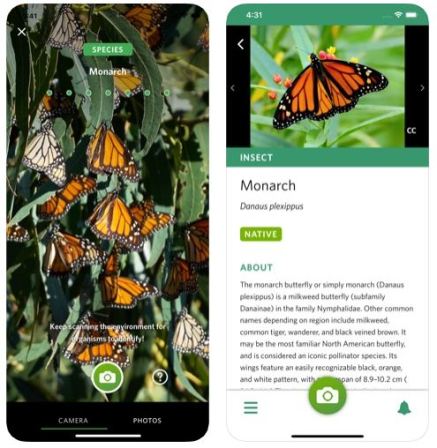
We read about the “Seek” by iNaturalist app a few weeks ago and have been using it a bunch of late. If you’ve ever wondered about the names of the plants/trees/insects around you, this app is awesome.

Here’s how it works –

1. Open up the app and point the camera at any plant (for example)

2. Using image recognition, it’ll give you the name of the species with a confidence score.

3. If you’re unable to get it on first try, you just have to try a few different angles. For example, a closer view of the the leaves of a plant may help it identify it easier.

It is a wonderful application of image recognition. And, we’ve been using it to identify plants and trees all around us.

I also love that it is called “Seek.” In the world we live in, knowledge and wisdom are never more than a few taps away.

All we need to do is seek.

Pain without memories

One of the most fascinating things about kids is that they manage to experience pain without burdening themselves with the memory of it.

They may be crying one moment and then laughing the next. No big deal.

Most adults, instead, tend to go through difficult experiences and accumulate baggage. And, with that baggage, we lose the emotional flexibility that enables us to recover quickly from setbacks.

Much to learn, we have.