Except it didn’t feel like a renewal email. Below is the first paragaph.
“Hi Rohan,
You’re getting closer to your WordPress.com anniversary — congrats! I wanted to thank you for being a valuable member of our community and remind you that your WordPress.com Personal plan for rohanrajiv.blog will renew in 30 days. Don’t worry, you don’t have to do anything; your renewals happen automatically.“
It felt like a celebration of our relationship. It also reminded me that a renewal was coming up – but there’s nothing to worry, they’re on it.
I’ve seen so many renewal emails over the years. Many of them make me wonder if there is autorenewal and if it will, in fact, work as planned. Others just remind me it is going to be time to pay.
Very few make me feel good about renewing.
Good copy goes a long way in improving user experience.
PS: I did find myself thinking of other small touches. One easy improvement that would have been even nice would have been to say – “You’re getting closer to your 8th WordPress anniversary.” A nicer touch still would have been to add an asterisk and compare 8 years with some meaningful milestone or cool stat.
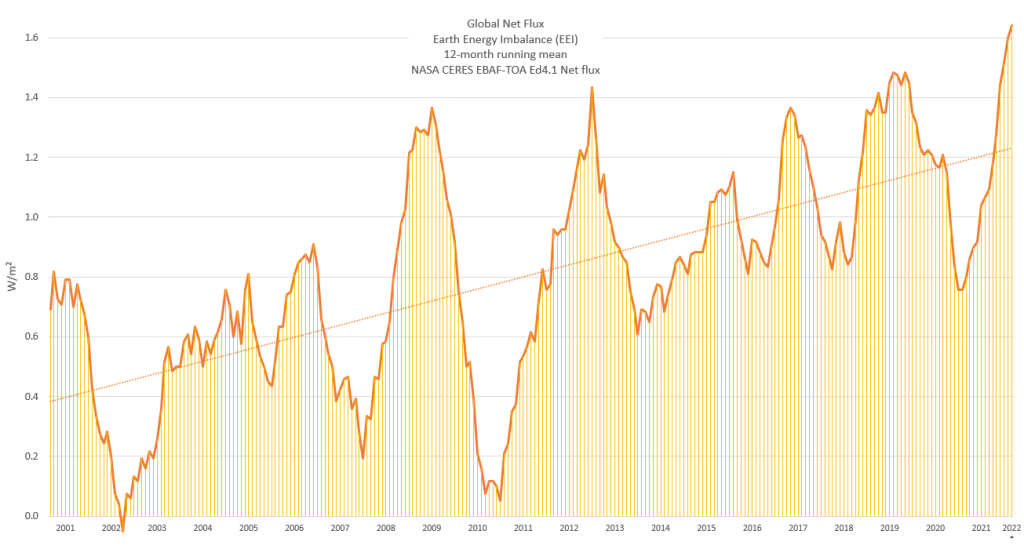
This chart shows a trebling of the energy imbalance just since 2000 alone. That’s a lot of additional energy in the Earth’s system, available to heat oceans, land and atmosphere, melt ice and increase sea levels.
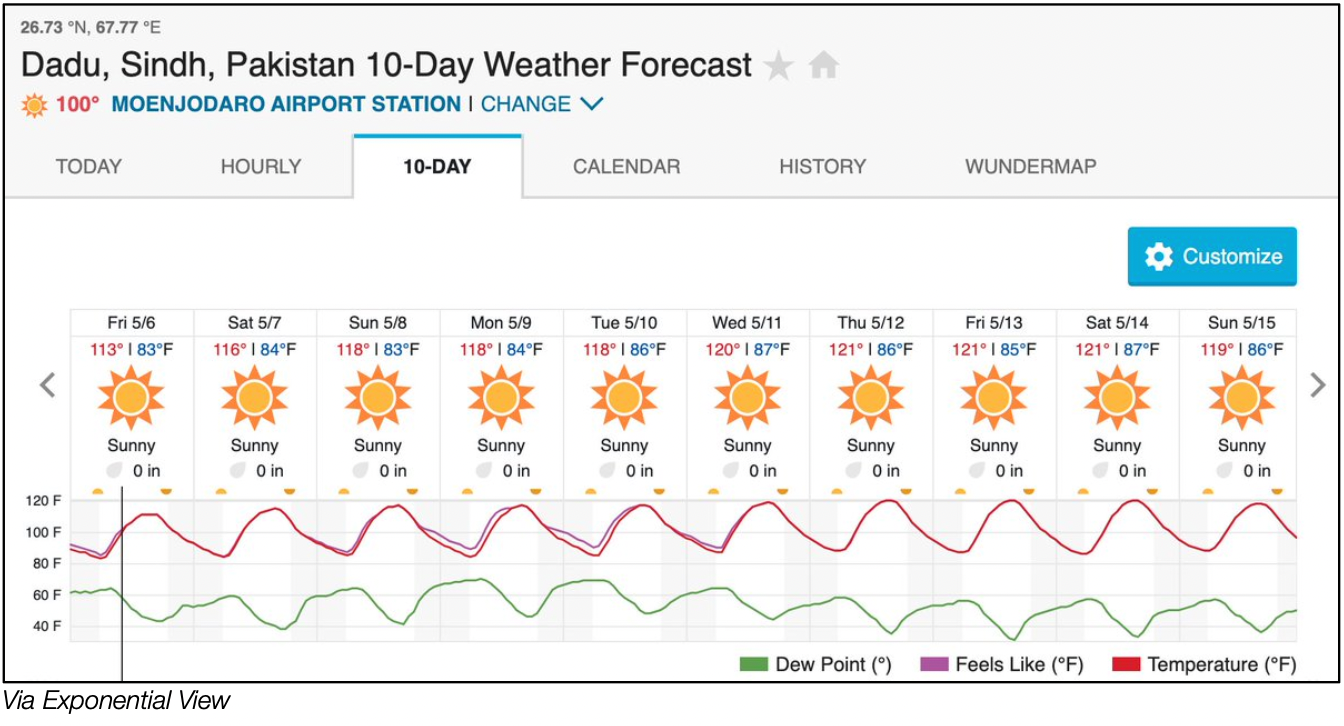
Our parents have been talking about the incredibly intense heat in India already. This is happening across the subcontinent. The forecast for Dadu in Pakistan over the next ten days is 48-49°C (120 degrees Fahrenheit).
Such heat is deadly and challenges a person’s ability to survive without the support of air conditioning. Three years ago, over 350 Magellanic Penguins living in the southern tip of Argentina died when the temperature hit 44ºC in the shade. We aren’t any different.
It is ominous.
Our transition away from Carbon can’t come fast enough. To that end, here are a few optimistic notes.
Electricity is responsible for 25% of global greenhouse emissions.
(2) This week, NJR Clean Energy Ventures started construction on an 8.9-MW floating solar installation in Millburn, New Jersey. It will be the largest floating array in the United States. While floating solar is usually built on reservoirs, what will be the world’s largest offshore wind farm was also begun this week, 125 KMs off the east coast of Yorkshire, England in the North Sea. The Dogger Bank Wind Farm will have an installed capacity of 3.6 GW.
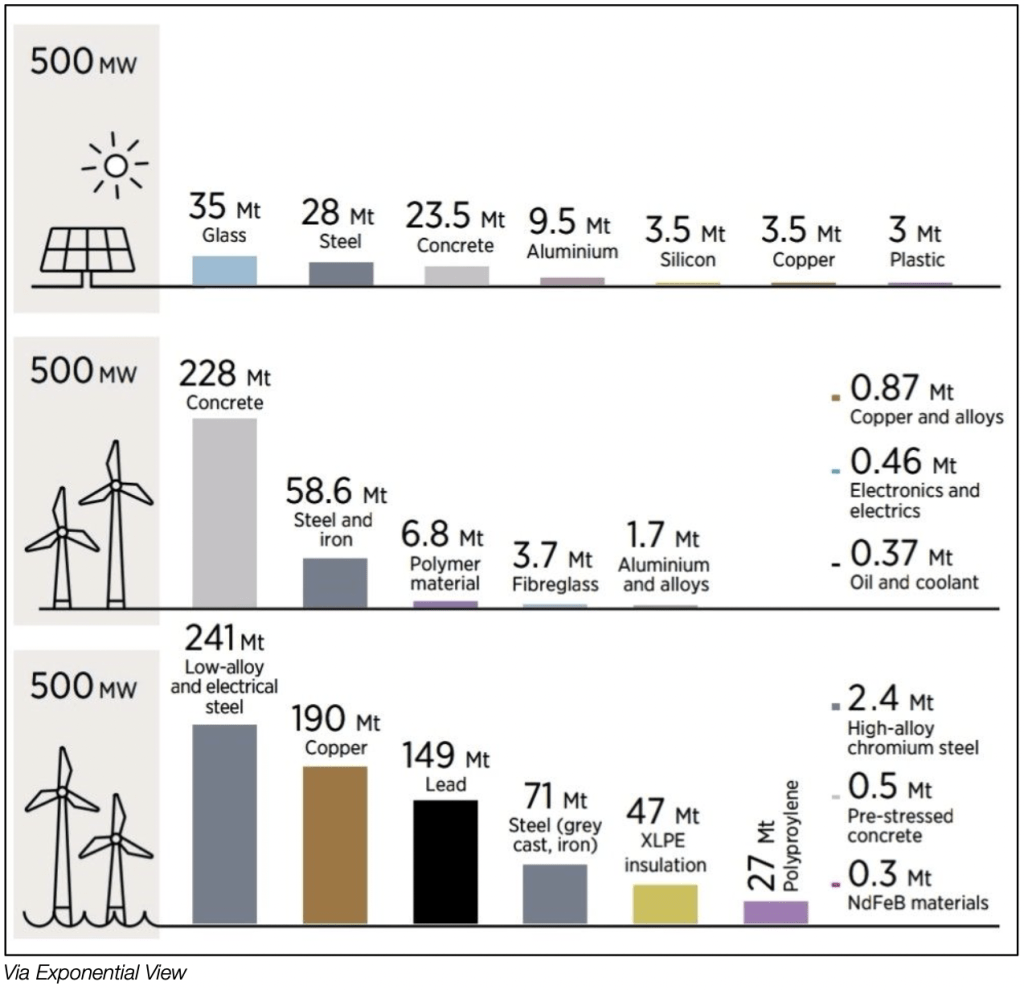
While this is both great, large scale solar installations are way cheaper that wind.
(3) Australian and Chinese researchers have published about the development of an organic polymer-based rechargeable battery with double the energy capacity of previous models. This is pointing to a possible future with far less dependence on lithium and cobalt mining.
(4) 2 weeks ago, the US Bureau of Land Management (BLM) shared plans to approve the construction of 39 utility-scale solar projects, totaling more than 29 GW of capacity on federal lands by the end of 2025. That’s more than twice France’s total installed solar capacity and will increase overall solar capacity in the US by 20%.
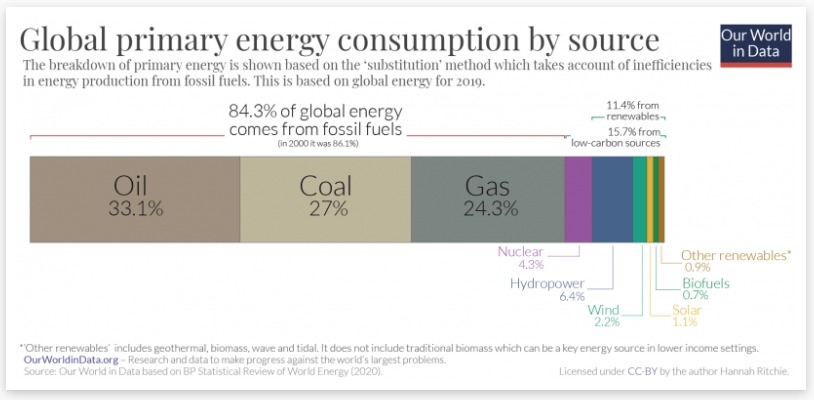
(5) This data from 2019 shows the scale of the problem – 84% of global energy comes from fossil fuels.
This is changing quickly – for example, in 2021, 10% of all electricity came from wind and solar. But the change can’t come fast enough.
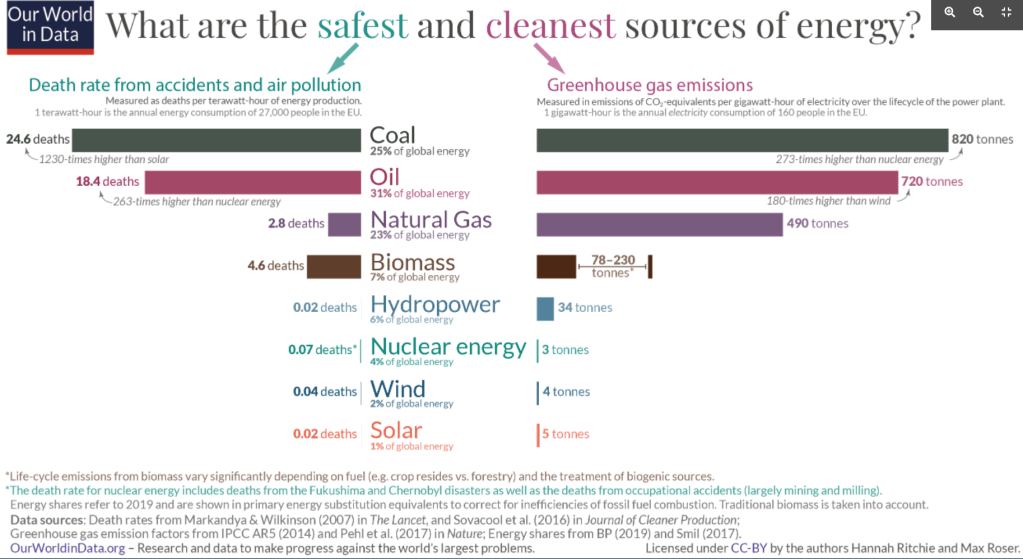
(6) Nuclear is among the bigger non-fossil fuel sources. It is also among the safest and cleanest sources of energy.
We need a lot more innovation on nuclear energy. Seaborg technologies, for example, is working on providing nuclear energy on barges in industrial areas.
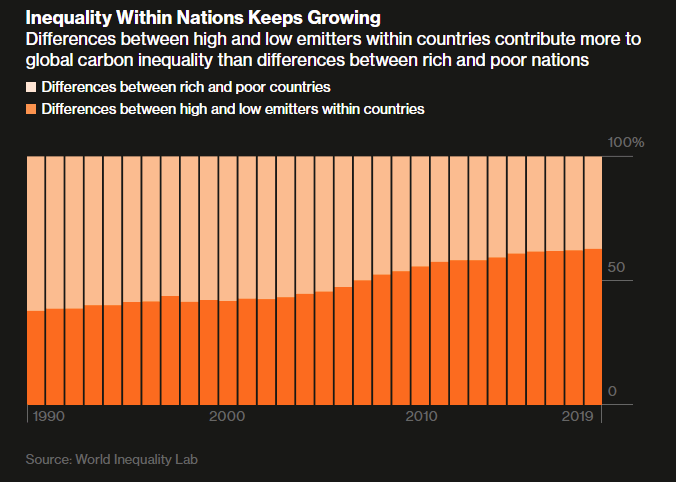
(7) The top 10% richest humans in any country (e.g., over $170K household income in the US) contribute a disproportionate amount of Carbon emissions. Even the middle 40% (I’d guess household income >$50,000) make a massive contribution to emissions.
The differences between the rich and poor within a country contributes to more emissions than between rich and poor nations.
Every one of us can and needs to act. There’s a lot riding on it.
Our ability to stay fit and healthy as we grow older depends on our ability to unlearn our instinct to minimize effort.
That means – for starters – taking the scenic route to the bathroom, willingly running the same errand multiple times, peeling the banana instead of reaching for a processed snack, walking or biking instead of taking the car, carrying weight, squatting instead of sitting, and fasting instead of eating.
Our entire cross-functional team met in person this week. Folks from multiple locations came together for an action packed three days. It was filled with conversations, laughs, tears, and many special moments as we spent time sharing our appreciation for each other.
After months of meeting each other on video, it all felt very special.
Toward the end, a couple of us were reflecting on the week that went by. We were all looking forward to catching up on sleep. But, as one of them nicely put it, “my cup is full.”
That’s what quality in-person interaction does – it fills our cups by recharging our emotional batteries.
“Not all of us can do great things. But we can do small things with great love.” | Mother Teresa
When I share this quote, I replace the word “great” with “extraordinary.”
It is an idea that has stayed with me over the years. It has shaped how I think about building product, leading teams, and, well, every attempt at being a better human.
I came across this chart looking at mortality data for children and adolescents between ages 1-19. (Source: NEJM)
While the thought of losing a child is both morbid and heartbreaking, I’m not one to avoid the thought. I had 3 reflections as I looked at this data –
(1) The sudden spike in drug overdose and poisoning between 2018-2020 is noteworthy. It captures the effect COVID-19 had on adolescents – a ~80% increase in drug overdoses likely made possible by the easy availability of opioids.
(2) Similarly, the other effect of COVID-19 lockdowns was firearm related injuries – which took the #1 spot over motor vehicle crashes. I’m not sure what caused this – was it just the availability of firearms at home? Also, I’m not sure why they were trending up starting 2014 either.
(3) I think there’s the obvious question – will the above trends hold as the pandemic? We’ll know when we get newer data in a year or two. But if you’re working in public health or are parenting teenage children, the areas to focus on are very clear – drugs and guns.
While drugs might be a global problem, guns are a US-only circumstance that is unlikely to change anytime soon.
I was an early Google Apps – now “G Suite” – adopter. I’ve hosted my @rohanrajiv.com domain email address on G Suite for well over a decade. The beauty of the Google Apps suite was that it was free if you were just hosting your own domain or had a small number of users.
Over the years, I used the free account for a couple of projects – e.g., a non-profit – before eventually just returning to using it for my personal email. I was a big fan of the service and always grateful to be an early adopter.
Until I noticed a recent policy change from Google which effectively said – “Pay up or lose your data.”
After an outcry – both external and internal – on this, Google made the terms more lenient – offering up a waitlist in the coming weeks.
I’m still waiting to see if I’d be able to avail the no-cost option as the G Suite plans are designed for small businesses vs. “small individuals.” :-)
Or I will look forward to the fun process of migrating a decade+ worth of emails and data elsewhere.
Google has unfortunately pulled this trick far too often in recent years. I was disappointed when they pulled support from Google Reader. I saw that end coming for Feedburner too and moved off before they pulled the plug. This track record made it clear that I should stay away from Google Photos. The early edition of Google Photos was completely free – they then pulled off that rug from under their users a couple years later.
For what it’s worth, I understand why they made this move as well. There’s a cost to providing a free service. Why not just get rid of those costs and make some money in the process?
The short-term revenue and cost reduction upside will always loom larger than the loss in user trust.
This experience got me thinking about the promises I’ve made in free products I’ve been responsible for. I haven’t yet been in a position where I’ve had to make such a move.
But it is definitely plausible… and one I’d like to make sure I avoid.
Elon Musk is likely going to be remembered as the entrepreneur of this generation. SpaceX and Starlink have achieved incredible feats. And switching from a Chairman role to run Tesla Motors day-to-day while still being the CEO of SpaceX may go down as one of the most important moves ever made in the history of business.
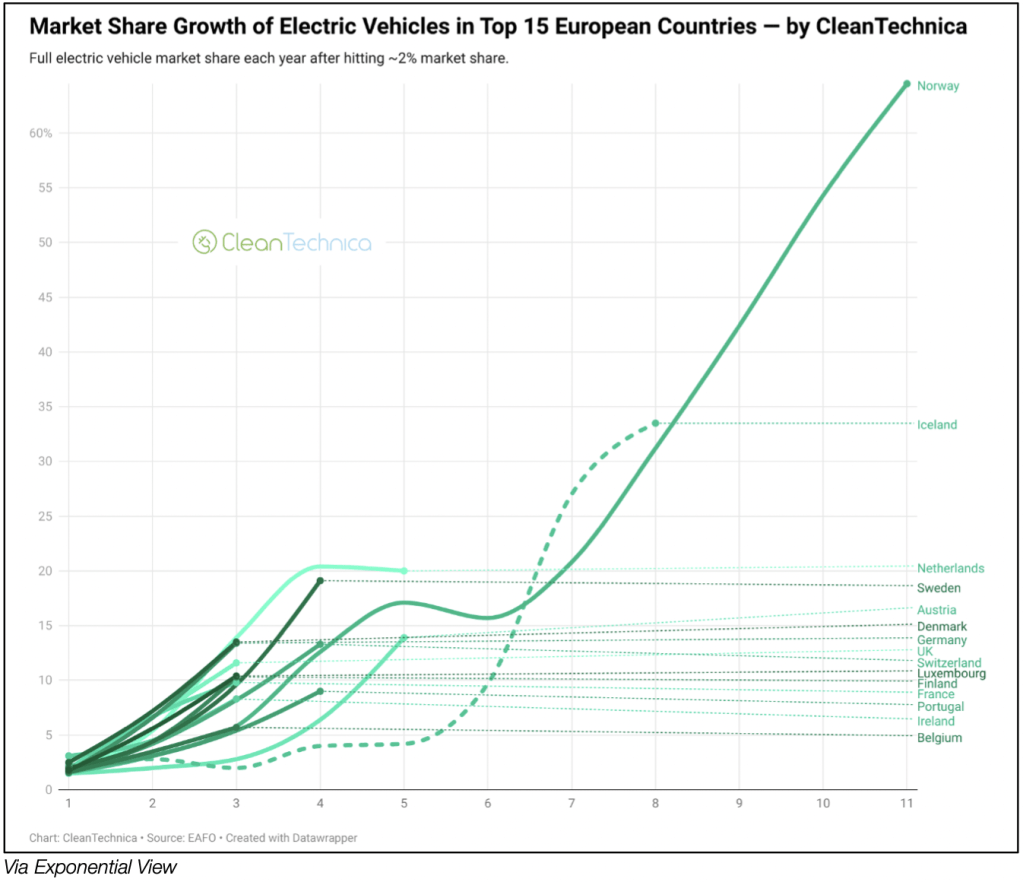
When I look at the chart below – showing the growth in market share of electric vehicle in European countries – I see multiple countries reaching tipping points (Norway, is of course, the outlier). And I wonder if this might have been possible if not for Elon Musk.
I think we often overestimate the impact of individuals. But in this case, I’m not sure it is an overestimation.
Use that money to build an even more affordable car
While doing above, also provide zero emission electric power generation options.
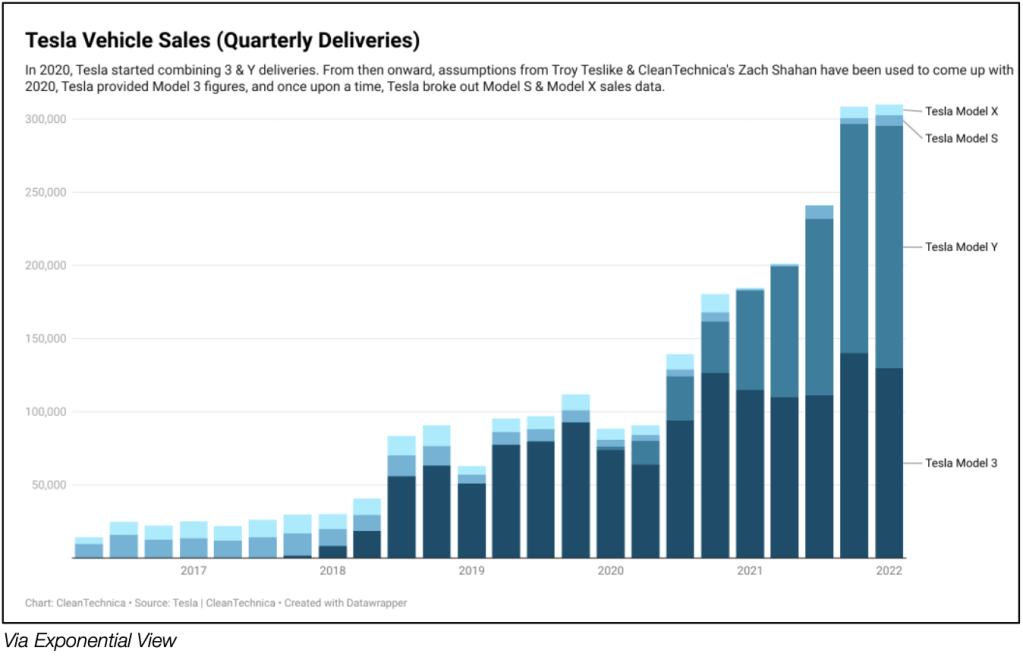
After looking at the chart below and seeing the dominance of the Model Y and the Model 3, it is hard not to marvel at that secret masterplan and the incredible execution that brought that plan to life.
Tesla has changed the game – forever. And it is unlikely that would have happened without Elon at its helm.
With all this said, I do think Elon has underestimated the challenges of running Twitter. Steven Johnson had a thoughtful post that resonated with what I’ve been mulling. A key excerpt –
Musk likes to talk about how he runs all his businesses from “first principles”—starting with what the laws of physics will let you do, and building out from there—which is apparently an excellent strategy if you are making rockets for a living, or electric batteries. But the things that make Twitter such a hard nut are not “first principles” problems. The rallying cry of free speech sounds like it should be a law straight out of Newton, something fixed and undeniable, but in practice—like so many of the variables at play in social media—it turns out to be more like quantum mechanics: murky and unpredictable, more probabilities and gray areas than absolute truths. Twitter is a political and sociological problem—a problem rooted in conflicts over values—not an engineering problem. It requires a different set of skills.
I don’t think he is in over his head – even if it is fair to ask – “when is it going to be too much?” But going after Twitter’s Chief Legal Officer in public while ignoring the fact that she reports to a CEO (Jack Dorsey) who must bear ultimate responsibility felt like the sort of rookie mistake he wouldn’t have made at a different time.
I think Elon will go down in history as one of the greatest entrepreneurs of all time. I also think he’s made a big mistake acquiring Twitter.
It is an exercise in holding two conflicting thoughts at once.
I’m hoping to be proven wrong and I’m hopeful none of this impacts the work he’s doing moving Tesla’s incredible vision forward.