Creativity is a renewable resource – The 200 words project

Here’s this week’s 200 word idea thanks to Things a Little Bird Told Me by Biz Stone.

In his first job as a book jacket designer at a publishing company in New York, Biz Stone was tasked with creating jacket covers for books. He learnt that he was expected to design 6 (!) possible jacket covers per book. This felt like a huge, almost insurmountable, number.

His mentor, however, encouraged him to view the exercise as fun by sharing his two tenet philosophy on designing covers –
Tenet #1: Work is never wasted. If you loved it and the editor didn’t, just add it to your portfolio.
Tenet #2: You are not successful when you produce 6 covers but when you produce 1 that actually makes it.

So, Biz’s focus soon shifted from having to create 6 book jackets per book to creating as many necessary at make it successful. He soon realized that the experiences we gain as we create combined with a dose of curiosity drives us to make unexpected, offbeat connections. It is these nonlinear steps that often lead to the greatest work – in Biz’s case, it helped lead to co-founding Twitter.

And, thanks to this, he learnt a really valuable lesson – creativity is a renewable resource.

(PS: Here’s a post from Biz Stone’s blog from 2004 on “How to Design a Book Cover” :-))

Be as creative as you like, as often as you want, because you can never run out. – Biz Stone
SonoSite resources – The 200 words project

Here’s this week’s 200 word idea thanks to How will you measure your life? By Clayton Christensen

Kevin Goodwin, the CEO of SonoSite, knew that Sonosite needed to sell their portable, but less sophisticated ‘iLook’ product over the more powerful and profitable ‘Titan’ before a competitor came in and disrupted them. But, SonoSite’s salesmen completely ignored promoting the iLook, even though it was a strategic priority for SonoSite.

Goodwin couldn’t understand what was happening and went along with a sales team member to understand if this was because of negative customer reactions. He realized immediately that the problem was that the sales team were not even showing iLook to the customer. Their commissions based on the total value of their sales and gross margin dollars. And, Titan was a more lucrative product.

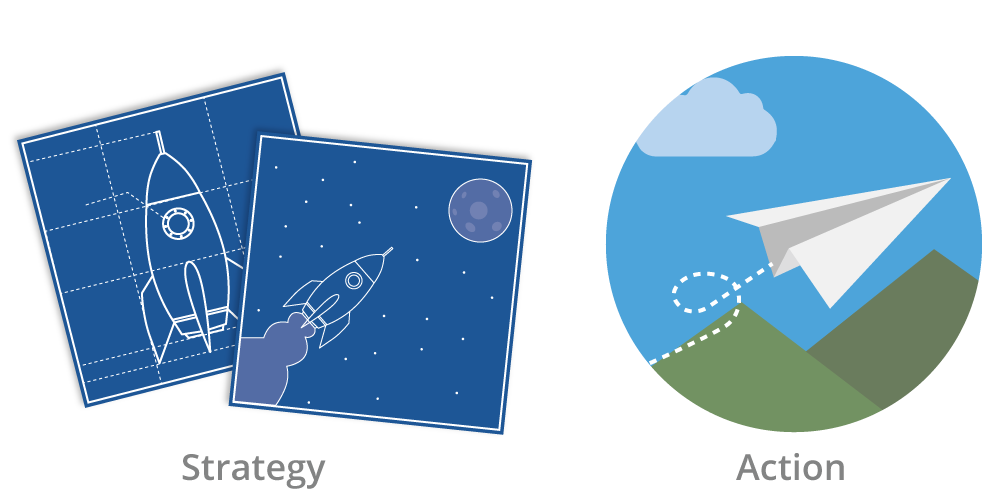
Clay Christensen draws an analogy for life – “You can talk all you want about having a strategy for your life, understanding motivation, and balancing aspirations with unanticipated opportunities. But ultimately, this means nothing if you do not align those with where you actually expend your time, money, and energy. In other words, how you allocate your resources is where the rubber meets the road.”

SonoSite resources

Source and thanks to: www.EBSketchin.com

Watch where your resources flow. If they’re not supporting the strategy you’ve decided upon, then you’re not implementing that strategy at all. – Clayton Christensen

Focus as a verb or noun – The 200 words project

Here’s this week’s 200 word idea thanks to Essentialism by Greg McKeown.

When Bill Gates first met Warren Buffett, their host at dinner, Gates’ mother, asked everyone around the table to identify what they believed was the single most important factor in their success through life. Gates and Buffett gave the same one-word answer: Focus.

In his book, Greg McKeown dives into the nuance and depth behind the word. He explains that there are two kinds of focus –
Focus as a Noun. When people speak of focus they usually refer to the noun – having a single goal. So, focus is thought of as a static thing that you have.
Focus as a Verb. However, focus is also something you do. This type of focus is an intense, dynamic, ongoing, iterative process that explores what is going on and what the (noun) focus should be.

Professor Henry Mintzberg taught that there are two sources of strategy: deliberate strategy – where leaders develop a clear vision and map this to goals (noun focus), and emergent strategy – where people respond to unanticipated problems and opportunities (verb focus). It is the disciplined pursuit of both of these approaches that best enables us to focus on what is essential.

FocusSource and thanks to: Greg McKeown on LinkedIn

Louis Pasteur cholera cultures – The 200 words project

I hope you’re having a nice weekend. Here’s this week’s 200 word idea thanks to Mastery by Robert Greene..

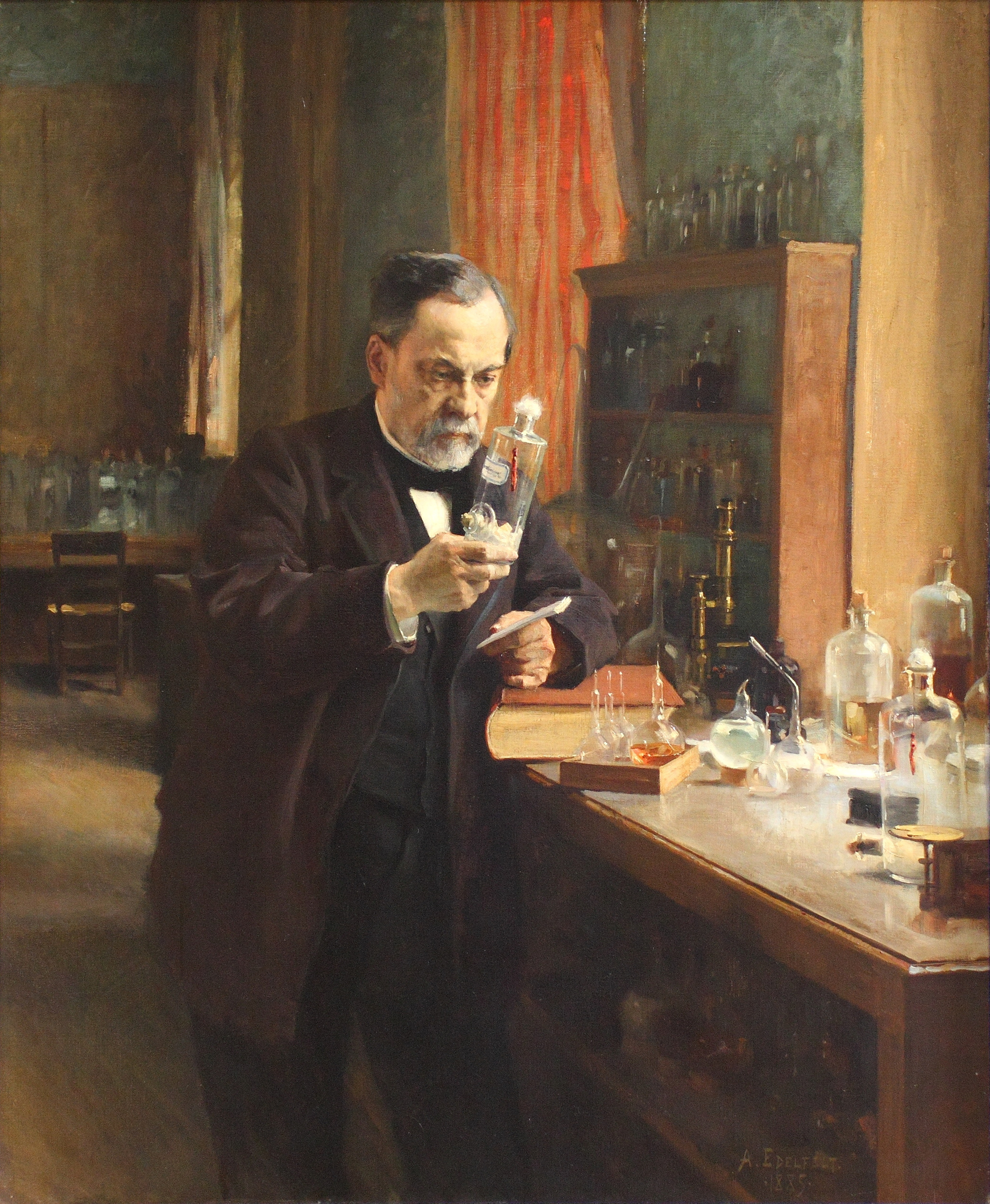
Louis Pasteur spent years arguing for the fact that diseases are caused by germs. This was contrary to the view at the time so he needed data from multiple experiments to prove his point. While experimenting with germ theory in 1879, he began researching cholera in chickens. However, his work got interrupted and he left the cholera cultures untouched for several months.

When he found his cultures again, he injected them into chickens and was surprised to find that they all recovered easily from the disease. Here’s what is amazing – Louis Pasteur was not the first person to see this occur. Many doctors had witnessed similar phenomena but, since this wasn’t what they were researching, they ignored it.

Pasteur, however, dug deep and experimented with old and new cultures. A combination of his broad understanding of the sciences as well as a willingness to be open to new ideas led him to a ground breaking discovery – vaccination.

As masters have repeatedly demonstrated, preparation, openness and opportunity go together.

Louis Pasteur                                                                                                      Source and thanks to: Wikipedia 

Chance favors only the prepared mind –  Louis Pasteur

Brain-writing – The 200 words project

Here’s this week’s 200 word idea thanks to Lifehacker.com and Prof Leigh Thompson on Brainwriting..

There are two leading problems with the average brainstorming session, as Professors Leigh Thompson and Loran Nordgren at the Kellogg School of Management explain –
1. In a typical six- or eight-person group, three people do 70 percent of the talking.
2. Early ideas tend to have disproportionate influence over the rest of the conversation.
The process, known as anchoring, favors the first ideas and forces the unique and creative ideas away through a phenomenon called conformity pressure.

So how can this be avoided? Professors Thompson and Nordgren suggest a process called “brainwriting.” The idea is pretty simple:
– Take 5 minutes and ask the group to write their ideas down on a stack of index cards
– Next, put all the cards up on the wall and ask the team to do a blind vote.
If done right, the best ideas will emerge very quickly.

Here’s to giving brain-writing a shot.

BrainwritingSource and thanks to: The Kellogg school

The tripwire – The 200 words project

Here’s this week’s 200 word idea thanks to Decisive by Chip and Dean Heath

Inmet Mining Corp. was losing money fast on a mine. So, the team met in Wisconsin to decide if they ought to close the mine. However, the mine employed a 1000 people, had recently been acquired and had millions invested in it. The discussions reached an impasse as the head of the mine refused to accept closure as an option.

So, a team member issued the group a challenge – list out all options available and ask – “What would have to be true for this option to work?”

The head of the mine now laid out a bunch of conditions (e.g. we would have to get it to 90% capacity in 3 weeks and we would have to break even in 2 months) to keep the mine open. These were “tripwires.” If they tripped, they would have to close the mine. The best outcome of this move was that everyone collaborated to try and make sure the tripwires didn’t trip.

But, they did trip. By the next board meeting, the resistant head of the mine endorsed the close himself. One question and a tripwire had moved the group from adversaries to collaborators.

TripwireSource and thanks to: LeadershipTraq.com

“”What would have to be true for that option to work?” sets up tripwires. A tripwire specifies the circumstances during which you would reconsider a decision. Most people overestimate the chances of making it past an obstacle.” | Chip and Dan Heath in Decisive

Questions and tentative talk – The 200 words project

Here’s this week’s 200 word idea from Give and Take by Adam Grant..

Wharton researcher Adam Grant’s interviews with successful lawyers, sales people and executives on how they moved people led him to repeatedly find 2 common behaviors – asking questions and using tentative language.

1. Asking questions – In a study of optical sales people, Grant found that, while unsuccessful staff try flattery and assertive talk (“I think the designer had someone like you in mind”), successful sales people ask the customer for their lifestyle, tastes, etc., before pushing forward a recommendation. They behave like opticians, not salespeople. Just the question – ‘do you plan to vote in the next election’ makes people 41% more likely to go if they weren’t planning to do so. Questions allow us to be convinced by a person we really like – ourselves.

2. Tentative language – Successful influencers were found to use caveats (this idea might suck), hedge words like ‘I think’, ‘maybe’ and words like ‘very’ that signal their lack of complete confidence. Such words were found to hold much more persuasive ground.

And, the underlying requirement? Good intent. Nothing could save someone whose intent was misplaced.

Questions and Tentative TalkSource and thanks to: www.EBSketchin.com

“Many times, you can have bigger impact if you know what to ask, rather than knowing what to say. I don’t learn anything when I’m speaking. I learn a lot when I’m listening.” | Jim Quigley in Give and Take

Kite strings – The 200 words project

Here’s this week’s 200 word idea thanks to some awesome anonymous storyteller and a hat tip to Vik’s blog for sharing the story.

A son was watching his father fly a kite. After some time, the son said – “Dad, that string isn’t allowing the kite to go any further higher.”

Hearing this, the father smiled and broke the string. The kite went higher for a while and then began to come down and, eventually, fell to the ground. The child was very disappointed as he saw his idea fail.

The father took the opportunity to share a life lesson. He said – “Son, in life, when we reach a certain level of prosperity, we can often feel that there are certain things in our life that are not letting us grow any further. These things can be home, our values, our culture, our existing friendships etc. We feel the need to be free from those strings as we believe they stop us from going higher. But, remember, going higher is easier than staying at that higher level. Often, it is precisely our friends, family and values that help us stay stable as we experience the highs of our achievements.”

Source and thanks to: LinkedIn Pulse

And one to make you smile – ‘If you ever want to call a family meeting these days, turn off the WiFi router and wait in the room where it’s located.’ :-)

Process, spot and Rory McIlroy – The 200 words project

I hope you’re having a nice weekend. Here’s this week’s 200 word idea thanks to Steven Pressfield’s blog post about Rory Mcillroy..

When golfer Rory McIlroy was having the tournament of his life at the British Open championship, reporters asked him, “Do you have ‘secret thoughts’ that are helping you play so well?” Rory confessed that indeed he had two specific words that he was repeating to himself. But, he said, he wasn’t going to say anything until the championship was over. He won – at age 25!

When reporters asked him again, he said – “I just thought ‘Process’ and ‘Spot.” He explained that “process” meant to him the consistent, repeated sequence of thoughts and actions that he performed before every swing. Then he would pick a “spot” on the green he wanted to roll over. So, he focused not on the hole but on rolling the ball over the spot.

There is great wisdom to what he did – by thinking “process” and “spot,” Rory detached himself from the outcome of each individual shot and just focused on making good decisions and good swings. Of course Rory wanted to win the British Open. But, he knew that to over-obsess about this ultimate object would be focusing on the wrong target.

Great results follow great processes.

Process spot Rory McIlroyRory at the press conference after the tournament
Source and thanks to: News.yahoo.com

“Nobody can control the outcome. All you and I can do is stick to our process and roll our ball over the spot. That’s enough. It worked for Rory.” | Steven Pressfield

Find your show dog – The 200 words project

I hope you’re having a nice weekend. Here’s this week’s 200 word idea thanks to Prof Cerf at Kellogg with a bit of the backstory from Fundingverse.

When Paul Iams visited a mink ranch in 1946, he noticed the dogs at the ranch, who also ate food made for minks, seemed exceptionally healthy and beautiful. So, he developed Iams 999, a superior quality high-protein variety of dog food. However, sales stagnated at 100,000 dollars and Iams looked in trouble.

The vision of Clay Mathile, a new manager, however, changed everything. Mathile asked the question – what is a segment that would love what is great about Iams (superior quality => shiny coats, healthy dogs) and not mind what isn’t great about Iams (high cost, limited distribution)? Show dogs! So, he went on to focus all advertising on show dog owners who were more than happy to buy premium dog food and go through the difficult sourcing process so they had a competitive advantage.

Soon, Iams was ready to expand again. Next, they focused on breeders who cared about healthy, shiny dogs and didn’t mind the extra expense. Breeders naturally recommended the new owners continue Iams.

By 1999, Iams had 900 million dollars in sales and was acquired by P&G – a classic case study in the power of segmentation.

IAMSSource and thanks to: www.EBSketchin.com

“In finding the ideal market for your product as well as for yourself (e.g. your spouse and employer), your ideal segment is one that loves what’s good about you and doesn’t mind what’s bad about you.” | Moran Cerf, Kellogg School of Management