The man in the arena

Every once in a while, I find myself thinking about the famous excerpt from Theodore Roosevelt’s speech “Citizenship in a Republic” titled ‘Man in the arena.’

It is not the critic who counts; not the man who points out how the strong man stumbles, or where the doer of deeds could have done them better. The credit belongs to the man who is actually in the arena, whose face is marred by dust and sweat and blood; who strives valiantly; who errs, who comes short again and again, because there is no effort without error and shortcoming; but who does actually strive to do the deeds; who knows great enthusiasms, the great devotions; who spends himself in a worthy cause; who at the best knows in the end the triumph of high achievement, and who at the worst, if he fails, at least fails while daring greatly, so that his place shall never be with those cold and timid souls who neither know victory nor defeat.

It reminds me of 2 things –
1. There is very little value I add as a critic. If I really care about something, I should just take ownership and fix it. And, if I don’t, then move on and focus energies on what I am working on. 9/10ths of education is encouragement.
2. It is okay to fail. But, if you do, fail while daring greatly. And, fail by being authentic.

It never fails to inspire me.

Letting go

I am reminded of a popular Buddhist parable – Two monks were about to cross a river when a girl asked a monk to please help carry her across. The monk did.

The two monks kept walking in silence. And, after a few hours, the other monk burst out – “How could you do that?” He went on to explain that this was against all rules around contact with the opposite gender.

To this, the other monk replied – “I dropped her off at the shore. It seems you are still carrying her.”


Counter intuitive

The harder you work, the more you need to let go.

The more you know, the more you need to shut up and listen.

The more you care, the more you need to let people be.

The more you feel like working, the more you need to take a break.

The more you feel like running around in different directions, the more you need to pause and enjoy the moment.

It is always interesting to me that the best decisions we ought to make in a given moment seem counter intuitive.

The interesting part is that, once we train ourselves to listen to our intuition, we realize that our intuitions tell us this as well.

Perhaps they are not counter intuitive after all?

Writing out presentations

Every time I have a presentation that matters, I’ve learnt that I should take the time to write down a draft of what I plan to say.

Even if there are slides and even if I know the key themes, it helps a great deal to be able to map all my thinking down.

2 things happen when I do that –
1. I cull unnecessary content. There always is a lot of it. And, writing it down helps clarify my thinking.
2. I feel very comfortable veering off track. I rarely end up sticking to the exact content. But, having written it down gives me the confidence to change strategy on the fly.

And, I find both things to make the pain of writing it out worth it.

Jeff Bezos on being right a lot – The 200 words project

One of Amazon’s leadership principles says “leaders are right a lot.” Jeff Bezos once shared an observation about this principle.

He said people who were right a lot of the time were people who often changed their minds. He didn’t think consistency of thought was a particularly positive trait; instead, it is perfectly healthy – encouraged, even – to have an idea tomorrow that contradicted your idea today. He’s observed that the smartest people are constantly revising their understanding, reconsidering a problem they thought they’d already solved. They’re open to new points of view, new information, new ideas, contradictions, and challenges to their own way of thinking.

This doesn’t mean you shouldn’t have a well formed point of view, but it means you should consider your point of view as temporary.

And, what trait signified someone who was wrong a lot of the time? Someone obsessed with details that only support one point of view. If someone can’t climb out of the details, and see the bigger picture from multiple angles, they’re often wrong most of the time.

‘He would flip on something so fast that you would forget that he was the one taking the 180 degree polar opposite position the day before. I saw it daily. This is a gift, because things do change, and it takes courage to change. It takes courage to say, ‘I was wrong.’ I think he had that. – Tim Cook on Steve Jobs

Source and thanks to: Jason Fried’s Blog

(This is probably the third time I’ve shared this story on this blog in the past few years. I find it to be a wonderful reminder to stay humble and keep questioning my assumptions.)

A 3 part framework for great managers

A few friends and I discussed great managers recently. There’s plenty of literature on this. But, I find myself frustrated when I see lists of the 435 characteristics of great leaders/managers/employees. We generally don’t remember more than 3 things. So, I sought to boil it all down to 3 characteristics.

After a bit of discussion, we ended up at the following framework that characterizes great managers –

  1. Great managers understand each member of the team. Every member needs to be managed differently. This requires an understanding of their strengths, weaknesses, personalities, working styles and motivation. The first pre-requisite is, thus, empathy.
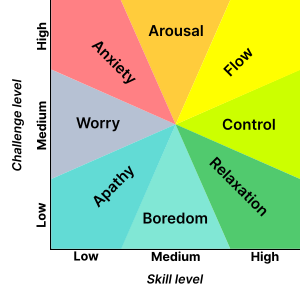
  2. Great managers learn how to scope work well. The worst managers over-promise to their higher ups/clients and burn their teams by making them work 12+ hour days to achieve unrealistic, unproductive and generally unnecessary results. And, on the other hand, great managers scope work such that their team is regularly in the “stretch” zone and never in the “panic” zone. The ability to scope work is a learned skill. It also requires guts as it necessitates pushing back and saying no to unnecessary work.
  3. Outstanding managers care more about their team’s goals and individual ambitions than their own progress. While characteristics 1 and 2 make good managers great, an outstanding manager is one who simply cares a lot more than the next person. When you work with outstanding managers, you believe know that they always have your best interests in mind. And, even when you are going through difficult times as a team, you know that they care more about the team’s goals than their own.

We rarely come across managers who do all 3 things well. But, as a wiser friend pointed out, if you do 3 well / care more about the team, you are forgiven for not scoping work well.

There is, however, no escaping really understanding every member of the team.

Silent and Loud

I came across this quote – “Confidence is silent, insecurities are loud.”

The ego that arises out of insecurities makes a lot of noise attempting to announce, explain, and justify.

Confidence doesn’t need all that. You know you know.

I’ve found that to be very true. But, I’d never thought of it in this way. And, I’m looking forward to observing my silence and loudness and understanding where they come from in the coming days..

The first rule about advice

Take it with a healthy pinch of salt.

Nobody (not even your mom, dad or spouse) has the context you have.

Nobody is free of biases. We all love our own thought processes and generally believe we are right.

Nobody has to live with a decision you make in the same way you have to.

Nobody cares as much as you do.

So, listen to people who matter and then forge your own path.

And, if it helps, there is no right answer. There may be a “general” right way. But, there’s no guarantee that it is the right way for you.

PS: If you find yourself sharing your perspective or giving advice, state your biases. It helps the person on the other end.

Equanimity

An idea I’ve increasingly appreciated over the past few years is “equanimity.” Equanimity is defined as a state of mental calmness or composure in difficult situations.

I struggled with something approaching even a semblance of equanimity until a few years back. Highs and lows were the norm. Over time, however, thanks to all the self reflection that writing here required of me, I’ve learnt to keep perspective. And, in addition, I’ve realized that what matters most is to keep focus on the process / things you control.

An example of applying this was when my laptop stopped booting up last night. I had been having intermittent problems over the past couple of days. I hadn’t gotten around to figuring out the issues since I was busy wrapping up a project and switching locations. But, last night, just as I boarded my flight, it gave up on me. So, I reached home this morning and gave it a fresh shot.

Again, no luck. Damn. Can’t blog in the morning. Can’t do some work I wanted to get done. Can’t get through emails that required certain actions for a current project. Not good in my world.

But, I chose instead to spend my time unpacking. I’d been having a good couple of days and just viewed this as the inevitable “down” and moved on. After unpacking, I took it to our IT support folk at school. Within 3 hours, they’d identified that the problem was the result of a hardware loose contact and had fixed it (thanks guys!).

The best part about this was not the fix but the fact that I didn’t experience the slightest amount of stress or anxiety. While this is a classic first world problem, this would have caused hours of irritation and anxiety in the past. But, thanks to focusing on things that I could control, I dealt with it far better than I ever would have.

Truly a transformative experience.

(PS: A big part of this evolution has also been the absence of the manic high. More on that another day.)