
Counting another person’s money

A friend shared a great story about NBA superstar Steph Curry. In 2017, Steph Curry had turned in incredible performance after incredible performance to win the NBA title for the Golden State Warriors. However, thanks to a 4 year contract he’d signed in 2012, he was making less than half per season as some of his fellow top NBA players.

When he was asked about this, he said – “One thing my pops always told me is you never count another man’s money. It’s what you’ve got and how you take care of it. And if I’m complaining about $44 million over four years, then I’ve got other issues in my life.”

“My perspective was: ‘Man, I’ll be able to take care of my family with this. Blessed to be able to know I’ll be playing at least in the NBA for four years and see where it goes from there.”

It is easy for us to point to his massive wages and say that it is easy for him to say that. But we are social creatures who compare ourselves to others. It would have been easy for him to put any sense of happiness to death by comparison.

But he didn’t.

His approach reflects an enlightened perspective stemming from a simple and powerful idea – don’t worry about how much other people have.

Gardening on this journey

We’re all gardening on this journey. It helps to do three things in our role as gardeners –

(1) Plant trees that grow gratitude and avoid giving too much attention to the weeds that inevitably get in our way. There are always reasons to be unhappy.

(2) Aspire to and work at becoming a better gardener. Good outcomes follow the development of proficiency and insight.

(3) Don’t spend much time looking at others’ plots. Comparison is the simplest path to unproductive discontent.

Policy trade-offs and solar covered canals

One of my favorite courses in graduate school was a course on public policy decisions taught by a great economics professor. I took away two lessons from that course –

(1) Public policy decisions on everything we consider important – energy, infrastructure, immigration, public health, etc. – are fraught with trade-offs.

(2) A rigorous approach to estimating the return-on-investment on projects is critical. as they determine the quality of our decision making. One way to ensure rigor is to get multiple people take different approaches to arriving at the answer. The truth typically lies somewhere in the middle.

I’ve always had empathy for these trade-offs in discussions around public policy – most of whom ignore the nuance. And I also find myself to be incredibly appreciative of ideas whose investment case is so obviously positive that we don’t have to rely on people to make difficult trade-offs.

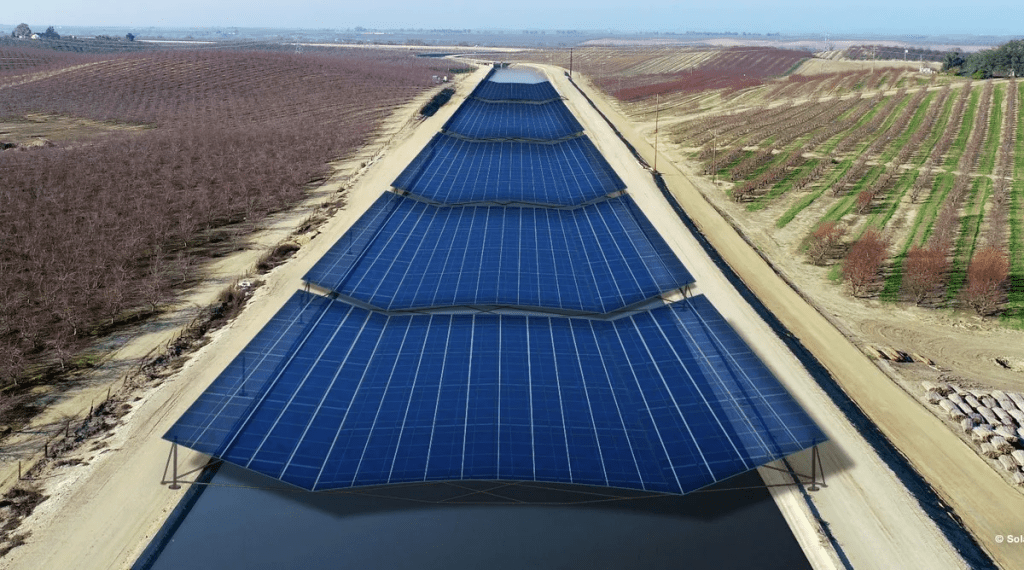
One such project I stumbled on recently was a pilot in California to create solar power canopies over canals.

Let’s take a moment to consider the positives:

(1) Renewable energy: Covering 4,000 miles of canals in California can produce enough power for over 90% of California’s households.

(2) Evaporation: It would also save over 65 billion gallons of water annually by reducing evaporation. That meets residential water needs of over 15% of California households.

(3) It is a pilot with a proven track record: They’re starting with a small pilot to test viability. That said, India has already proven it can work with large scale deployment (who knew?!).

Investment cases like these are a gift that keep on giving. Here’s to many more of these.

Unsustainable hard work

Hard work becomes unsustainable when we don’t feel connected to – either via the problem or people – the work we do. That lack of connection is a recipe for burnout.

Conversely, we have an immense capacity for hard work when we experience that connection.

If you’re feeling burnt out, it probably isn’t just about the hours. The hours just bring other problems to light.

Hetch Hetchy

For over a hundred years, the Hetch Hetchy reservoir has been the primary water source for the farms in California’s Central Valley and the residents in the San Francisco Bay Area.

But the glacier that is the source of the water in the Hetch Hetchy reservoir is melting in the warm weather we’re experiencing right now. A Park Ranger we met said the latest estimates are that we’ve got about 20 more years before it disappears.

Gradually, then suddenly.

That’s the challenge that lies ahead for all of us with the warming climate. The most devastating changes happen gradually at first.

It may not feel urgent to care and to take actions that make things better today.

But this is exactly when such action is most effective.

Mistakes

Mistakes are inevitable in projects that are new, complex, or complicated.

We can try reducing their occurrence. But it is hard to avoid them.

Best to expect them / make an allowance for them and not waste time being surprised or disappointed when they eventually happen.

The lesser the drama, the more we can focus on a creative, constructive, and corrective response.

Making decisions faster

Organizations often look to simplifying decision making processes to speed up decision making.

In reality, the biggest lever we have to making decisions easier is to develop a strategy – that comprises of a set of hypotheses/principles – that is well understood within the organization.

While good strategy is helpful in aligning the organization on a path forward, the best outcome of good strategy is helping people avoid deliberating on decisions that shouldn’t be considered in the first place

Requesting people we don’t know well for help

Every once a while, we find ourselves in situations where we need to request people we don’t know well for help. As someone who has been a giver and receiver of this sort of help, I’ve come to appreciate when people do 3 things right –

(1) Get the name right. I know this sounds nuts. But roughly a third of the people who reach out to me make mistakes between my first and last name. Some threads even involve alternating names somehow.

(2) Keep it short/get to the point. Get to the ask directly. It’s okay.

(3) Don’t pretend a relationship exists if it doesn’t. No need to ask to catch up or feel compelled to pretend there was a strong relationship. Just make the ask – see (2).

Of course, it’d be great if we didn’t have to do this. It is best to plant trees well before we need the fruits.

But in situation where we have to, keep it simple and just make the ask.

Closing an inactive account

I received an email from Mailchimp saying they’re closing my account as it has been inactive for 2 years.

They had a clear reason for doing this – they want to delete the user data involved to reduce security risks.

In one stroke, this likely reduced internal tech debt, possible security vulnerabilities, and greatly simplified compliance. Genius.

It also makes for a delightful user experience. I’m clearly not using my Mailchimp account and I’d love to remove it instead of a continued zombie state existence.

Delightful user experiences can come from the most unexpected of places.

Great job, Mailchimp. I hope more services follow your lead.