
The Exponential View team shared this interesting piece of analysis recently.
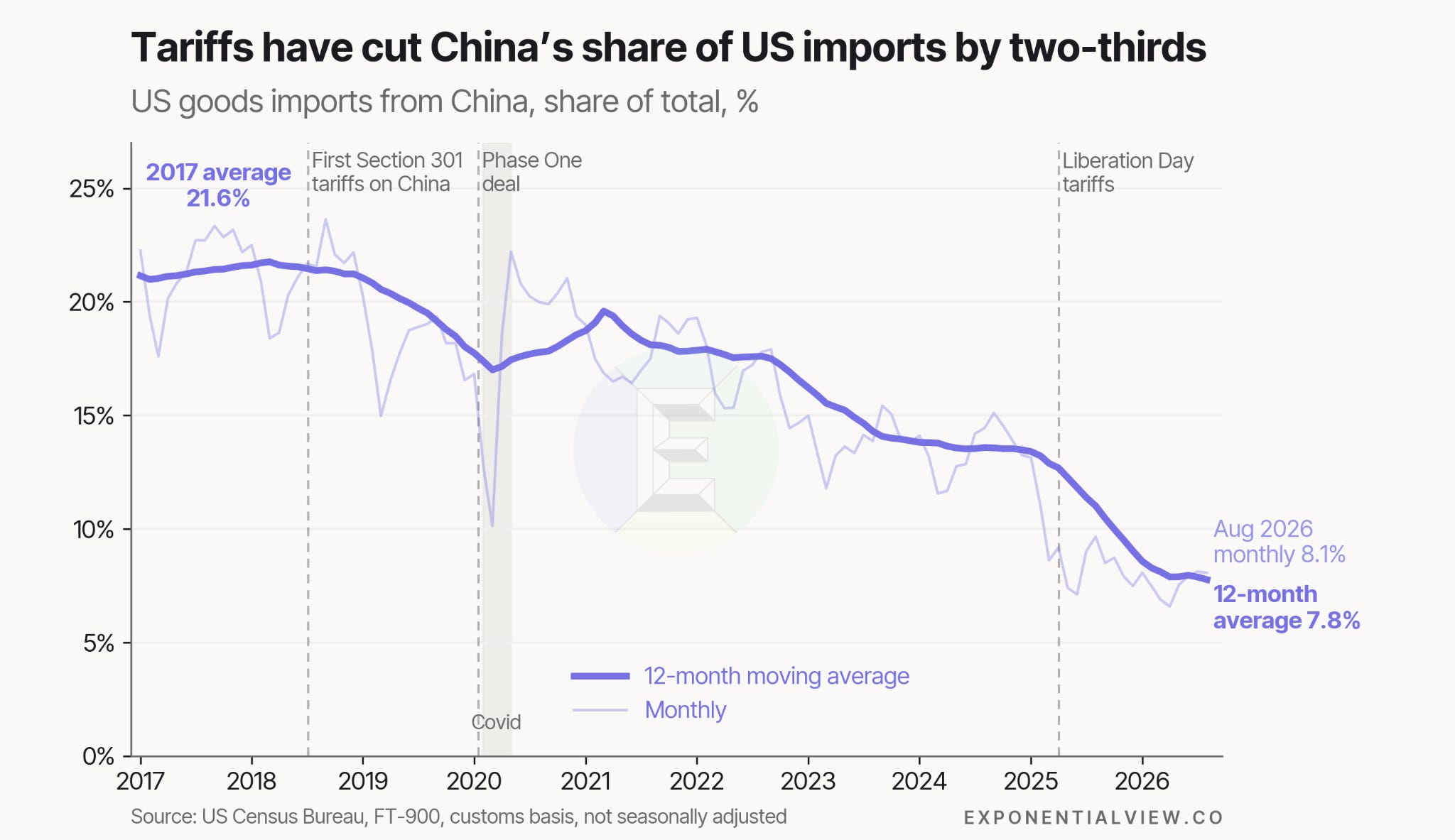
“The immediate impact of tariffs on China was a drop in the share of US imports from China. In the mid 2010s, the share of goods imports was around 21%1. By this summer, it had plateaued at around 8%.
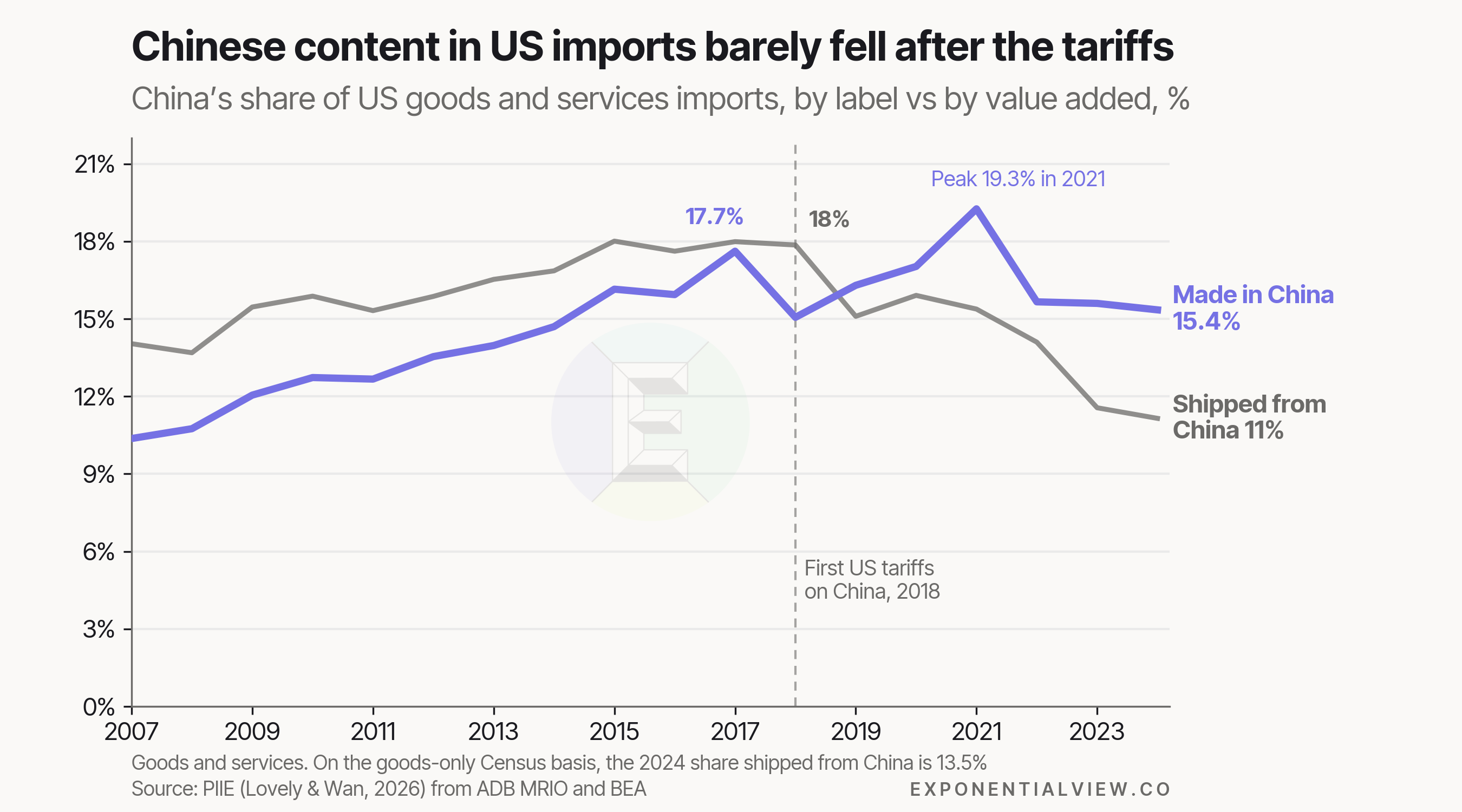
The Chinese engineering state found a way around it — tariff-jumping investments, i.e., relocating production to other countries. A product made in Vietnam or Mexico can reach the US as that country’s export, even if the factory, or the parts that went into making it, are Chinese.
Chinese-owned factories shipped 25% of Vietnam’s exports to the US between 2020 and 2023, up from 11% in 2018-19 – imports that don’t carry a “Made in China” label. Chinese imports have dropped, but China’s supply-chain impact remains strong.
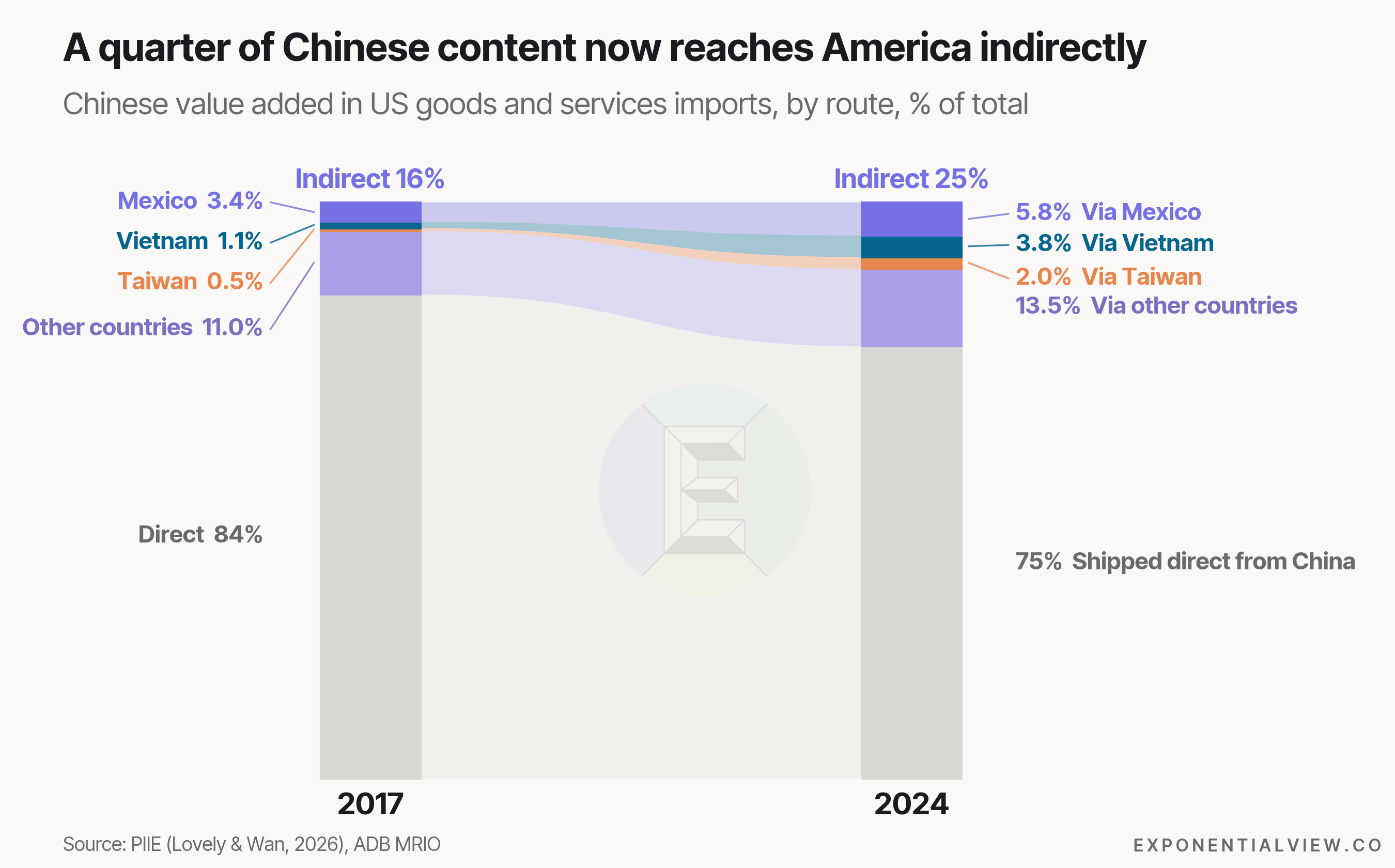
In fact, the share of Chinese value added in US imports that arrived directly from China dropped from 84% to 75% over 7 years, while the share arriving via Vietnam more than tripled.
Seeing this data was fascinating even as it was entirely predictable.
The challenge in setting any kind of policy isn’t in imagining the first-order impact. It is in taking the time to understand the second and third order impacts.

