
I recently started building products focused on healthcare affordability in the US. As I was ramping up on a new space, the biggest question that sparked my curiosity was: how did we get here? This question is the inspiration for this weekly series chronicling the decisions, accidents, and breakthroughs that built the US healthcare system.
Henry Kaiser was a construction magnate who had invested in shipyards as the demand for ships rose with World War II.
By 1942, his shipyards in Richmond, California were running around the clock. Workers poured in from across the country — 80,000 by the end of that year, over 200,000 at peak. Kaiser built housing for them, schools for their children, a credit union, and even a dedicated electric commuter train between the housing areas and the yards.
Between his Richmond and Portland shipyards alone, his teams built 1,490 ships during the war. When he noticed too many workers missing shifts due to illness, he decided it was time to build a better healthcare system for his employees.
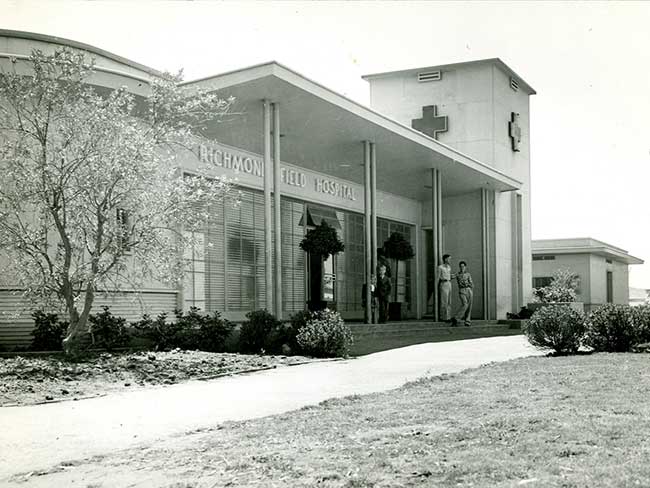
He called Sidney Garfield — the desert doctor whose prepaid model had so captivated him at Grand Coulee — and asked him to scale it. Garfield built out a tiered system: first aid stations in the shipyards for minor injuries, a field hospital in Richmond for more serious cases, and a fully renovated hospital in Oakland for severe illness. Workers paid 7 cents a day for comprehensive coverage.
By August 1944, 92.2% of the Richmond workforce had voluntarily enrolled — the highest voluntary enrollment rate of any health plan in the country.
Kaiser didn’t stop at healthcare. In 1942 he bypassed the unions and integrated his shipyards directly, hiring Black workers and women through the US Employment Service. His hospitals followed. At a time when racial segregation in medicine was standard practice, Kaiser’s facilities treated workers of all races and genders equally.
The American Medical Association was watching all of this with alarm. Their opposition was fierce and coordinated. The prepaid model threatened everything the medical establishment had built — the traditional fee-for-service relationship, the physician as independent entrepreneur, the idea that medicine was a private transaction between doctor and patient. County and state medical societies even barred Kaiser’s doctors from existing hospital facilities.
Kaiser’s response was to build his own hospitals. If the establishment wouldn’t share their facilities, he would create his own self-contained system — with full-time doctors, nurses, and staff who believed in the same thing he did: that keeping people healthy was better medicine than treating them when sick.
Ironically, the AMA attacked it by calling this socialized medicine. Kaiser was a private sector industrialist who had chosen to build a market-based solution — employers paying for worker coverage, competition driving quality — and was now getting attacked as a socialist for it.
When the war ended and the shipyards closed, membership collapsed almost overnight — from 200,000 to 11,000. So, in July 1945, Kaiserand Garfield announced it was open to the public. The San Francisco Chronicle reported the news matter-of-factly: Kaiser’s Permanente Foundation Hospital in Oakland, built for shipyard workers, was now available to anyone who walked through the door.
Writers at the time called it “a Mayo Clinic for the common man.” Kaiser simultaneously drafted a proposal for Congress to establish a nationwide voluntary prepaid care system. While Congress ignored it, unions didn’t.
Between 1952 and 1955, membership grew to 500,000 as Kaiser partnered with labor leaders to extend coverage to unionized workers across California. The model that the AMA had tried to kill quietly became the template for a new kind of healthcare organization — one that would eventually be called a “Health Maintenance Organization”, codified into federal law by the HMO Act of 1973.
Henry Kaiser built the Hoover Dam, the Grand Coulee Dam, and the Liberty Ships that helped win the Second World War. He started an aluminum company, a steel company, and an automobile company. He was one of the most prolific industrialists in American history. But he said Kaiser Permanente was the achievement he was most proud of.
Fittingly, the shipyards are long gone and Kaiser Industries no longer exists. But the health plan he built for his workers survives — 13.1 million members, 40 hospitals, $127 billion in annual revenue, the largest nonprofit health system in America.

