
The life sine wave

Equanimity, as a concept, really fascinated me for the longest time. It wasn’t something I managed at any stage in the first 20 odd years of my life. I simply moved up and down with the flow of life. However, writing every day on this blog gave me a sense of balance and perspective that I’d never managed. So, the time felt right to give equanimity a shot. And, the concept that helped me make progress the most was the idea of the life sine wave.
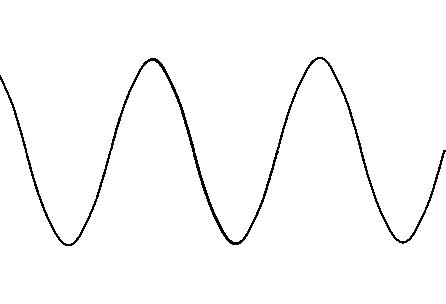
A sinusoidal or sine wave is a curve with periodic oscillations. While a normal sine wave has periodic oscillations, life’s waves aren’t as periodic. But, they’re just as predictable. Some days are “up” days and other days are “down” days. So, if it is an up day, you know there’s a down day coming and vice versa.

The beauty of understanding and accepting this is that you don’t take either kind of day to heart. You understand that this will pass and all you can do is keep plugging away and doing your best.

That acceptance is the first step toward equanimity.

The Ikea effect and Origami cranes

When Dan Ariely built a chest of drawers that he bought from IKEA, he didn’t enjoy the process. But, once he finished, he noticed that he looked at the chest of drawers a lot and felt a sense of pride.

So, Dan, Mike Norton, and Dan Mochon conducted an experiment where participants were asked to make origami cranes. When they built easy cranes, they found that the creators of the cranes were willing to pay 5x more for their creations than neutral buyers. This difference went up for harder-to-build cranes.

P E Duff discovered this idea in the 1950s when the easy-to-make cake recipe didn’t sell all that much. Sales picked up when they made the recipe more complicated and included complicated instructions to decorate cakes with frosting.

Zappos built its reputation as a great place to work by allowing their employees to build their own experiences. They could build their cubicles and their own call scripts. Zappos understands that we’re all toddlers. And, like all toddlers, we love things we build.

We often dream of paying others to do our chores, cook our food, etc. But, given how much we love putting in work and tasting the fruits of our labor, are these dreams contributing to feeling alienated in our lives? In the long run, these minor annoyances may be our sweetest memories. A little sweat equity pays itself back in meaning. And, that is a high return on investment. – Dan Ariely


Source: Payoff by Dan Ariely, The IKEA Effect study

3 responsibilities of an advice giver

Every once a while, people ask us for advice. This is a privilege. And, like all privilege, it comes with responsibilities.

1. Take a moment, and think about what you are going to say. This is not the time to improvise or ramble. If you don’t have something thoughtful to say, don’t say it. It is okay to take time to think.

2. State your biases. Every thoughtful receiver will spend thinking about what you said. And, in the process, they’ll begin to parse your biases and understand why you said what you said. Save them that trouble. Contrary to what some might think, biased perspective is actually really useful since yours is one of a few perspectives that the receiver is likely listening to. So much better to acknowledge it and move on.

3. Let this be advice to the other person, not to yourself. This is a key major reason for really dumb advice. Too often, people give advice that is really meant for themselves. They rehash their own mistakes and talk about how they might have avoided them. Or, they project their own experiences without considering the receiver’s path and personality. This is all about the receiver – let’s keep that focus.

And, I’ll end with emphasizing what I started with – advice should only be given when it is asked.

Most lethal

I chanced upon a display of Pulitzer prize winning photography. The collection was generally a collection of images that brought light to human strife in various parts of the world. They told a tale of events that ended up being lethal for millions of humans.

I expected disease, famine and starvation to be lethal. But, I was struck by the most lethal killer of them all – humans. Or, more specifically, “man” – as it nearly always was driven by men.

I know the sample probably wasn’t representative. But, in an age when we’ve solved for issues like disease and hunger at an unprecedented scale, our greatest enemy is ourselves.

Or, perhaps more accurately, the stories we tell ourselves. These stories – of “us” and “them,” of “enemies,” or of the relative perfection of our respective faiths, beliefs and ideologies have been most lethal.

It is easy to brush it away as decisions made by “them.” After all, most of us aren’t on the front lines and aren’t in the rooms that declare war.

But, let that not obscure the fact that we have the power to make an impact. The stories that we tell ourselves, our families and our communities have an effect on our collective consciousness. We can choose to tell stories of oneness or division.

The change needs to start from within.

How we let ourselves off the hook

We let ourselves off the hook by blaming people and organizations for not having prepared ourselves well enough. For example, here are two examples you’ve probably seen play out.

Employees blame companies for not doing enough to enable growth into future roles.

Students blame universities for not preparing them well for the needs for the market.

It is important employees push their companies to get better. And, it is critical students continue to work with their schools to do a better job preparing them.

But, blaming them is a really poor use of time.

Instead, we’re better off deconstructing the skills we need for whatever we want to do next and then working toward them. Now more than ever, we have a previously unimaginable range of learning options available to all of us. We all have access to an incredible set of tools to work on real projects that can make an impact. Finally, we can choose to easily connect with people with similar aspirations all over the world to learn and ship.

We have everything in place for us to own our own path.

Waiting for someone to prepare us is a poor excuse. It is just us letting ourselves off the hook a touch too easily.

We can do better.

Standards

Standards denote a level of quality. Our behaviors and actions are typically evaluated by others on the basis of these levels. In the long run, they are a leading indicator of our reputation.

So, that brings two questions. First, do we have standards for ourselves?  And, second, do we hold ourselves to them consistently?

The enemy of high quality levels is an exceptions process. Too often, we let ourselves off the hook by making excuses. I make excuses all the time and am fresh off making them yesterday – too hungry, too tired, too something else.

Of course, the solution isn’t to beat ourselves up. That doesn’t help either. No, the improvement process involves silent observation, a clear understanding of the triggers of unhelpful behavior and, in time, a proactive approach to guarding against it.

We judge great goalkeepers by how they do on their worst day. Similarly, the beauty of functioning standards is that they help us on our worst days. They will us to do better by calling on our character.

When standards work, they work because we realize that the standards that matter aren’t the ones “they hold us to.” Instead, they work because we realize that the ones that matter are the ones we hold ourselves to.

What has meaning

So, what has meaning and what doesn’t?

Whenever I share a book/article/recommendation with people, I always ask them to share what they learnt with me. It rarely happens. But, it gives me great joy when it does. This morning, a friend shared a profound portion of David Foster Wallace’s awesome “This is Water” speech.

 if you really learn how to pay attention, then you will know there are other options. It will actually be within your power to experience a crowded, hot, slow, consumer-hell type situation as not only meaningful, but sacred, on fire with the same force that made the stars: love, fellowship, the mystical oneness of all things deep down. Not that that mystical stuff is necessarily true. The only thing that’s capital-T True is that you get to decide how you’re gonna try to see it. This, I submit, is the freedom of a real education, of learning how to be well-adjusted. You get to consciously decide what has meaning and what doesn’t. You get to decide what to worship.

This was a great reminder. A large portion of our lives is spent responding to everything that happens around us. So, for the most part, it is just us learning to roll with punches.

The beauty about this is that we get to consciously decide what has meaning. That freedom comes with responsibility. And, it is on us to wear it well.

Day Traders or Venture Capitalists

We have a unique opportunity in front of us today – to choose between being day traders or venture capitalists. However, the opportunity comes with a twist (doesn’t every opportunity?). Few realize that the opportunity exists and fewer know that the default option is day trading.

Day trading requires us to engage with all the goings on in the day. The nature of the day dictates our mood. We like good weather and good news and generally struggle to find motivation otherwise. We invest in the now and avoid crazy swings. It is the default option and works just fine.

However, a few realize that there’s an alternative. When we play venture capitalist, we look at things differently. Yes, we’re engaged with today but, really, we’re focused on building for a few years from now. We’re on the lookout for opportunities to invest in ideas and people who might building something of value. They key word is might, of course. There are no guarantees. Unlike in day trading, there’s more risk and more volatility. But, there’s also tremendous excitement about possibilities.

So, today, we get to choose if we want to live this day and week as a day trader or venture capitalist. One feels safe and the other feels full of tension, discomfort and risk.

Then again, sometimes avoiding risk is the greatest risk of them all.

Shredded sheets and acknowledgment

People were asked to match pairs of letters on a piece of paper. They were paid 55 cents for the first sheet. Then, they had an option to continue for 5 cents lesser each time. So, 55c, then 50c, then 45c and so on. There were 3 groups – “acknowledged,” “shredded,” and “ignored.”

Group 1 (acknowledged): Once they finished, the experimenter looked at their paper carefully and said “Aha.”
Group 2 (shredded): The paper was immediately shredded. They were then asked if they want to continue.
Group 3 (ignored): The experimenter simply put the paper to the side and asked if they’d like to continue.

When people were asked what difference they’d expect between the groups, they all expected some difference between the number of matched sheets per group. But, not much.

In reality, the “acknowledged” group matched 2x the number of sheets.

Similar experiments involving engineers building Lego toys for a small payment showed the same result. And, a simple thank you text from the boss to chip factory workers at Intel performed much better than gifting a pizza coupon or giving a cash bonus.

“In some ways, we never grow up. We seek to be connected with our workspace, to be acknowledged and to know how our work impacts someone down the road. Companies and managers are pseudo-parents – they can choose to be quashing or nourishing.” – Dan Ariely (paraphrased)


Source and thanks to: Payoff by Dan Ariely

PS: Of course, none of this is an excuse for not paying people enough. However, once money is off the table, goodwill counts for a lot.