Skills and knowledge

The big insight with deliberate practice is the idea of focusing on skills instead of knowledge.

The obvious example is learning, say, tennis. Sitting in a tennis theory class that explains how to use the racket isn’t all that useful, obviously. It makes intuitive sense for us that we must get out on the field and try things. And, as we try things, we will hopefully have a coach who corrects us when we do the wrong things. That is the difference between developing the skill of how to hit the ball versus simply possessing the knowledge of how to hit the ball.

While this connection is easy to make when we think of sports, it is harder to make this connection with knowledge work or science. In a fascinating deliberate practice experiment in the University of British Columbia, Professors converted a part of the Physics curriculum from lecture notes to in-class discussions facilitated with interactive questions and clickers. The idea here was to move from knowledge transmission to actually helping students develop the skills of reasoning like real world physicists. They executed this with graduate students who were teaching for the first time and improvement was fantastic – 2.5x on a standard test compared to the control group.

skills, knowledge, deliberate practice

This has all sorts of implications for how we think about training in the professional world. A lot of training is still about knowledge transmission versus skill development. And, even if it is skill development, it is done once a year.

As I get back to the working world post graduation in a few weeks, there are a couple of interesting questions on my mind – how do I use the principles of deliberate practice in my work? and how do I use the knowledge vs. skills idea to develop processes to get better?

Deliberate practice has transformed the way we get better in fields like sports and music. It will be much harder to use its principles in fields where progress is less easily measured. But, it can be done.

We’ll just have to stay with the problem a lot longer.

Generous email is alive

There are many who say email is dead.

Yes, certain kinds of email are definitely dead. The kinds that selfishly ask us for a click, a favor without a real explanation, money without trust and attention without a relationship – we’ve learnt to recognize them from afar and they are generally dead on arrival. Thank god for that. We don’t need more of those.

But, the generous compliment, the kind note, the thoughtful ask, the intelligent discussion, the love-filled wish – they are all alive and well. These are the sort of notes which even the busiest of inboxes would love to see. They may not always garner a response (they still do, often) but they are nearly always appreciated.

Generous email is alive. Long live generous email.

generous

Looking good and getting good

There’s a lot of great literature that focuses on looking good. We know plenty about how people perceive us, how people think and how we can do this and that to persuade people. It is no coincidence that “How to Win Friends and Influence People” was the book that invented the self help genre.

Looking good, however, isn’t all that helpful if you haven’t done the work to get good. It can mask competence for a while. But, not for long.

So, what do we know about getting good? I think there are three things we know about getting good.

First, we must commit to getting good. It doesn’t really matter what we choose to get good at. It just matters we choose something. We don’t need more confidence. We just need more commitment.

Second, we must apply the principles of deliberate practice toward our journey. To get better at our craft, we must train relentlessly, seek task specific feedback from a coach and push ourselves to expand our comfort zone. No coach? No worry – find people who’ve done it before and mimic their approach until you find your own style. The end result from this process is developing a mental model that enables us to “see” the world differently. It is these mental models that help us make consistently better decisions.

Finally, once we get good, we must then commit to a life of depth. Becoming good doesn’t mean we will stay good. To become experts, pastmasters even, we must consistently hone our skills and commit to a process of lifelong learning. We do that by building a deep life – one where focus, commitment, and mindfulness are the norm. It is the sort of life where we distance ourselves from the noise of distraction and keep our focus on the things that truly matter – good self-care, good people and a focus on the work that helps us make the world a bit better. A deep life is the surest sign of a good life.

By all means, continue the conversation on looking good. But, if we’re going to run the marathon, let’s make sure we’re fit enough to go the distance… and then maybe go some more.

getting goodImage Source

The Popeye spinach myth – The 200 words project

Popeye the sailorman was a major evangelist for spinach in the 1930s and is said to have increased green consumption in the US by one-third. He loved spinach because the iron content helped him attain super strength.

The only problem was that the “fact”  about the iron content in 100 grams of spinach – 35 milligrams – was off by a factor of 10. That’s because a German chemist named Erich von Wolff misplaced a decimal in his notebook in 1870 and that goof created one of the cartoon characters of the century. The story of the decimal point goof has since been retold multiple times, most famously in a book called “Follies and Fallacies in Medicine,” a classic work of evidence-based skepticism first published in 1989.

All these re-tellings miss another important fact – the decimal point explanation is a myth. The mistake arose from faulty measurement methods. Subsequent analyses just improved measurement closer to the currently estimated real value of 2.71 milligrams per 100 grams (roughly 1/10th the believed 35mg).

So, what’s with these myths that get presented to us as facts? And, why is “science” so problematic? More next week..

It’s a lot easier to spread the first thing you find, or the fact that sounds correct, than to delve deeply into the literature in search of the correct fact. – Samuel Arbesman

popeye, spinach, myth


Source and thanks to: The FiveThirtyEight Blog – Who Will Debunk the Debunkers?

It’s all in our head

In conversations with people who’ve recovered from an episode of depression or an addiction of some sort, I’ve noticed a persistent theme. They vividly remember the day they realized they emerged into normalcy and this vivid memory generally involved them looking up at the sky for the first time in days and noticing that the sun is shining and that all is well.

I think the reason this moment is so powerful is because they realize that all was well all along; and, with that comes a visceral reaction, that it was all in their head and that they can, if they choose to, focus their minds on better things.

What an incredible realization. Philosopher Eckhart Tolle wisely says – “Don’t take your thoughts too seriously.”

It is one of those perspective changing realizations that I have learnt to remember from time to time. Just yesterday, I had a similar moment as I was thinking of a couple of issues I had been wrestling with over the past couple of days. All was well in the grand scheme of things, the sun was out, the breeze was beautiful, and nearly all of what I thought were issues were all in my head. The moment I found that perspective, I realized that I had the power to shift my perspective and focus my attention on other things.

And, so I did.

We have much more control over our mindset and happiness than we think. As a result, we are much more powerful than we realize.

head

The child prodigy

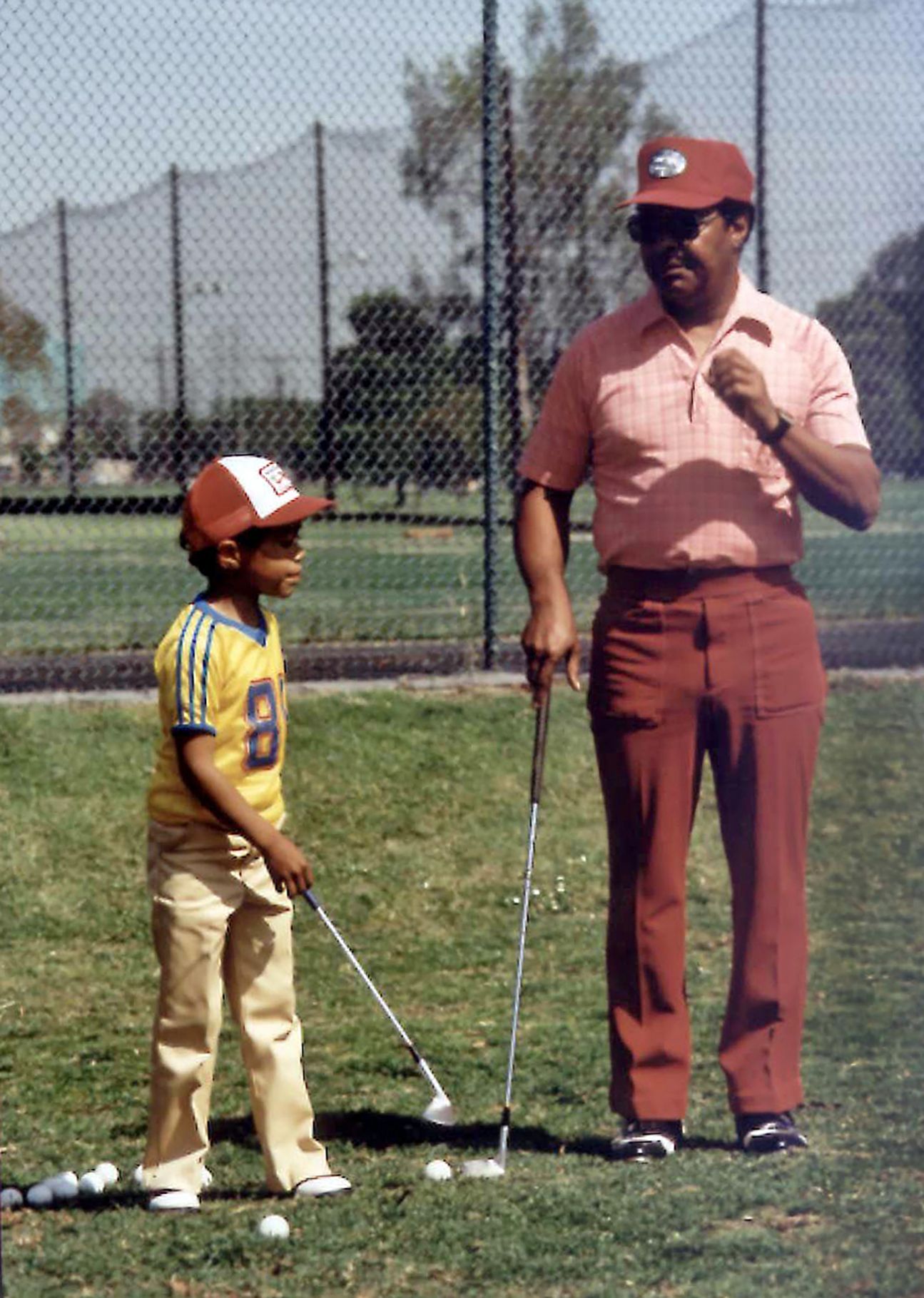
ESPN has an in-depth article on how Tiger Woods’ life unraveled after the death of his father in 2006. It is a long read but an interesting one if you were curious about his fall from grace. The fact that he had trouble keeping up his performance after his scandals became public didn’t surprise me. Golf, as I understand it, is a mental game.

The extent of his fall did surprise me, however. This article does a good job explaining what happened in the past decade. The author’s view is that Tiger’s relationship with his Dad is what kept him in equilibrium. He was raised to be a pro golfer by his dad and, as a result, didn’t really grow up with a “normal” social circle or support group. And, after his dad’s passing, all of this began to unravel.

I found myself reflecting on child prodigies. Tiger Woods was definitely one of those prodigies as I was growing up. Macaulay Culkin (The Home Alone star) was another one. So was Lindsay Lohan. All three of them (and many more) have had so many difficulties dealing with being thrust in the limelight so young. Tiger kept going for a really long period of time before the house of cards began to collapse.

All of these child prodigies achieve a huge amount in record time. That’s what makes them so popular. But, I do wonder if the costs are worth it? G R R Martin wisely said that he is so glad to have only “made it” in his 60s and 70s because he’s found it so hard to deal with worldwide fame. He feels it would have ruined him had it come to him when he was young. That makes sense. It takes character to deal with fame and not let it ruin you. And, character development doesn’t happen in time for the kids who are pushed into fame.

Child prodigies are manufactured by eager parents. This article made me wonder – would the same parents push their kids to do what they did if they considered the end result more carefully?

child prodigyImage Source

And, on a parting note, I really hope you find your way back to happiness, Tiger.

Generosity with compliments

If a book has made an impact on you, let the author know.

If you really enjoyed a performance, send a note to the performers.

If an event changed your perspective, write to the organizers.

We often benefit greatly from the efforts of others. Sure, they’re likely doing it because they’re getting something in return – a salary, personal satisfaction, learning, etc. But, compliments generally mean a lot. This is not just because it makes you feel good as a builder (it does). It is because it helps you understand what is working. Generally, you get so much negative feedback about stuff that isn’t working that it becomes fairly easy to zero in on what needs to be fixed. But, it is much tougher to understand what is having impact.

Writing an email to thank someone or complimenting someone as you pass them in the building doesn’t take much. But, it can mean the world to someone and greatly brighten their day or week. It isn’t easy being a builder. There are enough opportunities for you to get knocked down without even getting to all the inevitable feedback.

Compliments go a long way. They don’t cost us much. Let’s make it a habit to be generous with them.

complimentsImage Source

Confidence and commitment

The next time you tell yourself that you aren’t doing something because you lack confidence, I would suggest checking once again if the issue is one of confidence or one of commitment?

Too often, we use confidence as our excuse for not giving enough thought to something that requires it, for not taking a small leap, and for not pushing hard to become a better version of ourselves. Confidence, however, is just a lazy out. We don’t need more confidence in the world. We need more commitment. More unwavering commitment results in more confidence and the confidence built on commitment is the kind that lasts anyway.

Imagine you are considering a small leap – say building a relationship with someone you admire. Instead of using the “I don’t have confidence” excuse, how about doing the following –
– Give a lot of thought to why the person might want to connect with you
– Consider what it is that you might be able to add to the person life or perspective
– Commit to building a relationship for the long term

Once you do, you can begin reaching out and finding ways to connect, build and maintain a relationship. It won’t always work – that’s the case with all kinds of relationships. But, hey, it just might.

Either way, you’ll never know until you commit.

commitmentImage Source

The Leicester City story

Premier league minnow Leicester (pronounced “Lester”) City won the English Premier League yesterday. That is huge. To win the premier league, you win and draw more games over the course of the 38 game season that every other team. In the last 20 years, there have only been 4 winners – Manchester United, Arsenal, Chelsea and Manchester City. The reason there are only 4 winners is because it was believed that it took a tremendous amount of financial clout to build a squad that would last the season. Leicester City’s entire side was assembled with less than 10% of the financial resources of the bigger sides. They were supposed to be favorites to be in the bottom 3. And, yet, here they are.

In every way, this is a historic event. Kudos to Leicester – for pulling off what no one thought was possible. And, for doing it with admirable consistency.

The obvious questions follow – will they be able to keep it up? Will they buy new players to sustain a challenge next season? Will the big teams get their mojo back?

All of these questions, obvious as they might be, completely miss the point. John Nicholson, on Football365, said it beautifully –

Whatever age you are, I guarantee you this: the 2015-2016 season is a season you will never forget. We are living through a moment that will still astonish in 50 or 100 years’ time. As it comes to pass, now is the moment to embrace it, enjoy it and be inspired by it, so that whenever it looks like the odds are against you, whenever it looks hard to achieve something, whenever we take on people with more money and power, we can tell ourselves, if Leicester can do it, we can do it. And that is priceless.

So true. It is a fantastic story.. and one that will inspire many an underdog team for a very long time. Congratulations Leicester!

Your future self equation

My future self equation is as follows –

Futureself

You grow at the rate of your learning and are limited by your self-belief. Both of these have compound effects – which I think are critical. Learning compounds. Start on the journey today and your mental models are going to be much better than me if I start ten years from now. We might both go through the same learning experience at that point but, you will learn a lot more on account of your superior mental models.

Self doubt acts as the discount rate in the whole process. This is because our belief in our own abilities and discipline directly influences whether we take on long-term learning challenges. The lesser our self belief, the more we will focus on the short term.

So, what is the rate of learning then? It can be broken down to three factors –

1. Rate of reflection. This is how much you extract from every experience you go through. There is so much learning in our own experiences if we take time to dig in and understand what they are.

2. Rate of learning from written work. This is what you learn from what others have shared in writing. This might just have been “learning from books” before blogs and the internet emerged. Books likely still dominate thanks to their generally solid signal to noise ratio.

3. Rate of learning from people. Your rate of learning is directly proportional to the kinds of people you spend time with. The more you spend time with people of value, the more you are likely to learn.

So, in summary, my thesis is – the growth in your future self as compared to your self today is directly proportional to the amount of learning you extract from your own experiences, from what you read and from the people you meet. This learning and growth compounds over time and is only limited by your own belief in yourself.