
Happy Friday folks!!
‘We feel productive when we are peace. And we feel peaceful when we accept that there is a limit to what we can do in a day.’| TGRR
Have a productive day, everyone!
The Headphones Tangle Problem: (Solved!)
Most of us have headphones these days. While not great for the ear, they are pretty handy on the commute and at our work desks to listen to music, books etc.
An annoyance I had been plagued with for 4 years in university was the constant problem of headphones getting tangled. And being bad with ‘soft touches’, I used to try and wrench them apart leading to headphones getting damaged all to easily.
All that was solved when I spotted this little gem at Daiso (2$ shops in Singapore). I’m sure you’ll have these available where you live. Worth a try!
Earphone cord manager

‘It is in self limitation that a master first shows himself.’
Happy mid-week all!
3 MUST Do’s when making a Home/Phone Video
13 hours of video content is being uploaded onto YouTube this every minute.
I am guessing a sizeable portion of this number is what I term ‘home/phone video’ i.e. clips made my non-professionals using a simple phone or video camera and edited using basic video editing software.
Now, a lot of these are also being used increasingly in corporate presentations and most first timers end up making the same mistakes I made 2 years ago..

Having gone through the learning curve on this thanks to a year and a half of making videos thanks to ExpressionHappens, I thought I’d share 3 points to remember –
1. Stand: Always always try to mount the phone/camera on a stand. Our hands end up shaking so much that the videos often tend to look appalling!
2. Ambient Noise: If you have people talking, always shoot in a quiet room. In places like restaurants etc, the camera picks up an inordinate amount of ambient noise. Often, this is not in proportion to reality.. and typically is the single greatest annoyance when one gets down to the editing.
(The only way this is fixed in a public space is if your video camera has a proper mic attached – think TV reporters)
3. Lighting: A slightly tricky customer if not understood. I have a simple principle when it comes to lighting – if you are in a bright area and the subject is looking dark on the camera, just swap sides. The change always tends to give you a sense of what can work.
Happy video-ing all!
‘I went to a restaurant that serves “breakfast at any time”. So I ordered French Toast during the Renaissance.’
Haha. Some mid-week humor!!
Choosing a Disciplined Approach vs Discipline
‘What you need is not discipline, but a disciplined approach’ said David Allen aloud as I was listening to ‘Ready for Anything’.
As is the case when I hear a nice excerpt these days, I generally pause the book and make a note on my phone. I really liked the sound of this little line i.e. choosing a disciplined approach vs discipline but I didn’t fully understand it.
It was only when I decided to take up the whole ‘Wake up at 5am idea’ that I recalled it. And here’s how this 1 line changed my approach.
Before
– Focus would be on waking up at 5am
– I would end up sleeping at normal time and waking up at 5am the first day
– Result: Sleep deprived and less energetic day = lower momentum
– I would have persisted for a couple of days but after a point, I would begin to oversleep and chuck the whole idea out of my mind.
– Of course, this would be accompanied by the usual combination of kicking myself, finding an excuse etc etc.
After
– Focus shifted to – Get 8 hours of sleep AND wake up at 5am. (The math makes it simple now = Sleep at 9pm (WOAH))
– So, I began slow – Sleep by 10pm and wake up by 530.
– Result – Slept eventually by 1030-11 and woke up 530.
– Managed 3 out of 5 days in my 1st week.
– Next, I slowly began sleeping at 10pm. And again, kept up 3 out of 5 days for 2 additional weeks.
– And, finally, yesterday, for the first time, I managed to sleep by 930. Woke up at 530am today feeling fully rested and great. First time ever!
– And, as a result of the focus, any day I don’t get 8 hours of sleep, I prioritize the 7-8 hours of rest versus waking up early. Therefore, I hardly feel the pressure.
This is similar to playing a game. Now, we are not focusing on the game, but instead – focusing purely on the preparation. Here, the game is waking up early but the preparation is really what happens the previous day – Finishing up work on time, eating on time, sleeping on time etc.
Can this get better? Absolutely. But, as you can see – the big difference was the focus on the approach versus crazy discipline. And, all of a sudden, I have something more sustainable and most importantly, something more fun.
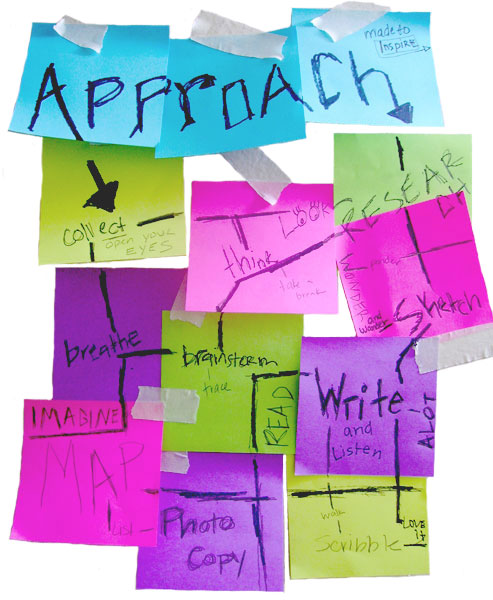
It is the same with tackling any life problem. Yesterday’s book learning was about the David Allen Framework – the framework looks daunting on first glance. But, I remember that when I started, all I focused on was getting the 1st step right and then taking it a step a time.
Ages ago, it was once suggested to me that I was probably going too easy on myself with the whole ‘a learning a day’ idea as it implied that it was okay to make mistakes the first time – even if they were simple and unavoidable. That is true. It may not be ideal. (What is?)
But, I also believe it is FAR more sustainable in the long run to take baby steps and to apply constant, consistent and predictable pressure on ourselves. And that way, you also have the opportunity to have fun along the way AND build a blog AND learn a heck of a lot from that experience as well.
That’s killing many birds with one stone. Happy ‘disciplined approach’ this week, everyone!
‘If I miss one day of practice, I know it. If I miss two, my manager knows it. And if I miss 3 and my audience knows it.’
Brilliant. Happy Monday everyone! :)
On the David Allen Framework
This week’s learning draws inspiration from Ready for Anything by David Allen.
Last week, we dealt with 5 things that get in the way of us being productive. This week, we will continue on the productivity journey.
In the picture below, we have David’s 5 step process beautifully illustrated. David’s 5 process involves:
1. Collect: Put in all your thoughts in the ‘Bin’ or collection tray.
2. Process: If actionable, decide on whether it is a ‘2 min’ action or ‘project’. If not, ‘trash it’, ‘someday it’ or ‘reference it’
3. Organize: If it is a ‘Project’, then decide outcomes and break down the actions.
4. Review: Decide if you plan to ‘do’, ‘delegate’ or ‘defer it’.
5. Do: Get it done!

On first glance, this can look VERY daunting. My suggestion –
1. Read through the whole illustration 3 times and understand it.
2. Plan on implementing 1 step every week!
This system works incredibly well and applies not only to tasks but also to email. More on that next week!
Here’s to ninja-like productivity this week!
The 7 Habits of Highly Effective Home-mates
We all share space. And whether it is family, partners, friends or acquaintances, sharing space is always a challenge.

Here are 7 tips that might help you make that house feel like ‘home’.
1. Keeping a world-beating attitude: Let’s face it – things are often shitty. Running a house is never easy. There are always bills to pay, maintenance that is pending, cleaning and laundry to be done. And sometimes, you even land up in a house that is significantly worse than your previous one.
Now, we can never wear a smile on our face every single moment. But, having a positive attitude is a great step to maintaining a great environment. There is absolutely no replacement to being a positive, happy person.
2. Saying ‘Please, sorry and thank you’: Pleasantries are named thus for a reason. They help keep things pleasant. And we need lots of pleasant.
3. Doing dirty work, and doing it in teams: There is always a lot of dirty work to be done in a house. Whether it is taking the dirt out of the vacuum cleaner, or cleaning the bathroom, being the first one to volunteer always helps.
And if possible, doing it in teams always creates a great bond!
4. Keep your own work space: We all have different styles of working. Some like keeping cluttered work spaces while some like it spotless and clean. It is VITAL to keep your own workspace – an area that only you touch, clean and manage.
This greatly helps keep sanity. If you have your own room, then that’s perfect. But, if not..
5. Lower your expectations: Not everyone has the same filters as you. You are going to be disappointed by people’s cleanliness, their inability to do many things that come naturally to you, and vice versa. Also, it is amazing how people have their own unique approaches to cleanliness. Some, for example, can tolerate messy cupboards but cannot tolerate an unkempt workspace.. and vice versa.
Let it go. It’s easier to ‘be a light, not a judge’. If you are a stickler for cleanliness, try this. Try leaving your room or space dirty for once. Hard, isn’t it?
That’s how hard it is for an untidy person to be clean. While being unhygienic is never an excuse, it works best if you develop blind spots for areas of the house that you don’t use.
6. Keep candor but never embarrass someone: Candor is often overlooked. And this is what results in fractured relationships between roommates from time to time. When sharing space, it is obvious that it helps overlooking many small annoyances, it doesn’t help skating over big issues.
Talk about it. Express it. But never embarrass someone – that generally leaves a scar.
7. When you are brooding, stay out of everyone’s way: We are all going to have periods when we experience the ‘blues’. I call this ‘brooding’ time. This is great for us as we always feel better after a period of brooding but not so much for those we come in contact with.
If you are brooding, there’s many ways you can keep people informed – warn them/stay out of their way/put a sign on your desk that says ‘Brooding Time’.
And this works the other way around. If you sense that your home-mate is brooding, let them be. They will snap out of it in few hours. Just act as if nothing happened. This happens every once in a while with all of us and it is very normal!
 A Learning a Day