Impact

We often talk about making a dent, making an impact. The obvious assumption here is that it is done the Steve Jobs way – create something amazing and put that ‘ding’ in the universe. It’s akin to mass marketing. Put that big advertisement on TV and the assumption is that it will touch millions. It probably will.

But the fact remains that real impact comes from the people we touch on a day to day basis. For a guy like Steve Jobs, I would argue that the real impact came from the people he touched and inspired, those that will make sure his legacy will live on at Apple and Pixar.

And while somebody like Jobs was both brilliant and hard working, he was also aided by incredible good fortune and not all of us may be as lucky during a lifetime.

What we do have going for us is that every one of us does have the opportunity to directly impact many a life in our lifetime. Be it friends, colleagues, mentees – the ability to impact a life in a positive way (and inspire?) is not beyond us.

Life is what we make of it. Real impact is well within our reach. We don’t need credentials to live wonderful inspiring lives. We don’t need to have massive accomplishments to live lives of integrity and to help others around us get better, do better, work harder, learn more and live happier.

Image Source

We just have to learn to cut through the noise and focus on making a dent, one person at a time, one interaction at a time, one minute at a time. There’s 7 Billion others waiting to be inspired. No excuses.

Muscle Memory – The Working of The Elephant and the Rider

I sat down for my 20 minutes of guitar practice at the end of the day and groaned. After 2 days of postponing working on a chord sequence that involved 2 very difficult chords given where I am at – the B flat/C# and the F barre chord.

I first got my fingers in the F barre chord position and gave it a strum. Some sound. Positive. Tried switching to the C# and I cried out “Impossible!”. I attempted doing 5 switches from F to C# and found myself wincing in pain. A couple of the fingers were well and truly cut (again!) by now.

Image by Feliciano

While I was groaning about the difficulty of the task to myself, three things happened subconsciously.

First, I reminded myself that the elephant part of my mind regularly lied to me about what’s possible in an attempt to keep me happy. The elephant, while operating in my best interests, operates on the assumption is that I am happiest in the comfort zone. It doesn’t quite get the difference between instant gratification and long term happiness. Luckily, my rider does.

Then, my rider took over and announced to the elephant that we ought to go on, despite the obvious pain, because it’s the right thing to do. But the elephant didn’t quite agree with what the rider thought and being the big animal that it is, refused to budge.   

That’s when the rider struck a bargain to appease the elephant. 3 rounds of 10 switches between the chords – we do that and we stop. I heard the elephant relent.

And as we resumed progress, my rider gently reminded the elephant that he thought the open F chord was impossible just a few months ago and during the break, whipped up a tune to show him how easy it’s become. The elephant became more enthusiastic and committed (for 10 minutes) to be of help.

The next night, the elephant is less problematic. This time, we agree on 3 rounds of 20 switches at a faster pace. Grunting his approval, we keep practicing and gradually begin the process of committing these chords to my muscle memory.

And as my elephant and rider slowly reconcile their differences with help from me in using my will power reserves as necessary to aid the rider, I remind myself that every time we hit a peak in our learning or growth, getting to the next peak involves going through a valley. This is always painful but going through this process is what makes the peaks memorable..

The Soapbox and The Era of Why

Seth Godin had a great post yesterday on The soapbox and the city. He says the following (Parts of his longer post))


If you want to find creative work, go to a city. If you want to find inspiration, expose yourself to diversity, not a bubble. The city is chaotic, without much of a filter.

The soapbox, on the other hand, is the amplified voice of a single speaker. The soapbox is the newspaper with subscribers, the Twitter account with followers, the blog with readers.

For the first time in the history of media, those that are able to consume the media are also able to create it. That’s a powerful (and thus frightening) choice. One day soon, it’s possible that corporate interests will impose barriers on soapbox access, all in an effort to reclaim power for themselves. Until then, the race is on to build your tribe, to tirelessly connect and to earn an audience that wants to hear from you.


While Seth hits the nail on the head, I thought I would add my two cents as to why this is the case.

Two thousand years ago, people connected over the ‘what’ i.e. friendship and relationships were among equals of role. Kings with Kings, farmers with farmers, traders with traders. What you do defined who you were and the circles you hung out in. In ancient India, as an example, these divisions even gave rise to the now famous caste system. This connection was restricted to people in your area as very few travelled across distances

Gradually , society and communication evolved to enable us to connect on the ‘how’ we did things. Success meant less barriers around distance, and all the way till the 1980s, these barriers kept breaking and we had connections across lands. If you were an amazing scientist, you could increasingly cooperate with men of Science across lands. The ‘what’ was still relevant but the ‘how’ was more significant.

Over the past 2 decades, we have rapidly moved into the era of ‘why’. The readers and commenters of this blog are a fantastic example. One look at the top commenters reveals people across ages and backgrounds who are connected with the same ‘why’ – in this case, a belief in the fact that we get better everyday, that we learn from every circumstance we face. We are united in the ‘why’.

That’s why the concept of the soapbox is immensely powerful and if we want to make use of it, we need to share our ‘why’, our beliefs because, for the first time in many millenia, we are able to connect with truly like minded people with similar belief systems from all over the world.

It’s like magic. And it’s not to be underestimated.

Work Hacks Wednesdays: The Person on the Other End of the Line

Companies are rightly encouraging the use of conferencing services over taking flights for short meetings. This makes sense. In the long run, hopefully, video conferencing services will be more widespread as these meetings are primarily held over the phone for now.

The big issue with telephone conferences and calls is that we can have conversations and get work done for a sustained period of time without needing to remember a basic fact – the person on the other end of the line is a real person, just like you.

Image by Tyler Durden

Take time to get to know that person. Unless you are operating in crisis mode, spend the first 5 minutes talking about life (the weather doesn’t count) and of course, if there is any possibility to meet, do so! Place it on priority!

If you have had issues with working with someone purely over the phone, watch how they disappear once you make the effort/meet. And, on the other hand, if you have marvelled how much work can get done over tele conference, just wait till you actually meet and strike a relationship – it’s like magic!

Frictionless

When I think of the future of consumer technology, there’s one word that comes to mind – Frictionless.

And if I look at the apps that I use extensively, there is only 1 app that meets the bar – Reeder. I use Google Reader for all my blog and news reading and Reeder syncs them onto my iPhone and iPad. It doesn’t matter which device I switch on, I can just pick up from where I left of. If I switched on Reeder on my phone at a spot with internet, I can still reed feeds and blogs when offline and it would sync automatically the moment I get online again.

Image Source

That ability to pick up where I left off is invaluable to me. Truly frictionless.

I find that struggle with Audible, for example. If I read half a book on my phone, I feel like I should be able to continue on another device and be able to see all my bookmarks. Or, for example, I am typing this post on Windows Live Writer. I absolutely love Windows Live Writer and refuse to blog elsewhere but I can only use this on my Windows Desktop. Repeat frustration for Outlook.

It’s a clear mandate for technology developers – get your app across devices and make sure they ‘talk’. For when it is frictionless and when it ‘just works’, that’s about when consumers fall in love with technology all over again.

Fatalistic?

Of late, I’ve been observing myself developing an increasingly fatalistic view on things. Fundamentally, I feel like there’s just been a gradual change in my belief system. If I were to think of it in analogies, I think my earlier belief was that the universe was on it’s own journey and you had to really push and force it to set sail in the direction you want. Anything you wanted involved a massive push if it’s against the direction of the winds of the universe.

Image by el_vaquero

My experiences over the past year have had me reconsider this. Now, I’m convinced that pushing only works very rarely. For the most part, the universe just goes it’s own way and your energies are better spent figuring out the direction of the wind and setting sail accordingly.

So, most of the macro energies in your life have their own plan. If you are due to have an ‘upset’, you will. If you are due to have a stretch of good luck, you also will.

While, on first look, this evolution feels disempowering, it actually works the other way. I actually feel very empowered and powerful because all I’m focusing on is working out what I want to do, looking out for the direction of the winds and then changing plans as necessary. Getting stuck up on the old plan only leads to disappointment. Change is guaranteed.

I’m not sure if this is indeed a fatalistic view because I still believe in the power of being best prepared for any change ourselves and the power of responding to a macro change well. That said, it is still pretty philosophical.

The final part of this belief system is that the macro winds do know what they are doing. If you are forced to change direction, it’s because it eventually all works out. We often get so involved in the act of sailing and get so attached to the destination that we forget about why we are doing it in the first place..

Massive change in thinking. I feel old. Haha.

Wish you a great week.

(PS: It does all work out :-))

Gawk.It

It’s been a few weeks since I changed the default search engine from Google to Gawk.It. I thought I would give it a bit of a test run before posting about it. I have been amazed at the limited capacity of blog search engines for a while now. I initially had Google, switched to Lijit (disappointing) and then switched back to Google (i.e. the default option).

That’s about when I began interacting with Kevin Marshall via the comments on AVC.com and then here as Kevin popped in once a while in the comments. Gawk.It was first launched on AVC as a search engine that also searched the comments on the site. In a site as large as that, the value created in the comments is immense. I was very impressed and when I belatedly realized Kevin was taking in requests from ad-hoc/small time bloggers, I shot him a note.

image

4 weeks later, I must say I am VERY pleased. I had warned him upfront that I would be the only user of the search box and as the likely sole user, I am loving it.

So, I just thought I’d give Kevin a shout and say thank you for a wonderful product. I wish him all the best. And, of course, I encourage you to try it and leave any feedback you might have in the comments. Kevin would love to hear from you and it’s a wonderful way to have him pop by anyway.. :-)

On the Florida Experiment

This week’s book learning is from ‘Thinking, Fast and Slow’ by Daniel Kahneman.

In an experiment that went on to become a classic, Psychologist John Barge asked students of NYU (Aged 18-23 years) to assemble four word sentences from a sentence of 5 words. Eg: Listens He Music Liked To.

For one group, the sentences involved words like Florida, Forgetful, Bald, Grey, Wrinkle (i.e. words connected to old age). After assembling the sentence, the students were sent out to do another experiment and the short walk was what the experiment was about.

When the researchers timed the walk, they found that the youngsters who assembled sentences with the elderly theme walked significantly slowly i.e. The set of words primed thoughts of old age (though ‘old’ is never mentioned) and that went on to prime a behaviour!

All this happened without any awareness, of course. None of the students had a clue and denied any influence of the words, or even a difference in behaviour. The idea of old age hadn’t even come to their conscious awareness.

And, although you aren’t aware of it, this story primed you as well! If you just stood up from your chair, you might have moved slowly. Unless you don’t like the elderly, in which case you might have moved faster.

Image source

I found this story absolutely amazing! It just goes to show how far the environment we live and work in, and the people we choose to spend our time with, have an effect in our lives. Often, the effect is not even conscious!

Here’s to looking after our environment for ‘priming’ effects this week!

The Extra Mile

We used to have a tradition of speeches in the morning assembly at the High School I studied in. Our Principal used to often chip in with a nice story and message after a student’s speech and other announcements. I remember listening to one about the ‘extra mile’ and wondering about the concept.

As a student, the concept of the ‘extra mile’ was not one that was obvious simply because most of what you ‘should’ do is well defined. And, more often than not in the Indian system, what you ‘should’ do often includes what you can and cannot do.

Image by Chris Heaton

It’s been 7 years now and I found myself thinking about it last night. I remembered a quote that said ‘excellence begins on the extra mile.’ Smart, and true.

I realized yesterday that we make ‘extra mile’ choices in practically everything we do in our lives – whether at work, at play or in our relationships. We either don’t meet expectations, struggle to meet expectations or simply make it a habit to repeatedly exceed expectations. And, all of the latter, happens on that proverbial extra mile. We are what we repeatedly do. We are what we repeatedly choose to do.

The extra mile isn’t proverbial management jargon. What we choose to do above and beyond what we are expected to do is where the magic lies..

(For magic, think expression on Mom’s face on having flowers delivered to her doorstep as a surprise!)

Seeking Diverse Experiences

I’ve seen 2 things happen when seeking, and finding, diverse experiences.

Firstly, there is an much higher sense of appreciation. It is only after learning tennis for a while did I truly understand the genius in Roger Federer. You have got to have done it, or attempted to do it to know what it takes. The more such experiences and the more appreciation we have for people out there – learning, attempting things and doing things.

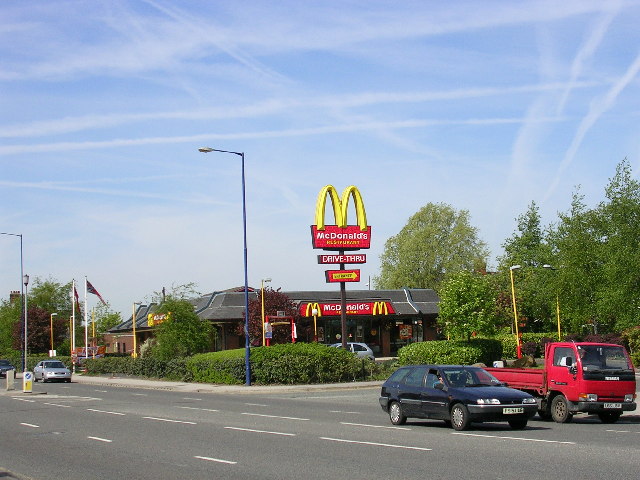
Secondly, there is a MUCH higher tolerance for failure. I was helping out at a restaurant on the evening of one of the busiest days in the year the other day and the experience taught me so much. There was a long queue of impatient folk, some of whom were getting understandably irritated and I vividly remember mentally switching sides and wondering how I would behave and also gaining an insight on what needed to be done to deal with the situation. A few years ago, it took only a week of work at McDonalds to change my perspective about McDonalds..

Image by Keith Williamson

It’s the same with every new thing I’ve attempted over the years – writing a book, working with an IT friend on an iPhone app, learning the guitar, writing a daily learning blog. All these activities have given me a ton of new perspective.

I’ve come to the conclusion that while diverse experiences likely add value in many ways (making you a more interesting person, for instance), the biggest way they change us is that they make us more tolerant, more humane and with a bigger ability to empathize.

In short, they teach us what it really takes to be human.

That’s some return on investment..