Today’s interview is someone I’ve had the pleasure to get to know personally thanks to RealAcad, a crazy and inspiring entrepreneurial boot-camp I’ve attended many a time. Stephan is fun, inspiring and all in all great guy!
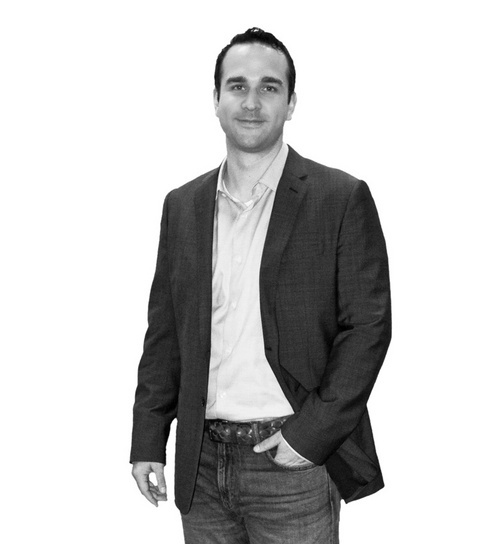
About Stephan Jacob
Stephan is the CEO/Founder of Kembrel – a tightly integrated multi-channel boutique for independent small niche apparel and fashion accessories, headquartered in Philadelphia. He co-founded his company along with two of his co-founders during his MBA at Wharton. Previously, Stephan worked as a management consultant at McKinsey & Co. He holds a Master of Information Systems from the University of Mannheim and the University of South Australia. He has previous work experience in Bain & Co. and Bunge Ltd. Stephan is married and is fluent in English, German and Spanish and can converse in Indonesian and French
Rohan: It’s great to have you here, Stephan. What is your story? Tell us a little bit of your background, and how you ended up running your own little tech start-up.
Stephan: I think it goes way back to my early days. We (Rohan and I) have shared our life stories many times through RealAcad. Reflecting on it, I think that my early experiences were very formative.
By that, I mean my upbringing in a very loving household of 3 generations where my grandpa lived right next door and was an integral part of my childhood. When I was young, I used to spend a lot of time with him. He was a well-traveled and ‘worldy’ man in his early 50s which was very unusual in Germany. He was always around when we grew up. We had a lot of exposure to the world because of him. He gave us a bigger perspective of the world than what we would have gotten if we just had been in my little village.
He was very supportive of the adventures we took – taking time off high school to spend it here in the US for a year when I was 16. He also supported my taking time off from university to spend some time in Indonesia and Australia. I think my experience in all these international trips and journeys have shaped me.
I made a conscious decision post high school to get into technology and study computer science during my undergraduate days. I am benefiting from that decision on a daily basis running a tech start up. Though I don’t write all our code anymore, I’m still very closely involved in all our development processes. That part has been a very formative experience. I would say this journey to entrepreneurship came through stages.
Early on, my grandpa was very instrumental to push us to dare, to try out stuff and show that is okay to fail. He never really failed much in his life – he was extremely successful as a business person, but still pushed us out of the nest, if you will. And my parents were encouraging which I very much appreciate.
There is a great quote by Ralph Waldo Emerson, “The voyage of the best ship is a zigzag line” and I think it is very true.
Starting out, I schooled in Germany and did various projects in the nonprofit world in Indonesia. Sandra, my wife was working there as well. Then I took time off later on to join Ankur in Singapore to help work on RealAcad and Nineo. I joined McKinsey post-graduation from my undergrad. On the tech side I interned with a couple of companies before Bain and definitely enjoyed that.
I realized at some point though that it wasn’t really what I wanted to do in the long run. I am very grateful to this day for the learning that I took away from the consulting experience. But that sense of ownership wasn’t there, not so much in terms of equity but in terms of owning the piece of work that you invest your time and energy into. You never have that as a consultant. That was the reason behind the decision to take time off from that life to come to school and dedicate those 2 years to learn entrepreneurship at Wharton, which is where we started the business Kembrel. Since graduation, we have been working in it ever since.
So it was a bit of a discovery process as I didn’t come from a long-term family of entrepreneurs that showed me that path. It was rather a family that supported adventures. I am extremely grateful for all the support that I received along the way.
I think the year and half spent in the military was extremely helpful. There is a reason why Israel as a startup hub is extremely successful. As they all go to the military, they have the the discipline required to make a start up successful. And, as an entrepreneur, I do find myself thinking back to the many lessons that I have drawn from my time in the Special Forces.
So I think it was sort of a mixed bag of experiences, a little bit of McKinsey consulting, a lot of values that I took from my home, my family, the military training, the network and the type of the exposure that I had during the 2 years here at Wharton that helped shape me as an entrepreneur.
Rohan: That is a very interesting insight about what Israeli entrepreneurs and super interesting about your computer science background. I guess the Steve Jobs’ quote of ‘dots never connect forward, only backwards’ makes so much sense.
Stephan: Absolutely. It takes time and you can’t or don’t see it while it happens. You need to let it happen and obviously you can make decisions along the way but you only realize it afterwards how it all fit together.
Rohan: Makes sense. Could you tell us a little bit about Kembrel..?
Stephan: Kembrel is a tightly integrated multi-channel boutique for independent small niche apparel and fashion accessories. We started out as an e-commerce business ‘Kembrel.com’, launched it in the context of a business contest during at our first year at school and used the summer to build the prototype. My 2 co-founders and I didn’t spend a single second on recruiting as those 2 years were dedicated to starting our own business and getting enough on the ground. Our wish was to say thank you to the dean on graduation day, turn around to walk back to our own office and keep working on our business. That worked out pretty well. We raised some funding at the end of our second year, over the summer. Since then, we have been iterating.
Initially, it was a purely online, purely ecommerce BUSINESS featuring these unique brands and designers. Later, we realized that there was a place for local and physical retail in our model. When we started to give these small and niche designers space, we received positive response from our customers.
At the same time, typically, our customers don’t know these brands. It’s that element of discovery where we offer to our customers which is great on one hand, but on the other hand, fit is always an issue for apparels. You don’t know that piece of clothing will work for you.
As a result, there are 2 ways to do business – if you are purely an online business, you have to make returns extremely easy, but that shows up as very high in return rates. That’s fine as long as you build that in to the model. We did differently – we still make returns very easy and I think that’s the way to do business online these days as a retailer. But at the same time we say, ‘Look, we strongly believe the choice should be with the customers. They should be the ones to decide whether they want to engage with us as a brand online from the convenience of their home or whether they want to come in and touch it and feel the merchandise’. Our customers appreciate the fact that they can touch and feel and try it on. So, we opened a smaller show room directly adjacent to our office.
With the merchandise for the online business, a little bit of space and help from the local furniture makers to build us some racks and shelves, we opened a full length show room. Our customers loved it!
We always have really interesting merchandise. In our case, both online and the showroom merchandise rotates in and out on a weekly basis. So there is something fresh and new every couple of days. And at the same time the atmosphere is very boutique-y – small scale, old, tiny, caring atmosphere where you feel like you are served by the owner from the very beginning. I used to spend a lot of time in these stores and we have now trained our staff to create that same unique experience for the customer. After more tremendous positive feedback, we decided to open up the second shop in a location here in Philadelphia. I’m working on the third one and now we are more convinced that this tightly integrated model is the way to go.
You need to create a shopping experience for customers. At the same time, we do manage our stores so that they break even in the first month. We do this thanks to short term leases where we pay a fraction of regular base rate. For us, these stores act as a customer acquisition vehicle for the online business. We are paperless in our stores so we capture their information and then convert and turn them into online customers. That sort of joint model seem to be working well. That is what Kembrel is about. Tightly integrated boutique curated merchandise.
Rohan: What do you think is unique about Kembrel?
Stephan: It is essentially 3 fold. Physically we ask our very same question to our customers ‘What is that brings you back to the Kembrel?’, especially the regular ones. ‘Why do you come in week after week and spend your hard earned dollars with us?’.
I think the answer is 2 fold from customer’s perspective. And we have a third type of dimension behind the scenes.
The first is merchandise – unique curated merchandiseis put together by our experts that isn’t found in the Philadelphia retail landscape. It is different in New York and San Francisco. So, we feel the physical expansion strategy will very much be within tier 2 cities that have the money and the appreciation of demographic, but not the retailers. It’s the merchandise and the fact that it weekly rotation resulting in something fresh and new that draws people.
Second is the customer experience. They feel that they are taken care of – it’s a very much a relationship based shopping experience. Shopping has always been a social activity and people appreciate the sort of care that we try to give when they walk into our doors.
And while the care is almost like the old mom and pop style of business, it’s “2012” technology enhanced and supported. So they can order something online, pick it up in the store or return online orders in the store. We leverage the back end, their data to give them more relevant shopping advice. So, as somebody walks in they can check in, have all their information made available to their stylers and receive styling advice accordingly.
That seems to be working well. We see customers do a styling session with our employees and spend almost 5 times more than our regular customers which is great as they feel they got better advice and found relevant merchandise.
The third part is behind the scenes. Our inventory system is fully integrated and we have no warehouse. We house all our merchandize in our stores, so when an online order comes in, it’s a cloud based fulfillment system. So, that cuts down on the cost and allows us to leverage the staff that we have in our store during the slow hours.
The final piece is the real estate arbitrage I mentioned. As commercial real estate is very depressed, we make arrangements landlords to go into a property for a period of time, stage it and invest very low cash upfront. We are able to break even on those properties within the first month, which is the biggest issue for many pure based model retailers. So, there is an efficiency argument behind the scenes both in terms of inventory integration as well as how we manage our real estate.
Rohan: It nice you use the word efficiency. Your Germanic roots will be very proud. J What have some of the biggest learnings been?
Stephan: We have always been, and to this day are, a cash-strapped operation. We initially bootstrapped using our own finances, maxing out our credit cards and student loans. On one hand, that sucks because you don’t have the money to spend on customer acquisition. So, money is always tight – it’s not as convenient and you don’t grow as fast as start-ups who are very well funded.
The flip side is that you need to make due with very little money and that can be a very good thing. Especially during the very early stage of business, it is very easy to bring a product to the market and then push it heavily and spend a tremendous amount of money and resources at it, get it into the market and get people to adopt it. But if the product is simply not right, if there is a lack of product-market fit or simply not developed enough – a lot of these go “poof”. You spend a lot of money to acquire traffic and paid acquisition, but it doesn’t convert because the product is not good enough. From that perspective, Kembrel has been very healthy.
We have always been forced to a) look at our data extremely carefully in order not to waste resources, on acquisitions that doesn’t work and that doesn’t convert. And b) we had to listen to our customers very carefully to get as much as feedback we could get to make the product better.
It’s only now that I feel we have reached a place where if we have a little bit more resources, we could jump on a faster and steeper growth.
We also have a “marketing funnel” of our own.
At the top level it has just traffic – how many people do we have on our site and how many people do we have in our stores?
The next level is the engagement – how many engage with us and how many become VIP members etc.
The third level is how many transact – number of orders, average order value etc.
Finally, the fourth level is how many of those who have transacted once are actually coming back. And what we are seeing is that the conversion from one level of the funnel to the next is actually very decent.
We see that in the store as well as we have a high number of regulars who come back. So, we are pretty confident that we have built a product that people appreciate and are willing to spend on. We are a very small business in the sense that hardly anybody knows about us.
And, with more resources, we would be able to at least accelerate that growth curve. This is one of the fun exercises that I see as an entrepreneur – building the product, building the business and, at the same time, courting potential investors. It has been definitely a remarkable and interesting fun journey to this point.
Rohan: Are there any quick little productive routines/ routine hacks that you would like to share?
Stephan: It turns out it takes a little while to figure out how to make the distributed teams work. In our case, our developers sit in Montreal, our buyers are in New York and the rest of the team are in Philadelphia. We have always been in multi-location and we use a combination of shared screens, Google Hangouts during our “all hands” meeting twice a week. It’s not rocket science but that was that has been working well for us. We look at our metrics at using the shared screens. The metrics include how long have people entered our funnel, what is working and what is not, what to do to fix it. That’s the set up and basically we do a round robin – everybody gives a 2-minute update on what they have been working on or the challenges for the upcoming week. This set up has been working well to make the team more productive.
In terms of other tools, I’m very much a ‘getting things done’ fan. I think that methodology works. I’m not using it religiously but the general principle of say having one repository of everything that’s on your mind and pushing it through project management system works well for me.
I have been using Trello and I’m getting value from that product. So, we are using that in the business as the to-do management system. Other than that, I’m a complete Google person. So I’m on every Google product that you can imagine, and my life is completely transparent to anybody that has access to my Google profile. I feel it simply makes me a very productive knowledge worker. I hardly use my mouse anymore and that sounds like I’m an investment banker – everything is done using keyboard shortcuts and Google. That has been the golden path!
Rohan: Final question. Any thoughts or insights that you would like to pass on. I used to call this advice to the real leaders but these days I’m thinking less about advice and more about any ideas that you would like to share.
Stephan: Real leaders typically tend to figure things out for themselves anyways. So it’s hard to give them any advice. J At the same time, I’m still very young and very early in my career. I’m hesitant to say that I have wisdom to share with the world.
But reflecting back, I can tell you that I do wish somebody had pushed me to do more, earlier. I’m extremely happy with the path I have taken, the sort of the zigzag line that I followed to my entrepreneurial career. I wish somebody had pushed me even earlier to do that. I always admire people who grow up in a very entrepreneurial family where they help at their parents business and their dad’s or mom’s coach them and show them what it means to be an entrepreneur, get that ingrained in their DNA as they grow up.
It doesn’t have to be that way, of course. You just need to take chances early on and may be dare to leave that secure and safe path early on to take that time off, for example, to try out something. It’s a lot easier to do that when you are 18 or when you are in your mid-20s, than when you are in your late 20s and early 30s.
During my university career, I took a semester off, to do various projects and to just explore and to take up internships in the US and in Indonesia etc. It takes a little bit of guts and your parents are not going to be happy about it but I think it pays off in the end. It’s all about a group of people who have dared to step left and right in order to explore and experience, often times in terms of different geographies and quirky nontraditional career paths. It shows in more maturity, in more well-rounded human beings both personally and professionally.
So, dare to be a little different. It doesn’t mean you have to go around against all conventions and the like to do something crazy.But, at the same time, dare to take steps left and right and swing. It will often be a miss. But you will still get a lot out of it. I think the ability to defend your decisions and dare to be a little bit different in your decisions really pay off more and more.
—
Thank you for that your time, Stephan.

 A Learning a Day