Rockstar Analyst Series – Powerful IFS (SUMIFS, COUNTIFS)

The updated spreadsheet for today’s post is here. Please head over to the “IFS” tab to understand the power and potential application of SUMIFS and COUNTIFS.

Understanding SUMIF and COUNTIF

image

The first table is a simple summary of the distributor’s net sales and number of transactions to achieve the net sales. This can be achieved by simply using a SUMIF or COUNTIF function. But, for the sake of simplicity, I am going to stick with SUMIFS and COUNTIFS since they work for all scenarios. So, the formula structure for SUMIFS is

SUMIFS(Data you want to sum i.e. Net Sales, Data you want to filter i.e. Distributors list, Criteria for filter i.e. Distributor name)

Similar application for for COUNTIFS, AVERAGEIFS. I haven’t shown AVERAGEIFS here as I haven’t used it all that much in practice but it’s just an extension of SUMIFS and COUNTIFS.

Power of SUMIFS

image

The real power of the SUMIFS function is illustrated in the above table. You have now taken the data dump in the “Base” sheet and converted it into a heat map to understand which distributor-valve combinations generate the most revenue within 3 minutes.

There are many ways of cutting this data and it really depends on what you are trying to do. No matter how you plan to summarize it, SUMIFS/COUNTIFS/AVERAGEIFS can usually help. For example, you could just as easily focus on which distributor-valve combinations aren’t giving you enough sales.

image

Next week, we’ll take a look at how to set up absolute and relative references in such analysis before diving into conditional formatting and other ways to use this data.


Series introduction, Part 1 (Set up), Part 2 (Shortcuts)

Do we learn more from success or failure?

A ton of research over the past years has pointed us in the direction of learning from bright spots or successes. So, do we learn from failure? And do we learn more from success or failure?

I believe we learn from both. That shouldn’t be too much of a surprise coming from someone who writes under the banner of a blog called “a learning a day.” That said, I do believe learning from success is more powerful.

Out of every 100 projects we attempt, it is likely we have about 80 failures and 20 successes. So, failures are a huge part of our life and learning from them is essential. That said, their primary function is to teach us that something doesn’t work. However, for every 10 ways that work, there are a 100 ways that don’t and thus, successes are few and far between.

So, we should learn from failure. That’s how we grow up, become wiser, and stay humble. But, we must focus our energy on learning from success. Luckily, we don’t have to restrict ourselves to our successful experiences – learning is an equal opportunity employer. When you see something working, copy it.. and then develop your own style. I have my eye on learning from Ben Franklin’s Junto at the moment..

The tools only help after the threshold

Give a beginner guitarist who normally practices with a $100 beginners guitar a Fender original worth thousands of dollars and you won’t see any difference. The sounds will still be coarse and he’ll still have trouble making basic chords.

Give the same Fender original to a guitarist who has been learning for a year and you’ll begin to sense the difference. The sounds will be sweeter and the music more powerful. Give it to a seasoned pro and you will feel the difference.

There are 3 lessons here –

1. Our tools are only good after we cross the threshold level of competence. We could have the best golf clubs in the world but if we haven’t deliberately practiced golf and raised our skill levels, it doesn’t matter. So before you invest in the next great tool in a bid to raise your performance level, take a moment to ask yourself if you can bring out the best in the tool.

2. In the old world, access to great tools was scarce. Hence, there was a high cost to attempt just about anything. Starting a business required computers which cost millions of dollars. Today, the cost of tools has gone down to 0 in many cases and it’s easier than ever to build something meaningful. So, we need a really high focus on skills because the chances are high that the tools we need are available pretty easy.

3. Finally, skill building will require us to develop a collection of top notch habits. We have an unlimited number of options available – it will take more discipline and willpower than ever before to focus on what we’d like to achieve and to put in consistent effort to build something meaningful.

Bed-rock of habits first. Skills focus next. Tools focus last.

On Tasty Desserts and Never versus Later

This week’s book learning is from Willpower by Roy Baumeister.

Researchers looked at different kinds of self denial. Subjects were shown pictures of a tasty and appetizing dessert.

Group 1 imagined eating it.
Group 2 imagined passing up dessert by deciding not to eat any at all.
Group 2 imagined passing up dessert by denying for now but told themselves they would eat at some later time.

Then, they measured how often they were distracted by yearning for desserts in a later activity as unfinished tasks tend to intrude in our thought process.

It turns out the “Not now” group were less troubled than both groups – even those who had imagined eating it! This is because our mind marks “I’ll do it later” as a “completed” task.

The mind never takes no for an answer and even indulging it fuels a craving for more. The best solution is to just say “later.”

clip_image001

Sketch by EB

As Mark Twain put it ‘To promise not to do a thing is the surest way in the world to make a body go do that very thing.’ So, every time we face a tough food choice this week, let’s never say never and always say “later!”

A few thoughts on organizing a dream wedding

I got married 2 weeks back in Chennai. We were fortunate that our wedding turned out to be everything we hoped for and I thought I’d share my lessons with a focus on what went well. As the chances are high that you will be involved in organizing a wedding in some capacity – as a groom/bride, parent, sibling family member, or friend, I’m hopeful the lessons will be useful to you.

Context: We had 6 months to plan our wedding as I got down on my knees in January and we decided the date would be in July. Additionally, we had 2 days of pre-wedding celebrations with friends and family before a small wedding day and then a large reception – a mix of Indian and Western traditions. It wasn’t conventional and that meant we went back and forth on the kind of wedding we wanted. Additionally, our parents played a big role in our wedding as per the norm in Indian weddings – this context will be reflected in my thoughts below.

6 months before/ when you start planning
1. Bride/Groom – Sit down to understand: REALLY understand what you want. Ask yourself what you visualize when you think of the day(s) and make sure you have a picture that is aligned. We always described our wedding with 3 words – small, intimate, and celebration. That helped.

2. Bride/Groom + Families. Have an open conversation on the type of wedding you want. We had long discussions upfront to get this sorted and we eventually narrowed down on a plan for the 4 days that we all could live with..

A caveat here – It’s vital to be sensitive to everyone’s needs and requirements. We did our best (as bride and groom) not to bulldoze our parent’s suggestions and sensitivies while being firm. (It helped that our parents were wonderful throughout the process, of course!) After a bit of back and forth, we managed to find very good middle ground.

3. Set up governance. Organizing a wedding is just like managing a project. My recommendation would be to make the bride the CEO – no decision goes through without her approval. In our case, we had our parents take charge of different aspects and this was a HUGE step in making sure planning moved forward.

4. Sort out venues. This is driven by the type of wedding you want – so those discussions need to come first. As soon as these are done, get our pre-invites to all close friends so they can sort our vacation and flights as necessary.

3-5 months before.

4. Work hard on guest lists. This is tough if you are Indian and want a small wedding. I’d wager it’s tough in most cases. There’s no running away from it. We had many many long conversations and we kept going back to our keywords – small, intimate, and celebration.

5. Dig deep into costs. Weddings are expensive affairs and the cost of many small things add up quickly. Luckily, there are tons of levers to cut costs. For example, we were all aligned that we wanted excellent food all through but were more than willing to cut down on other little things like –
– We did e-invites instead of traditional invites and that helped a great deal as stationery costs add up
– We pre-bought all our alcohol in the 3 months before the wedding as charges across venues are really steep! So, we had all friends coming in from abroad bring duty free alcohol..
– We kept guest lists small :)
– As we got closer to the event, we went through every cost item line by line and removed tons of unnecessary items
– We worked with one logistics provider. This was more expensive but helped a lot with convenience and saved a lot of time as we had one point of contact for the most part.

6. Involve everyone who wants to be involved. We were fortunate to have friends and family who wanted to be involved. My recommendation would be to get everyone involved as much as possible.. their support becomes invaluable as you get closer to the day.

1-3 months before

7. Get inviting and help people coming from afar with logistics. This is an arduous process but is a big step in building the momentum. Send our your invites and then help all friends taking the trip across continents with logistics – booking flight tickets, etc.

8. Use Whatsapp. We experimented a fair bit with various pieces of technology and came to the conclusion that Whatsapp is the best event organization app. We had a huge centralized Whatsapp group for our friends and numerous sub groups for various pieces of the puzzle. This was invaluable and also helped build excitement and momentum.

1-4 weeks before

9. Speak to close family every day. This is crunch time and the stress levels go up. Be of help by keeping in close touch with close family (assuming close family is helping out :))

10. Very important – Transition “control center” to framily. The worst mistake you can make is to be the control centre  close to the wedding. My recommendation would be that the bride, groom, and both sets of parents absolve themselves of all organization responsibility one week before the wedding. I’m hopeful you will have close family members or friends who will take over. If you don’t, I’d suggest you go make some close friends NOW.

In all seriousness, the week leading up to a wedding in the family is very chaotic and you want to make sure you aren’t the stressed out bottleneck. We were incredibly fortunate to have some super capable friends and family take over the entire organizational piece – i.e. one big rocks manager (food, venues, etc.), one events manager (i.e. all the small details), and one person in-charge of the various small pieces of the puzzle . We literally just focused on what only we could do – show up, get married, smile, and have fun.

This learning didn’t come easy as I pushed the ‘ask for help’ part until I was completely overwhelmed. Please avoid my stupidity.

11. Do a complete event flow call – from first minute to last minute – with new framily event managers. We did a marathon 5 hour Skype call with everyone involved and walked through every single detail a week before the big day. That was the day we transitioned responsibility over to friends.

12. Define clear roles for all friends. As mentioned above, we also defined roles for the members of framily who were going to help with the wedding and had people in-charge of photo, video, technology, music, etc. This was really helpful amidst the chaos.

13. For the ladies – if you have more than 1 function, pack separate bags with everything required beforehand. Pro tip from the wife.

During D-days

14. Ask for lots of help. It’s amazing how many of your framily will want to help. You’ll be making them happy by asking them for help. So, do lots of that!

15. Always smile and be in a good mood. If the bride and groom are tensed, everyone is tensed. Let it be a real celebration! And if you are the bride/groom, it’s your day.. take advice with a pinch of salt and do what you need to do to have fun.

After

16. Follow up with thank you’s. To individuals, groups – as necessary. 

Other tips at random

Take some time to get to know each others’ families in advance. It’s nice to surprise relatives by already knowing their names! We didn’t have that issue with friends since most of our friends were common having been together 6 years.

Calling in-laws ‘Mom’ and ‘Dad’. This is not for everyone but we decided a few months before the wedding that we’d replace ‘Uncle’ and ‘Aunty’ with Dad and Mom i.e. A uncle became A Dad. It was a huge mental shift for us but helped..

Things will go wrong. That’s just normal. Shrug and move on. Make the most of the limited time you have with your favorite people.

Work in some surprises. We had a bunch of surprises planned that different groups were privy to and this added the sense of fun and anticipation.

Make sure the wedding reflects YOU. We didn’t have a traditional bachelor/bachelorette party as that’s not our style. Instead, we got our closer friends and family together at a beach house 2 days before our wedding and had a blast. We also had lots of music, some dance, lots of conversation and many laughs – i.e. our style.

Never forget that it is a celebration. Never ever ever forget this. Organizing a wedding can get very stressful.. remember to remind yourself from time to time that it is just a celebration and the most important thing is to have fun.

Our wedding was very very special. Save for a couple of super special people who couldn’t make it thanks to travel issues, we had almost all of the most important people in our lives together for 2 incredible days. I would happily do it all over again to relive all those great memories. Now that I’ve played the groom’s role in a wedding, I’m looking forward to helping out in the many that will follow..

I’m sure I’ve missed out a few tips but I’ve hopefully got most of what worked for us covered. Look forward to your additions in the comments.. and of course, I hope it helps!

Who you are most of the time

Life has us place an inordinate focus on who we are some of the time i.e. during job interviews, dates, product launches, and exams of various kinds. We aim to be our best selves during these times as they often decide what we do most of the time.

The paradox here is that it’s who we are most of the time that actually matters. It is what our reputation is built on. If every interview, date, product launch, or exam requires a super human push to bring out the best in us for a short while, we’re missing the point.

It’s great if we can bring out our A* game every match day but, in the grand scheme of things, it’s the ability to bring the A game every time we show up that differentiates the professionals from the amateurs. Besides, while you can occasionally make the A* leap on match day, it means your performance is heavily reliant on luck. That’s okay but it’s not a sustainable plan.

And, if a plan isn’t sustainable, you can be sure that the grind that is day-to-day living will rip it into shreds..

Failure and Abundance

If you fail once and decide to quit, you’re belief in scarcity is justified. There was an opportunity. You tried. You failed. There isn’t enough.

If you fail a 100 times, however, you realize the scarcity theory doesn’t hold as strong. If there are a 100 ways to not do something, there might just be one way to actually do it right. The only way to make it through here is to believe in abundance, i.e., that there may be more than one way to get what you want but you just haven’t found the right combination yet. Maybe the circumstances need to change or maybe you need to change, get better, and become more worthy of your goal.

It’s hard to fail a 100 times though. Most of us give up after 4 or 5 attempts and walk away telling ourselves it’s impossible. What we’re really saying is that our belief in scarcity was validated. Scarcity doesn’t like more failure. And not failing enough means not having enough perspective when you attempt to solve your next problem.

How do you get out of the rut? Fail more. Fail often. Ingrain the idea of abundance. Get perspective by clocking up the count of bad judgment and thus, gaining experience. Call upon the perspective by learning to be still and thus, learn how to be wise. It’s an arduous process. But, what good process isn’t?

The best way..

Identifying a path and calling it the “best way” leads to a potential opportunity to brand ourselves a winner. Lest we fail, however, we’ve just branded ourselves as a loser.

Better to just mark a potential path as “a” way, put in our best effort, and see what happens. Our best state-of-mind does not have the winners high or the losers low; it is one of calm and equanimity.

It’s all invented anyway. We might as well invent a way of thinking that makes us happy. There’s no best way. There is just a great way.. and then another.

Lady luck’s wish list

Lucky people generate their own good fortune via four basic principles. They –

1. Are skilled at creating and noticing chance opportunities

2. Make lucky decisions by listening to their intuition

3. Create self-fulfilling prophesies via positive expectations,

4. Adopt a resilient attitude that transforms bad luck into good.

You may occasionally get lucky but to be consistently blessed with fortune, lady luck demands resourcefulness, courage to listen to your gut, and a positive attitude wrapped up in persistence, grit and resilience.

Do you make it easy for Lady luck to favour you?

What is money good for?

We spend large parts of our life working to earn money. What is money good for?

My central thesis is that life is all about “being happy.” Being happy is very very hard and most of us fail miserably at it. One principle reason for failure is not understanding and using our happiness levers well. And money is at the forefront of that – misunderstood, under utilized, and misused.

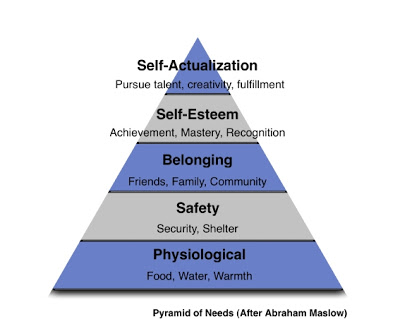
So, what is money good for? Think Maslow

1. Buying essentials and shelter. Food, water, clothes, and a place to live. These are the bare minimum fixed costs. We need to earn enough to cover these expenses. Ideally, you’re happy with simple investments in fixed costs because we get used to the basics very quickly i.e. your cool new BMW soon just becomes a vehicle you use to get to work every day.

2. Security. Save and invest. Being happy requires a feeling of safety and security else you are stuck with the occasional feeling of happiness.

3. Spend on experiences with framily. Now we get to using what remains after we buy basics, save, and invest – our guilt free spending money. The first best use of money, as a result, is using it to spend on great experiences with our loved ones. While we get used to our BMW real quick, we don’t forget that iconic trek to the Andes or that incredible road trip in Australia. The rule is simple – spend on experiences, not things. So, if you’re ever wondering if you should spend money to treat your loved ones to dinner or buy a watch, you know what to do..

4. Give. Giving builds self esteem. Give to those who are lesser fortunate, give your time to those who need it, and invest in yourself and others. Then repeat.

5. Finally, spend on yourself. Also a self esteem builder – good clothes, good gadgets, etc. Do so with the money that’s left over..

Money can never help with self actualization. We can’t spend our way to happiness. At best, money is a metric that is reflective of the success we have achieved. If we have built rare and valuable skills, the likelihood that we receive money in exchange for it is high. That said, it’s only a metric and the biggest trouble with metrics that are easy to measure is that they can make us forget why we began doing something in the first place.

Money exists to help us be happy. Let it not be the other way around..

PS: Dan Ariely recommends “Happy Money” – a book by behavioral economists who attempt to explain the science of smarter spending. I haven’t gotten to the book yet and am looking forward to it.