The “I’ve failed” kind of friend

Whether this is a peer friendship, a senior-junior friendship or a mature parent-child friendship, it is hardest to be the kind of friend to whom the other person can come to and just say – “I’ve failed.”

Failure comes with all sorts of fear – especially a fear of judgment. And, in close relationships, the sorts of judgment we fear are the “I told you so” or “You aimed too high” kind.

So, how to be that kind of friend? Be the kind of person who is willing to put yourself out there and say “I tried that and I failed. It sucks.” It always sucks at first. We slowly come to realize it is no big deal. We just have to learn to relax, pick up the pieces, and move on.

The alternative is to attempt to hide these failures with secrets and lies – a recipe for unhappiness. You owe it to your loved ones to make it easy for them to come to you for support. Focus on creative, constructive, and corrective action. And, as is the case with these things, start by doing so yourself first.

Just get it done

3 rules that help me get stuff done –

1. Never mind who was supposed to do it. If it isn’t done and if it is within your power to do it, don’t faff around sending reminders (unless you’re trying to make a point. If you are, see point 2) – just do it yourself.

2. Have a bit of unexpected down time? Take out your to do list. If you don’t have one, make one and get on with it. No posturing, no acting busy. Just get it done.

3. Never mind who gets the credit. Just get it done.

Finally, I have realized that it helps most if you, in the words of Stephen R Covey, “be a light, not a judge.” If you are really looking to set an example, don’t do so by castigating your team for not getting stuff done. Set the example by.. just getting it done.

Where does this lead to?

It always starts with that one cigarette.

In the spirit of asking the right questions, the choice of whether to ask ourselves the “Shall I do it just this once?” or “Where will this lead to?” makes all the difference in the world.

Studies have shown that the biggest reason people don’t save is because they forget that they will grow old someday. The short term weighs heavily in most of our automatic decisions. Habitually asking “Where does this lead to” could be among the most important things we do.

The nothing alternative – a procrastination hack – The 200 words project

Here’s this week’s 200 word idea from “Willpower” by Roy Baumeister and John Tierney.

Given our tendency to do everything except the most important task on our list, some writers and researchers have experimented with putting their most important task as task #2 just to trick their brain.

However, as far as procrastination hacks go, writer Raymond Chandler had an interesting process for writing that involved methodically waiting for inspiration.  Chandler’s process had 2 simple rules –

1. He would set aside 4 hours every day to write
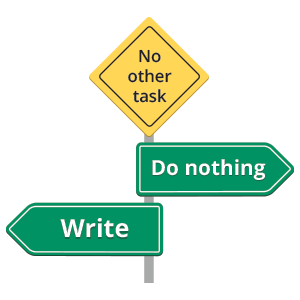
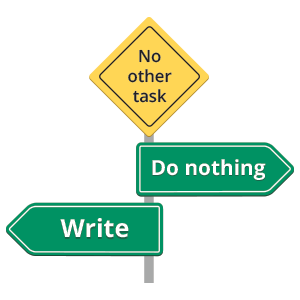
2. He could either write or do nothing. He was allowed to stand on his head or look out of the window but he couldn’t do anything that counted as a task (e.g. admin).

And, thus, we have a simple idea against procrastination – we set aside time to do one and only one thing. Justifying not doing important tasks by doing less important admin is no longer allowed. It’s all or nothing.

clip_image001Source and thanks to: www.EBSketchin.com

‘Anyone can do any amount of work providing it isn’t the work he is supposed to be doing at the moment.’ | Robert Benchley

Behind-the-scenes or the highlight reel?

“How are you doing?” “Oh, doing great. You know, work is good, life is good, etc. It’s nice to meet. Let’s meet for coffee sometime.”

I do not like fake conversations. I do my best to avoid them. If at all possible, I do my best to steer the conversation to real questions and issues I am dealing with.

Now, I’ve come to think of it as the difference between “behind-the-scenes” and the highlight reel. It’s easy to launch into a highlight reel – it’s the stuff Christmas cards are made of. But, we all know the reality is different. We all have our struggles. We often learn so much and gain so much perspective when we discuss them.

Yes, the highlight reel is appropriate sometimes (pretentious social occasions come to mind). But, I find we have much more deeper and meaningful conversations when we talk about what’s really going on. We gain perspective and, most importantly, really connect with those we meet. 

So, as I was asked the “how are you” question on a short catch up with a friend, I asked – “Do you want the “behind-the-scenes” story or the highlight reel?”

We both laughed. So much better than the “everything is great” bullshit.

Focusing on a process

When we started working on “The Real Leaders Project” as a team 2 years ago, we set ourselves this lofty (or so it felt at that time) goal – we would publish an interview every 2 weeks and we would aim to interview people that inspired us. I don’t think we knew what we were doing and I guess there’s a certain beauty in setting goals when you have no idea what you’re committing to.

The first year was a real struggle – we were always scrambling, always late, and seemingly always in crisis. We were so much in crisis that it didn’t occur to us that we must make a website of our own. We used to just publish our interviews on this blog. But, we were beginning to secure interviews. And, most importantly, these interviews inspired us and helped us share the inspiration with others too.

We had many limiting beliefs then – especially whether we would be able to interview people without having some connection (online or real world) to them. Gradually, we got the hang of this. The second year got better much quickly – we soon realized that the biggest secret to getting into the calendars of those who inspired us was good natured persistence. Don’t take rejection personally and don’t hesitate to ask until you hear no. (This process was infinitely easier if you knew someone personally of course.. but that list was short.)

2 months into the new year, I realize I am a LOT more comfortable this year than I was last year. And why? Process – that’s it. I have a straight forward process – every weekend, I write to 5 people I’d like to interview. Typically, this is a mix of adding 2 new folks on the list and following up with 3 from previous weeks. We started the year in apparent crisis following our break in December but I reminded myself that I knew better – trust the process and results will follow. And they did. That’s not to say this process will hold us in good stead till the end of time – things change and processes need to adapt as well.

But, one of my bigger learnings over these past few years is to focus a lot of energy into developing good processes. We run large parts of our life on auto-pilot and it’s important we work intentionally on these habits. You might get the odd sequence of results that don’t go your way.. but a thought through and well executed process is a fantastic long term ally.

The Jennifer Aniston method – a deadline for playing victim

I remember a short excerpt of an interview – I think it was with Jennifer Aniston – which spoke of her method of dealing with disappointment. She said she allowed herself to play victim for a set time period e.g. a day. As a part of this “victim day,” she was allowed to do whatever she wanted – sulk, moan, eat junk food, stay in bed, watch television all day, etc.

But, after that victim day, she wasn’t allowed to play victim any more. She had given herself time to do so and it was done. She had to now take responsibility and move forward.

I love the idea. It’s hard to be proactive every minute of your life. Unexpected disappointments do hit you and catch you unawares from time to time. This idea makes sure you give yourself some time to vent. But, venting doesn’t change facts of course. As an Irish colleague and friend of mine used to say often on a challenging project – “we just have to suck it up and deal with it.”

Five for Fighting on deliberate practice and writing 100s of bad songs

I just interviewed one of my favorite singers, John Ondrasik (known as “Five for Fighting”) for RealLeaders.tv. While the interview will be up in 2 weeks, I thought I’d share a few snippets that I’m sure I’ll be thinking about for the next few days.

– He achieved his first hit in his late 20s – Superman. He called himself another example of a 20 year overnight sensation with more than 20,000 hours spent working on his music.

– He graduated with a degree in Applied Science and Mathematics from UCLA just in case his music career didn’t work out. His mom was a piano teacher and his dad was an engineer and their influences in his choices are strong and obvious.

– While he wrote Superman in one hour, it took him more than 3 months to write his 2nd hit – 100 years. He described getting that second big hit very hard because music studios want you to regurgitate what has worked. A great work ethic, a willingness to stand up for yourself and a bit of luck is what he said he needed.

– When speaking of his creative process, he said he advised young songwriters to write 100s of bad songs. Superman was one of a 100 songs he wrote that year. He also spoke of how he made sure he spent a lot of time outdoors when looking for inspiration. If he felt stuck, he’d take a 2 hour hike and write outside. Staying healthy and happy helps him a lot.

– Finally, when talking of an idea that inspired him – he spoke about the idea of taking nothing and making something out of it. Artists, creators, and entrepreneurs do it. It’s result may be a low note or a high note – it almost doesn’t matter because true happiness lies in the journey.

His thoughts are a lovely collection of the many ideas that this blog stands for. It’s a great reminder that there are no shortcuts. More to follow on the interview soon.

And, thanks for taking the time, John.

Liking what’s not real

Bollywood movies would have you believe that Indian life has a lot of singing and dancing and chasing your loved ones around trees in beautiful landscapes. This couldn’t be farther from the truth. Visit Mumbai and it’s unlikely you’ll find much singing, dancing, or public displays of affection.

I think we love entertainment that doesn’t reflect too much of reality. It’s nice to be able to forget the (often painful) real world. Mobile games do that, for example. They ensure we carry a virtual world with us wherever we go.

Similarly, when it is time for next the summer Olympics, there will be a lot of anticipation and excitement around the 100m race to crown the “fastest man on earth.” Its fitting – life couldn’t be more different.

It is rarely about speed. It is almost always about endurance. It’s taking one hit after another, picking up the pieces and moving forward. Well, trying to, at least.

“Let me tell you something you already know. The world ain’t all sunshine and rainbows. It’s a very mean and nasty place and I don’t care how tough you are it will beat you to your knees and keep you there permanently if you let it. You, me, or nobody is gonna hit as hard as life. But it ain’t about how hard ya hit. It’s about how hard you can get hit and keep moving forward. How much you can take and keep moving forward. That’s how winning is done!” 
| Rocky Balboa