Achievement vs. potential – The 200 words project

Researchers tested two different Facebook ads for the same comedian. Half the ads said the comedian, Kevin Shea, “Could be the next big thing.” The other half said, “He is the next big thing.” The first ad generated far more click-throughs and likes than the second.”
Studies around candidates applying for new jobs showed that applicants had better chances emphasizing potential.

People often find potential more interesting than accomplishment because it’s more uncertain, the researchers argued. That uncertainty can lead people to think more deeply about the person they’re evaluating. The more intensive processing that is required can lead to rationalizing by generating more and better reasons as to why the person is a good choice.

The implication? When selling our skills, we should consider emphasizing our potential as much or more than our past achievements. Potential is interesting.

The potential to be good at something can be preferred over actually being good at that very same thing. – Dan Pink, To Sell is Human


Source and thanks to: To Sell is Human by Dan Pink, Original study by Michael Norton (HBS), Zakary Tormala (Stanford), Jayson Jia (Stanford)

(The 200 words project involves sharing a story from a book/blog/article I’ve read within 200 words)

Roads not taken

Our ability to reflect and see ourselves from an outside point of view is a big part of what makes us human. A side-effect of that ability is to dwell on roads not taken. We could spend days wondering about “what if I had..”

I’ve noticed two patterns whenever I think of roads not taken. First, I only consider the best outcomes from that road I didn’t take. If I’m thinking about an opportunity, I focus on the best case situation if I’d taken the opportunity and ignore any negative scenarios. Second, I neglect all the thought I’d put into making the decision.

Hindsight is always 20:20, of course. There is definitely a lot to be learnt from observing our past behavior. But, we must only move to correct something if we see a distinct pattern. For example, if we find ourselves repeatedly over-weighting risk in our decisions, there’s good reason to be mindful of that the next time we find ourselves making an important decision.

Beyond that, fantasizing about roads not taken is a pointless exercise. We must learn to build a solid decision making process and then trust that process. To do otherwise is just to invite unhappiness. Besides, it is worth remembering that our current state is a result of the best decisions we could have taken given what we knew. So, in theory, we did our best with the cards we were dealt. That’s all we can do.

We just have to keep the faith that we’ll push ourselves to learn from what is happening to us and, over time, to know better. And, when we know better, we will do better.

Downstream effects

Better decisions can be made by taking a moment to think about downstream effects.

When Wal-Mart cut costs by removing store employees, they just ended transferring the massive burden of stopping shop-lifting to the local police.

In an attempt to improve their demographic balance, Russia tried paying women money to have kids. But, they found an increase in abandonment rates. After collecting their pay outs, women were dropping these kids in orphanages. Sweden’s answer to helping improve demographics was to have an incredible range of maternity benefits. A Swedish woman can take 16 months of maternity leave (13 of them paid at 80%) until her child is 8 years old. If she has 3 children, that’s 4 years of leave. Sadly, women in their twenties are among the largest unemployed groups in Sweden.

On the flip side, Google outsourcing TensorFlow, an open source machine learning library, helped a Japanese farmer and former engineer create a system for sorting cucumbers.

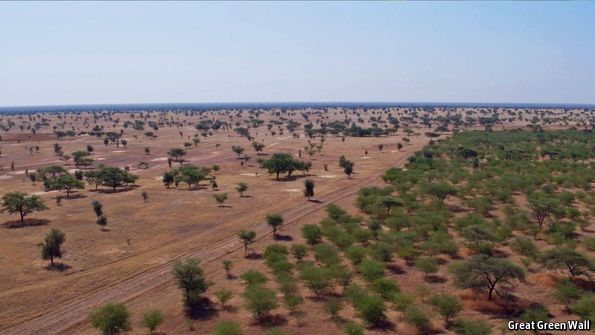
And, the African Great Green Wall initiative is likely to have long term ripple effects beyond just preventing the Sahara desert from increasing in size. When 21 countries come together to plant trees, there’s plenty Africa and the world gains from the effort.

downstream effects, externalities, unintended consequencesThanks to The Economist for the image

Every one of these stories is a story about the downstream effects of decisions. In Economics, these are called externalities or unintended consequences. Every decision we make has unintended consequences. In some cases, the negative downstream effects can be so powerful that they can just override any positives from the first order consequences of the decisions.

As a result, we must discipline ourselves to push all decision making conversation into the realm of downstream effects. All company destroying decisions started out as good ideas in the short term… with bad downstream effects.

Nobel Prize winners

Nobel prize winners have been getting older and more specialized in the past century. With more knowledge being created, the time it takes to get to the cutting edge of a field is increasing. The definition of a field is getting narrower, too. So, a future Nobel prize winner will have to spend a much longer period of time to first understand everything that has happened before and then innovate.

There are implications for us, too. Over this century, our world has seen a tremendous increase in knowledge too. While we can probably do well at our current jobs by investing just in functional expertise, having an understanding of the big picture will get harder and harder. It will require us to invest in learning in a way that makes us look more like Nobel Prize winners.

We’re approaching an interesting crossroads as we transition from an era of industrialization to an era of connection. The previous transition between eras was very bloody and only settled after multiple wars. This era is seeing signs of unrest, too. The wave of populism we’re seeing around the world isn’t going away any time soon. It doesn’t just affect our politics. It affects our lives. And, if we intend to contribute to the solution, understanding what is driving these reactions and understanding why the things we take granted in our societies are the way they are will be an important first step.

That’s at least how I’m approaching all this noise. I’m working my way through a reading list that involves spending time in the past and the future in equal measure – The Inevitable (on technology), The Seventh Sense (on networks), Bad Samaritans (on free trade), The Accidental Superpower (on geopolitics), and The World After Capital (on a thesis about the next era).

We must first understand why things are as they are. Only then can we ask why not.

Low flame

When we try to make changes in our lives, we often try to make changes on high flame. Making changes on high flame involves putting a lot of heat on something and expecting near instant change. When we do this, we forget that a lot of great cooking gets done on low flame.

The classic high flame approach is the new year’s resolution. We put a lot of pressure on ourselves in the month of January and expect instant results. The downsides are obvious – we often walk away feeling burnt from the experience.

The low flame approach is a much slower, longer term approach. It involves consistent heat over a long period of time. If you follow the low flame approach, building a strong culture in your organization will not revolve around a culture and values push. It will involve a steady set of initiatives over a long period of time. Similarly, there is no big product launch, only a consistent iteration on your minimum viable product.

The biggest benefit of adopting a low flame approach is when we’re making changes in our personal life. The best way to get fitter is to eat healthier and fit regular exercise into our weekly schedule. This never happens easily. Changing our schedule involves a lot of slow tweaking over time. While we might be able to force a change every once a while, we need to slow down, observe ourselves and allow time for the momentum behind the change to build up.

Slow, consistent, thoughtful, long term – there’s a lot of power in the low flame approach to change.

Later

Later is more than a word – it is an idea whose judicious use can change our life.

When it comes to working on the most important priorities, we don’t ever want to use it. The more we use it, the more we procrastinate.

But, when dealing with behavior that does no good in the long term, it can be a very powerful word indeed. Willpower researchers have found that substituting “no” with “later” when dealing with temptations can successfully resolve the tension in our head.

Therein lies the power of later. Our minds mark the action we’re dealing with as resolved and ease the tension. There are times when easing the tension is useful and there are times when it is counter productive. “Later” can thus be the difference between delaying gratification and succumbing to temptations.

Use it wisely, we must.

Do our absolute best

Much of our lives lies outside our control. People respond to this fact differently. Some like to believe they control everything while others like to believe it is all predetermined. Maybe one of those is the right view, we’ll never know. My preferred approach is to simply acknowledge that large portions of our lives lie outside our control. Once we acknowledge that, the onus is on us to also acknowledge the flip side – there are portions, occasionally significant, that are in our control. And, for those portions, we can choose to do our absolute best.

The context to which we wake up in the morning may be outside of our control. How we choose to live our day today, however, isn’t. And, by living our day well today, we can improve our context tomorrow. This can go on until our context changes again – for no apparent reason. That’s part of the unpredictability and beauty of this life. It can rain when we least expect it. What matters is that we learn to dance with it.

As I thought about the week that had passed by, I wondered if I could have done a little bit more. But, I also remembered to ask – did I do my absolute best? Did I be my absolute best?

Contentment and drive are false choices. There’s a tension between them (and many other false choices) that makes life beautiful. Asking ourselves if we did our absolute best is an example of a question that embraces both. We did the best we could as we knew it. Now, that we know better, we’ll do better.

I’ve learnt that there’s not much more we can expect from ourselves in every analysis. I’ve also learnt that there are few goals that are more worthy of aspiration. So, as I start this week, I tell myself that, at the end of it, I will reflect and ask myself – did I do my absolute best? Did I try to be the best version of myself?

I will likely have made mistakes and mis-steps this week. But, if the answers to those two questions were yes, it will have been a good week.

Monsters in the basement – The 200 words project

When Fred Kofman’s son asked him to accompany him to the basement, Fred asked him why he needed company. He said – “Dad, I’m scared of monsters.”

Fred’s initial instinct was to question the emotion of fear his son was feeling. But, he realized that if he believed there were monsters, he would be scared too. So, he asked his son why he didn’t see monsters when he went down. His son responded – “They go away when you grow up.” :)

In his work as an executive coach at leading companies all over the world, Fred finds that we generally respond to difficult emotions by telling people to suppress them. Telling someone “don’t be afraid” or “don’t feel bad” isn’t helpful. We’re effectively saying – “Push it away as it makes me uncomfortable.” And, bottling emotions up is akin to coiling a spring – they only come back with stronger force.

Difficult emotions are simply reactions to beliefs. Instead of challenging them, we must allow them to be felt. Then, we can discuss or challenge the beliefs.

To manage emotions, we have to learn to be comfortable with them and then inquire to the source of them. – Fred Kofman


Source and thanks to: Conscious Business by Fred Kofman

Bigger houses

There will always be people we know with bigger houses.

We might look at the folks with bigger houses now and think we’d feel better when we have that bigger house. But, when that happens, we’ll start hanging out with people with houses our size and spend our time looking at people with even bigger houses.

Of course, this isn’t about houses. This could just as easily be about bigger cars, teams, companies, following, etc., etc. With constant connectivity and exposure to everyone else’s life and career, a friend described this as an arms race. One better social media update needs to be matched with another.

It is ironical that arms races have the word “race” in them. While they contain the speed element of a “race,” arms races rarely have a winner. Most arms races only leave behind losers at every turn.

The only way out of such meaningless arms races is by asking ourselves one question – how will I measure my life? Once you have a hypothesis, you just need to keep plugging away to make your life meaningful – by your standards. In the final analysis, all that will matter is how you did by your own yardstick.

The rest is gravy.

“Just a little”

It is better to be completely honest or completely dishonest. Being “just a little” dishonest is a problem.

Being just a little honest/kind/environmentally conscious means we are only those things when the situation suits us. The moment the going gets hard, we change our behavior.

The problem here isn’t just the unpredictability of our behavior – though that is definitely a problem. The bigger problem here is that we live a life built on lies to ourselves. We just rationalize away any bad behavior and think of ourselves as honest human beings. We do so by blaming all of our “just a little” behavior on extenuating circumstances. And, by gradually believing this lie, we stop feeling the kind of guilt that focuses us to take action.

The “Just a little” way of life is a massive problem because it is built on bad behavior during extenuating circumstances. Life, it turns out, is just a series of extenuating circumstances.