The password audit

Over the past few years, I’ve made an audit of our passwords a part of the end-of-year check in routine. I’ve gone through 4 stages:

1) Ensure all important accounts have strong passwords. Strong passwords = lower case letters+ upper case letters + numbers + symbols. The most common passwords found in data breaches are still variants of 12345, password, qwerty, iloveyou. So, strong passwords are a good first step.

2) Set up password breach monitoring. I have set up breach monitoring across multiple services and have found Spycloud (free) to be the best so far.

3) Set up 2 factor authentication across all important accounts. 2 factor authentication adds an extra layer of protection in case of breaches.

4) Stop reusing passwords across accounts. As steps 1-3 focused on key accounts, I was still stuck with nearly a hundred old internet accounts with reused passwords. Lastpass reminded me of this a few months ago and I started a weekly routine of cleaning up 10 accounts/passwords at a time.

This was an eye-opening exercise. I ended up closing ~50 defunct accounts and cursing another 15 services profusely for making it very hard to close accounts (requirements include live chatting or calling) before closing them anyway. I also cringed a few times when I saw how often I reused passwords. I’m glad to have done it and became a Lastpass “Security Dashboard” fan* as part of the process.

None of these steps ensure complete safety. But, in the event of a worst case scenario such as a breach or a scam, these are steps we can take to make sure damage is limited.

*This feature was free when I started on this journey. Mid-way through, it became a premium feature ($36/year). I wasn’t sure if this was in response to how often I was using it. If it was, hat tip to a smart paywall!

Notes on blogging

3 things I’ve learnt about blogging for folks who are either considering it or started writing recently:

1. The biggest challenge folks face is a lack of clarity on why they’re doing it. This happens because of a lack of clarity on the question – are you writing for yourself or writing for others?

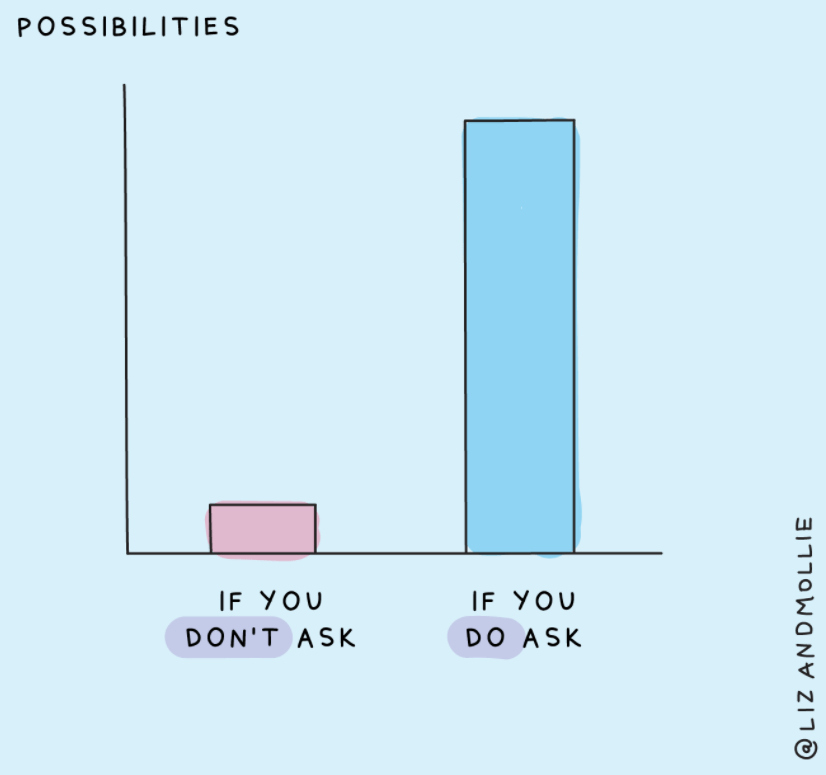
I’ve written a longer post on the difference between the two approaches here. The illustrative graph below shows the difference between the two. When you write for yourself, you spend all your time on the thinking and writing and ignore any investment in attempt to grow your readership. When you write for others, you spend as much time as you write on growing your readership.

This isn’t to say it is impossible to grow your readership while writing for yourself. Or vice versa. It is just unlikely.

It helps to be honest with yourself on what your goals are. One approach isn’t better than the other. It is just about figuring out what you are in it for.

A related note: If you’re one of those analytical folks prone to optimizing numbers and seeking to write for yourself, find ways to not forget about any admin dashboard that shows counts of subscribers or traffic.

(Update: After a few exchanges and questions, I realize it wasn’t clear why I advocate “writing for yourself.” Here’s a follow up post on that – Notes on writing for yourself.

2. Pick a blogging stack that works with your goals. My experience is completely on the “writing for yourself” side. So, the only piece of insight I have for folks who aspire to monetize their writing is to try Substack. I don’t use them but I’ve heard good things.

If you’re writing for yourself, there is an assortment of free tools available to try. As I started writing as a 19 year old student, I’ve tried my fair share of these – various hosting providers, Blogger, free WordPress, and Feedburner. They’re all fine in isolation. But, free also means inevitable issues and maintenance overhead.

I switched to paying for my blogging stack five years or so ago. I pay WordPress.com for a domain ($22/year) and hosting ($48/year). And, I pay Feedblitz for sending emails ($319/year). For ~$400/year, I can just focus on clicking my “post” bookmark, publish, and not worry about the rest. A gift that keeps on giving.

3. The final challenge is to get started and not break the chain. There’s no magic to this part. Just get started.

If it helps, I’m happy to be your first reader and accountability buddy. As some of you know, I’ve been writing every day for eleven and a half years now. Deciding to do this is among the best decisions I’ve made. So, if I can be of help on your journey, just send me a note on rohan at rohanrajiv dot com and we can get started on the program. :-)

PS: Merry Christmas to all of you celebrating!

Why David Graeber’s Debt is an special book

Every 6 months, I share my notes on all the books I’ve read in the period on RohanRajiv.blog. As part of these notes, I share insights that resonated. The quality and quantity of these insights typically determine the intensity with which I recommend the book.

This wasn’t the case with “Debt” by David Graeber.

There are a few special books that change our perspective by telling us the story of our past. “A Splendid Exchange” and “Guns, Germs, and Steel” do so from the lens of trade and conquest. “The Accidental Superpower” views the past from the lens of changing superpowers. “Sapiens” does so from the lens of human evolution. And, “Debt” does so from the lens of… well.. debt.

With every one of these books, we may not agree with everything the author says. That’s expected when you’re attempting to synthesize thousands of years of human history. But, these books are worth reading because understanding what came before us helps put into context what we’re experiencing today.

And, every once in a while, they also helps provide clues about what might lie ahead. History doesn’t repeat but it often rhymes.

Debt is a special book thanks to the audacity of what it attempts and the elegance with which it delivers it.

Global currency reserve system 101

Lyn Alden’s post on “The Fraying of the US global currency reserve” is fantastic. If you’ve ever been curious about the global currency reserve system, Lyn has you covered. It will take 20-30 minutes to read and is effectively a free top quality course in macroeconomics.

I’ve shared her summary below – but, I’d strongly recommend reading it in full.

Thank you for the education, Lyn.


Petrodollar System Peak

The world goes through periods of geopolitical order and disorder, and with that, comes the construction and subsequent fraying of the global monetary system each time.

More troublesome, the inherent flaw of having the global reserve currency, in a theme that goes back to economist Robert Triffin from over half a century ago, is that in order to maintain the global reserve currency, the country must supply the world with its currency via structural deficits in one form or another.

At first, the hegemonic benefits of being the reserve currency nation outweigh the costs, but as the benefits stay relatively static and the costs compound over time, eventually the costs outweigh the benefits and the system becomes unsustainable.

In addition, a system constructed around the US dollar decades ago when the US was 35% of global GDP, doesn’t work as well when the US is only, say, 20% of global GDP. It’s not about how big the US military is to keep its hegemonic status; it’s about whether the global monetary system as currently structured is still mathematically viable, and whether it even still supports the interests of the United States.

Put simply, there is a natural economic entropy to global reserve currency status, because inherent flaws in the system continue compound until they reach a breaking point. The challenge, of course, is identifying ahead of time where that breaking point is. A change in the global monetary system doesn’t necessarily mean bad things for the United States (indeed, the United Kingdom had an economic boom in the post-war years after it lost reserve currency status), but it does mean making a trade-off between international interests and domestic interests, and re-aligning trade as needed to obtain the desired balance.

My base case is that going forward over the next several years, the global economy will, more likely than not, encounter the third dollar bear cycle of this current petrodollar system. If so, assets such as global equities, quality residential real estate, precious metals, industrial commodities, and alternatives such as Bitcoin, are likely to do well.

From there, the global monetary system is gradually becoming more decentralized, in the sense that alternate payment systems and alternate currency settlements among trading partners are growing in use. This is indeed a more structural shift towards a new system. It could happen slowly, as it already is, or it could accelerate if the US itself also shifts out of the fraying system.

Patience, flexibility, and tact

I made it past my four year mark as a parent a few weeks ago. I was reflecting on the biggest lessons I’ve learnt/attempted to learn over the past years. The three words that came to mind are patience, flexibility, and tact.

It is fitting that patience was the first area that popped to mind. This is an area I frequently come up short. The good news is that I’m far more aware of how impatient I am. The bad news is that I still lose my patience a few times a week. I’ve made progress from “Always” losing patience to “Often” to “Sometimes” over the years. But, there’s a chasm I need to jump to get it down to “Rarely.” That’s the goal for 2021.

Flexibility is the area where I’ve made the most improvement. I started our parenting journey hoping to juggle parenting with a bunch of other things I wanted to get done. I am under no such delusions now. I understand now that work life balance is a myth. Instead, we just have work life trade-offs. These trade-offs are real and are best made consciously. I’ve become better about making consciously conscious trade-off decisions and then making peace with them.

Finally, tact. This is an area I often come up woefully short. I’ve shared an analogy a few times over the years – “When you try to fight fire with fire, remember that the fire department uses water.” The challenge with tact is that it runs counter to how I solve problems (I run toward them). That turns out to be a horrible way to solve problems with kids. As my wife frequently demonstrates, there’s often a creative detour you can use to diffuse the situation.

The good news is that I have become more aware of this. But, if I had to grade my progress – I think I have graduated from “Always” lacking tact to “Often” lacking tact. My hope is to get to “Sometimes” in 2021.

Here’s to making progress.

Sound of the true

“The sound of the true is drowned out by the noise of the new.” | Eric Weiner in The Socrates Express.

A beautiful articulation of Arthur Schopenhauer’s riff on our urge to seek the new.

It is one of those reflections that has became infinitely more powerful since Schopenhauer’s time.

PS: In case you’re curious about the original reflection – No greater mistake can be made than to imagine that what has been written latest is always the more correct; that what is written later on is an improvement on what was written previously; and that every change means progress. Mostly it is loss which teaches us about the worth of things.

Bikes and optionality

We bought bikes recently (yay!).

On the day we bought them, we had a choice. We could buy any and all accessories (think: carrier, toddler seat, lights, etc.) for a 15% discount on the day of the purchase. Or we could choose to wait to see which ones we’d really need and forego the 15% discount.

We decided to do the latter.

In the weeks following the purchase of the bike, we ended up purchasing – in batches – nearly all the accessories we’d considered purchasing on the day we bought the bikes. As we fitted the final accessories, I was thinking about the lessons we’ve learnt from the process.

The first lesson is the cost of optionality. When we chose to wait before we made any further purchases, we chose optionality. We could have chosen a bunch of accessories in our first day enthusiasm that we didn’t need. This way, we’ve only purchased things we know we’ll use. That optionality cost us that 15% discount we’d have otherwise gotten.

This is the case with all decisions in our lives. An example here would be a career decision students in graduate school often face. I have had many conversations with students who are torn about whether to go work for a management consulting firm or go into whichever industry they desire. Working in management consulting after graduate school for folks who have a strong hypothesis that they’d like to go elsewhere eventually is an example of optionality one could choose to exercise. It doesn’t come for free.

The second lesson here is removing regret from thoughtful decisions by reminding ourselves of the thoughtful decision making process. It is easy to look back at the purchases we’ve made since we bought our bikes and kick ourselves for not doing this when we had the discount.

But, that is an example of hindsight always being 20:20. We assume, for example, that every purchase on that day would have been the right one. There’s no such guarantee. One needless purchase could have eliminated any gains from the discount.

That, then, gets to the importance of reminding ourselves of thoughtful decision making processes.

I was recently on a panel where we were asked about career decisions we regretted. I explained that I didn’t have any regrets. This wasn’t because I haven’t had decisions with bad outcomes. I have too many to count. Instead, it is because I know that I always made the best decision based on everything I knew then. And, now that I know better, I’ll do better in the future.

We can’t guarantee good outcomes. But, if we’ve run a thoughtful process, reminding ourselves of that process helps eliminate needless and useless regret.

A modern(a) leap

In my past life as a management consultant, I spent a year working for Pfizer in the UK early in the past decade. It remains my only stint working with big pharma and it was fascinating to be exposed to a world I hadn’t previously known – patents, clinical trials, and such.

Pfizer, at the time, was facing patent cliffs of some very lucrative products in the coming years and there was a lot of debate about what would be the next superstar drug. Speculation was rife that the way forward for Pfizer and other big pharma companies was to acquire themselves out of trouble. That meant finding promising biotech companies doing interesting work, partnering early in the drug development process, and acquiring them if things looked promising.

The promise of biotech was that we’d see a democratization of drug development as technology would make it make it possible to produce drugs/vaccines with newer and more innovative methods. But, just as there was promise, there were big questions that remained to be answered. How would a small company survive the process of bringing a new drug/vaccine to life? What about the challenges of taking that to market? The heavy investment involved favored large incumbents.

So, I was curious about what we’d learn from the process of creating the COVID-19 vaccine. I expected the usual suspects – the likes of J&J, Roche, Pfizer, AstraZeneca, et al – to be among the leading contenders in creating and eventually mass producing the eventual vaccine.

But, following Pfizer’s announcement, it was heartening to see a much smaller Biotech company come out with a solution with impressive efficacy. It was particularly heartening because their story had all the elements of the biotech dream – find a problem, plug data into a computer, give software a day to figure out the solution, and then test it.

Of course, if it were a software company, you might A/B test it immediately. That’s not how medicine works – for good reason. We need randomized controlled trials with large enough populations for statistical significance. But, these comparisons aside, Moderna’s story was just as magical. Two days after the COVID-19 genetic sequence was released on January 11th, the Moderna vaccine was ready.

By the time the first American death from COVID-19 was announced, the vaccine was already manufactured and shipped for its Phase I trial.

That vaccine was approved by the FDA today. It is a giant leap forward for the Moderna team and for the many scientists and technologists who’ve been championing the potential of biotechnology for over a decade. The future is here.

Ozark and slippery slopes

We recently watched the Ozark series on Netflix. It is the story of a financial planner who relocates his family to the Lake of the Ozarks in Missouri after a money laundering scheme goes very wrong. It is a good show with strong and well developed characters.

The one idea that the show hammered home for me was the idea of the slippery slope. It shows the downstream impact of one decision that compromises our ethics. That decision leads to the next bad one and the one after that. Covering the tracks of each of these decisions lead to many more decisions that further compromise our ethics.

Before we know it, we find ourselves in a place that is unrecognizable from where we started.

It reminded me of the Clay Christensen anecdote about a cyclist who made the decision to dope “just this once.” No cyclist starts cycling with dreams of becoming a doping addict. But, he might make an exception “just this once” for an extenuating circumstance. And, before he realizes it, doping becomes the new norm. A slippery slope.

Clay’s advice is two-fold. First, make sure you have ethics and principles that you care about. And, second, stick to those ethics and principles 100% of the time. Never make allowances for extenuating circumstances because life is a never ending series of extenuating circumstances.

We know this to be true. The Ozark story arc brings it to life on the screen nicely.

The Morgan Housel compilation

I had 3 notes to share as part of this year end “Morgan Housel” goodness compilation –

(1) The first is a post titled “We have no idea what happens next.” As is his wont, Morgan Housel shares a fascinating story about the aftermath of a volcanic eruption in Indonesia in 1815 that disrupted the world for more than a year.

After it resulted in a famine in Germany, it inspired Justus von Liebig to devote his career to improving agriculture. That, in turn, led to Ammonia based fertilizers that changed the course of large scale agriculture. A great example of innovation that was likely inspired by a global catastrophe that was also simultaneously impossible to predict. Morgan then concludes with –

Then there’s the big unknown: the crazy, disconnected, counterintuitive change set in motion this year that we’ll only be able to piece together in hindsight. The kinds of things that only happen when seven billion people have their lives thrown upside down, experience a bunch of stuff they’d never imagined, and are either motivated or forced to do something completely different than they had considered in January.

No one should even guess what that might be. The unpredictability is the point.

But when good vaccine news came out this week, several people said, “there’s light at the end of the tunnel.” Maybe. But I suspect we have no idea what happens next.

Indeed.

(2) Next, he made an insightful observation in another post about low interest rates.

When interest rates are zero, stories about what the future could be are more important than what the present actually is. Interest rates tempt investors away from stories about future potential with promises of returns right now, this year.

Once those returns fall to zero, stories about what could potentially happen years from now – even if it’s low probability – gain most of the market’s attention. And people are good at coming up with awesome stories. That’s part of why Tesla is worth two-thirds of a trillion dollars, and the market is at an all-time high with 10 million people unemployed.

(3) Finally, after reading his book – The Psychology of Money – I shared a few copies with friends. It is an interesting book because it isn’t about how to invest or how to think about money. Instead, I describe it as a book that is about how to think about thinking about money.

The book is a collection of stories and anecdotes that provide food for thought. And, it can either be a light heavy read depending on how you’re feeling.

I walked away with a list of questions that I intend to work through in the coming days. It made me think. And, for that I’m grateful.

Thank you, Morgan, for your excellent work.