EB:I designed a Milaap’s logo back in 2010. Anoj, a co-founder of Milaap is my senior from National University of Singapore (NUS) and that’s how I got into the job. Milaap has been close to my heart since!
A couple of my friends got together and raised about $2500 for education in India through Milaap, using their graduation from NUS as the apt excuse. I was also a part of this initiative. I have always known Sourabh as the co-founder of Milaap and this exercise was the handle for meeting him! I was instantly inspired by his passion for his work and saw a Real Leader Interview at hand. Sourabh agreed to talk to me and here is his story!
About Sourabh Sharma
Sourabh is the old man on Milaap’s team; besides business development, he looks into their online marketing strategy. A second time entrepreneur, Sourabh, brings experience. He sold his previous startup MicroAppli, a media sharing mobile application company to OnMobile Global (BSE: 532944) where he defined product strategy and was responsible for revenues in excess of 1 million USD.
Sourabh graduated with honors in Computer Science from NUS. When not labouring, he likes to run. He has covered over 200Kilometres with 10 half-marathons and one full marathon in Singapore in 2010 alone.
Sourabh is passionate about mass market activation for convenience in lifestyle. Milaap for him is an extension of this passion, an opportunity to involve the masses in bringing convenience to the poor with every loan made.
Sourabh: I am Sourabh, one of the founders of Milaap. Milaap is a crowd-funding platform for financing loans to poor. This loan is to give them access to things like clean drinking water, sanitation, training which helps them to get a job as well as providing capital to entrepreneurs who are doing small businesses and micro enterprises.
I studied at National University of Singapore and graduated a long time ago. I worked on my first start up that is a regular tech start up. It was for sharing photos and videos on mobiles. It was much before the entire app store and iPhone economy kicked in. Our app did not do that well, so we did a distress sale to one of the companies. I worked with them for around 3 years.
After that I realized it was time to start up again. And this time I wanted to do something that impacted a lot more people and in a more deeper, meaningful way than just a software for sharing photos. I have always been interested in bringing together a lot of people to create something meaningful!
Milaap really brings these two passions together. On one side, anyone around the world can make a loan to help a poor person and at the same time every loan made will mean that someone is being drastically impacted. I think that really helps me to define why we are doing this and why I am making this my career.
EB: Where do you see Milaap in the next few years?
Sourabh:When we started out with Milaap, I wanted to completely disrupt how people did good – from the way it is being done today. Some people do it for guilt-riddance or as a personal thing. They do not like to talk about their work. I wanted to change that and the way money was being used. That is what we are trying to do with Milaap!
100% of the money is being given to the beneficiaries. You can even choose whom you give your money to. You can see how the re-payments are coming in. You can see how their life is being impacted. That’s where I see Milaap going – changing the way people do good. I want to make the process pervasive and make it an everyday activity. I want to make it part of the everyday rituals of eating, drinking, working and partying. People should be doing good and giving back to the community. If that can be achieved I’ll be really happy!
EB: What is your inspiration everyday? What drives you?
Sourabh:The primary motivation or meaning for my existence is in whether I create a difference in people’s lives and not just my own. Milaap helps me do that on an everyday basis. Sometimes our everyday operations bog us down, but once in a while you get this really nice e-mail from a lender who gave a loan. He would write about how happy he was for discovering Milaap, about how he always wanted to do this and that it was his dream to do it, about how he was glad to see someone else living his dream. That provides all the energy and motivation to keep doing this better.
EB: What are your biggest learnings on this journey so far?
Sourabh:The start-up journey teaches great many lessons. The chances of failure are so high – the only way to get it right is by doing more and more of it and learning from your mistakes. That way your success rate increases progressively. There are so many things you learn by being an entrepreneur. You need to take the form of a sponge. It does not matter what your current skill set is, you just absorb whatever needs to be done to grow your company and for its betterment. That is one of the biggest qualities an entrepreneur should possess.
Another learning is about expectation management – You tend expect a lot from the world. When you are dealing with a large organization there are different people and different issues at stake. Putting all of that together and making the machine move is an art. You also need to keep your team motivated. You need to know how to bridge the gap in passion between you as a founder and the rest of the team. You need to go beyond extrinsic motivation from compensations and bonuses to intrinsic motivation. When you see that, you see real work and results.
EB: Do you keep any productivity routines?
Sourabh:I still struggle with being super-productive! I do have one routine to clear up my mind and to be most creative. I run. That helps me clear the air and detoxify my mind. That’s something I do a lot.
Eb: What would be your message to aspiring leaders?
Sourabh: One of the things I have heard from people is, ‘I always wanted to start-up but I just don’t know how to go about it’. Be it financial or risks excuses, I think it is over rated.I think risk and safety are over-rated. By that I mean putting your bets on one thing that will happen next is over rated. I think you need to enjoy the moment and live in it. Be it a small hobby project or be it a trip or be it starting a company as well. I don’t think you should sit and wait. I think you should take the plunge. And not think about what will happen if this or that does not work out.Life in the end is about experiences. Each experience makes your life richer and richer. That is so much more important than anything else!
—
Thank you for sharing your thoughts, Sourabh! We respect your work and we are in awe of the change you are creating in the lives of many people.
I was talking to my friend Jun Wei about Real Leaders and he thought I should definitely meet Shariff. Md Shariff Abdullah, nicknamed as Singapore Blade Runner(SBR) is an athlete by profession. Read on to be inspired by change from within.
Every interview teaches us something new! We have usually stuck to a Q & A format. This time around it’s more of a story. It is a story of a man who was born without his left foot. It is a story of a man who changed his life!
As he narrates..
I was born without a left foot to a Malaysian woman and a Eurasian man. They separated after my birth and I was left with my father. My father got married to an Indian woman after that. My stepmother took care of me till 1977. She has her own story by the way. She was born a man as Govindaswamy. She underwent an operation to become a woman – Govindama. I have been to a lot of temples and took part in Hindu traditions with her even though I was an Eurasian.
People were very uninformed those days in a village. They liked to throw stones at me and call me by names whenever I walked down the street. They loved to make fun of me whenever I fell down. Somehow as a child though it did not seem big. I ignored their comments and went on with life.
In 1977 my father passed away and my mother had to take care of me by herself. It was a very tough phase because the next year my mother passed away as well. I had to perform her final rites as her only son. It was an experience I will never forget.
I was passed on from one family to another, as people did not want to keep me for long. It was a superstitious belief that you would bring bad luck to the family as a handicap.
In 1980 I found my biological mother. She was married to a man and they had two kids by then. She agreed to take care of me. I was left some money by my father and stepmother. Grabbing that money was a motive for some people who agreed to take care of me.
I stopped schooling that year and had to earn some bucks even though I was living with my mother. I used to sell curry-puffs to make some money. There were times when people used to steal my food. I was 13-14 years old and I was fed up with everything that was going on. I decided to run away from home.
The best place to go to, when you are lost is Changi Airport! It was built in 1981. It has air-conditioning and you can see a lot of different people all day. I learnt to go to Pulau Ubin after a while. I was at this for a while before the police found me and took me home. I did this 4 times! I could not get along with the family.
I was 16 and I took up my first job at Changi Airport. I left the airport job soon and went on security jobs in and around Singapore. I wore long pants to hide my handicap. When they would ask me questions about my fitness and why I was limping, I would lie about how I played soccer the previous night and hurt myself.
That lie has helped me get CPF and get a house. I kept switching jobs as well. I could not stay in one place for too long else they would find out about my leg. I have been a bouncer, site security specialist and a salesperson. I was ignorant of the sports world those days.
In 1992 I decided to get married. I have been married for 19 years now. I have an 18-year-old daughter and two others – 15 years and 12 years old. I kept at my routine of job jumping. I needed to survive and help my family.
In 2008, I was working on a construction site. My leg was hurting with a pricking sensation. I went to see a doctor. After a lot of tests, he said that my stump was infected and that it should be amputated. I went ahead with the operation but I felt like ending my life after that. Nobody would hire me after that.
I did not even know how to kill myself. I tried Dettol and a lot of Panadol. Nothing worked. I decided to try YouTube to see if they can help me. Somehow thought the first video I saw was that of Oscar Pistorius. He does not have two legs but he sprints. My mind started following this train of thought.
I researched more and found a lot of people like me who were athletes. I only saw Ang-Mohs. I did not see any Asian men who were at this. There were sprinters but no marathon runners. I decided to do it!
I wrote to the Singapore Disability Organisations for help. Three weeks after my operation I went to the stadium to try and run. I was only wearing the standard prosthetic leg. At the Yishun stadium I ran a little bit and wounded my stump. It started bleeding and the officials there told me off.
I started going to the gym to take care of my fitness after three months of recovery. I prepared for my first 2.5 km charity run. I understood the pain of a runner after that run. I decided to start a blog!
I wrote to a lot of bodies like NCSSin Singapore for funding for a proper blade leg. NCSS gave a certain amount and my donor, Madam Beatrice Tan helped with the rest. She just offered to help without knowing who I was!
I got my blade leg together with a lot of help and I completed my first marathon. I went crazy over running and completed 157 kms in running in 2009. In 2010, I ran 315 kms just in race. In 2011 I finishes 417 kms. This year I am still counting.
I have another mission now – I want to be the first disabled Asian to climb the Everest. I have learnt to start pushing beyond my borders. I ordered a prosthetic leg for climbing purposes. I have also set up a gym called ‘Gym Singapura Everest’. I want to celebrate the 50th anniversary in 2015. I also want to inspire people around the world and show that it is possible! I went to climb Mount Kinabalu with a team. After that trip I decided to quit training with able men. The schedule is completely different for someone with a disability.
I went to climb a mountain in Malaysia. Right behind me there were two Indonesian blinded men climbing. When we reached the vertical climb portion, I instructed them both to hold the rope tight as there were crocodiles below. They believed me and climbed all the way. After they completed though, I told them that there were no crocodiles but that they would have taken a very fatal fall.
I went to Boston this year to participate in the marathon! You must have a very good timing and also must be invited to participate. It was also my first time in the US. From the beginning to the ending of the race, there were people cheering you up.I am going to continue with this running until my Everest mission.
I am planning to climb a couple of mountains next year. I also cover Manali in India. I have made a budget and it seems like a lot of money. 165 000 in 2015, 88 000 in 2014, 65 000 in 2013 and this year I am spending 8 500. I am looking for sponsors to raise some money.
I have taken little initiatives to encourage the sponsorship. I am giving inspiration talks to people/corporate. I am working with ex-offenders as well.
When asked about his initiative to inspire others..
I believe in myself and in focusing on my task. I don’t like to give up. From my childhood I have been grooming to ignore others remarks. I want to educate the young generation about positive thinking!
I simply like to share. I also want to help other disabled people. On Saturday the 22nd of September I am running 100 kms for that cause. Please come down and support!
When asked for a message for our Real Leader audience..
Keep at what ever you are doing. Don’t ever give up. Never encourage negative thoughts or the people who talk so. If it’s your dream and your wish, you can make it happen. If it does not come now it will come in later. I don’t use the word difficulties; I think it is more like challenges!
—
Please feel free to contact Shariff @ pa.sgbladerunner@gmail.com if you want to help him or want him to help you. I have not met a more friendly man!
Thank you Shariff for an absolutely inspiring story. We often forget what we are capable of doing if we set our will on it. You are a living example for that truth!
Dhanya: Subhashini is a wonderful artist and a great person to be with! She was the neighbour of a good friend and he made introductions. She has taught Art at National University of Singapore through our visual arts club NUS ArtVibe. From then we have been in touch and I am a fan of her work. I look up to her just because she has taken up art as a profession! I hope to be inspired by her in a couple of months while making career decisions!
About Subhashini
Born in Chennai India, Subhashini’s initial training in Art started very early under the guidance of her father Maniam Selven – an accomplished illustrator in India. She furthered her interests by acquiring a Bachelor’s degree in Fine arts – Drawing and painting from Stella Maris College, Madras University (1997)and Master’s degree in Contemporary practice (2009) from Nanyang Academy of Fine Arts, Singapore and University of Huddersfield, UK. She is the recipient of ‘Metal Award’ for her work Raga Shivaranjani and a special award for dedicated Practice in 2009 from Nanyang Academy of Fine Arts, Singapore. She currently lives and practices art in Singapore. She has exhibited her works in Singapore, Malaysia, Australia, UK & India.
Dhanya: Hi Subhashini, thank you for agreeing to do this interview! Can you share a little bit of your story with us?Where did you grow up, when did you come to Singapore?
Subhashini: I was born in Chennai. My father is a very popular magazine illustrator, Maniam Selvan. I did not realize the influence something like that had on my life. Even until 10th 11thstandard in high school, I did not realize the gifts I had.
I always thought I would become a doctor. I took up science subjects at school in view of pursuing that. When I was in 12th though, my mother encouraged me to get into Fine Arts. She explained how it would be very difficult to establish a name. In my case, my grandfather and father have already done that. Hence it would easy for me to pick it up form there.
That’s how I joined Fine Arts and Painting in Stella Maris, Chennai. I realized it was logical. My sister and I grew up together. She always came up with very nice artwork. In my head she was the one meant for that, not me. Only after my mother’s thoughts had I decided to give it a shot.
I prepared for my college application and got through. It is very difficult to grow up with powerful people around you. People expect a lot from you! That sort of made me go into my shell and I would be reluctant to show my work to people. Even college, professors would be curious about my work because of my father. I would be very scared of not keeping up to the standard.
I got married and moved to Malaysia after college. I did not take up art because of my lack of confidence. I had a child and I went back to Chennai for a while. I was more interested in graphics design than in traditional art then.
My husband shifted to Singapore and I got the opportunity to work with the Temple of Fine Arts here. I was doing a lot of graphic design and designing publicity materials for them. The Founder of Temple of Fine Arts, Swami Shantanand Saraswathi inspired me to come out with my works and clear the doubt I had around it. He helped me grow in a way!
Our Tabla teacher Nawaz Mirajkar had an idea of having a concert where someone would paint the scene as the concert progresses. It was part of a monthly fundraising performance called Mela. It was a Santhoor performance in January 2003. Swamiji asked me to take up the job and that was my very first break after very long time. I did go on stage and paint. I did this for a couple of other dance performances in KL as well. I went to Perth and repeated the attempt for a couple of performances there. The whole tour was inspired by M F Hussain’s painting of a popular Huindustani Performer. I would not say it was a great success or that it was my best work. It was a starting point! That day was kind of a re-birth after my undergraduate.
In 2006 I joined Nanyang Academy of Fine Arts in Singapore for a Masters in Contemporary Practice. In the mean time, I went back to basics and reconnected with everything. My husband has been very supportive during my Masters here. He has helped me whenever I was down and encouraged a lot of my progress!
Studying here away from my father was different. Every time I drew something I would show it to my father for his feedback. The education here in Singapore helped look into myself to see what I am most excited about. I think the distance from home gave more freedom to find my identity and my own ground level!
In that respect the last ten years have been a good time for learning away from my father’s shadow. Once, my grandfather’s, my father’s, my sister’s and my works were put together and we exhibited the three-generation’s works in Chennai! It was an interesting learning to exhibit then.
My work was around contemporary belief and my research was about paintings inspired by music. Art was developed a lot around Carnatic music in the early stages. They were inspired by the 16th century Ragamala times. They personified ragas and painted them as figures. I am also a Carnatic singer. Even though there is a lot of research around this idea, being a singer I wanted to express what I best understood about the art.
It was my own journey towards contemporary art. My father and grandfather were illustrators. Only something figurative was art to me. And that’s why learning about modern art was a very different path. It was a lot of struggle to learn about abstract art and trying to understand and connect to it.
Dhanya: What is your take on the Art Scenes in Chennai and Singapore?
Subhashini: I have not spent much time in Chennai to talk about the Art Scene there, apart from my education. When I left Chennai and came to Singapore – in those 10 years I realised a lot had changed with respect to art. Internet made such a difference to the pace of development of art.
In my under-graduation we learnt the basic painting mediums and we studied great masters. We copied great masters. It was a very academic way of painting. We never went into modern art. From this scene I cut straight to my masters where I met students who indulged only in contemporary art. They did cover a bit of renaissance but it was more of abstract art than history. Such a contrast was very challenging for me! And I am still learning.
Renaissance 2.0 after the 1990s has created a lot more of local artists. I am very much impressed by the effort the Singapore Government is putting into bringing up local talents here. They are creating a great environment for the local artists by bringing in international art events and inspiring people. That helps them connect with the western art scene and around the world.
Dhanya: How are you practicing art now? Any plans for the immediate future?
Subhashini: I try to exhibit once in a while. It was much easier when I was with NAFA. We would have a lot of people coming in and of course the support from the school it self was encouraging. It is even more challenging because I have to do it myself. Last year, I exhibited my work in the Gallery of Gnani Arts. The year before I exhibited in the International Art Expo in Malaysia.
I am still working on what I am. I am exploring various topics other than my research. Being a woman I find it difficult to keep in touch with my passion aside from the other responsibilities as a mother and wife. I still try to exhibit twice in two years.
There was an exhibition in Chennai by Anandha Vikatan at Lalit Kala Academy. I donated a painting for the cause there. I am working on another show now. That keeps me going. Until my kids are independent I wont have as much time to practice art. Till then though I will have one string attached to my art!
Dhanya: Have there been any mentor figures through all this?
Subhashini: There have been so many people I would say! Starting from my mother, my father and my husband. Swamiji from the Temple of Fine Arts is a huge inspiration. Dr Shashidharan was the art director for Temple of Fine Arts who was a source of inspiration. They have all helped me do what I do.
Once I started at NAFA I met great people. A fellow graduate from LASALLE, my lecturers and there are so many people. When you are totally lost somebody gives you a direction/spark! Only at the end of the journey you realize how that particular thing made you do something.
Dhanya: Are there any hurdles that stood out? Do you have any stories?
Subhashini: The first event I mentioned was a huge hurdle for me. It was not my best painting, but I did do it. I also realized it turned out to be my grandfather’s birthday. It was the same day 26th of January. It was a wake up call of sorts. I decided it was meant to be. I took that as my challenge!
Dhanya: When I tell somebody that I like art, I find a lot of criticism about its simplicity and nothingness. I feel many share this opinion that any other hobby, say singing. Have you ever come across this?
Subhashini: I think that was the struggle I was talking about. Even when I was studying modern artists I came across works I could not relate to. I would start appreciating it only when I get it. I would also think like that. There is however an entire reason why someone does what they do. That changes the whole meaning of art. These days when you have to be good in art, there are many ways to express yourself. You can create installations, you can write. Those are art as well. The way in which you express yourself becomes the art.
I realized that you could never judge anyone’s work. It is their way of expressing their emotions. It’s not the end of the journey. It is like a fingerprint. It is just yours.
Dhanya: For all the people who are reading this what is your message?
Subhashini: I would say that if you are really interested in what you do, you should never worry about what other people say. You should gain the strength to carry on. I know it is hard. If you are really passionate, you should be at it. Minimum of 10 minutes everyday is also good. That will give you the best results. And when you feel the reward in any small way it would make you happy!
Life can get stressful. If you have a passion to turn to, it will keep you going! My friend Mr Vijay Kumar, is in the shipping business. While that is his job, his passion is Indian sculptures. He talks about sculptures on his blog and inspires people around the world. I think that is what passion can do!
—
Thank you Subhashini, for that! Art is indeed a fingerprint – to each his own. We hope you have a great time painting! We will keep at our passions too. What else is the purpose of Real Leaders, eh?
Elayabharath: Joe Hill is known for his amazing 3D pavement art! For the past seven years, Joe along with his friend late Max Lowry has travelled the world from New York to Shanghai creating his unique 3D street art. They design their anamorphic paintings to encourage audience interaction.
Joe was invited to Singapore by the famous art gallery ‘28th Fevrier’ to paint a 3D picture at our office lobby at the Solaris building. When I approached him (actually interrupting him painting) for the interview, he greeted me with a big smile and instantly agreed to it! He was very warm to all the people who were walking across the lobby, talking to him though it distracted him from his painting. Personally, I would be very annoyed when someone distracts me during my painting time. So here goes the first lesson to being a great artist – share your painting time with a big smile.
Please do visit their website for a lot more exciting works!
Here is the masterpiece that Joe had created in the office lobby:
Side view:
EB: Thank you Joe for this interview. Let’s get started by getting to know you! Where did you grow up and how did you get into Art?
Joe: I was born in England and I travelled around lots when I was young – my father was in the air force. I studied art at school but then when I was 19 I stopped painting all together and went on to get a degree in a drama school. I was a stage actor in London during my 20s. While I was doing that I started to enjoy writing and I started to write screen plays and put the art piece to one side. Screen plays take a long time and are very difficult to make money.So I started doing these chalk drawings to make some money on the side.
I was approached to do a series of pictures in Spain by a company. I immediately called Max from school – he is a very good artist. We both didn’t know how to do a 3D art – so we taught ourselves how to do it and went on this tour in Spain. We started small and our paintings got progressively bigger.
We started by using chalk to create our images, and soon we realized people like taking their pictures with the art work. They wanted to get on the art work which requires the art work to be quite interactive. We could use paint for the images, but it is very difficult to get permission to paint on the sidewalls and pavements. The solution – using a canvas!
It completely opened up a whole new world because we were able to create the artwork that is completely interactive that allowed people to jump on them, play with them, come up with different poses and also to reuse them. As I said it is difficult to get permission for paints! In the very early days it meant that we would roll out the pictures without getting permission and just roll them up very quickly whenever we had to pack. Now we of course we get things done in the right ways!
And to really answer your question, I didn’t really start painting until I was 30!
EB:What inspires you? What makes you get up from bed every day and do what you do?
Joe:It sounds like a cliché but a new challenge always is that the last picture has to be better than the one before. The latest picture has to be the best one!And I have to come up with something new as well because it is very easy to just do the same work over and over again. Although it is quite nice to carry on with used themes and techniques, it is always good to take a new spin at things. If I know I am working on a project that I know is different, I wake up and spring up from my bed because its new and exciting.
EB:What were some of the defining moments in your life? Times that stood out..
Joe: Well there are positives and negatives. I got married recently, to an amazing woman who is a very talented actress! It is very good to be with someone who is very creative.
Then when the Max, my art partner died 2 years ago. That obviously turned my world upside down. Suddenly I was working on my own. However, what was amazing was that a lot of max friends who were very good artists stepped in and helped to get through my first year assisting me.
I would think I have loads of defining moments. I have really supportive parents and an amazing sister who encourages me. They weren’t the people that asked me to get a proper job, or give up and do an office job because you should earn some money. They have encouraged me and have been really influential. It’s just a constant number of moments every time that keep me going!
EB:What is your take on talent? Is there such a thing called ‘artistic talent’, do you believe in it?
Joe: I think its practice. I don’t know – I could probably practice piano for 20 years and still not be able to play. I don’t know. But I do know that I have only improved through just hours and hours of practice.
I think it’s a combination of both. It’s a horrible word talent, isn’t it? It makes it sound little bit smug. I think it’s a lot of practice and hard work!
EB:What is the biggest learning that you have gained in all these years?
Joe: What I have realized is that one should take opportunity as it comes – rather than pausing when somebody says ‘Can you do this?’, then making a list of things that could go wrong and refusing the offer. I have learnt that the best thing to do is to say Yes – I can do this, and then work out the details, because that’s how it all started. Somebody said “Can you do a 3D picture in Spain?” I didn’t know how to do it, but I said ‘Yes’. That move helped me learn how to do it because I believed that it was possible.
And the same thing happened when we broke the world record for the largest ever piece of street art. They said ‘Do you want to do this?’ I said ‘Yeah, absolutely’. Is it possible? Yes! They said it was in November at England, and that means it would be raining out on the streets. ‘Yes, no problem at all!’ is what we said. And as it turned out, it was really difficult. For 4 days the paint washed away and we had to start again and again. But we got there in the end, we found solutions!
So biggest learning with the street art which I have carried on for the rest of my life is that apart from things like ‘I can’t physically jump to the moon’, most other things are possible if you really go for it!
EB:What would be your advice to the people who are just starting out or to the ones who want to pursue art in their lives?
Joe:I would say don’t let the negativity in. There are a lot of people who will tell you that you can’t do things, who would ask you to do that or who would ask you to focus on what is important. What is important to them is probably not necessarily important to you. So you just have to do what you think is right! Don’t let anyone try and put it down on earth. And believe in yourself I guess!
EB:Thank you for the wonderful interview Joe. And thanks for spreading happiness and making our lives more interesting!
Joe:I have got the luckiest job in the world – I get to make people smile!
—
Thanks for a lovely interview, Joe – we loved it! We salute your gusty approach towards your career!
I am sure you guys have noticed how Real Leader Interviews have transitioned from Tech VCs and entrepreneurs to artists/teachers. Before you think I have jumped 10 feet into art, I need to tell you that EB and Dhanya have taken over the interviews these days! Both of them being passionate about art, have interviewed (and are continuing to) people who inspire them in that respect! Hope you are enjoying the variety :) We surely are!
Dhanya: I met Prof Titima Suthiwan through my friend Eunice. When I was speaking of Real Leader Interviews and about how we were meeting people with passion, Eunice thought it fit to meet her Thai Prof who was always passionate in her classes. She says its one of the best classes she ever attended. She said she would remember the class just for how Prof Titima always managed to keep the students engaged and interested in what was going on.
Charisma like that is something we at Real Leaders love! So Eunice and I met the Professor for a catch-up at the Arts and Social Science faculty of National University of Singapore. We had a good time listening to her story filled with quirks and little jokes! Hope you enjoy it too.
PS: I am sorry about the ‘okays’ you hear from me through out the video! I realised it can be really distracting when you are trying to listen to her. I promise to not repeat that with my future interviews!
About Prof Titima
Dr Titima Suthiwan holds a BA (Hons) in Thai language and literature from Chulalongkorn University, Thailand, and a PhD in Linguistics from University of Hawaii, U.S.A.. She was recruited by the Southeast Asian Studies Programme at NUS in 1998 to set up and coordinate theThai language program, which is now a part of the Centre for Language Studies, and the world’s largest and fastest growing Thai as a foreign language program. Prior to joining NUS, she taught in and coordinated Thai language program at various universities in the U.S., including University of Hawaii, University of Washington, Arizona State University, as well as University of Oregon where she also coordinated the Laos and Khmer language programs. Her publications are in the areas of Southeast Asian historical linguistics research, poetry, and translation.
Dhanya: Hello Prof, thank you for agreeing to this interview. We are really grateful to you for having you here. Do you want to introduce yourself first?
Titima: My name is Titima Suthiwan. I came from Thailand to Singapore almost 14 years ago to set up the Thai language programme at the National University of Singapore.
Dhanya: My first question is just getting to know you Professor. What is your story – how you ended up coming to NUS to set up Thai, what you did before that, where you grew up..
Titima: I was born and raised in Bangkok, Thailand. I studied Thai language and literature for my bachelor degree at the Chulalongkorn University in Bangkok. During my time at Bangkok,I was also a poet and a translator. Before I went to the US, I had published my collection of poetry that became the best seller in Thailand in the year that I published.
Later I studied Philosophy for my masters’ degree. When you do a PhD, you should have a question that you really want to answer! Back then I didn’t really have a question in my life. So I didn’t know what to do for my thesis after my coursework.
I noticed that a lot of my professors studied linguistics. Since I liked language I applied and went to study Linguistics at the University of Hawaii. Initially I had just planned to do a masters’ degree, come back to Thailand and teach language. However I was awarded a scholarship at the University of Hawaii, so I decided to pursue a PhD since I felt it was a good deal – not having to pay the tuition fees. I also met a man there who I eventually married!
I taught Thai at the university by substituting the regular full time teacher when he was away. I also taught Thai at the summer school in various universities like University of Washington, University of of Oregan and Arizona State University.
So I had experience in teaching Thai as a foreign language and in managing programmes. In the University of Oregan, I didn’t really teach but I coordinated the Thai programmes. At that time there was no full time positions that were available in universities for languages. So I looked around and found out that NUS had a Southeast Asian Studies Programme but they were teaching only Vietnamese and Indonesian. I approached NUS and asked if they would be interested in offering Thai. They said yes and that’s how I moved here.
Dhanya: Could you tell us more about poetry book and what was it about?
Titima: The book was in Thai and it was about Love. Back then I was politically active and very critical – especially about politics. In a while, I got sick of the dirty side of politics and decided to write about love.
I started writing poetry when I was in the fifth grade. I used to take orders from my friends for many occasions and sometimes I even wrote poetry for their homework. There have been times when they got better grades than I did.
I started to send my poems to women magazines and slowly got around to publishing.
One of my poems got turned into a song by a band and they were looking for the writer so they could pay the royalty. A lot of people claimed the poem to be theirs and I was one of them as well. Somehow, the band believed me but offered very little. I decided I would not take that little sum and let them use it for free.
It made me realize that it was time to have my poems published so there was some record of it all!
We planned the publishing around Valentine’s Day. 30 years ago in Thailand, most of the literature was about politics. When my book about love came out, 2000 copies were sold out in 2 weeks and we had to print 3000 more copies later. Eventually it was re-printed around 8 times!
I had another book that came out later that year. Recently, it was a children’s book about a cat at a university which was a real story! One of my best friends did the water colour illustration for the book.
Dhanya: My next question is what inspires you – what makes you wake up every day and do what you do – to teach Thai. What is it that drives you?
Titima: It is fun to be with people! I love being with the people.May be this is not politically correct but I like to teach and control people! Well actually control how you speak Thai. It is always fun to relate to people, to express yourself, to learn about others – especially about the younger generation. I like the older generation as well but it is tough to teach them unlike in the US. The students in the US were older than me because usually they were grad students. Here in NUS though, every batch of students gets younger each year.
Dhanya: In all these years, have you had this one experience that you always remember from your teaching?
Titima: To just be in a class is fun. To sum up all the fun moments we have had in the class, I remember the drama that my level 4 Thai students played at our programme’s tenth anniversary in 2008.
We had a Thai night and we had a variety of shows done by my students. The students in the Thai musical ensemble and my Thai level 4 students did a musical called “yîng rian, yîngbâa – The more we studied the crazier we become”. They imitated the classes and how we taught them. I specially remember the guy who played me. He dressed like I do – with these head bands and a bag. He even said “I am the queen and who dares to challenge me”. That was fun!
Dhanya: Who were your mentors through these years? Is there someone who is your inspiration / role model and has always said the right things for you when you needed it?
Titima:That would be the Buddhism education that I have received. I believe that I cannot become a Buddhist just by my birth. I studied the teachings and I really agreed! I also learnt from my grandparents and my father who became successful through education and honesty. My father never got corrupted by his position or power. I was lucky that my mom always told me about how honest my dad and her father were. I always rely upon these good teachings.
Dhanya: Since you mentioned Buddhism, could you share some of the learning from Buddhism that has formed your core values?
Titima: Buddhism has important teachings that I still can’t follow! The main teaching of Buddhism is that there are 3 characteristics to our world. The first – nothing lasts forever. The second – everything changes and the third – nothing is ours.Of course I still do live in the worldly situation, this hand phone is very much mine!
When I was in my fourth grade, they started teaching Buddhism in class. I have discovered that principles I learnt there apply to my work – 1. Love what you do 2. Be diligent in what you do 3. Focus on what you do.
It is important that I just didn’t memorize them. I have thought these principles to be true. I have noticed that when I do what I love I could do it well. Buddhism is always something that I can rely upon and I agree with. This is what Buddha taught – you should not believe in anything just because someone told you to do so or just because your ancestors believed so. You have to think for yourself.
Dhanya: What advice would you give to the young leaders of tomorrow?
Titima:I think people should be sincere to themselves. When they do something they should really like it. It will be better if you know what you want to study, what you want to be or what you want to do for your living. Of course these are not constant wishes – they evolve as you grow up every day.
But the earlier you find out what your passion is, the better! Suppose you like music or arts and instead you choose to study economics because you think it will bring you more money or more success, I don’t think that will make you happy. Because deep inside you would always think – too bad I didn’t get to be what I want. You have to be sincere with yourself.
—
Thank you Prof for a light and insightful chat! Your learnings from Buddhism were a highlight for us!
Thank you, Eunice for helping make this interview possible!
The Real Leaders Team, Dhanya, Eb, and yours truly..
I am a huge fan of Disqus. It is my commenting system of choice and it’s one of those products I cannot stop recommending. I can count up to 8 bloggers who switched to Disqus thanks to my recommendation – I can’t think of too many other products I evangelize as much. Disqus was co-founded by Daniel Ha. Along with close friend Jason Yan, he founded this online discussion and commenting service for websites, while at UC Davis and I was obviously delighted to have had some of his time for a very insightful 30 minute discussion.
About Daniel: Daniel is the CEO and co-founder of Disqus, a company he co-founded with close friend Jason Yan in 2007. Disqus is based in San Francisco and is a small but quickly growing company that aims to improve conversations online. Today, the Disqus commenting platform is used by it’s 79 million users across some of the largest sites on the web.
Rohan: What is the back-story of Daniel the person?
Daniel: Disqus is my first company and it is also my first job. I did techno internships when I was in college and had a number of other jobs. However, as far as out of school concerns Disqus is my first project. That’s the same story wit my co-founder. We started Disqus while we were still in school. We loved building things and we moved straight into crossing all the hurdles that come with working with larger companies. Very soon we found out that we were really interested in pursuing Disqus!
Rohan: Where did you grow up? What is your personal story?Daniel: I grew up in San Francisco in the Bay area. It is right next to Silicon Valley, San Jose. My father worked with tech companies on the finance and business side of things. He gave me the opportunity to learn about companies out there! I was really inspired by that.
I guess that’s like growing up in Hollywood and seeing movie and music studios all around you, being right in the middle of it. That’s how I never knew any other life from tech. I also realised that some people do not have this kind of an opportunity. I was always into computers and technology. I started working with computers very early on, between the ages of 7 and 9 years. I started with simple programming. I started using the web a little bit after middle school. When I was 13 maybe 12 I met another little boy named Jason, who ended up being my co-founder in Disqus. We met in an advanced algorithm class in middle school. The first thing we ever did together was to play Star Craft. We got together to build a website which was a way for us to share music. This was probably around 1997, which was a little bit before peer-to-peer got popular!
We got a lot of online forums and discussion boards. Apart from that we were the nerdy kids in school, so we were able to work these projects! Through out though high school we were not as close and we lost touch for a while. We reconnected and went to the same college at University of California, Davis. It is outside of Bay Area, north of California. We did Computer science and Engineering. It was almost like we picked up stuff from our 13-14 year old selves. Now we were 18-19 and we had started working together!
Over the couple of years we did a lot of micro projects and I think a big driving factor was that we were really bored in school. A lot of the science classes were already done for us. So we did a lot of unrelated things before we finished up school.
I really did not like Chemistry. In the end I had this one class to take for graduation. We felt we had learnt everything there was to learn. And we realised there was a lot of opportunity waiting for us. We started Disqus in 2007 and started making it a company really in 2008!
Rohan: So what was the inspiration for starting Disqus? To improve your own blog or for blogs in general?Daniel: I am a non-blogger. I would not pretend to know much about this. Thinking back I had read a lot of blogs, but I never had one myself. Disqus started as a way for us to take what we know about good online communities from all the time we spent on message boards, RC Channels and other micro communities that exist all over the web to talk about movies and music. We wanted to link up all these small communities were we end up making a lot of friends over common topics. We wanted Disqus to be a new way for discussion platforms to work. So Disqus became something that was not only better software but understood how communities interacted.
One of the initial ideas was to make this completely network based. Say I was on a particular network and I talked about something in which I was a complete badass knowing all there was to know. And when I travelled to something completely different like say video games, they are not exactly the same communities, but a lot of cues about my contribution existed. And so we started off with this project and called it Disqus. One of the things that we did was look at the way it worked.
We figured out a way to put a microform that embedded into the website itself. At that time I was going to start another blog. I have started lots of blogs but I have never really kept up with them in the form of blog posts. Disqus was an excuse for me to say if I disconnected with my blogging I would still like to keep my engagement around. So we simplified the process and over time it looks just like comments and nothing else. So what started off as a discussion platform became a comment system and now we are on a path to go back to discussion platform.
Rohan: What is the vision ten years from now for Disqus?Daniel: I look at the web today where there are a lot of huge answers on social networking. That is because we have a lot of personal information about people, which makes a lot of transactions and exchanges very authentic. I can buy something online and I can have a good sense of who you are. That’s the sort of dimension that has opened up. It has created a lot of excitement by making everything more social and interactive. I think that’s a very cool thing. It really does make you think about where that ticks and how that makes the audience to relate to the true philosophies of web. When I got familiar with the Internet and the web, it was a lot of exchange of ideas and thoughts. Now days it’s mostly about people who are defined by the ideas they share. I sort of think Disqus as a place for web communities were discussions still matter.
Independent publishers and bloggers are struggling because while they have great content, they need to do something more to give a unique experience to their user. Some people do that by creating a brand image. The newsletters and publishers have their own stamp.
All we want to do is help the small communities create their own mark and space. When you are creating a community you are creating a nightclub or a bar or a lounge where people comment. They like people not because they know them from another life, but because they like the same content and exchanges. Bigger brands like Fox News, or CNN have an image, which resonates. We certainly don’t want to take and own the concept of commenting. There is discussion happening everywhere on the phone, on the web, on the television and on the street and we want to help build communities that are super strong.
Rohan: You are a Silicon Valley boy. What inspires and drives you?Daniel: Lot of things inspire me personally and that’s because of people around me. I think I am inspired by the things people do. I am really fascinated on a macro scale about technology being commoditised. I should explain that a little bit!
Right now in Silicon Valley, San Francisco everything is considered a technology company. Maybe you are creating a new way for transportation or you are creating a new way for digital avatars to have conversations, or new ways of commenting. If you think about it, it’s interesting because 100 years ago, companies were electric companies? If you used electricity you were unique and that was your classification. Right now we use technology and we can’t really be tech companies right? I am really excited about where this whole thing is headed. Just understanding that as a whole, we are not just building technology companies. It’s just a commoditised thing. People would build on what we are doing right now. I am really excited about what the next two generations of people using Internet would make out of it! That’s what drives me! What I am doing today with Disqus has a potential to shape the Internet and the way things function. We want a scenario where Internet is being taken for granted. Right now the infrastructure is still being built. The walls are still being built. And we are in it shaping someone’s foundation!
Rohan: Who would say are mentors who have inspired you? Daniel: This might sound a little cheesy but my long time role model has always been my dad. He got me into pretty much anything I was interested in like cars and computers. A lot of his work ethics and his view on technology inspire me. I still talk to him about all these things. He’s always been a very curious person – making sure that I had access to gadgets and electronics. It has given me an incredible opportunity to get things I have always wanted to. Other sources of inspirations are living in this area – where I am constantly surrounded by entrepreneurs of all areas and ages with different drives – all of whom really care about what they are doing.You can’t help but feel a bit lazy in comparison to them. So you always work a bit harder to achieve a little more. We did something called Y Combinator. We met a lot of great guys at YC and our current neighbours are from YC as well.
Otherwise, I like Henry Ford as a person – his views on industries and what that means for people and companies. His impact has been far reaching. Rohan: Was there a defining moment in this entire journey? Or was it just a gradual evolution? Daniel: We had a bunch of major milestones along the way. I would say that nothing would ever top the first couple of weeks of getting started. A lot of it was the transition from playing house to running house.
Me and my co-founder, we would met up at a diners at college. It was during breaks while we were still in school. We would come up with fake business plans and fake product documents. It was this sort of make-believe and fun-pretend exercise. Its funny that after all the research of seeing who does what and how, you end up throwing everything and doing it your own way.
Rohan: What are little things you do in your week to stay productive? Daniel: I am a big list maker. It’s always big things to small things and medium things featuring there. Every week is a list of small things on a bullet list that need to be accomplished to make next week better than this week! I usually have 20-30 items on the list. I try to identify the top 2-3 that just has to be done. Every time I start a new project I start with Evernote or a notebook.
People always come up with challenges but the details it takes to address them can get fuzzy. I like to keep things in a very execution driven thing. I never do anything unless it’s on my bullet list and all the steps needed are listed down there. I find it very helpful!
Rohan: What is your message to those who are watching this/reading this? Daniel: You are never too good for any opportunity. That was very helpful to get my foot in the door for various things.
You really need a lot of advice for how to do things. People do put a lot of ideas around how valuable your time is and how you should do something. Never let that cloud your judgement for taking up opportunities! Anything that comes up that could lead you to something new, you should go for it.
When you are starting something new you will always have something else as your competition. They can be better in every way. But you can be more prolific and you can try harder. It’s really easy to drag your feet when there is so much advice out there.
In this ecosystem its very interesting that everyone has done some version of what you are trying to do. In the technology, entrepreneur or marketing side, someone likely has more experience. Whatever decision you do make, make a push on it. Do not give up on it! — Thank you Daniel for that! We heard some really interesting ideas about technology in the future. And hey we love lists too!
As regulars here know, I have been learning guitar for about 5 months and was even thrown on stage (;-)) by my very trusting guitar teacher.
Having had a wonderful experience learning the guitar, it was great fun interviewing Drue, my guitar guru. As you will agree after watching the video/reading the transcript, Drue has some cool insights on learning, performance, ‘talent’ and what makes a great student.
About Drue: Drue James is a guitar teacher in London who has taught over 300 students over the past 8 years.
Drue: I have been teaching guitar for the last eight years. It was not always my full time job. It has been so for the last four years! I am 28. I live in South London. I guess I am more of a teacher than a musician!
Rohan: When did you first realize that teaching guitar was what you would be doing for a living?
Drue: I had friends who were always musical, unlike me. I liked singing the most. It is more of my first instrument. I started learning guitar pretty late, around 14. I have been singing for longer than I have been playing guitar, actually. I decided to pick up the guitar so I could support my voice and learn a few chords. Well, the real reason is because I wanted to get noticed and to find a girlfriend!
I started teaching by accident. I was a musician and I was writing songs. I worked at a bar where you can just turn up and play. The show went really well! After that someone came up to me and asked if I had thought about teaching guitar. I slowly got my mind around that. I put up my ad and a dad seemed really interested. So I taught his teenage girl and walked out thinking ‘Did I just get paid to do that?’ I really enjoy my work now. And that’s the story!
Rohan: What is the profile of your average student?
Drue: That’s a tough question to answer. Well, I could say they fall into two categories. There are the children whose parents want the child to learn a new skill. These kids are usually starting at about 8 years. I have tried teaching younger kids. I do not think it’s for me. Some people tend to think it’s only for boys but I have taught equal number of girls and boys.
For adults generally between 20-30 is the age they start. My oldest beginner is 52 years! So you learn that it is never too late to start! It’s usually people who are creative, the ones who really enjoy music and the ones who enjoy the talent of taking up something new! And then there are people who want to turn to a musical career.
Rohan: Is there such a thing as musical talent?
Drue: I think there is musical passion! That’s what I’ll say. I think you can love something so much that you want to play. Jimmy Hendrix when he first started playing guitar was rubbish. Its not like they picked up the guitar and they started gushing out good music.
However, there was something they loved about it. There was something that awakened them when they played. I suppose you could call that the talent. I personally love to call it passion. The will to want to practice, to move forward and to want to get better drives them. They are happiest when they are playing. I think that’s how I would sum it up!
Rohan: For a kid who just starts out, what kind of role do the parents play in the journey?
Drue: I have certain students who are just very good at it. They have the talent for it. When they start at about 8 years, for the next 6 months they would encourage the kid to practice. Eventually the child would start practicing without the parents. The parents would be more and more supportive mentally. I think the ideal role that the parents are playing would be to assist the child and not push.
Rohan: What is your experience with the older group? What about their motivation levels?
Drue: When you are an adult I think it’s harder. It’s not like a kid who comes back from school at three, finishes homework and has a couple of hours to work on this. I think otherwise the same rules apply. If you enjoy it enough, you are going to find time to play and practice.
The longest adults stick around with me is about two years. Adults learn the basic core skills and follow their own independent path. Of course if they want to specialize, they have to channel all their practice towards that.
An ideal student is one who plays what they like, reads a bit of music, goes back to their motivation and finds the encouragement to pursue this talent. My work with adults is around 25%. Choosing the music that they like and they can relate to, is most important. Even if I don’t personally like the music its their passion that matters! It’s really tough to catch on in the first year. So I do my best to make it work!
Rohan: In students that make the maximum progress, what are the most common traits that you see?
Drue: With a person who sets a goal – saying I will learn this much by this day or at this point in time, I see more progress. I have noticed this attitude matters a lot. It also goes back to talent and passion. Being able to play a song they like, being able to learn a difficult technique are some evidence of interest! Organizational skills are a big thing – being able to say that I have 20 minutes and so I will practice during that time is good stuff! Time management is important – sticking to their practice regime regularly. Determination and visioning help a lot. Seeing yourself playing what you want to play does wonders to your performance!
It’s not over night, what happens. The people who respect that it’s a skill and the improvement comes only in small steps are usually good. People who jump and want to do the tough things straight away are ones who easily give up.
Rohan: Its two very different ways of approach, am I right? The adults would be more free but the kids would be more respectful and sincere I would think..
Drue: You would be surprised actually. The difference is that for an adult they know what they want to learn. It’s easier to plan towards it. It’s easier for the kids to take up the theoretical things I would think. It needs to be fun and engaging. I would have a lot of energy and need to make everything more fun for them! Its slightly more academic with kids. It’s more artistic and expressive in the adults. I guess the difference is that you are freer with the adult.
Rohan: What have been the biggest learnings in the journey so far?
Drue: When you meet the kid for the first time I think you need to make a character assessment. That has nothing to do with the talent level. You are going to be seeing this child every week. How are we going to get on? If the student doesn’t respect the teacher and if they aren’t friendly, then it’s going to be hard for both of us to get along.
Academically I do not have any qualifications to teach. I am sitting for my grade 8 exams soon and that would mean something! What helps is learning with the student. You need to be one step ahead of them. And proper communication will help that step reach the person. I have been taught by a lot of people who are not qualified but are great musicians. Having a paper from a college is not going to add any credibility to the teacher as the time and effort in getting ready to coach the student would.
When I started teaching I would take 2 hours to plan an hours lesson. Over the last 7-8 years I have developed materials to learn. Regardless of whether I like it or not I have had to learn songs and be able to play them before I can teach it.
Different students like to learn through different ways. Some like to read something, some see it and some hear it. One song does not fit all bills. One person would like death metal and one other would hate it.
Rohan: What happens when people don’t practice? You can only shape the path for them right?
Drue: Lessons can get very boring because you have to get past something to learn something new. It becomes boring for both the teacher and the student. I meet them and ask ‘How has your week been?’ They have very high expectations for themselves and so they would say they had done some practice but not as much as they liked. I hear that so often! I would ask how much that was. They would say an hour a day. And I would say ‘ That’s too much! What are you doing that much for?’ They think they need to spend that much time but its not really necessary.
With some people, some mistakes are repeated continuously. That’s when you know they are not going to be guitarists. Generally 80% of the people who learn do not go on to become guitarists. But there is always 2/10 that do. It’s just the way it is! That’s what I want to learn from all this. How I can make those people want to learn forever!
Rohan: Who have been some of the most influential people in your life? As musicians, mentors or just people..
Drue: The first one would be my closest friend Dave. He is a lot better at guitar than me. I would watch him play! I have been in bands with him for 8 years now. I would always and still do tell him that I want to learn some technique. He is a very bad teacher because of his lack of patience. We write songs together.
Second person would be a group – Radiohead. I love their music and it always gives me the tingles. It motivates me to play and I think everything about them is good! They have shown me what it is like for 5 people on a band to sound like.
Rohan: There are people who are out there learning things. Not so much about guitar but people who are learning in general! What would be your advice to these people?
Drue: I think you should never stop learning. Even a master is always a student. He is and should be continuously learning. I think there is always something to learn. I think writing down your goals is extremely important! If it’s written down and you see them everyday, you will be motivated to go get it. I did not believe it myself before trying! I don’t keep it in my wallet; I put it in a folder. Even if I am not looking at it then, its always there reminding me of what I want.
If you are learning something, write down the little steps that you need to take. Because these little steps are really the best way to achieve it!
Drue plays a lovely minute from the song Mad World by Gary Jules! Do listen!
—
Thank you Drue for a very humble and frank interview! Your thoughts on learning are most encouraging..!
The month of May was a wonderful month for Real Leader interviews. I had the opportunity to interview some fantastic people and it has been an absolute pleasure meeting new people with the ‘Real Leaders Interview’ excuse! Brad Feld has been on my daily blog digest for many months now and it was wonderful to have found a slot in his calendar after multiple email exchanges with his wonderful assistant, Kelly.
As always, I hope you enjoy the interview as much as I did!
About Brad Feld
Brad has been an early stage investor and entrepreneur since 1987. Prior to co-founding Foundry Group, he co-founded Mobius Venture Capital and, prior to that, founded Intensity Ventures, a company that helped launch and operate software companies. Brad is also a co-founder of TechStars.
Brad currently serves on the board of directors of BigDoor, Cheezburger, Fitbit, Gnip, MakerBot, MobileDay, Oblong, Orbotix, SEOMoz, Standing Cloud, and Yesware for Foundry Group. Previously, Brad was an executive at AmeriData Technologies after it acquired Feld Technologies, a firm he founded in 1987 that specialized in custom software applications.
In addition to his investing efforts, Brad has been active with several non-profit organizations and currently is chair of the National Center for Women & Information Technology, co-chair of Startup Colorado, and on the boards of Startup Weekend and the Application Developers Alliance. Brad is a nationally recognized speaker on the topics of venture capital investing and entrepreneurship and writes the widely read blogs Feld Thoughts and Ask the VC.
Brad holds Bachelor of Science and Master of Science degrees in Management Science from the Massachusetts Institute of Technology. Brad is also an avid art collector and long-distance runner. He has completed 21 marathons as part of his mission to run a marathon in each of the 50 states.
Rohan: Would love to get a sense on your story before Foundry group!
Brad: I grew up in Dallas, Texas. My dad was a doctor. My mom was an artist. I was interested in computers at a very young age. For my Bar Mitzvah, I saved money to buy an apple computer! I was always playing around with computers. I went to MIT for college. I lived in Boston starting in 1983.
I had a couple of failed efforts running companies in school. I eventually started my first business with a partner called Feld technologies. We started the company in 1987. It was self funded. We had 10 bucks and that was the money that went into the company! We built a business over 7 years. We had to be cash flow positive as we had no money and we would make money every month. Eventually in 1993 we sold it to a couple of companies. It was a 20 person, 2 million dollar business at that time.
Rohan: What did you do at Feld Technologies?
Brad: It was a software consulting business and we wrote custom software for small and medium sized companies. Some of the companies where in the Boston area and some were across the country. We did PC based applications at that time when client-server concept was still new. We started writing Database applications. People did not know how to build PC based software. So we took a very computer science approach and built some very robust applications, early on in the life of personal computer.
That business was bought by a couple of companies that grew up to be a very large company. We were probably 6th or 7th of 40 odd companies. I worked with this company which was a larger version of my company. The guy that was the CEO of that company ended up running all the consulting business. I worked with 2 co-chairmen on MNA stuff, technology strategy and things like that.
Sometime later, I started to make angel investments. In 1994 when I was still in Boston I invested in a bunch of companies, early on in the life of the commercial Internet.
In 1997 I joined with a couple of guys and started a venture firm that eventually became Mobius Venture Capital. I continued to start companies but also did a lot of investments during that period of time. Eventually Mobius grew and had a lot of success early on! The Internet bubble was very tough on Mobius but we still managed the remaining Mobius portfolio. Today, a number of those companies are still active. My three partners and I started the Foundry group in 2007. We have been investing in early stage software developing companies. Since then we have made around 45 investments all around the US.
Rohan: Why the switch from entrepreneur to VC? Both are very different games I would think..
Brad: I was CEO for 7 years and I was probably a pretty good CEO because we built a nice company. But I didn’t love it. When I started investing as an initial investor I had a ton of small investment as an early stage angel investor. I really liked working with CEOs and entrepreneurs and really liked the fact that I was not the one running the company day-to-day. As I did more and more of that, it eventually turned into a venture capital activity.
It took me a while to separate the two constructs. Even when I was doing venture capital I was still starting companies. As the chairman, I was providing a lot of leadership and running companies. It wasn’t until I got to the other side of it – I had to then choose between being an entrepreneur and the investor.
Rohan: What have been some of the defining moments through this journey?
Brad: A particular defining moment for me was obviously selling my first company. That was pretty substantial and impactful. We really did not plan on selling our company. It was an accident that somebody found us and bought our company! Later, the two people I worked for were excellent entrepreneurs and had been extraordinary mentors of mine – Len Fassler and Jerry Poch.They are two people I learnt an enormous amount from. That’s been a great relationship.
Another was my move to Boulder. My wife Amy, a couple of months before I turned 30 told me she was moving to Boulder and I could come with her. We did not know anybody here, we just moved randomly. It has ended up being a spectacular place to build a life!
The 1999-2000 time period was on the positive side and the 2001-2002 time period on the negative side were incredibly impactful. They were extraordinarily busy times. On the upside of it, it was very chaotic and fun and invigorating – the downside of it was excruciating. The juxtaposition of these two really enforced me the importance of building substantial companies. It taught me about being in it for a longer view!
I learnt a lot about public markets. I learnt a lot about sentiment of individuals. On the down side of the curve when everybody got crushed, you really learnt many didn’t do it because they were excited about things about building companies and were just in to make a buck. So that was powerful!
Many of the experiences went out of Mobius and went into Foundry. And 2005-2007 formed a lot of the views my partners and I shared. We all worked together in Mobius. We had all had the experiences with different vantage points. One of the things we decided was to create a firm that was just the four of us, focus on doing things that we were great at, doing things we love with the people we enjoy working with and not worrying about too much of the other stuff!
Rohan: Why Boulder, of all places? I know you are trying to build a community of entrepreneurs there..
Brad: Boulder was random. I grew up in Dallas. My wife Amy grew up in Alaska. Boston was very good to us but we decided to move somewhere! I spent a lot of time in Seattle and San Francisco and Los Angeles. I did not really want to live in any of those three cities. So we chose a place, which was more connected to a larger city. I also was traveling a lot to the east coast and west coast. So moving to the centre made sense!
We moved to Boulder with the idea that if we did not like it, we would just try something else. We picked a place we thought was a starting point but we did not have any preconceived notion. 6 months in and it was phenomenal!
I look back and I think there was a little bit of thought that went into form the standpoint of looking at places which were high in the mountains or near the ocean or were liberal places. We wanted to move to a place we would be comfortable with. There weren’t that many of that on the west coast or the east coast. We also did not really want to be on either coast. So all that was part of the drive!
Rohan: How did you convince all your partners to move with you? Was there a community of entrepreneurs already in Boulder?
Brad: One of my partners Seth had been living here in Boulder for a long time. The other two Ryan and Jason were both living in the bay area. We had long conversations and they made a commitment to move here as part of us forming this firm together. Part of the discussion was that I did not really want to have the distributed organization. I had been in a satellite office for Mobius and had to go to California all the time. It was really hard and I did not want to do that anymore.
It wasn’t that they had to move in to show their commitment but it was a big commitment on their part to make it. They have done so with vigor! They maintain their ties back in the valley as well. My friend Ryan and his wife Katherine they keep a house there as well. But Boulder is also a part of their lives now.
Jason’s loved this town and made his presence here. It was a lot of conversations about how we want to be together and have our families together. We don’t want to be dispersed. That was something that was important to us!
Boulders always had a lot of entrepreneurial activity. The natural food industry was created here. Companies like Celestial Seasonings and Whole Foods were created here. In this area you have always had a lot of storage and telecommunication and lots of data services businesses. So there was a lot of software engineering talent in and around Boulder. It has a very smart community. It’s a college town and 25% of the population is tied with the university. There are a lots of PhDs and hippies here. So, a lot of people live their lives the way they want to live rather than the way somebody thinks they should live!
So all that’s been very satisfying. From that has emerged a real commitment to the community and to doing something that is durable. The software internet community here is extraordinary and that’s a function of many factors, a whole bunch of leadership and a whole bunch of activites.
Rohan: Who were your big role models? Who are still?
Brad: A handful of them I guess. My dad is one! I have written about him a lot. My uncle, dad’s brother Charlie Feld has also been a huge mentor of mine and as well as a business partner. He and I have worked on an enormous amount of things. He is a very successful CIO. In his career, he was involved in running large tech infrastructure companies. When I was a teenager, he used to let me come to Boston and expose me to tech companies by including me in meetings!
I mentioned Len Fassler. He and I had worked on a number of companies. Some successful and some not. He’s an incredible mentor, friend and partner in many different activities!
I don’t have a personal relationship but have a lot of emotional and intellectual loyalty towards Warren Buffet. I love the way he articulates about business and how he does things. There are a lot of pieces of things he does that I have deep respect for.
I would say that Yoda is one of the influential non-humans on my arc. I think that the style and character of Yoda, the understated-ness of him and his ability to be a total bad ass with his light saber is amazing. His willingness to continue to invest in the next generation of people/leaders is something I aspire to when I look at my hopefully very long life!
Rohan: You mentioned that Foundry manages 45-46 companies and then a few from Mobius. What makes you get up from bed all energized?
Brad: Its very very simple! I love working with people who are creating new things. I love the energy and the process and the exploration of starting with an idea and creating a product from the idea. The product can be software or things like a Sphero, a company that came through Techstars, a ball that you can control with your iPhone (See President Obama playing with Sphero). Bringing that product from idea through concept, creation, them releasing it, manufacturing it and finally getting it to peoples hands is awesome!
Being involved in the company’s growth is amazing. Zynga would be a great example that many people know about. I was involved in Zynga. We made an investment with about 10 people still in the company. They are an incredibly satisfying experience. Its not just the outcome, its the whole process. Being involved with the entrepreneurs and the early people in the company to try to do something special!
That inspires me. Through Foundry and TechStars I have seen hundreds of companies come up. We are very supportive of many other companies and many other people who are not investors. We also try to be available to any entrepreneur that wants to engage with us!
Rohan: There’s been so much news about Facebook going public. And then there are companies like GE, which are making real world products. So I know you have a lot of views on this and on Robots.. Where do you think the world is now? What are we going towards?
Brad: I can say this publicly and I believe that the machines have already taken over! I don’t have a post apocalyptic future view. I believe that the humans and machines are interdependent from now. I think the machines are our friends and we should view them as such. Humans have been trying to kill humans ever since the beginning of time. You know the anthropomorphism of machines trying to kill humans erratically is well unfounded. If that happens its okay, because they are probably never going to win.
Lets not worry about that scenario. Lets worry about the scenario that’s a human enhanced computer future and a computer enhanced human future. Lets continue to work and innovate and create amazing things that enhance our lives on this earth. We should recognize that there are some things about us as humans that uniquely are ours. There are things about the machine innovation and its intersection with the humans that we do not understand. Right now there aren’t a lot of biological computers yet. They are starting at a point where interaction between the human physiology and the machine workings is getting deeper.
I think in the next few years the development will be just mind blowing. I think it’s awesome to be in the middle of it all! Communication and governance whether its government or companies are shifting dramatically from hierarchy to network. And that reflects the dynamics of how machines interact with each other. I think the ability for us to have this conversation, for you to report this and broadcast it wherever you want is amazing. I clicked a couple of buttons and now we are talking. Go back 40 years in time, this would have been the science fiction of 40 years ago!
Even today we go ‘Gosh I want to be in front of my computer’ or ‘I have to get to a screen’ or ‘I was late to discuss this because I was in another thing 20 minutes away from here’. I should be able to start the conversation when I just start driving. I should have pressed a button and my car should have driven itself. We should have just had our conversation. So we can see how this will happen in 2050 or if you keep extrapolating from today. We are on that trajectory! More and more amazing companies are going to emerge. I don’t want to be predicting the specific future of all this. But what I do want, is be part of the ecosystem around the creation of all this!
Rohan: You have a goal to run marathons in 50 states. How did that happen?
Brad: The stimulus for that was I was fat. I was a skinny kid. I weighed about a 170 later and I slowly got up to the 200s after college. At the peak of Internet bubble I was about 240. I gained a lot of weight and I used to look like Homer Simpson! I looked myself in the mirror every now and then and for <>
The motivation was to integrate fitness into my routine. Changing diets and losing weight created health concerns and I was curing that by taking medicines. I wanted the process to keep going so I came up with a big goal. I ran in high school and later in college. So I came up with this goal of running a marathon on every city. Act of running is substantial but the long hard goal of doing 50 of these was powerful.
I have 21 now. I don’t think you can really master something like a marathon because you have different things you can learn and do. But I understand what it is now. I have done 21 of them I am confident that unless I injure myself I will finish! My wife and I are having a nice time exploring the US as part of this activity. I do it on weekends so I get to explore the city wherever.
I also think running has become a source of meditation for me. It gives me a chance to be alone with my thoughts, to be away from everybody else and to listen to music. I like to run alone and usually not with company. I like to get the emotional/spiritual activity along with the physical activity.
Rohan: What are some of these productivity routines that help you keep it sane in all your traveling?
Brad: Some of the routines are tactical and I use them when I am working. The simple ones would be that I try to get up at 5 o clock every morning. On weekends I don’t, but during the week no matter where I am I try to. I usually have 5am-9am unscheduled. I get up, make a cup of coffee, sit in front of my computer and catch up on email from the day before. I write a blog post. I have a daily information routine where I go to a couple of websites and look up whatever I want for the day.
If I go running that day that’s the time I workout. From 9am-6pm my time is very scheduled. I don’t do random phone calls. I very rarely pick up my calls. I tend to run pretty close to the schedule. Sometimes I run 15 minutes off the schedule. I schedule everything in 30-minute increments, so I almost always have a buffer of 30 minutes to use.
I have a lot of 5 or 10-minute phone calls. So I have 15 minutes to catch up and prepare or talk to someone or just sit and catch-up through out the day. In the evenings from 6pm-9pm, I am generally catching up with partners and doing something related to business. I try to get home to go to bed by 9.30 or 10.30 latest.
Amy and I have a routine called ‘4 minutes in the morning’. When she wakes up she and I hangout together for just 4 minutes. I stop whatever I am doing, and we have coffee. Just say good morning. Once a month on the first day of every month we have our ‘life dinner’. Just the two of us, we go to a restaurant we talk about the previous month and the month that is to come!
Rohan: What would be your message to the future leaders?
Brad: Try to spend as much time as you can on things you are intensely passionate about! There’s no way you can spend 100% of your time on it. There’s always things to be done, the overhead of life or something else that needs your attention. Work as hard as you can and spend time on things you are incredibly passionate about! Your life is over before you know. If you want to be a leader or an entrepreneur spend a happy life. Be with the people that you want. Sickness, death and unhappiness are all part of life. So spend time on things that you care about!
Thank you Brad, for all those insightful thoughts and stories! We especially love the ‘4 minutes in the morning’ routine. And like you said ‘It’s a wonderful time to be alive!’
Regulars here are well aware of the book – ‘The Geography of Bliss’. I’ve been very inspired by the ideas in the book – especially by the idea of 100% attention. So, you can imagine how excited I was when Eric responded to my interview request with a ‘yes’.
Interviewing with Eric was a wonderful experience. In true journalist style, he ended up asking me a couple of questions while I was interviewing him! It made for a very memorable conversation and I walked away with a deep admiration for the depth of his insights and his wonderful way with words.
About Eric: Eric Weiner was a longtime correspondent for National Public Radio. He spent a decade overseas for NPR, based in New Delhi, Jerusalem and Tokyo.
He is the author of Man Seeks God: My Flirtations with the Divine and the author of The Geography of Bliss: One Grump’s Search for the Happiest Places in the World. In the book, Weiner travels to spots around the globe – including Iceland, Bhutan, Moldova and Qatar to search out how different countries define and pursue happiness.
Note: A word of apology for me regarding the video. I recognize Eric’s voice is soft compared to other videos (and especially soft compared to mine). We realized when editing this video that I need to make sure I do these Skype calls on full volume so the voice is well recorded. Apologies for the trouble!
Rohan: We would love to hear your story! We know you were a journalist with the NPR. What is the rest of it?
Eric: Well I grew up in Baltimore in the US. And I decided I was going to run away from home when I was 5. Maybe a lot of 5 year olds talk about running away from home, but I actually did! I ran a couple of miles before they picked me up. I guess you could say that I have been running ever since. Some would call it running away from something, but I would say running toward something!
I am a traveller and an amateur philosopher. An American writer Henry Miller can sum up my philosophy for life with this quote “When it comes to travel, ones destination is never a place but a new way of seeing things”. Long story short, I have been travelling in different capacities like a free spirit. I was with National Public Radio(NPR). I was stationed in Delhi, Tokyo and in about 30 or 40 other countries. These were not particularly happy places though.
One day I woke up and said, “This is kind of silly. Why am I travelling to these miserable places”. And so I decided to travel to the happy places on earth and see what they could teach us – about the art of happiness. I was trying to find someone to fund me for a year of travelling around the world to these happy places. A great publisher called Twelve Books did go for this and helped me. The result is the book The Geography of Bliss!
Rohan: How long ago was this?
Eric: I always had a way with words and I always wanted to travel. I was a journalist for a good 20 years with both NPR and New York Times for a while. At some point I realised the limitations of Journalism. For example, as a journalist, you can only report the facts and can never really say how you feel about something. I feel the liberation now that I get from writing books and magazine articles. For instance, I’m off to Kolkata over the next few weeks for research on my next book. I have the freedom for however long I want and for however long I can afford. So, if I feel like the India Coffee House in Kolkata is the place to be, I can spend days there whereas previously my editor would probably call me and say “Eric, you need to get out of this place and cover that war!”
I get the freedom to choose what I do and how I do it. And this freedom has made me realise that this is the true calling of my life! A bit late maybe, but ‘Better late then never’!
Rohan: What was the defining moment that made you stop and say hey I am going to write my own book?
Eric: My problem was never coming up with ideas, rather narrowing them down. I had lots of ideas for my books. It was from all the travel in all sorts of places. Once I was in Kazakhstan for about 7 weeks. My wife and I were staying there to adopt our baby girl. Staying that long was a requirement of the process. There’s not much to do there for so long and I had a lot of time to think. That was when the idea to write this book came! When you have a right idea, something sort of clicks into place, you know just know and you don’t turn back! That is quite wonderful.
Rohan: You next book delves into religion and spirituality. Geography of bliss never touched this topic much. How did the second book come along?
Eric: I needed a subject bigger than happiness and what is a subject bigger than happiness except for God. I came across the fact that people who were religious are happier than people who are not. Why is that? Do the religious people know something that we don’t? I have never been a particularly religious person. You call me spiritually curious maybe, but that’s about me. And then something happened to me which I describe in the book ‘Man Seeks God’.
I finished my first book and about a week later I developed abdominal pains. I was worried and I went to the hospital. They took a couple of tests and I was waiting for a specialist to tell what was going on. The nurse in my room whispered this in my ears – ‘Have you found your God yet?’. Long story short, I was not dying. Though I thought so, for a short time. That question however, stuck. So, I travelled the world as I tend to do and tried on different faiths in a serious way but with a dose of humour as I don’t tend to take myself too seriously. So, the book is an exploration of these 8 faiths and what being spiritual and religious means in the year 2012.
Rohan: In the ending of ‘The Geography of Bliss’ that you call your thesis of happiness, you say you need money but not too much etc. How has this changed your life?
Eric: It did not change my life in any super dramatic way. I did not move to Iceland or Bhutan. Some people say you need to move for happiness, but they are whom I call hedonic refugees. They are happier when they move to a place different from where they are born. For most of us it does not work that way. We need to find a way right here. But we can incorporate these lessons, these other ways of seeing the world into our life
The Thais have wonderful sayings. One of them is ‘mai pen rai’ or ‘Never mind, just let it go’. It is a simple saying but one that we all find tough to accept. Another is that ‘You think too much’. This idea is actually alien to many of us. So I guess I picked up these lessons of happiness through this journey and I try to go through them everyday!
Rohan: So I am getting to an obvious question, but ‘Are you Happy?’!
Eric:I am less unhappy than I was before! Lets put it that way. You seem happy Rohan, are you happy?
Rohan: It’s funny but somebody the other day asked how my day was. I said it was very busy. She asked if it was good busy or bad busy. I said that I never think of things as bad busy. I just think of it as busy or good busy. She said that I was too young and not old yet!
Eric: Haha. I don’t buy that. What is the source of your happiness?
Rohan: I lost my dad and uncle when I was very young and it left my family in a tough place. What doesn’t kill you makes you stronger I guess. I guess I just realized that ‘Life is a blessing’. I think it really is! I write down 5 blessings in my life/things I am grateful for, think about my bucketlist and make commitments on how I plan to live the day every morning..
Eric: I read in a paper that in Washington, there is a public bucket list wall. People write down ‘Before I die..’ things on it. And interestingly most of them are to do with travel and places people want to see! I think this travel impulse points to how people want to get out of the confines of their lives. One person from Ghana even wrote I want to swim in Buttermilk. That seemed odd but there was something very spontaneous about that.
I think it is important to remind ourselves of mortality. You lost two very important family members and I am sure that was very hard but it also probably reminded you about the fragility of life. I think people respond to crises like that in two ways. They either close down and shrink or they grow and expand. Seems like you have done the latter and I am really happy to hear that!
Rohan: I remember a quote that, At the end of the day, it’s your conception of death that decides our answers to life. I find that very deep. I was lucky with people in my case. I had my friends and family taking care of me. I think that’s the thing about India. How there is always family!
Eric: Yes, there was this study done about homeless people in Kolkata and California. The homeless people in India were much happier! They have family connections and relations. And that is a part source of happiness.
Rohan: I think connectedness, right?
Eric: Its usually people. But you could be connected to your Labrador or your gold fish. To nature or universe. We tend to talk about happiness as if it was a personal thing here in the US. It’s a very telling phrase that ‘you sabotage happiness by treating it as something you hold for yourself’.
Rohan: I am sure you know Jonathan Haidt’s Happiness Hypothesis. I find it very interesting that he says it comes from the between.
Eric:Happiness is a by-product! Its never works like I am going to be happy today. I am going to be kind to others today or I am going to have fun today or I am going to be more appreciative today works. That will help your happiness.
Rohan: Eric, you get to decide how you spend your time. How do you discipline yourself?
Eric: When I go to a place I try and stay focussed. I try to answer one big question or a few big questions at a time. My travel is always designed to uncover answers to these questions. I think the day of just roaming around the streets of Kolkata in search of answers are over. The world is pretty well discovered by now! Technology has shrunk the world that way.
The kinds of travel books that still appeal to people are the ones where you travel with a purpose. My next book is based on the geography of genius. It is about how certain places make us feel more creative. And how certain places through history are very innovative. And about why that is. I am travelling to seven cities to discover what is in the air and what makes it work. So I want to ask you Rohan, where did you feel your most creative self?
Rohan: I have lived in Chennai, Singapore and London. In terms of places I think London is the place I feel most creative! Another place is the Silicon Valley or the bay area as they call it. I think there is a certain energy in the air. I think diversity helps when it comes to feeling energy. I also think history helps. For example the bay area has an history of innovation..
Eric: When you take Kolkata as an example, most people think of Mother Teresa and poverty. And then there are the great writers Tagore and Vivekananda and artists and Indian film makers. I am just wondering maybe the messiness of the city creates inspiration..
Rohan: I think Chaos helps, too! I feel very creative back home.
Eric: One of the great things about moving out of home and returning is that you see it with fresh eyes. Does that happen to you?
Rohan: I remember this quote that says ‘You travel around the world and come back to the place where you started and finally recognize it’ that is the essence of travel, I think!
Eric: I think TS Elliot said that. And I think we’ve butchered it. (haha)
(Original quote: And the end of all our exploring will be to arrive where we began and to know the place for the first time)
Rohan: I am exploring routines as a source of happiness. Do you have daily routines that help?
Eric: Oh boy. That’s a good question. When you are a free spirit you do not have a structure in your life. So you have to create a structure. So, I need to pay more attention to my schedule than you do because you have to be at a certain place for work. I don’t have to be anywhere except to pick up my daughter from school.
So I try to map out my day pretty tightly. I start the day with some Buddhist meditation or exercises. I find I need to get out of home to right as there are too many distractions. I go to a coffee shop or someplace like that. I catch up on e-mails and block out time to write. I use a program called Freedom that cuts me off the internet! I need that discipline. I try to block out the time and give myself the routine. I think it is important. We need structure in our lives, even if we are by ourselves.
Rohan: What is a message you would like to pass on to the motley bunch of readers on this blog – let’s say a bunch of youngsters like me?
Eric: You say youngsters and I am struck by how many young people from your age are so damn serious about everything! They feel like they are very behind in their lives. How can you be? You are 23! They have to take their tests go to graduate school and what not. If you look at great people like Einstein, they were terrible at school and would appear to be goofing off.
So, my message, if you Don’t take things so seriously.If you lose that sense of playfulness – what the Thais call ‘Sanuk’, you have lost everything. The moment work feels like work, you are not going to do anything great. When it feels like play. it doesn’t feel like a burden. So, Chill out and have some fun!
—
Thank you Eric! That was fun, entertaining and profound all at once. Thank you so much for taking the time.
Hope you all enjoyed it as much as we did. As always, look forward to your feedback, thoughts and comments in the comments. :-)
Happy Monday all!
The Real Leader Team,
Dhanya, EB and your truly..
The credit for today’s interview goes to close friend and RealAcaderBaptiste Picard. I’d asked Baptiste a few weeks ago as to whether he had any interesting entrepreneurs in mind for a Real Leader Interview. And he immediately wrote to an entrepreneur he knew – Frédéric Mazzella.
Thankfully, Frédéric responded with a yes! And before we knew it, we were interviewing in his lovely article with an incredible view of Paris! Both Baptiste and I had a lot of fun interviewing him and I must apologize in advance for the ‘oohs’ and ‘aahs’ you will hear once a while on video. It was a great experience..
AboutFrédéric: Frédéric is the co-founder of BlaBlaCar (Covoiturage.frin France), a ride sharing service that now has more than 2 million users in France, UK, Italy and Spain. Accel Partners led a $10M round in BlaBlaCar in January 2012.
BlaBlaCar – Company bio
BlaBlaCar is a new community-based travel service. Of course, we could call it a “ride sharing website” but it really is a travel revolution. We really think of it as a new social, low cost and environmentally friendly way to travel. The service has initially begun under the name Covoiturage.fr in France and has been a phenomenal success amongst drivers and passengers alike who are hard hit by increasing petrol prices and rising public transport costs. The site was founded in 2006 and already gathers over 1.8 million drivers and passengers in Europe. The community is growing by over 80,000 new users every month. BlaBlaCar is the largest European social ride sharing network with presence in the UK, France, Belgium, Spain an Italy. It has offered already more than 10 million trips since its beginning which represents more than 1 billion miles shared between drivers and passengers.
More on Frédéric’s background is covered in the interview.
I grew up near the Atlantic coast in France. I came to Paris to study Piano in the conservatory when I was 17. And then I studied Mathematics and Physics. I went to Stanford to study virtual surgery. It was a joint project between NASA and Stanford. It existed to train the surgeons who could go on long space missions. I studied computer Science after that and then worked for a small American company in Paris. I learnt a lot from customer support to project managing. That’s when I had the idea forBlaBlaCar.
I realised I needed a business background to launch a company and improve BlaBlaCar from just a website concept to a business. So, I decided to go toINSEADfor a full-time MBA. I used BlaBlaCar as an example for ALL my projects at INSEAD!By the end of the year, all the students knew the project because they had seen it in one class or the other!Also, this helped me gather about 500 questions about the project and I had to have an answer for every one. It strengthened the idea a lot!
BP: How did the BlaBlaCar idea originate?
The idea came during Christmas. I was to take a very early train to get home. I had to wake up at 3 am to get it. I know there would be other people who were going to my place for Christmas too. So I could pay them for a ride instead of taking the early train. I could not sleep for 72 hours after that! I was wondering how the idea did not already exist. It was already existence in Germany for instance but they did not use the internet. They used information in train stations to share car rides. In the US, for example, there are special car pool lanes but no network!
That’s when I began looking for other solutions and that’s when the idea came to me. And I have been working on it for years now.
RR: Who were the investors in the company? How did it work?
Jean-David Chamboredon(ex 3i investor) and Pierre Kosciusko Morizet (Founder of Price Minister now Rakuten Europe) of ISAIandLuis Martin Cabiedes of Cabiedes & Partners(Spain) were our first investors.We then raised money from Philippe Botteri of Accel Partnerswho is based in London. We were very lucky because they their contacts and experience helped us and they keep bringing opportunities and connect us to the right people.
The first step was setting up and proving that the concept works and then it was about expanding the business.
BP: How did the jump to entrepreneurship feel? What were the defining moments?
I did not realize that developing a company would turn out this way. At the beginning, it was just me and then I had to work with other people. I started working with a good friend, Damien, initially. It’s comforting to have a partner encourage you when you feel ‘down’. I did work alone a lot. You have to switch between all the kinds of work in a company from selling to coding. I was lucky that my background helped me with both.
There wasFrancis Nappez– CTO (Previously at Free & Meetic) who joined the company full-time. He structured the entire architecture so were available both on the web and on mobile and made it robust, ergonomic and scalable. It also became much faster. Francis took care of all the technical part of the company, which was the most time consuming part. It helped me focus on the other components. We then got our first office and employee. I still remember having to clean up my apartment to make space!
We raised our first round of capital in June 2009 and continued to grow.Nicolas Brusson– COO (Previously in the VC industry at Amadeus Capital) joined us. We had studied at INSEAD together in 2007 and Nicolas helped the company a lot in raising capital during both our funding rounds (€600k in 2009, €1.25M in 2010 with ISAI and $10M in 2012 with Accel).
It’s hard to identify a turning/switching point. I did not realize I was going to be an entrepreneur. Once I did take the step, I did realise that I would never want to get out of this! I have found my ideal role. Its what I am best at and I know this after trying out research and also being an employee. Initially, I did not know that entrepreneurship was even an option. I thought it would either be teaching or research. So, it was a surprise discovery !
RR: What has your experience with investors been?
You get good advisors (and money) with good VCs and investors. That’s what one should be looking for. I’ve met people with money but with an old-fashioned way of thinking – a combination that does not work out today. It’s quite difficult to make a decision about choosing your investors. It took me a LOT of time.
In a critical mass market, bootstrapping is not always possible and that’s also why VC’s like critical mass markets.
When I first set out to raise money, I thought it was just about investors taking shares and trying to control the company! I didn’t realize the added value of having clever and informed people should be around you to guide you and help you not make mistakes i.e. the board. The board is very helpful to the entrepreneur.
Even if the board does control the company, it doesn’t mean anything is imposed. In fact,,they tell you what is important and shape the path forward.It is a good thing to accept people to drive with you. And that’s why it’s important to choose carefully and this can hence take a long time – 2-5 years even! You aren’t just getting money. You are choosing a partner, an associate and it takes time. With an investor, making mistakes is costly as it could be too late to fix an error.
RR: Where is the service located today? Where do you see this service in ten years from now? And how does it work?
As of today we are based in UK, France, Spain and Italy. It’s an activity that can be developed everywhere. Its not interesting enough in the US now, because owning a car is cheaper and gas is cheaper. We hope to grow outside France for now in Europe and later in other places. Now, we have 2 million in the network.By 2015, we hope to grow to10 million people and then to 30-50 million.There are so many people with cars and many who are looking for rides all the time. There is hence a lot of exchange to be done. On any given day, we have 15000 people travelling with BlaBlaCar.
They pay online; we take the commission and transfer the rest to the driver. Typical rides are between 300-500 kms.
BP: In the past 3 years, what were some of the big learnings?
That money is the by-product of a good product.Make a good product and money will follow. Our focus was on making the best product. It is lucky in a way for us that we can test our product pretty easily. We are ride sharers ourselves and all 40 of us test our platform all the time. We are lucky we can actually try our product out very easily.
We realised that when you try it out, you are not the same person as when you conceive it. You need to shift your mindset to that of the consumer and that’s how we make improvements to our product.
RR: What is your take on competitors?
It’s a ‘winner takes all market’ by nature. A part of the value you propose to the members is the number of ads. This means that eventually there will only be one network per country. People will see the advantage of being part of the biggest network. Of course, this means that different countries can have different services.
Within Europe, France and Germany are already taken (Covoiturage in France). There is lots of opportunity in the other markets and that’s why we are expanding fast.
BP: How do you organise your day? Do you have any routines for productivity?
Part of the job is to be able to work anytime anywhere on anything. If you see something and say ‘I know its useful but I don’t want to do it’, its never going to work. You have to be in good health. If you cannot work 90 or 95 hours a week, it’s going to be difficult. At one point, I used to sleep 5 hours a day during weekdays and 12 during the weekends, totalling up to 50 hours a week. It used to work well!
There’s always an opportunity to be productive. You can take calls when walking and clear emails on the train. Some times, stopping and thinking can make a huge difference too!
You might have 156 things to finish. That’s probably when it helps to pause and think about everything before doing it.
RR: What would your advice be, for the next generation of leaders and entrepreneurs?
You cannot become an entrepreneur if you are not passionate.It’s SO lot of work that if you aren’t driven by passion, it’s likely to be very hard.I know there are different kinds of entrepreneurs – lifestyle entrepreneurs, money entrepreneurs, ‘make history’ entrepreneurs.
By all means, you can have your own motivation.But, whatever it is, it better be strong.
— I watched the interview twice myself as there were so many great takeaways.
Thank you Frédéric, for taking the time! And thank you Baptiste, for making this happen.
Looking forward to your thoughts and feedback in the comments!
The Real Leader Interview Team – Dhanya, EB and yours truly.

 EB:I designed a Milaap’s logo back in 2010. Anoj, a co-founder of Milaap is my senior from National University of Singapore (NUS) and that’s how I got into the job. Milaap has been close to my heart since!


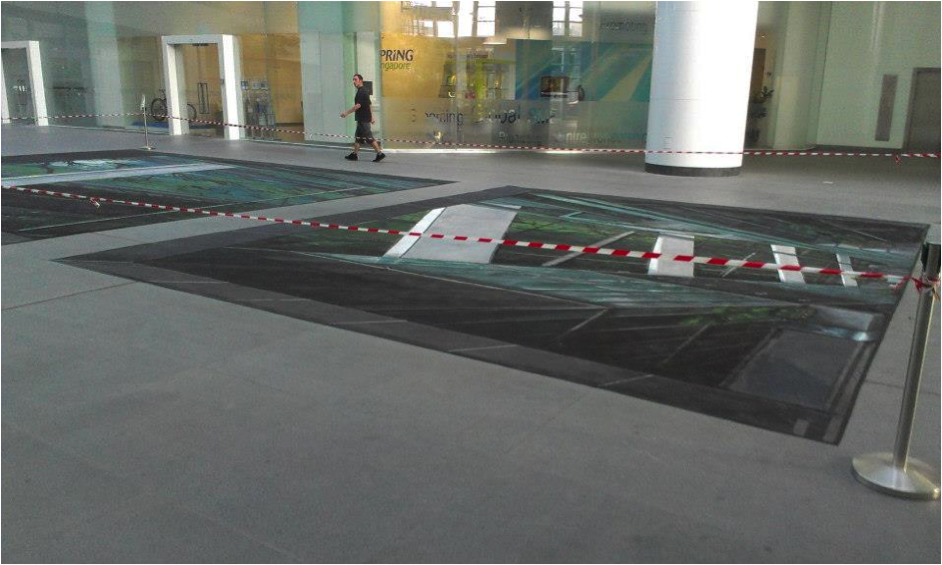


 Brad has been an early stage investor and entrepreneur since 1987. Prior to co-founding Foundry Group, he co-founded Mobius Venture Capital and, prior to that, founded Intensity Ventures, a company that helped launch and operate software companies. Brad is also a co-founder of TechStars.

 A Learning a Day