
Jerry Colonna, CEO Coach, Real Leader 35

I’ve wanted to interview Jerry for a very long time. And, after many attempts, we finally found a time that worked. I hope you enjoy the conversation as much as I did.


clip_image002

About Jerry

As a certified professional coach, Colonna draws on his wide variety of experiences to help clients design a more conscious life and make needed changes to their career to improve their performance and satisfaction. He established his coaching practice in 2007. Prior to this work, Colonna was venture capitalist focused on investing in early stage technology-related startups.

In 2002, Colonna became a partner with J.P. Morgan Partners (JPMP), the private-equity arm of J.P. Morgan Chase where he led the firm’s investments in companies such as ProfitLogic Inc. Colonna served as a director at ProfitLogic until its purchase by Oracle Inc.

He joined JPMP from Flatiron Partners. With his partner, Fred Wilson, Colonna launched Flatiron in August 1996. Flatiron became one of the most successful, early stage investment programs. Before Flatiron, Colonna joined his first venture firm, CMG@Ventures L.P. in February 1995 as a founding partner. CMG@Ventures was the first “Internet-specific” venture firm. Prior to joining @Ventures, Colonna worked for ten years for CMP Media Inc.

Colonna also serves as a director, trustee, or advisor to a number of for-profit and non-profit organizations including Naropa University, the only accredited Buddhist-inspired university in North America. He is a recipient of numerous awards and a compelling speaker on topics ranging from leadership to starting businesses, Colonna has been named to Forbes ASAP’s list of the best VCs and Worth’s list of the 25 most generous young Americans. A graduate of Queens College, Colonna lives in Port Washington, New York.

(00.16)
Rohan:
I want to take a minute to tell you why we are doing this! I blog a lot about learnings which are essentially ideas. I think the stories of real leaders, put these ideas into context. At the end of the day, this is about understanding the Why, How, and What-to satisfy the curiosity.

So my first question, why are you doing what you are doing now? How did you get here? What’s the back story and maybe, the influences behind your career/life?

Jerry: Two things occur to me as a response. Firstly, looking back through the lens of hindsight, something is very clear to me across all the careers I have had (this is really the fourth career). I have also had a couple of side activities along the way-writing and teaching. The core about all the work I have ever done has been about what I refer to as having the conversation. One of the most important things for me in life is to connect in a real and authentic way with the other human beings. For me, that’s air and water-its absolutely essential. Every single job I have had from being a manager, to being a journalist, to being a VC, and to now being a coach has revolved around having that deep conversation. The way I look at it, the transitions have been more and more of a distillation of that process. That’s my first response.

The other response, is a story of how I decided to become a coach. In 2001 and 2002, I was entering a period of profound existential depression. I had agreed to take a job with JP Morgan. In the spring of 2001, I told Fred, I could not continue in our partnership. It was very painful because we were very close friends and had grown up together. I wasn’t sure what was happening for me. But I did know that I could not make a ten year commitment, in raising fund.

I went ahead and took a job with JP Morgan. I began working for them officially in January 2002. Within a very short period of time, I was seemingly depressed. I would come to the office, lock my door, close the blinds, and hide under my desk. I would cancel my meetings and I would just cry. Eventually I came to understand that I would have to leave that position as well.

In 2003, I went out on my own. Through 2003, 2004 and early 2005 – I was mostly doing internal work that I needed to do on myself. It was during this period that I did some teaching, a lot of writing, and served on a number of boards of directors-I was busy.

It was then I had met a young man who came to network with me for a job. He started to ask me a series of questions and he started to cry one day about how miserable life was. I gave him a book called Let Your Life Speak by a dear friend now, named Parker J Palmer-it is an extraordinary book. And the book had really moved me profoundly. When he left my office, I started thinking about that exchange and I realized that, this was something I wanted to do with my life. I called a friend who was a coach at that time and I said, “I think I want to be a coach”.

We began the process of talking through what that would account. For me, its very hard to separate the decision to become a coach and the path of the other positions I have held as an adult or for my own internal work. Its all been about deep conversations around existentially true issues.

(06.30)
Rohan: Do you think that the depression came about because you lost touch with these conversations for a while?

Jerry: I think the coping mechanisms I had developed in my 20s and 30s to deal with the existential questions broke down. It stopped working. I remember reading a very poignant quote in a book called Listening to Midlife by Mark Gerzon-he’s a fabulous writer. He tells a story of Buzz Aldrin, coming back, after orbiting the earth and suffering a major depression. And the quote that’s attributed to Buzz Aldrin is, “After seeing the earth from the vantage point of the moon, what else is there?” And I felt very thoroughly on hearing that. The coping mechanisms I had developed in my 20s and 30s were things, like the pursuit of money, the pursuit of external affirmations, and external validation. What I realized, in my late 30s, was that they don’t really work. They work for a while, but they don’t really stave off the demons. I had no choice, but to sit still, and listen.

I am a Buddhist. The way I like to tell a story is that when Buddha as a prince, came to realize the realities of birth, suffering, sickness, old age, death-became a wandering mendicant in the forest, became an ascetic holy man, he realized that wasn’t enough. The way I like to think of it is that, one day he just said “Fuck it!”. He had had it-it was enough and he sat down at the boddhi tree, saying to himself, “I am not moving until I figure it out”.

I like to think that, for me, that’s kind of what happened. I just said I am not going to move until I figure this out. I am not going to pretend anymore. And, what emerged was, Jerry the coach.

(09.30)
Rohan: I am trying to understand this. So it seems like the problem was not “what”, it was more of “why” you were doing something. Could you talk me through that? Did the purpose change?

Jerry: I think what happened was that I became more connected with my whole authentic truth. And I became more fiercely dedicated to moving to that fully integreted place. In reality, instead of having a conversation, within service of creating a story as I did as a journalist; or open a company as I did as a manager; or the investments as I did as a VC, I began having conversations that further the alleviations of suffering. And that changes everything.

(11.02)
Rohan: As a coach, I have seen you talk in other interviews about helping entrepreneurs with depression or helping people to ask these “why” questions and stay connected. How big a role does faith or spirituality play in this? In the past ten minutes, I have seen the role Buddhism has played in your life. Do you actively, encourage people to find that faith to help relieve them from their suffering?

Jerry: I don’t believe it matters what religion you believe in. I don’t believe it matters whether or not you consider yourself spiritual. I am not sure what faith means. But I do believe that a kind of radical self enquiry, a radical truth tell is absolutely essential to not only living a better existence, but also being a better leader. Being able to withstand the vicissitudes of everyday life as an entrepreneur. If you give in to the very human tendency, trick yourself, and lie to the world (and to yourself), you actually exasperate the highs and lows on the entrepreneurial world.

(13.21)
Rohan: But does the fact that you believe in something outside yourself, help? I guess that’s my question..

Jerry: Yes, one of the most important ways to break through the ineffaceable narcissicm as an entrepreneur – is a connection to something much larger than yourself. That could be community, that could be family, that could be the society in which you are trying to operate, it could even be a faith.

There is a balance between three things – the inner view, the outer view and the other. If it is only focused on the inner view, you end up falling potentially prey to a kind of self-indulgence-trapped in your mind. If you focus on just the outer view then, you run the risk of living a hollow life-what we call as “hungry ghost” in Buddhism. If you only live for the other, then life is going to be great but you are going to be disconnected from an authentic self. So you really need all three in balance with each other. The awareness of the other keeps you from trapped in your own bull shit.

(15.22)
Rohan: How do you put these great ideas that makes you put these ideas into context? How would you advice people to take practical steps to put this into their lives?

Jerry: Are there things that you can do on a practical everyday basis? Joseph Campbell, Writing in The Power of Myth says, “You must have a room or a certain hour a day when you don’t know whats happening in the newspapers. A place where you simply experience and bring forth what you are and what you might be.” I think that if we spend a little bit of time everyday (very pragmatic piece of advice) cut off from the noise-it could be walking, sitting in meditation, journaling, exercise, or just staring at the sky. Just a little bit of time reconnecting with you without your title, your obligations, your responsibilities, the things that plague you all day long. I think that enables you to build a foundation and then work your tail off. Who are the people coming to the website?

(18.44)
Rohan: I have a whole bunch of people who read the blog. A large group is people who are in my age in their mid 20s.

Jerry: All the people who you talk about can benefit from a little quiet time. One of the great traditions from religion, is that there is a prescribed general time of disconnection. Sabbath – a period of fasting, a period of self reflecting. Many people are so used to these rituals that they don’t use it for the kind of self reflection they were designed for. But what if you can reconnect to these practices?

When I speak to clients I say this, “How about having lunch by yourself and not in front of the screen?” What a radical concept. What if you took a walk around the building? What if you walked home instead of taking the subway? What if you went for a bike ride? And not listen to the iPod? What if you drove your car with the radio off? What if you did not turn the TV on? What if you didn’t check the email? What if you rode the elevator without checking your phone? What would happen?

(20.57)
Rohan: It almost seems like a push for introvercy right? In this world that is obsessed with being an extrovert?

Jerry: I think you make a good point. I am an introvert. Many of these things feel comfortable and natural to me. I am just as drawn to the distractions as anybody else. Maybe there is something that the quiet introvert can teach the rest of us. Maybe there is something beneficial about opening a book and reading poetry.

(21.50)
Rohan: How do you put these principles? What are your habits that make you effective?

Jerry: I am very boring at night because I tend to go to bed around 9 , 9.30. I wake up somewhere between 5 to 6 am. I journal usually with a cup of tea, meditate, check e-mail at that point, or go to the gym. It’s a lovely way to start the day. It takes time. I generally wake up 2 hours before I am supposed to leave. That shocks people. I try not to engage with the screen of any sort after 9, 9.30. I find that its just too loud. That’s a very typical day for me. And then the day proceeds, its very full, sometimes highly emotionally draining. If I had 7, even 10 sessions in a day, that’s a long day. I am working 10 hours. But for me to be fully present for my clients, for my own life, I need this ritual.

(23.40)
Rohan: Is there a message, quote or idea that you would like to share to the eclectic group of readers we have?

Jerry: ‘Don’t take it so seriously’, have fun, breathe, chill out. 90% of the time I spend my time ing people out of their crazy fears. So what would happen if you fail? So what? So whaat? Relax! Its no big deal, Its no big deal. That would be my message, ‘Its no big deal’.

Thank you, Jerry, for a very inspiring interview. I’ve started tweaking my daily morning schedule to emulate yours and have begun meditating every day, as well…

Real Leaders Team,

Dhanya, EB and yours truly..

Jeffrey Minch, Entrepreneur, Real Leader Interview 35

Rohan: I met Jeff Minch of JLM in the commenting section of Fred Wilson’s blog, AVC.com. AVC.com is a great example of the power of blogs in creating communities and I’ve been fortunate to e-meet with some really inspiring people. JLM is one of them. We’ve been fortunate to have JLM over at ALearningaDay from time to time as well and he never fails to amaze us with his wisdom and eloquence.

My half hour with JLM was seeing him at his best – eloquent, wise, funny and full of fascinating stories. I hope you enjoy it.

About Jeffrey Minch

clip_image001

Jeffrey L Minch is an entrepreneur who has founded, managed and led multiple companies — both private and public — in the real estate, construction and entertainment businesses as well as having been an angel investor.

He has been a Managing Partner, President, Chief Executive Officer or Board member for over 30 years. He is finally getting the hang of it all.

He was educated at Virginia Military Institute — a very good place to be from but a devil of a place to be — and graduated with distinction in civil engineering having also met the qualifications for a degree in economics and mathematics. He has an MBA in Finance.

He is a Veteran having served with distinction in the Combat Engineers where he was both a Paratrooper and Ranger.

He has lived in Texas since the early 1980s and is currently involved in CEO coaching, angel investing and multiple start-up businesses.

His passions are family — he has been married for over 33 years including time off for good behavior and has two lovely grown children — business, the beach, the mountains, hiking and driving his beloved 1966 cherry red (slightly in need of a paint job) Impala Super Sport convertible.

He claims to be the “luckiest son of a bitch alive” and there is much evidence to support that assertion.

His Big Red Car is the author of an irreverent blog — The Musings of the Big Red Car in which the car channels its thoughts on business, startups, politics, the military and life.

He can be reached at US 512-656-1383, jminch2011@gmail.com or Skype “jeffminch” and your contact is welcome.

(00.08)

Rohan: JLM, lovely to finally e-meet you. My first question – what’s the story?

JLM: I am 61 years old. I was an army brat growing up. My Dad was in the service and so I went to a military school. I was probably not the most likely kid to go to a military school because I was not particularly well disciplined. Military school for me was a great experience.

Soldiering was the family business, so I have lived on Army posts. It was perfectly comfortable to me. I was forced to do a lot of things – to go to an engineering school, to study – it was exactly the kind of hand that I needed.

I went to the Virginia Military Institute (VMI). It’s created many great leaders like Stonewall Jackson, who was a professor at VMI. Its reputation has been built over 140 years and they knew exactly what they were doing. When you walked through the gates, you were just another guy with shaved head. That learning experience was really the beginning of building us back up. They had absolutely no mercy.

I made an F in calculus, in the first grading period. I had never seen the letter F in my report card in my entire life. It was a terribly humbling experience. I worked with my advisor and he told that if I continue that way, I’d get kicked out.

At the end of the year I was so motivated, I was number one in my class. I had no inkling that I had any kind of a brain. I always felt I had gotten along on baloney and on being quick witted enough. I never got bad grades but I certainly wasn’t a stellar student. But, here, I was scared straight. That first year at VMI was a very telling experience.

I was in the military and I served in a number of different locations. I was a combat engineer. It is very difficult to get in as they pick only the best officers. You had to fight like infantry in an infantry division and you also had to be able to do all the engineering tasks, i.e., build airfields, dams, and bridges.

Combat engineers are used to force river crossing. The infantry comes up to a river and you would force a crossing – go across the river on a little rubber boat under the protection of smoke and then the infantry would come across.

I learnt every single thing I ever needed to learn about business as a platoon leader and company commander.

The first ever rule was that, take care of your men.

If you did that – if you took care of their physical protection, tactics, fighting, food, bullets, and water; even family problems and legal problems – everything would turn out okay.

We used to have people from all backgrounds. Once, we needed somebody to fix the tile in the latrine. Some guy raises his hand and says, “I was the largest tile contractor in Miami before I got drafted”. That’s the kind of people you have in the force. My company clerk was a PhD in English from St Joseph’s University and he handled all my correspondence.

My first job was with Mobil Corporation. It was a wonderful experience. I was going from Toronto to New York and I lost my luggage, flying Air Canada.

I showed up for my interview in blue jeans and a pink shirt that had been cleaned at the hotel overnight. And I said to the chairman: “A day will come when you will need to get things done with no excuses. So, here I am – lost luggage and all.”

He stuck his head out of his office and said the job was filled. It was a great learning experience as it was just like in military – your mission is in the forefront. You have to get the job done.

It was the greatest experience of my life because this company had no problem with money. With most businesses, the problem is that they don’t have enough capital. I learned a lot working with them.

I worked for a guy in Austin, Texas. His name was Jack Crosby.

He is the finest entrepreneur I have ever met in my life; the absolute best deal guy. I saw this guy turn water into wine and lead into gold.

I worked for him for a number of years in the real estate business and built some buildings. When I see a building, I don’t see it; I see the substructure, the foundation, the mechanical & electrical functions, and the fire protection systems.

When I walk into a room, the first thing I do is look at the ceiling. If you have a nice ceiling, you know that building is very well built.

I sold all of that in the mid 90s. I retired when I was 45. That was the first big personal mistake I made. I went from being intellectually engaged, to really just working on my tan.

And working on your tan does not require a very high IQ. So, I went back to work (it was a struggle to get my brain working again!).

I have run public companies and private companies. I consider myself a bit of a leader. I don’t say that because I think that I have any particular great talent. If you look at the life experiences I have had, it has been forced upon me.

Within everyone, there is a talent for leadership. It’s just a question of whether it has been developed. I firmly believe there are no extraordinary men. We simply have ordinary men thrust into extraordinary circumstances; the friction of those circumstances for a person reveals their character, and that character carries one to where they need to be.

President Eisenhower is a perfect example – a farm kid from Kansas to running the whole damn world, just because he rose to the occasion in every difficult situation.

As for the rest of my story, I stopped running the public company I was running, 4-5 months ago. I am back in start-up and entrepreneurial business. I am working on a couple of deals, now. Last week, I was actually advising a couple of folks I had met on Fred Wilson’s AVC.com

(10.05)

Rohan: It sounds like a bunch of big moments. What are some of these big moments you had, that in hindsight, made all the difference in the world..

JLM: In the context of today, how can we overcome a bad economy? During the oil crisis in the mid 80s the economy in Texas was really just horrible. I always say that tough times don’t continue, but tough people prevail. The lessons I learnt during that time were monumental. It was like I was back in combat. Every facet of running a business was challenged. While I know the company prevailed and made good profits, I know how we made the payrolls every two weeks.

While I am proud that I lived through it, any person should do it. Keep putting one foot ahead at a time. As long as you decide to never quit, nobody can ever defeat you. No circumstances can ever overcome you. You just have to keep showing up every single morning.

As humans, we need and like challenges. I honestly did not know if I’d make it in military school. The willingness to test ourselves in difficult circumstances is the driver, and recognition of that reveals the entrepreneurial sense in a person.

I think it’s cyclical – sometimes, the force is powerful and sometimes, you need a little bit of rest. It’s all a matter of negotiating with yourself. In some places I am the best coach, in some others I am my own largest critic.

And, on some days when I feel the fatigue, I recharge my battery and come back to work the next day and wonder “Why did I feel like that? I’m ready to bite the ass off a bear.” As long as you have that spirit within you, you can prevail.

When I was in my mid 40s, I contracted hepatitis. It is a very dangerous disease and a lot of people die from it. It forced me to re-evaluate things.

I think survival mentality is a very powerful driver of how you see the prospect of life.

For most of my business career I was a guy in a blue suit, cufflinks and Hermes ties. And here you see me today in front of this camera with a privilege to come to work in blue jeans or khakis.

Funny thing is, I wake up earlier, I work harder and I work more than before. I am also more comfortable.

If I want to wear a blue suit, I’d do it. But now it’s my choice as opposed to it being forced upon me. The ability to control your time is extremely powerful.

I think the ability to work in a comfortable atmosphere and with good men and women is important.

As an entrepreneur, you’d rather be first in command on a small rowboat than be the second in command on the Queen Elizabeth II. You’ve got the whip in your hand. You can drive yourself, you can drive the community and that’s the greatest blessing you can have.

It’s also one of the real secrets of the American economy, the real driver is a small business man who has the power to fashion his own strategy, execute it and reap the benefits of it.

(15.35)

Rohan: What role has mentorship played in your life? What do you think about the Mentor and Mentee relationship?

JLM: I don’t think there’s been a minute in my life where I’ve not had a mentor. Nobody in my family had gone to college. And my mother never ever tolerated the notion that her children were not going to go to college.

My mother and father are the smartest people I have met in my life. The way they managed us, and our expectations, was beyond belief.

VMI has the most powerful leadership programme than you can imagine. There is one man in particular, who was the Commandant of Cadets – Colonel Buchanan.

He was a highly decorated army officer in the Korean War. He was an example for the kind of guys that VMI puts in contact with its cadets.

As a cadet I was a very good student, I was steered into it. In my first year I was the number on in my class, but I absolutely did know that could be the case.

I was the most surprised person when I saw all the A’s I got. This was because I was not striving to be number one; I was just trying to do my best.

When we went to army summer camp, I was a serious student but I was just a tolerable military cadet.

I did not think VMI was army. I did not shine my shoes, or have the closest haircut – I just got by.

So this Commandant of Cadets called me in one day. I walked in and I saluted him.

He said, “ I just want to tell you just one thing. Don’t embarrass VMI at the summer camp this summer.” And I was so thoroughly pissed off and every thing I did that summer was with a resonation of his voice in my head.

About 10000 cadets were graded at the same time in summer. And there I was number 1.

The Commodore walked up behind my back and whispered in my ear – “Minch I knew you could do it”. He knew exactly what he had to tell me to motivate me.

The result from my side was genuine, real, sincere and as passionate as it can be. I was going to show him that he was wrong. And the entire time he was just playing me like a big fat trout, he knew exactly what he was doing.

Later on when I became a professional soldier, I would see him from time to time, we got to have a peer-to-peer relationship. It was one of the finest things in the world. He would say something like, “Minch, I knew what you did in summer camp, get those fires going”.

I had a partnership for 13 years. It was two guys doing business and shaking hands over a napkin. We made hundreds of millions of dollars of profit.

In that 13-year period we had one disagreement. We had a cup of coffee, next morning, and asked, “So what did you think?”. At the very same instant we both pointed out – “You were right”. When you think of that, you can’t imagine how perfect that fit was; it was totally serendipitous.

When we started that partnership, my partner was the financier. He knew his way around the capital markets and it was a perfect partnership. At the peak of it, we had 500 employees. We built a lot of projects together and in the whole time we did not have one cross word.

I look back now and that person is still a mentor to me. That relationship has been extremely valuable and extremely sacred. It’s been extremely productive, both ways.

I see him every 6 months or so to have a chat. He can make a critical assessment of anything I did and I can return that favour.

I invest a lot in that relationship. He was at an advantage when we started – he was the older guy by a few years. The relationship grew with us. When my son was born, he was the first guy to hold him.

So if you want to have a mentor relationship you have to seek out the right people. I am not buying anything about how it is a difficult process. Put yourself out there; get the best help you possibly can. Be humble. Be aggressive and ask for help from the people who can really help you. Be a mentor in return.

The other thing is being able to do it with humility. I was impressed with what I learnt about Mitt Romney’s personal generosity. I wish that he had become president, but he hasn’t. But, a guy like that who has left real footsteps with his character and wealth – that makes me feel real good about America.

That is the American dream.

It is one of the amazing things in this world. The more that you give, the more you get – to be able to have a mentor-mentee relationship. Our relationship is just like that – to be able to learn so many things from each other.

It is something that’s very unique about the community that surrounds Fred Wilson at AVC.com. I think it starts with him and people like that are attracted to other people like that.

(26.03)

Rohan: What are a couple of your favourite hacks that make your day more productive?

JLM: When I was first in business we used green and white accounting paper for accounting. I used to think that the HP 12C calculator was really something!

In my lifetime I bought the first Apple II that was ever bought in Texas. And I used it to do interest rate calculations for high-rise office buildings. I could change interest rate assumptions in 45 seconds and the result would be on that screen.

Can you imagine saying to somebody today? – that your screen will change in 45 seconds? (haha)

I am a bit of a gadget guy. I like everything about technology. I have a laptop, a smart phone, a tablet and a PC. I like productivity software – I am an Evernote slave!

There’s so much data which can give so much more information. Skype is amazing.

I think you should have your skills sharp and invest time in it. Everyone should have some quiet time as well. You have to go skiing, or spend an hour swimming, or do something else to refresh your brain. It’s unbelievable how productive you can become if you master that.

One of my theories around business is what I call a 360 degree business man.

You have to know everything about the business model that you are operating with, regulatory environment, leadership, management, legislation lobbying and on top all that you have to be able to master the technology. You have to be able to communicate. The reason being – you should understand all these little sensitivities until you have them on your fingertips.

I learnt how to fly an airplane when I was 50 years old. I don’t want to learn how to do it – I want to master it. I spent 250 hours and I took my test. The designated examiner who tested me said, “Are you sure you are here for this test?”. I think one of the things in my 360 degree businessman theory is mastery as opposed to familiarity.

If you do that, I think you will be in a position to prevail today.

(29.59)

Rohan: If there’s one idea that you’d like to share what would that be?

JLM: One of the great tragedies going on in the world right now is all of the war and horror. It’s going on in the Middle East, in the competition between us and China, us and Russia and all the millions being spent on weapons.

I have been a soldier; there is nothing obscene and degrading as competing in these kinds of things.

You take the macro layer of the problem and come to the micro level. And it gets down to something very simple. All of us get back what we invest.

The niceness, the courtesies, the humility that you personify and exhibit in personal relationships, comes back a thousand fold. The genuineness, the sincerity, and the authenticity that one brings to every relationship affect the value of that relationship.

Punctuality is the courtesy of kings because there’s nothing else they can really give. It seems to me as though we should be more humble and god-fearing about everything.

You may not think of that as being a business theory but really it is. It’s helpful whether you are dealing with failure or triumph – failure is tuition – doing the right thing and in the right way is the greatest contribution you can make to comity in general, to the sweetness of life.

It’s like the American Constitution. You are entitled to life, liberty, and the pursuit of happiness. Nobody said you’re going to be guaranteed happiness but they did say that you can take a crack at getting it in your life. And that’s the humble approach to be taken for everything we do.

Thank you, JLM for that absolutely inspiring interview!

Real Leaders Team,

Dhanya, EB and yours truly..

Pal, Financial Services and Hospitality Entrepreneur, Real Leader Interview 34

Mr EMC Palaniappan or “Pal Uncle” as I know him has been a close family friend. My mom has been a big fan of his aesthetic taste as the families have gone on multiple holidays to his resort and service apartment properties.

As an entrepreneur, Pal Uncle made his bones in Financial Services and has since then expanded into hospitality amongst other industries. I met him at his lovely offices in Chennai while I was home this winter. I hope you enjoy the chat as much as I did.

About Pal

imagePalaniappan (or Pal) has completed 17 years in the Stock Broking and Financial Services business. He is the Founder Chairman and Managing Director of Chona Financial Services Limited (CHONA), a Member of the National Stock Exchange (NSE), Bombay Stock Exchange (BSE) and MCX-SX, a Depository Participant and Portfolio Manager.

A bachelor in Commerce, he completed his MBA at PSG Tech, Coimbatore and then went on to the USA to do his M.A. in Journalism at the University of Wisconsin-Madison and then his Masters in City and Regional Planning (MCRP) at the University of Memphis. He worked as a City Planner for two years for the State of Florida before he returned to India and entered Stock broking and Commodity broking.

He writes regularly on market related issues and is a guest on several television shows related to the markets.

Palaniappan was the All India President of the Association of National Exchanges Members of India (ANMI) in the year 2009-10 and was the Chairman of the ANMI Southern India Regional Council – Tamilnadu, Kerala, Karnataka Chapter for four years. He was a Member of the Secondary Market Advisory Committee of SEBI in the year 2009-10.

While always involved in the Real Estate business, his recent business pursuits include Development and Operation of Resorts (The Fern Creek in Kodaikanal, and Old Kent Estates in Coorg), Sales and Charter of Luxury Motor Yachts and the launch of an e-Commerce portal for products and services in the Construction and Interior Decoration space under the name “Build Mantra”.

(00.30)

Rohan: The purpose of this initiative is to meet people and find out their stories. It would be great to find out what you do, why you do it, and what makes it work for you. So let’s start with your background story..

Pal: Where do we start (haha). I did my B.Com at Vivekananda, Chennai. I went on to complete my MBA at PSG, Coimbatore and went to the United States to study for a couple of years. 2 years became 5 years. I did a Masters in Journalism and then one in City and Regional Planning. I worked for a couple of years as a Planner. I got back to India after that. It seemed like I had a clear plan as to what to do when I was abroad, but when I got back, I did not know where to begin. There was a family business to go to, but I was not too inclined to be a part of that.

After a few hits and misses, my wife started a stock broking business. It started growing at a pace where she could no longer do it alone. So, I stepped in. Together, we brewed that business. That was the start of our story. We embraced technology and that was a major factor in our success. We developed multiple other businesses branching out from that. We continue to develop these initiatives and turn them into well-oiled machines.

(02.20)

Rohan: I have two questions. What businesses do you run? I’ve realized that there is always a back-story as to how you learnt what you learnt in entrepreneurship; what would you say is yours?

Pal: I can’t pin point to one experience or lesson and say “that is where it all came from.” Every course I took, every task at work and every experience has given me lessons. They continue to do so, even today. And I hope they will continue forever.

I guess you could say that the spirit of entrepreneurship comes from my family. I started a video games business way back in 1982. It did not go well. My father said, “It is your first business. It’s would have been great if it went well. It’s totally alright if it didn’t. Let’s move on now”. That was his attitude and it rubbed off on me as well. You have to keep trying and keep going. At one point in the US, I was doing three four jobs at the same time. All that helped. Little spark-offs came together and connected.

(04.35)

Rohan: You started off as an entrepreneur and then grew. What have been some of the defining moments in this time?

Pal: Sometimes, success comes without you realizing it. You are often constantly plugging away and working on something, and just when you wonder why you weren’t successful, it seems to come and pour down on you. You really don’t understand what you did differently. It is just that everything accumulates with time. You need to keep going on the right path and it will come.

(05.17)

Rohan: Do you think that is a product of luck or skill?

Pal: Skill is what keeps you going. Luck is what comes to you to keep you on the path. If you are not on the path, luck will never hit you. To me a lot of things depend on integrity. I value integrity and trust above all else. If you don’t let your employees and your company down, everything else will automatically follow.

(05.52)

Rohan: You run so many different businesses! What are your key strengths across the spectrum? And, what is your approach to managing these businesses?

Pal: I think one of my negative attributes is that I start looking at new opportunities every time I have free time! And that spreads you very thin. That was very difficult for me to control. The plus point of being an entrepreneur is probably a negative for me. So, the one thing that I need to focus on is to restrict myself to core areas and not spread out too much.

These have all been totally different businesses. I depend upon a lot of people in my work. I look at the person more than a role.

(07.29)

Rohan: Do match a role to a person or a person to a role?

Pal: I think it works both ways. You are continuously trying to match these two things. Sometimes, you need to take a portion out of one role and give it to another person and vice-versa. It is not a process with an ending. It continues dynamically.

(08.07)

Rohan: There are two schools of thought here, right? You decide on what you are going to do and then hire the fit for that role. The other way is to take a bunch of great people and build something around them. What do you prefer?

Pal: I think its somewhere in the middle. Often times, you could have picked the best person in the world and he may not be what you are looking for. For example, my dad is a great operations guy. He is the kind of person who will “do everything” and even work 24 hours! But, he is not a tech-savvy guy. What can you do about things like that? I just have to pull tech related responsibilities out and give it to someone else.

(09.00)

Rohan: What have your biggest learnings been?

Pal: Entrepreneurship involves great risk. You have to take risks which have to be calculated. One thing I always do is take risks in measured steps. You should know how much you could lose to take the risk. “Is this something I can afford to lose?” should be the measure by which you take the step.

Don’t take too big a step. This is the key for our portfolio management as well.

Diversification is the key. If you do that, when the entire business or industry goes down, you don’t feel the pressure. So, the principle is extensive and constant diversification in different areas. That means each step in itself will not hurt you. I apply the exact same principle in business as well.

(10.52)

Rohan:

Are there any principles/hacks by which you run your daily life?

Pal: I wish I could say it was that simple. I have a to-do list that seems to always grow and never come down (haha).

I believe management-by-crisis is not the best way to manage things. However, you end up managing a lot of crisis on a day-to-day basis. One way I have managed to keep a portion of the management at production (versus crisis) is through delegation. When you find the right people you trust, you get to focus on the core areas of the businesses.

(12.08)

Rohan: Both you and your wife are working parents. I know you have three kids. So when there is trouble, how do you guys manage?

Pal: It is one of the biggest challenges we faced. Our kids always say that business has taken a prominent place in our lives. We try our best to be around for them. We make sure one of us is always available. Our office and home are next door. We planned it that way so we get to maximize our resources (even if it costs us a lot more, financially!). We also plan getaways from work to be with them and get the family time.

(13.41)

Rohan: Has there been a big evolution with your world so far with respect to your role as a leader? Have you seen your principles change over time or have you just altered minor bits?

Pal: I would love to say that I knew what I was doing all along. But no, it is a dynamic thing. It continues to change till this day. I think learning never stops. There are a lot of things I never do, and there are things I have picked up over time.

(14.23)

Rohan: So where does your learning come from? Is it books, people or how?

Pal: I work with my wife and she is a huge source of my learning. I talk to a lot of people, watch a lot of television, and read a lot of books. There are multiple sources of information in that case. I would attribute value to a lot of things I have discussed with people. When you discuss, you often stumble on insights that seem to come out of the blue.

(15.30)

Rohan: What are some of the things you have learnt that you would like to share?

Pal: Hard work – there is no substitute for that. Take risks and innovate. Don’t bother about failure.

My dad used to say that there was a very thin line between a fool and a genius, “Don’t be afraid to be called a fool, otherwise you’ll never get a chance to become a genius.”

Success is not your decision. It is a product. You have to choose your methods, policies and business. The rest will follow.

I also casually asked him off-the-record as to the role routines played in his life. And, I learnt that he played 90 minutes of tennis every morning to keep himself fit. For someone struggling to get to 30 minutes of exercise in every day, that was really inspiring!

Thank you, Pal Uncle for that inspiring interview!

The Real Leaders Team,

Dhanya, EB and yours truly..

Brad Blackstone, Communications Lecturer, Real Leader Interview 33

Dhanya: Brad Blackstone was my professor (He laughs when you address him as Professor, btw) for a Professional English Communication module at National University of Singapore. The second I met him, he stood out from the professors I was used to – even with the way he introduced himself. I found being in class an incredible experience. Brad just loves what he does and it shows in the way he handles things. Rohan and EB have also taken the exact same module in their university days and loved it!.

So, he’s been on our “to-interview” list for a while to understand. And I met with Brad at his office to understand what makes him tick. Read on!

About Brad

Brad Blackstone is Lecturer, Centre for English Language Communication (CELC), National University of Singapore, and Chief Editor of ELTWorldOnline.com. Currently, Brad teaches communication skills courses for science and engineering students and for business students. Prior to coming to Singapore, he developed and implemented communication skills training programs for General Motors, Linksys and the Japanese Ministry of Education. He has taught English for Academic Purposes, composition and communication skills in universities in Japan, Malaysia, Portugal and the United States. Brad received CELC’s Commendation for Teaching Excellence for Academic Year 2007/2008, 2009/10 and 2011-12, and the NUS Annual Teaching Excellence Award for 2009-10. Brad’s publications include academic articles, several volumes of poetry and two dozen songs.
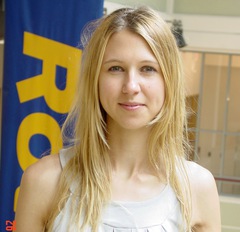
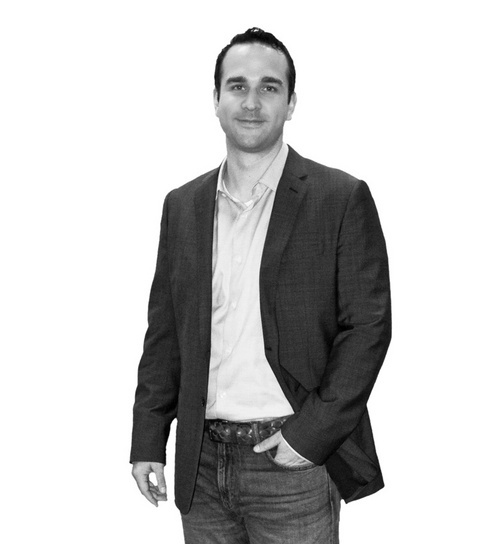
 

(00:16)
Dhanya: What’s your story, Brad? Right from where you grew up to how you ended up in Singapore..

Brad: I was born in a small town in Ohio and majored in Russian literature. I was in a Russian graduate program. After studying in Moscow I really questioned whether that was what I wanted to do. Of course I wanted to be on the same path as everyone else – I finished undergrad and opted for a graduate course. But when I took a small break and went on a tour around Europe I realized that there was so much more to the world than Russian literature. I was fascinated, interested and realized that I could do so much more than that.

The reason I had taken Russian literature was because I was interested in European history and civilization. I realized I needn’t focus on Russian literature to embrace European civilization. I spoke to my course advisor and told him about my reservations. He told me that since I was trained in Russian literature and a couple of other languages like French and German, I could teach English. He told me how that would help increase my personal reach and growth. He told me how I understand language and people and why there was no reason I shouldn’t teach English.

That meeting got me thinking really. He told me that I could go places too. He asked me to pick a place and I remember saying Singapore. This was in 1979 when I was in grad school. I ended up quitting grad school, I moved to Europe. I lived in Portugal for 3 years; I ended up teaching English and Business Communication with General Motors. That experience expanded my horizon really. I realized how there was a world of communications waiting to be explored with respect to personal interactions and cultural interactions. That was a defining moment for a typical American college kid from a small town.

I learnt Portuguese when I lived there. I used to read the newspaper in English and Portuguese, watch the local television and I also had a Portuguese girlfriend who spoke no English. So I took every opportunity to learn new cultures and meet interesting people. It was also the time when I was questioning the United States and a lot of assumptions I had as an American. In America, you are brainwashed to think it is the best country in the world.

I realized Portugal was a country that has a thousand years of statehood and it had become a nation a thousand years earlier. They had incredible history, culture, tradition, food and beaches. America was not the only place to be.

(06:20)
Dhanya: Can you tell us the story about the General Motors pitch?

Brad: It was at a party once, in Portugal. By that time I had a job teaching engineers, English. I had about 2 or 3 engineers. They would come to my house for an hour once or twice a week for English conversation. As I talked to these guys I found out that about 20 odd engineers were being sent out to various places across the city for English – the purpose being to enhance their English language skills. I found this system extremely ineffective because these guys are driving 20-40 minutes from their office to different places. And all the time is taken from their work time.

Somebody told me that the Managing Director of GM was around at that same party. The idea to take English for all these engineers at one place had struck me earlier. So I decided to pitch that idea to him. I walked up to him and introduced myself as one of the English tutors of GM. He didn’t seem to be interested but then I said, “The program you have set up is very inefficient.” His interest perked up and he asked “Why?” I explained the situation and how I could come to the head quarters. He said “Come up to my office on Monday morning”.

I planned two different levels of English courses for Beginners and Advanced. That ended up being my job for two years. I remember learning so much about business from a huge multi national corporation like GM. They were all men except one or two women maybe. Later when I went back to graduate school I focused on business communication.

(12.12)
Dhanya: Would you say teaching was your passion?

Brad: It was just the people and the university lifestyle. I liked being in a learning environment. And suddenly being the teacher and not the student was cool. I was always interested in the human element of interactions rather than the evolution of language.

(15.00)
Dhanya: Your recent interest has been interaction on social media right?

Brad: Even something like blogging for example. I am interested in watching their interaction on the blogs. I find it really cool to see what they have to say and how they respond to each other. Similar interests on Facebook, I would say. I find it a great way for people to develop that feedback.

(16.00)
Dhanya: EB, Rohan and myself think of you as one of our favourite NUS professors. We love your charisma as a teacher! Have you ever felt a difference in approach in comparison to your peers?

Brad: I have visited a lot of lessons and I feel sometimes people are just born to teach. If you boil it down to what makes them tick, I think it is about whether or not you care about other human beings – authentic care about others. For me its not a magic formula, I am truly interested in finding out about what you need and what you have to say. I get to be part of your experience; I get paid for it and so much the better.

Nurses are the same. I have a sister who loves her job; she loves to find out who they are and what their hopes and dreams are. When I walk into a class if I believe in the course objectives, it is very satisfying.

(18.12)
Dhanya: Can you tell us about
Radio Moka?

Brad: I was in a band called the ‘Blackstone’s blues’ for a long time – I played the harmonica, percussions and did some backup singing. I mainly organized our gigs and that took a lot of time. In Japan I organized a music festival – getting the bands, getting sponsors, figuring out the schedule and just putting together everything was a hell lot of work, as much as I enjoyed it. I let that role go by after that phase. To perform on stage takes a tremendous amount of energy. You need to be pumped up. I couldn’t afford to do that with my job here in NUS. I still love music; it is my place to unwind.

As for Radio Moka, I met a guy who lived in my condominium complex. He was an exchange student here. We met at the pool, became friends and got to chatting. When he came home one day, he saw all my CDs and he was impressed with my huge collection. I have got about 2000 CDs and he said he had about 2000 on his Mac. We shared music. Finally he told me that it was his dream to start a radio station and I agreed. I guessed I would love to keep my foot in music that way. This was about two years ago. He went back to Paris and figured out setting it up. He asked me to write a blog post every time I broadcasted and I have been doing it ever since. I go live once in two weeks for about an hour.

Media has a focus on pop music and there is so much disproportional popularity for pop music. I realized this and that’s when I got into regional music. That was a great way for me to get in touch with my musical and anthropological side at the same time. Music is such a happy place – whether it is sad or happy music. That’s the story of Radio Moka.

(25.09)
Dhanya: What is an idea you would like to share with the readers of this blog about what you have learnt in your life?

Brad: It is interesting that you ask that question, I just got a Facebook inbox from my 26 year old daughter. She has very strict opinions and she does not wish to change them. At my age I feel I do not have such hard thoughts. Today I think Barack Obama is a positive force in America, but tomorrow I wouldn’t be surprised to find out that it was completely fake. And I would be willing to accept that. I was more resilient with my opinions as a younger man but at this point I am not so fixed.

At this point I feel it never hurts to embrace the unknown. Even if it seems intimidating, it might not be so once you get used to it. I sign up for projects that everybody else is hesitant to sign up for. I signed up for teacher training in Thailand recently – it comes back to the fact that I am going to work with interesting people; and possible friends. I am not intimidated about jumping into things.

Embrace challenges and jump into the unknown.

Thank you Brad, for a very sweet interview.

Real leaders Team,
Dhanya, EB and yours truly..

Nina Mazar, Behavioral economist, Real Leader Interview 32

Nina Mazar was featured in Dan Ariely’s book The Honest Truth About Dishonesty: How We Lie To Everyone Especially Ourselves and I was compelled to reach out to her to find our more about her research. Her work and the book taught me many things about how we are comfortable with lying/cheating on a regular basis. We talked about all that and much more. Do read on!
About Nina Mazar
Nina  Mažar (Mazar) is an Assistant Professor of Marketing at Rotman. With her focus on behavioural economics, she investigates consumer behaviour and how it deviates from standard economic assumptions. In addition, she studies moral decision-making and its implications for policy. Her research topics range from irrational attraction to free products, the paradoxes of green behaviour to temptations to be dishonest. Nina has received various honours and awards, among others the Dean’s Award for Excellence in Research. Prior to completing her PhD, Nina was a management consultant working in the UK and Germany.
(00.08)
Rohan: First we would like to ask about your story and about why you ended up doing what you are doing?
Nina: I came to MIT in 2001 to visit Dan, this is when I got to know Dan Ariely. He enrolled me in a bunch of projects whether it’s about handing out things for free and seeing how big the lines get or about dishonest students and finding out how we can make them more honest. It’s mainly through a lot of inspiring conversations with Dan. He is an amazing person full of ideas and creativity.
Around the time of 2003 and 2004, the Enron scandal happened. That’s when we thought that it was time to start focusing on dishonesty and truly understand what makes people cheat. It wasn’t possibly what we were witnessing on the media about those events. Just a few people did not possibly commit the events entirely. There are good people and then there are really bad people. We hope that the group of bad people is rather small.
If you want to explain the kind of dishonesty that we were observing it seems more likely that people like you and me do tend to fall off the wagon and engage in some criminal transgressions. The data was raw and we wanted to understand how we struggle in our daily lives with the goal on one hand to be honest and think about ourselves as honest human beings and witnessing these events as well. What are ways we give in and how can we control that?
(02.42)
Rohan: So did you already study psychology from Germany, I know you are from Germany..
Nina: Ah you want to go further! I studied Business Administration in Germany, completed my Masters in it. I was a consultant for two years. During one of my consulting jobs, I found myself to be a bit bored. I realized I was always more interested in theory, so I decided to try and apply for a PhD.
I applied for a PhD program at the same university where I did my masters. They accepted me and I signed up for the PhD in Business Administration in Consumer Behaviour. I had been working on that for almost a year that time. It was quite cool to study consumer behaviour online and offline. My advisor told me that he would be able to help me very little because it was not his research area. He further told me to reach out to the people whose papers I was reading.
One of those papers I had read was by Dan Ariely. So I e-mailed him introducing myself. I told him that I was a PhD student in Germany and that I needed some advice on my dissertation. I told him that I found his work was relevant. I asked him if I could come by for a week and explain my work to get his thoughts. I was very lucky that Dan accepted me and asked me to come over.
By the way, I had no idea what MIT was and I had never been to the US as well. That was a good thing because if I had known I wouldn’t have had the courage to send out that e-mail. After going there, meeting the people and working with Dan I figured that the place was actually quite good. Once I was there it was so easy to see what people were working on and how smart they were.
I was lucky to be accepted as Research Assistant and PhD student to Dan’s colleague. After that I became a RA of Dan’s. From 2002 to 2007 I was first a visiting PhD student and then I went back to Germany to defend my dissertation and came back to MIT as a post-doc.
(05.52)
Rohan: Now you are a professor at Toronto?
Nina: That’s right, I am an assistant professor at the University of Toronto since 2007 in the Rotman school. I am in marketing doing consumer behaviour, behavioural economics, judgment and decision-making – everything when it comes to human decision-making. I research on how certain factors influence us and how some of these are doing so without our conscious understanding; how we can change the environment to change our decision making for the better of ourselves and the society.
(06.30)
Rohan: Through Dan’s books I am always reminded of how fallible we are. And that we try to find reason/rationale for everything we do. For someone who has studied this, what are some these studies that have given you the best of learnings and maybe changed your life?
Nina: I am not sure if they are changing my life. But I can see these experiments at work. I can see what ways we are fallible. But I am not walking around with a constant reminder of these findings about our weaknesses. I am human like anybody else and even though I have all this knowledge I am making the same mistakes that you or anybody else is making.
(08.00)
Rohan: One of my biggest conclusions from Dan’s book is that the more you are aware of these patterns the less susceptible you are to make these transgressions.
Nina: Say we define transgressions as immoral transgressions. What we have found is that when people are more aware of their moral norms and standards, it is much harder to give into temptations.
When we did this research on honesty, what we very often found is that. We would give them a general knowledge test and we would pay them for the amount of transgressions they saw correctly. But then we would pay one group for Questions that were designed for cheating. And we wanted to see how honest people were compared to how many Questions they could answer correctly. When you give people money and opportunity for cheating they do it more often than not – which is a bad thing. We also found that many of them cheat only by a small amount and that is good news.  There are also people who realize that you can’t trace back their cheating, so they go all the way and cheat entirely. However this was a small group.
More money was lost to a lot of people cheating by a small amount as opposed to a small number of people cheating all the way. We have magical tricks up our sleeves, which convince us that we haven’t really done anything bad by cheating a little and that is why a lot of people do it.
An example would be, if you had some chewing gum on your desk and you left the room, I would pick it up thinking that it was just one and that you wouldn’t have really missed it. If it becomes two, then its harder to convince myself of a rationality. If it is the entire packet then it gets really hard to convince myself.
Similarly, taking a pen from work is easier than taking one dollar form the petty cash box. Situations are such that sometimes they make it easier for us to convince ourselves about our behaviour. We even forget the moral norms to justify our actions to ourselves.
When there are constant reminders about morality, social norms and values in your environment, it gets harder to suppress these when you want to commit an act.
And yes, I do think a lot about dishonesty and what is right or wrong. From that perspective it might be a little bit harder to suppress the whole ignoring of standards. Yet, I am as susceptible to cheating by a small amount as much as the next person.
(14.30)
Rohan: It is actually really disturbing to read about this right..
Nina: Sorry but it is actually not that disturbing. An economist would say that every person in our experiments should cheat all the way. The test was designed such that we cannot prove who cheated. It is really surprising that despite the fact that they can all get away with completely cheating, the vast majority cheats only by a small amount.
(15:20)
Rohan: I should explain more when I say disturbing. One of the conclusions of Dan’s book is that when cash is directly associated with cheating we do it less. However we are moving as society from cash to cashless transactions. Which means it makes it very easy to cheat in the coming days.
And I think it all comes down to little Cues. I was at a clients place and there were Cues about washing hands and keeping a place clean etc. As a result whether we like it or not, we do keep the place clean. That was my biggest learning. So when you want to build an environment with values, these cues help so much.
Nina: Reminders, Questions like ‘How important is honesty to your family?’ all help. There is some beautiful research showing how a picture of a pair of eyes (it needn’t be real eyes, anything that can be interpreted as eyes will do) makes people more honest.It is as if someone is watching you.
Cues are a good place to start. However, humans are smart and we would find a way (a magic trick) to get across these. Maybe the cues need to change as well with time.
(18.15)
Rohan: It seems as if you accidentally ended up here. What were some of the defining moments that stood out so far?
Nina: I don’t think I had that Ahaa moment. It was just about being surrounded by amazing people especially like Dan. Just seeing how much he loves his job and seeing him ask the right Questions inspires me. I saw that my field of research could actually be impactful on the society when asking the right questions. That is my biggest motivation. The more I saw, the less I could imagine being anything else.
(19.40)
Rohan: I am very far away from research but I can see how exciting your work is! So what are some productivity hacks that make your day better?
Nina: I get distracted from my productivity every time I see the little dot on my e-mail program. It becomes so hard to resist not opening it up. What I am trying to do now is switch of the program when I am focusing on my work. I turn it on for half hour in the morning, an hour in the afternoon and evening. That’s the ideal place I want to get to, to improve my productivity.
(21:30)
Rohan: Is there an idea or a thought that you would like to share with the people on this forum?
Nina: There is a great research that’s coming out in a book by my friend – Michael Norton from HBS and his collaborator. Their work is to do with money and happiness. The essence of the research is that happiness comes from buying things for other people with your money and not from buying it for yourself. I really loved that idea. You should read up more and meet one of them maybe to do full justice to their work.
Thank you for that interesting conversation Nina. It was a pleasure having you here!
Dhanya, Eb and yours truly..

Stephan Jacob, CEO/Founder of Kembrel, Real Leader Interview 31

Today’s interview is someone I’ve had the pleasure to get to know personally thanks to RealAcad, a crazy and inspiring entrepreneurial boot-camp I’ve attended many a time. Stephan is fun, inspiring and all in all great guy!

About Stephan Jacob
 
Stephan is the CEO/Founder of Kembrel – a tightly integrated multi-channel boutique for independent small niche apparel and fashion accessories, headquartered in Philadelphia. He co-founded his company along with two of his co-founders during his MBA at Wharton. Previously, Stephan worked as a management consultant at McKinsey & Co. He holds a Master of Information Systems from the University of Mannheim and the University of South Australia. He has previous work experience in Bain & Co. and Bunge Ltd. Stephan is married and is fluent in English, German and Spanish and can converse in Indonesian and French


Rohan: It’s great to have you here, Stephan. What is your story? Tell us a little bit of your background, and how you ended up running your own little tech start-up.
 
Stephan: I think it goes way back to my early days. We (Rohan and I) have shared our life stories many times through RealAcad. Reflecting on it, I think that my early experiences were very formative.
By that, I mean my upbringing in a very loving household of 3 generations where my grandpa lived right next door and was an integral part of my childhood. When I was young, I used to spend a lot of time with him. He was a well-traveled and ‘worldy’ man in his early 50s which was very unusual in Germany. He was always around when we grew up. We had a lot of exposure to the world because of him. He gave us a bigger perspective of the world than what we would have gotten if we just had been in my little village.
 
He was very supportive of the adventures we took – taking time off high school to spend it here in the US for a year when I was 16. He also supported my taking time off from university to spend some time in Indonesia and Australia. I think my experience in all these international trips and journeys have shaped me.
 
I made a conscious decision post high school to get into technology and study computer science during my undergraduate days. I am benefiting from that decision on a daily basis running a tech start up. Though I don’t write all our code anymore, I’m still very closely involved in all our development processes. That part has been a very formative experience. I would say this journey to entrepreneurship came through stages.
 
Early on, my grandpa was very instrumental to push us to dare, to try out stuff and show that is okay to fail. He never really failed much in his life – he was extremely successful as a business person, but still pushed us out of the nest, if you will. And my parents were encouraging which I very much appreciate.
 
There is a great quote by Ralph Waldo Emerson, “The voyage of the best ship is a zigzag line” and I think it is very true.
 
Starting out, I schooled in Germany and did various projects in the nonprofit world in Indonesia. Sandra, my wife was working there as well. Then I took time off later on to join Ankur in Singapore to help work on RealAcad and Nineo. I joined McKinsey post-graduation from my undergrad. On the tech side I interned with a couple of companies before Bain and definitely enjoyed that.
I realized at some point though that it wasn’t really what I wanted to do in the long run. I am very grateful to this day for the learning that I took away from the consulting experience. But that sense of ownership wasn’t there, not so much in terms of equity but in terms of owning the piece of work that you invest your time and energy into. You never have that as a consultant. That was the reason behind the decision to take time off from that life to come to school and dedicate those 2 years to learn entrepreneurship at Wharton, which is where we started the business Kembrel. Since graduation, we have been working in it ever since.
 
So it was a bit of a discovery process as I didn’t come from a long-term family of entrepreneurs that showed me that path. It was rather a family that supported adventures. I am extremely grateful for all the support that I received along the way.
 
I think the year and half spent in the military was extremely helpful. There is a reason why Israel as a startup hub is extremely successful. As they all go to the military, they have the the discipline required to make a start up successful. And, as an entrepreneur, I do find myself thinking back to the many lessons that I have drawn from my time in the Special Forces.
 
So I think it was sort of a mixed bag of experiences, a little bit of McKinsey consulting, a lot of values that I took from my home, my family, the military training, the network and the type of the exposure that I had during the 2 years here at Wharton that helped shape me as an entrepreneur.
 
 
Rohan: That is a very interesting insight about what Israeli entrepreneurs and super interesting about your computer science background. I guess the Steve Jobs’ quote of ‘dots never connect forward, only backwards’ makes so much sense.
 
Stephan: Absolutely. It takes time and you can’t or don’t see it while it happens. You need to let it happen and obviously you can make decisions along the way but you only realize it afterwards how it all fit together.
 
 
Rohan: Makes sense. Could you tell us a little bit about Kembrel..?
 
Stephan: Kembrel is a tightly integrated multi-channel boutique for independent small niche apparel and fashion accessories. We started out as an e-commerce business ‘Kembrel.com’, launched it in the context of a business contest during at our first year at school and used the summer to build the prototype. My 2 co-founders and I didn’t spend a single second on recruiting as those 2 years were dedicated to starting our own business and getting enough on the ground. Our wish was to say thank you to the dean on graduation day, turn around to walk back to our own office and keep working on our business. That worked out pretty well. We raised some funding at the end of our second year, over the summer. Since then, we have been iterating.
 
Initially, it was a purely online, purely ecommerce BUSINESS featuring these unique brands and designers. Later, we realized that there was a place for local and physical retail in our model. When we started to give these small and niche designers space, we received positive response from our customers.
 
At the same time, typically, our customers don’t know these brands. It’s that element of discovery where we offer to our customers which is great on one hand, but on the other hand, fit is always an issue for apparels. You don’t know that piece of clothing will work for you.
 
As a result, there are 2 ways to do business – if you are purely an online business, you have to make returns extremely easy, but that shows up as very high in return rates. That’s fine as long as you build that in to the model. We did differently – we still make returns very easy and I think that’s the way to do business online these days as a retailer. But at the same time we say, ‘Look, we strongly believe the choice should be with the customers. They should be the ones to decide whether they want to engage with us as a brand online from the convenience of their home or whether they want to come in and touch it and feel the merchandise’. Our customers appreciate the fact that they can touch and feel and try it on. So, we opened a smaller show room directly adjacent to our office.
 
With the merchandise for the online business, a little bit of space and help from the local furniture makers to build us some racks and shelves, we opened a full length show room. Our customers loved it!
We always have really interesting merchandise. In our case, both online and the showroom merchandise rotates in and out on a weekly basis. So there is something fresh and new every couple of days. And at the same time the atmosphere is very boutique-y – small scale, old, tiny, caring atmosphere where you feel like you are served by the owner from the very beginning. I used to spend a lot of time in these stores and we have now trained our staff to create that same unique experience for the customer. After more tremendous positive feedback, we decided to open up the second shop in a location here in Philadelphia. I’m working on the third one and now we are more convinced that this tightly integrated model is the way to go.
 
You need to create a shopping experience for customers. At the same time, we do manage our stores so that they break even in the first month. We do this thanks to short term leases where we pay a fraction of regular base rate. For us, these stores act as a customer acquisition vehicle for the online business. We are paperless in our stores so we capture their information and then convert and turn them into online customers. That sort of joint model seem to be working well. That is what Kembrel is about. Tightly integrated boutique curated merchandise.
 
 
Rohan: What do you think is unique about Kembrel?
 
Stephan: It is essentially 3 fold. Physically we ask our very same question to our customers ‘What is that brings you back to the Kembrel?’, especially the regular ones. ‘Why do you come in week after week and spend your hard earned dollars with us?’.
I think the answer is 2 fold from customer’s perspective. And we have a third type of dimension behind the scenes.
 
The first is merchandise – unique curated merchandiseis put together by our experts that isn’t found in the Philadelphia retail landscape. It is different in New York and San Francisco. So, we feel the physical expansion strategy will very much be within tier 2 cities that have the money and the appreciation of demographic, but not the retailers. It’s the merchandise and the fact that it weekly rotation resulting in something fresh and new that draws people.
 
Second is the customer experience. They feel that they are taken care of – it’s a very much a relationship based shopping experience. Shopping has always been a social activity and people appreciate the sort of care that we try to give when they walk into our doors.
And while the care is almost like the old mom and pop style of business, it’s “2012” technology enhanced and supported. So they can order something online, pick it up in the store or return online orders in the store. We leverage the back end, their data to give them more relevant shopping advice. So, as somebody walks in they can check in, have all their information made available to their stylers and receive styling advice accordingly.
 
That seems to be working well. We see customers do a styling session with our employees and spend almost 5 times more than our regular customers which is great as they feel they got better advice and found relevant merchandise.
 
The third part is behind the scenes. Our inventory system is fully integrated and we have no warehouse. We house all our merchandize in our stores, so when an online order comes in, it’s a cloud based fulfillment system. So, that cuts down on the cost and allows us to leverage the staff that we have in our store during the slow hours.
 
The final piece is the real estate arbitrage I mentioned. As commercial real estate is very depressed, we make arrangements landlords to go into a property for a period of time, stage it and invest very low cash upfront. We are able to break even on those properties within the first month, which is the biggest issue for many pure based model retailers. So, there is an efficiency argument behind the scenes both in terms of inventory integration as well as how we manage our real estate.
 
 
Rohan: It nice you use the word efficiency. Your Germanic roots will be very proud. J What have some of the biggest learnings been?
 
Stephan: We have always been, and to this day are, a cash-strapped operation. We initially bootstrapped using our own finances, maxing out our credit cards and student loans. On one hand, that sucks because you don’t have the money to spend on customer acquisition. So, money is always tight – it’s not as convenient and you don’t grow as fast as start-ups who are very well funded.
 
The flip side is that you need to make due with very little money and that can be a very good thing. Especially during the very early stage of business, it is very easy to bring a product to the market and then push it heavily and spend a tremendous amount of money and resources at it, get it into the market and get people to adopt it. But if the product is simply not right, if there is a lack of product-market fit or simply not developed enough – a lot of these go “poof”. You spend a lot of money to acquire traffic and paid acquisition, but it doesn’t convert because the product is not good enough. From that perspective, Kembrel has been very healthy.
 
We have always been forced to a) look at our data extremely carefully in order not to waste resources, on acquisitions that doesn’t work and that doesn’t convert. And b) we had to listen to our customers very carefully to get as much as feedback we could get to make the product better.
 
It’s only now that I feel we have reached a place where if we have a little bit more resources, we could jump on a faster and steeper growth.
 
We also have a “marketing funnel” of our own.
 
At the top level it has just traffic – how many people do we have on our site and how many people do we have in our stores?
 
The next level is the engagement – how many engage with us and how many become VIP members etc.
 
The third level is how many transact – number of orders, average order value etc.
 
Finally, the fourth level is how many of those who have transacted once are actually coming back. And what we are seeing is that the conversion from one level of the funnel to the next is actually very decent.
 
We see that in the store as well as we have a high number of regulars who come back. So, we are pretty confident that we have built a product that people appreciate and are willing to spend on. We are a very small business in the sense that hardly anybody knows about us.
 
And, with more resources, we would be able to at least accelerate that growth curve. This is one of the fun exercises that I see as an entrepreneur – building the product, building the business and, at the same time, courting potential investors. It has been definitely a remarkable and interesting fun journey to this point.
 
 
Rohan: Are there any quick little productive routines/ routine hacks that you would like to share?
 
Stephan: It turns out it takes a little while to figure out how to make the distributed teams work. In our case, our developers sit in Montreal, our buyers are in New York and the rest of the team are in Philadelphia. We have always been in multi-location and we use a combination of shared screens, Google Hangouts during our “all hands” meeting twice a week. It’s not rocket science but that was that has been working well for us. We look at our metrics at using the shared screens. The metrics include how long have people entered our funnel, what is working and what is not, what to do to fix it. That’s the set up and basically we do a round robin – everybody gives a 2-minute update on what they have been working on or the challenges for the upcoming week. This set up has been working well to make the team more productive.
 
In terms of other tools, I’m very much a ‘getting things done’ fan. I think that methodology works. I’m not using it religiously but the general principle of say having one repository of everything that’s on your mind and pushing it through project management system works well for me.
 
I have been using Trello and I’m getting value from that product. So, we are using that in the business as the to-do management system. Other than that, I’m a complete Google person. So I’m on every Google product that you can imagine, and my life is completely transparent to anybody that has access to my Google profile. I feel it simply makes me a very productive knowledge worker. I hardly use my mouse anymore and that sounds like I’m an investment banker – everything is done using keyboard shortcuts and Google. That has been the golden path!
 
 
Rohan: Final question. Any thoughts or insights that you would like to pass on. I used to call this advice to the real leaders but these days I’m thinking less about advice and more about any ideas that you would like to share.
 
Stephan: Real leaders typically tend to figure things out for themselves anyways. So it’s hard to give them any advice. J At the same time, I’m still very young and very early in my career. I’m hesitant to say that I have wisdom to share with the world.
 
But reflecting back, I can tell you that I do wish somebody had pushed me to do more, earlier. I’m extremely happy with the path I have taken, the sort of the zigzag line that I followed to my entrepreneurial career. I wish somebody had pushed me even earlier to do that. I always admire people who grow up in a very entrepreneurial family where they help at their parents business and their dad’s or mom’s coach them and show them what it means to be an entrepreneur, get that ingrained in their DNA as they grow up.
 
It doesn’t have to be that way, of course. You just need to take chances early on and may be dare to leave that secure and safe path early on to take that time off, for example, to try out something. It’s a lot easier to do that when you are 18 or when you are in your mid-20s, than when you are in your late 20s and early 30s.
 
During my university career, I took a semester off, to do various projects and to just explore and to take up internships in the US and in Indonesia etc. It takes a little bit of guts and your parents are not going to be happy about it but I think it pays off in the end. It’s all about a group of people who have dared to step left and right in order to explore and experience, often times in terms of different geographies and quirky nontraditional career paths. It shows in more maturity, in more well-rounded human beings both personally and professionally.
 
So, dare to be a little different. It doesn’t mean you have to go around against all conventions and the like to do something crazy.But, at the same time, dare to take steps left and right and swing. It will often be a miss. But you will still get a lot out of it. I think the ability to defend your decisions and dare to be a little bit different in your decisions really pay off more and more.


Thank you for that your time, Stephan.
The Real Leader Team
Dhanya, Eb and yours truly..

William Mougayar, CEO of Engagio, Real Leader Interview 30

Today’s interview is that of a friend and person who’s gone from being a corporate person to then being a consultant and author, and then back to corporates before setting out to be an entrepreneur. His story as an entrepreneur is one of characteristic tenacity – he started up with an idea and, when that didn’t become the success he thought it would be, began working on a new idea which has been doing really well over the past year.

One year ago, William had reached out to test a product he was developing – Engagio. I had gotten to know William through Fred’s wonderful blog – AVC.com. His first minimum viable product launched on AVC a few weeks later and William hasn’t looked back. It’s a really cool story. Thanks William, for taking the time!

About William Mougayar

William launched his second start-up Engagio in 2012, having started Eqentia in 2008. He has more than 30 years of strategic, operational, and leadership experience in the technology industry, as an entrepreneur, business executive, professional speaker, management consultant and best-selling author. His career spanned 14 years at Hewlett-Packard in a mix of senior sales and marketing management roles, 10 years as an independent thought leader, and 2.5 years as global VP of Corporate Marketing at Cognizant Technology Solutions.

He was also the best-selling author of Opening Digital Market (McGraw-Hill, 1997), co-author of The Business Internet and Intranets (Harvard Business School Press, 1997) and was a columnist for Computerworld, LANTimes and Business 2.0. William is a graduate of the University of Washington (BSc), the University of Western Ontario (Marketing Management), and attended the University of British Columbia’s Graduate Commerce School.

Rohan: It would be great to start with your story, William..

William: Thanks for having me again on the program, Rohan.

I was born in Lebanon and my family moved to Canada when I was 17. We moved here in 1976 exactly because of the war and we landed in Montreal since we spoke French. I was not speaking English so well back in those days; it was more of a third language.

I went to the University of Washington, Seattle. Vancouver in British Columbia became our home in Canada. After university I started my first job in 1982 with Hewlett Packard (HP) when I was 23. My first job was in Sales in the medical division. HP was the leader in that sector those times. I stayed with HP for a good 14 years! As you can see I spent most of my formative years in HP. HP was the most admired company and held a great place in the Fortune rankings year after year. It was a 2.5 billion dollar company in the year I joined and when I left in 1994 it was 32-34 billion dollar company in terms of sales.

I think I have learnt a lot from HP. I have been in different roles there. I had also worked in the computer division. I was a salesman, a marketing manager, national sales manager and even in-charge of reengineering at one point. In 1995 when I realized the internet was going to be big, I jumped and become part the HP internal initiatives. It was called the information highway then.

Later I decided to leave HP and become a consultant. I wanted to write books on internet commerce and internet business. I did write some books and started speaking on these topics. This happened for ten years until 2005. I decided to go back to the corporate world and I joined Aberdeen, the research company. I went on to work with Cognizant Technology Solutions of Chennai. I was the head of global marketing out of New Jersey. It was a very global company and it did not matter where you lived. We would get on a plane and have conference calls. I used to work in the evenings because of India time on a routine basis.

In 2008, I decided to jump ship again and become an entrepreneur one more time. I founded my first start-up at that time (Eqentia) and a year ago I founded Engagio. To sum it all up, I went from a big company to a small company back to a big company and back to a small company. This is kind of the fourth stage of my career!

Rohan: If you could tell us more about the logo and the background, it would be great..

William: That logo you see there has just been changed. We are launching next week. We have twisted the e and it looks like an @ sign now. It symbolizes engagement as the new e-mail and communication segment out there.

Engagio Logo 150px .png

Rohan: So what’s the story of Engagio? What is your vision?

William: Engagio is based in Toronto. I am at the intersection of Yonge and King Streets now. It’s where the financial district is located and somehow it has also become the place for start-ups to be located. Between where I am and ten blocks going to the west of King Street, there’s probably about a hundred start-ups.

You and I being prolific commentators on Fred Wilson’s blog, we know what it is to comment. I was commenting here and there in a lot of places including blogs. And I was finding it difficult to keep track of all of these discussions. It dawned on me to put all these discussion in one place – aggregate them like e-mail.

I called Fred Wilson and said ‘what do you think of this idea?’. This was almost one year ago in October 2011. Fred really liked the idea and said ‘make it look like Gmail’. And we did that in 9 weeks! And we launched on AVC.com. Our story is known with the AVCers as well.

As for the progress of Engagio, there are three phases of development. Phase one is when you start by managing your own conversations at the inbox level. We evolved it into following your friends’ conversations through the dashboard – that was stage two. These are dipping points on engagements in all of your networks not just Disqus and blogs. What we are launching next week is a place where you can see anybody’s discussions and anybody’s conversation.

By the time this interview is out, we will be a search and discovery destination for the online social conversations out there. When you go to the homepage you will be able to see the discussions that are going on and you’ll be able to dip in even if you weren’t involved in these discussion.

Rohan: What do you mean by discussions here?

William: I refer to the comments on blogs and also the conversations on social networks. You tweeting or re-tweeting is not a discussion. The minute someone else responds to you it becomes a discussion. Especially when there is more than one person. The more the number of people in these discussions the more prominence these discussions get on our platform.

He goes back to describing Engagio…

Along with this discovery we have a Search component. This has been the vision of Engagio since day one from January 2012. It took a little bit of time to have a mass of conversation before we could launch this aspect. When you search through conversations, you’ll find valuable information. You’ll be able to create alerts on the conversation about the topics that matter to you.

This is the first time we bring such a feature to the mass market. Of course there are expensive business solutions that do this. This is the first time we have a consumer-based solution that lets you generate your own alerts. We are working with 14 different APIs right now from social networks to social communities to blogs to vertical networks. We are indexing millions of conversations.

Rohan: So essentially if I look for a conversation about Manchester United game on Saturday, I’ll be able to see all the discussion around that game on Engagio, right? Is that the potential you see?

William: Well, I wouldn’t say all the conversations because we are slowly building our customer/user base. We have started with a majority of American users, so the probability of finding discussion about a football game might less. We have about 5 million user profiles now and it is growing fast!

What we are doing is going under the surface. If you subscribe to Google Alerts and such you don’t get the information under the headline. We are doing that – going beneath and seeing what is being said. A 500-word blog post could generate 300 more comments with thousands more words. So we are looking below the iceberg here.

Rohan: There is a lot of talk about social here. People are speculating if it’s a bubble or not a bubble. What is your view on it?

William: When we say Social I like to say Social Web. It is not just social media but a web. The web is becoming social. Everything we do online is becoming social. We are becoming more engaged. The trend I see is that the online world is influencing the physical world. We are becoming more and more Advocates. Online advocacy is becoming more real, powerful and effective in bringing change. For an example we can look at what happened with the SOPA and PIPA bills. Few months ago, these privacy bills were going to be pass in the US Congress. Suddenly the blogosphere, comment sphere and social sphere started to discuss those issues and in the end we saw the online world defeating the traditional lobbyists from the legislative policy making world. The raise-up from the online world saw passionate commenting changing those laws.

That is equivalent to other parts of the world where governments are being toppled because revolutions have started online in the social media. It’s not just about changing policy it’s also about changing the minds of people for the good of mankind.

I think we are barely starting to scratch the possibilities of what online advocacy can do and how it can influence the physical world. We also think Engagio can play a role in helping the people that want to be advocates connect with each other. As an example, recently because of what happened with the Hurricane Sandy in New York, Albert Wenger realized we should come up with ways to protect the New York to prevent damages and the first thing he did was suggest an online Kickstarter initiative There would be discussions about the issue and that would become important foundations for the real world change.

Rohan: What were some defining moments that come to mind when you think of yourself as a leader?

William: I don’t think I have had one defining moment that changed everything. I have had small moments that I keep remembering. I had the opportunity to spend two days with Alvin Toffler (Author of Future Shock & The Third Wave) back in 2000. We were speaking at the same conference in Santiago, Chile. I spent a lot of time with him. We ended up flying back together to Los Angeles. He is the dean of the information age and of what’s happening right now in the world of web.

I have role-models who have been guiding me. They don’t know that they are my mentors, but I follow them and learn from them. Alvin Toffler is one such person. Of late, Fred Wilson has become a great mentor. Not just as an investment guru but also as a professional advisor and as a friend. I benefit from my relationship with Fred and that has helped me a lot.

Rohan: Is there a productivity hack that you would like to share?

William: There are a couple of things I do. I used to have to-do lists but I don’t use them anymore. What I do instead is e-mailing myself the task that needs to be accomplished. I use headers to guide me when I am looking for these e-mails. For example, I would use ‘to-do’ as the subject line and when I search for that phrase, I get the list of things I need to complete.

I have another one where the subject line is ‘listen’ for podcasts or audiobooks or just music. I spend a lot of time travelling, so during those times I use these e-mails to listen to things in my car. Similarly I have ideas for my products and I use the ‘product’ subject line. Other examples are ‘marketing’ and ‘pitch’. I essentially have four or five categories of things to e-mail myself with. Haha.

Rohan: What is an idea that you would like to pass to our small and growing group of audience?

William: To never give up. I am bold, tenacious and I try things. That is what I want to give to others. When things don’t work out don’t take it personally. Take what you learn from it. Don’t let it affect you. My baseline thinking is this and I have been believing in it for 25 years now – I never let problems get to me.

I need to be in a full position of control to deal with these problems. I park them and I go and deal with them when I am in a better state of mind. Obviously there are some things you have to deal with right away. But the astonishing thing is that you don’t have to deal with them immediately. Some of them go away and if the others stay you just need time to think about them. If you spend a couple of days thinking about it you can come up with a way to solve it; you can be in a better position to be effective with them.


Thank you for the interview William. We loved your thoughts on the online advocacy – with social web becoming the new platform for businesses we should be aware of its effects on the real world, indeed.

The Real leaders Team,

Dhanya, Eb and yours truly…

Michael Bodekaer, Co-Founder of MailBird, Real Interview 29

I’ve been on an interviewing hiatus the past few months and I am excited to be back! I am sure you will notice the shift from interviewing leaders in the arts arena to technology entrepreneurs and venture capitalists (haha).

Today’s interview is someone I’ve known for a few years now. I met Michael Bodekaer in a RealAcad camp in Singapore. Michael is a very successful entrepreneur who IPO’d a successful company in his mid 20’s. He is an entrepreneur at heart and is currently in Bali working on a technology start-up incubator and creating many ventures along the way. I hope you enjoy the interview..

About Michael Bodekaer

imageMichael Bodekaer is an extremely passionate tech entrepreneur, focused especially on highly interactive online services and top-notch Mac-like Windows client-server application development using WPF, WCF, Silverlight and C#. He co-founded several tech startups over past 12 years, 2 exited successfully with a nice bonus attached to it. His core skill is rapid execution and product development, as well as a burning desire to develop world-class startups. He loves to enjoy life, travel the world and do extreme sports, as well as read books and attend seminars on NLP and personal development.


Rohan: Can you tell us your story, Michael?

Michael: I am from Denmark. I have always been a techie, playing around with computers since I was very young. When I was 16, I started my first software company that would develop management software for clients. I did not know who my clients were exactly but I was just developing the software. I thought it would be great to control computers in internet cafés or restaurants. I was working part time in one of those places and that’s how the idea came about. That company (Smartlaunch) turned out to be quite successful and our product is used all over the world today in thousands of places and by millions of people, which is of course a great adventure!

I was always driven by the concept of creating something new. I would always have three or four different projects going on at the same time. Most of them would fail while some of them would work out! I created a bunch of different companies following the years I started out. My studies were in Mathematics, Finance and Strategic Management.

However at the same time I was always building start-ups. I once did a food delivery system in Copenhagen. I later worked with mobile apps on advertisements – basically a bunch of weird things that did not turn out to be anything big. I failed a lot, I can’t even remember some of them. Essentially I loved spotting out the problems in the world and trying to solve them. Being a techie turned out to be a great skill to have. It allowed me to sit down and code a solution. A couple of days later I would have a prototype of what I wanted to do. I went on exchange to the US as well and lived in Boston, New York and Chicago during my university days. I moved to Zurich to work as a management consultant in McKinsey after that.

I felt like I needed to do something more though! At that time our company was 8 or 9 years old. Suddenly one day, I decided to sell all my companies. I missed the feeling of creating something, the feeling of building something for users. Whenever you put a 100 hours into something you know that would come back to you in a different form. When you are consulting you talk about the strategies and you make slides – at some point I said I want to do all this stuff I am talking so much about.

A while later I decided to move to Bali and I played adventure sports here. And my urge to create companies came back. That’s what I have been doing for a couple of years now. I am working with a tech incubator here in Bali. We have a couple of villas here. A bunch of people have come down and we have built start-ups.

Rohan: What is your current start-up about?

Michael: We are working on 6 different start-ups right now. One of them is really exciting; it’s an e-mail application. It’s trying to enter the windows e-mail market by creating great looking themes, more friendly and intuitive design. I think that is missing from Windows. Somehow, the Mac/Apple market has won app makers who focus on the quality and design whereas the Windows apps makers focus on features and not on so much on design and quality. So we want to try and innovate that!

I think we have the right skill set to do that in our team. MailBird is our first app. It’s super simple and is very intuitive. It’s focused on you seeing your emails and keeping track of your social activities with the best experience. It was very much inspired by sparrow who did a great job on the Mac market. It was taken over by Google later for about 25 million dollars, I think. The Windows market in nine times as big as the apple market. So we aim for a huge opportunity there! We finally launched.

(Kickstarter link for Mailbird is here)

Rohan: What’s the plan? Is Bali long term?

Michael: Yes definitely. Every year I am here I start to love it more and more! It is a super nice environment here and the cost of living is also very low. It creates a whole room for other opportunities and it helps my productivity tremendously. I personally don’t enjoy laundry, grocery shopping or cooking and we have managed to automate that process here. So it works really well!

So yes I will definitely stay here on the long-term. That does not mean I would not travel. I enjoy travelling and there are so many more places to explore. For a lot of projects that we are working on, we are building up the teams from Indonesia itself. Collaborating with the locals is a great approach. They are focused and artistic and great to work with.

We are working on a project similar to Mailbird. Then there’s Project Getaway where once a year, lots of entrepreneurs from all over the world come together, and live together for a month and work on their own companies. We are also working on a very exciting project called Start-up city.

We have a really cool concept of a start-up community here. We want to make that available to thousands of people. We are currently working on creating a huge locality, probably two or three soccer fields sized. We are building a small city there. People would be living and focusing on building companies. Primarily tech start-ups but any kind of start-up combined with access to local resources. We are also working on some entertainment games. We want to make education fun and engaging. It’s hard to compete with games like Warcraft. So what we do is bringing university and high school education to life. We have a bunch of high level universities partnering with us on this.

We are working on a lot of exciting projects. And I guess the main aim for us is to make it available to as many people as we can.

Rohan: What have been some of the defining moments here?

Michael: There have been many of them. I think having the experience of creating a start-up where you get users that appreciate your work is the best you can get. It’s amazing when you can see how the stuff you create make other users happy and makes them more productive or profitable. That experience in itself makes me focus my efforts on being an entrepreneur. That was one of the most defining moments. It keeps coming back to me whenever we built something and we talk to our users. Especially with Mailbird – they get their arms down and they go ‘its so cool’. I am not trying to sell it, it’s just a very cool experience. We obviously put tons and tons of hours into creating it. Getting the reward back is worth all of the effort. Even the money at that point is not the most important thing.

I started listening to audio books at a very early stage. I like to listen to them when I am driving or just instead of music. That is something I still do a lot around personal development. And it has changed my life in many ways. The personal development coaches have definitely helped a lot. I have a personal development coach and a business coach as well. I find them very useful.

I would try and connect with people who have done things in their life and that helps me improve mine. To this day I focus on learning new things and trying to develop my skills in any area. After a while it gave me a belief that there is nothing that we cant do. It opens up the whole world to you. If this is what I want to do, then I’ll figure out a way to do it. That really changes your whole perspective on life.

Consulting was a big defining moment. It was my first real job. It was a huge eye-opener. It helped to confirm that I needed to create something.

The last one has been coming here to Bali. The culture of the Balinese people especially – the way you can enjoy anything. It’s not about getting the biggest car and the biggest house. The way people live their life here, the way everything is simple and how everyone is friendly and smiling. That changes your perspective on life.

One more thing I would encourage people to do is to try and throw themselves into situations where they would be most uncomfortable. Whenever I get into an uncomfortable place, I go I shouldn’t do this – but that’s when I switch over and say I should do this. It has such a huge impact on you!

Rohan: What are some productivity hacks that you use?

Michael: The concept of productivity is huge for me. I studied math and optimization in School. So I am tuned to tweaking everything to the optimum. In general I read a lot about productivity and it is about finding the best thing that works for you. It’s very individual oriented. Do you talk with people or work on your own to focus? All those things define productivity. I spend 10-15 minutes every morning planning my day and deciding the items to work on for the day. I consider the purpose of those tasks. Not just what I am going to do but WHY I am doing it as well. Usually what I realized was that when I find the answer to why I do something, I find a much faster way to do it or an alternative way of doing it.

I believe in the 2-minute rule. Whenever I can solve a task (especially emails) that should take 2 minutes I do it immediately. By now there are so many things I just do automatically. I work in pomodoros. You decide what the goal at the end of 25 minutes is and work towards it. In the 5-10 minute break I usually think of what I did in the past 20-25 minutes and wonder what I could have done better.

Exercise helps me a lot. Just 5-10 minutes in the morning. We also train here with the others a couple of times week and that’s fun as well. Eating habits, reducing the amount of unhealthy food everything helps. We have staff here that serve us food 5 times day. I think that helps a lot too. It does not directly affect productivity but helps keep your mind fresh.

Rohan: What is your advice to different people who lead? What are thoughts on leadership that you would like to share?

Michael: When I started reading audio books I realized there was a lot about me me and me. At some point I decided to switch my goal from improving myself to helping others improve their lives. My mission became to inspire others. Obviously, I still wanted to get better but this expansion of circle helped me a lot. It helped me thinking about how other people work and learn. I put my emphasis on helping people if they want to of course. That ties to caring a lot about other people.

A favourite book, talks about 6 different styles of leadership styles. It’s not about one particular style. It’s more about being capable and adjusting to the right situations. It’s not about being that one person, its always about trying to fit into the problem and then capturing the situation. It’s about being in the moment, looking out for people and looking for the hidden signals. That ties with empathy as well. Emotional intelligence helps you get far!

That interview was a lot of fun, Michael. Thanks so much for taking the time!

As far as Real Leaders goes, we are having a fun period of change ourselves. We have been thinking about why we are doing what we are doing and have found ourselves really excited at the thought that we’ve managed to survive an entire year! As a result, we are working on getting Realleaders.tv launched soon.

Lots more to follow. It’s going to get much better! Stay tuned.. and wish you all a great week.

The Real Leaders Team
Dhanya, Eb and yours truly..

Anaka Narayanan, Designer & owner of Brass Tacks, Real Leader Interview 28

Dhanya: I visited Brass Tacks when I was in Chennai, India last February. It was a cosy store with friendly store managers who let me take my route and helped only when I asked for it. I take immense liking to such stores, it being a rarity in Chennai. I have mostly encountered only pushy store managers who suggest every possible design in the store even if it’s not what I am looking for.
Following that memorable experience I found the Brass Tacks page on Facebook and started following them. I noticed how Anaka Narayanan, the designer and owner of the Brass Tacks clothing line gave importance to her team. I noticed how she did not hesitate to share the spot light with them! That quality urged me to talk to her under the Real Leader pretence! It turned out to be a lovely 20 minutes.
The interview was close to my heart because Anaka does what I hope to do in a couple of years myself. A small clothing line that makes well styled clothes rich in Indian textiles and makes its customers happy.
About Anaka Narayanan
An appreciation for textiles is in Anaka’s blood. In the year she was born, her mother co-founded a textile and garment business, and Anaka grew up surrounded by the texture, scent, and colours of natural fabrics. Balancing her love for traditional crafts with a desire for practical foundations, Anaka decided to pursue her bachelor’s degree in Economics in the United States. After college, she worked at an economic analysis firm in New York. Throughout this time she nurtured her dream of working with textiles in India and networked with people who were in the fashion and textile industry. Finally, towards the end of her second year in consulting, she decided to quit her job and take the plunge into the world of textiles and fashion.
Dhanya: What’s your story? From where you grew up till when Brass Tacks happened?
Anaka: I grew up in Chennai. I went to school here till my tenth standard and later went to a boarding school near Pune for my high school. I took a year off between high school and college, travelling and exploring the country. I worked with a couple of non-profits and indulged in a lot of theatre and volunteer work. After that stint, I went to the states to study economics. I took up a job at an economic analysis firm in New York and worked in that position for two years.
During those two years though I was thinking about Brass Tacks and about my clothing line here in Chennai. One day I decided that I needed to do it right away! I was very impatient to begin, now that I think about it. I think impatience has been my shortcoming while it is also something that drives me! I had the support of my parents, which was very helpful. They told me that it would be a lot of hard work but if it’s what I wanted to do they would be there! I moved back to Chennai in 2006 and started Brass Tacks in early 2007.
Dhanya: What is the story of Brass Tacks?
Anaka: My mum and her partners started a saree retail business when she was pregnant with me. I don’t know how she decided to have a family and start a business at the same time! I am the youngest of three and she decided that raising three kids was not challenging enough.
Growing up I was never told to learn anything about her business. I was never even taught about the textiles – what was cotton, kalamkarior ikat. However, my mum did bring a lot of her work home. Sometimes when I finished school early I would be at her office working on my schoolwork. I think I was surrounded by textiles the whole time. And I can say that her taste and sense has influenced mine.
I never really thought about it until I was in college and working in New York. It was the first time I was living off my earnings and loving my share of shopping! I found that I gravitated towards strong silhouettes, sharp tailored and well-cut clothes. Every time I would see a dress or a jacket that had a great drape, I would imagine it in an ikat fabric or an ajrak fabric. I would think of a natural textile that would look good in the same cut. That’s when I started to think about this idea.
It was a lot of personal longing as well. I longed to see clothes that were made out of these Indian textiles. I wanted to see well-styled fashion-forward versions of the existing Indian clothes. Then again, I had lived outside Chennai for 6 years I wondered if someone thought of this already in the mean time. I came back to Chennai for one of my vacations and scouted around for a bit. I was sure I’d find someone.
However, I found there were two ends of the spectrum. There were brands like Fabindia that provided good value for money but were not necessarily fashion forward. Then there were the high-end labels, which were fashionable but not necessarily well cut or affordable. I saw this huge void in between that was waiting to be filled! I am not trying to create clothes that are going to be the next fashion trend; I am not trying to create red carpet clothes. I am simply trying to create clothes with good quality fabrics and strong silhouettes. Every garment that we make has to be shapely. That’s really what Brass Tacks is about. My aesthetic sense is surely influenced by my mother’s taste in handloom textiles and sarees. While that is more of a personal connection, our companies are completely different.
Dhanya: Is Brass Tacks in other cities as well?
Anaka: My own store is in Chennai, but I retail through other stores in Bombay and Bangalore. We also have an online store!
Dhanya: What about your inspiration for your work? Why do you wake up everyday and go to your workshop..
Anaka: I think part of it is the impatience to get the idea out, part of it is because it’s my own business.I am not sure if I would be this excited if I was working for somebody else. It’s your own business and it’s your own baby. You are always emotionally tied to it. You are always striving for perfection even if you are not there. It’s always a work in progress. You always want to make it better. You want to see if you can create a system that’s foolproof with respect to administration and operations. You want to see if you can link in people who love creating.
Outside the Brass Tacks picture, with textiles there is so much going on in India as well. I participated in a garment exhibition in Coimbatore a couple of weeks ago. It was such a cool experience. I got to meet other designers from all over the country and they are all doing such interesting work. Last week we had the World Craft Council’s golden jubilee celebrations here in Chennai. They had their summit and exhibitions in town. There was so much stimulation and inspiring ideas there. To have all of that around you it’s pretty easy to find inspiration! The energy to run to your workshop and create is just there.
There are so many people who are in the same industry and doing this under harsh conditions. For an urban designer with access to simple infrastructure that we take for granted like an air-conditioned office, good roads and Internet it’s a lot easier.
Dhanya: How does a typical workday pan out?
Anaka: I usually spend the first couple of hours working from home. I am a morning person and when I wake-up my mind is clear. I also find it conducive to concentrate especially when I need to work alone. Even though I have my own space at work it’s really hard to get uninterrupted time. So I usually do most of my creative work and design planning in the morning. I try not to answer too many e-mails or take phone calls during that time.
I go to the workshop after that and spend my time there. A lot of it is actually trouble-shooting, anybody who runs a business will tell you that. A lot of the time is spent solving problems and guiding people. I spend a lot of time talking to my production manager about the schedule and status of the different products. I spend time with my pattern maker viewing the next set of styles. I go through the samples and give them feedback.
I come back to the city after that. I drop by at the shop depending on how much time I have left – it might be just ten minutes or a couple of hours. That’s my schedule from Monday to Friday. I spend all my Saturday time at the store. That’s when most of our customers drop-by and I think it’s important to get first hand feedback from them. I also think it important for them to see the designer and understand my take on the brand.I used to spend a lot of Sunday time doing creative work but I have taken a break from that now. I don’t work on Sundays anymore.
Dhanya: I have seen you giving importance to your team. They are part of the system and they do help you put everything together..
Anaka: They really are a crucial part of the organisation. I was telling you how anyone running their business would tell you that they spend time troubleshooting. When so much of your business depends on people and people skills, you spend a lot of time putting the perfect team together. Be it hiring people, training people or figuring out ways to retain people.
Sometimes I think to myself ‘Wow I have people who joined Brass Tacks five years ago and who are still with me’. They are key people whom I can depend on. These are people I can call up in the morning and say ‘I can’t make it to the workshop today can you run the show for me’. I know that it’s in good hands and that I can trust them. I am so grateful for that.
It really is true what I say on Facebook – that they make it happen. I can sketch and order fabric but who’s going to make it a reality? The Facebook thing is also a celebration of the cool team I have. They understand my short temper, they understand my high standards and my pickiness with small details. They also understand that that’s what makes Brass Tacks what it is.To have a team like that even if it’s small is really precious. And these are fun people too. I thought it would be nice for the customers to see the people behind the brand!
Dhanya: What are some of the learnings that have stood out so far? You have been at this for more than 5 years now..
Anaka: When I started a business people always told me it would be hard work. I think hard work is actually an abstract word. At least it is for me after running a business for so long. Hard work to me means there is going to be a lot of time spent with it – I personally never had a problem with that. The hard part is the kind of work you have to do. The sort of problems you face with when you run a business are relentless. It could be a tailor issue today and a sales issue tomorrow and a rent issue the third day. It’s really hard to cope with that side of running a business.
I always try to stick to a few things that make me happy and give me a breather from all the tension. I find these things giving me energy and motivation to work despite all the things that need my attention. You need them to remove you from work and give you a time-out. It might be as simple as sleeping enough or watching a movie or making time for friends. It helps me get perspective and not get cynical about everything. I think that’s something I made a mistake with in the first couple of years. I always said I was too busy.
Time with people is so important because I work so much in isolation. Even though I work with a team of people they are working for me as well. I miss out on the peer-to-peer interaction and networking.
Dhanya: If there is one piece of advice or a couple of things that you want to share with the readers, what would it be?
Anaka: Like I said, finding the time to do a few things that you enjoy so that you continue to keep standards high, constantly push for improvement, motivate your staff. And that can be really hard.
When you have bills to pay and you have expenses coming in, you still have to go to work everyday and smile and motivate everybody else. They can let you know that they are down, but you can’t let everyone know that you are down.
You choose to do what you love doing and people are naturally good at what they love doing. However, It’s naïve to say that every single day of my life I want to do only that. I actually don’t spend that much time designing. It probably constitutes 20% of my time. The rest of the time goes in management, operations, marketing and scaling the business. My one piece of advice would be to motivate your team to keep standards high but in order to be able to do that you should also be able to stick to a few things outside work.
Thank you for sharing your passion with us Anaka! We love entrepreneurs who respect their people.
Real Leaders Team,
Dhanya, Eb and yours truly..

Celebrating a year of Real Leader Interviews

One year and 27 interviews old, Real Leader Interviews has been a significant part of the three of our lives. The inspiration behind Real Leaders was simple – stories of real people doing great things are a wonderful source of inspiration. While blogging a learning a day is primarily about ideas, these stories put all these ideas into a practical context. They make them real.As a result, I began with interviewing my Mom and very soon realized that this little initiative could be a lot more than just interviews of family and friends. It was a wonderful excuse to meet people who inspired me. And I can barely explain my delight when I was on a Skype call interviewing Joanne, a person I had only known through commenting on her blog.

I was fortunate to then have Dhanya and EB join me in January. And, we have been on this journey together since January this year. We are very proud of what we have created so far. While it has been very difficult at times, we have learnt and re-learnt the power of discipline and the magic of routines. Catching up every weekend and meeting our fortnightly Monday deadline despite the commitments in our separate lives has been challenging, frustrating and great fun, all at once. Most importantly though, the joy of speaking to incredibly inspiring people is one that gives us the energy we need to keep building this initiative.

As a tribute to the year that has gone by and as a milestone for the journey ahead, we have compiled a video of the best of moments from our interviews. Our sincere thanks to all these wonderful leaders who took time off to interview with us. We hope to do our bit to pay it forward.

We don’t rake in tens of thousands of views or clicks with every interview yet. However we’ve been fortunate to hear from many of you over this year. A big thank you for supporting us and encouraging us! It means a lot.

And finally, the biggest thank you to the incredible team – Dhanya and EB. Your commitment, openness and willingness to take swings never ceases to inspire me..

Bijan Sabet
Partner at Spark Capital

It’s hard to under emphasis that the relationship with my kids and my wife is a defining moment. They mean more to me than anything else! They’ve had an endless impact on my life. And you know it’s a juggle to be involved in your family and at work. At the end of the day family means more to me than anything else!

Joanne Wilson
Entreprenuer and Angel Investor

First of all, we always hear that there aren’t enough women in corporate offices at the top level, not enough women CEOs, not enough women in technology, not enough on boards of directors etc. Let’s say I find 100 women entrepreneurs, now we have a 100 women CEOs. So you can change that. Second is that women have childern. They are the only ones who can! There is more of a partnership in the last couple of generations be it picking up groceries or changing diapers but at the end of the day
women speak in terms of we, men speak in terms of I. Women have this innate nurturing quality. If you can be a woman entrepreneur at any level, its empowering for your children, particularly for your daughters to see that you can figure out how to balance your life. And if you run the company, you run your own show! If you need to go home, go to a basketball game, take a 2 week vacation or be home with your kids, no one is telling you “You cant do that because you dont have 2 weeks vacation”.

Sourabh Sharma
CEO and Co-founder of MilaapI think risk and safety are over-rated. By that I mean putting your bets on one thing that will happen next is over rated. I think you need to enjoy the moment and live in it. Be it a small hobby project or be it a trip or be it starting a company as well. I don’t think you should sit and wait. I think you should take the plunge.And not think about what will happen if this or that does not work out. Life in the end is about experiences. Each experience makes your life richer and richer. That is so much more important than anything else!Brad Feld
Venture Capitalist at Foundry Group

Try to spend as much time as you can on things you are intensely passionate about! There’s no way you can spend 100% of your time on it. There’s always things to be done, the overhead of life or something else that needs your attention. Work as hard as you canand spend time on things you are incredibly passionate about! Your life is over before you know. If you want to be a leader or an entrepreneur spend a happy life. Be with the people that you want. Sickness, death and unhappiness are all part of life. So spend time on things that you care about!

Daniel Ha
CEO and Co-founder of Disqus

You are never too good for any opportunity. That was very helpful to get my foot in the door for various things. You really need a lot of advice for how to do things. People do put a lot of ideas around how valuable your time is and how you should do something. Never let that cloud your judgement for taking up opportunities! Anything that comes up that could lead you to something new, you should go for it.

Aaron Klein
CEO and Co-founder of Riskalyze

I feel it’s my job as a CEO to make sure that we are always headed in the right direction; that we are not stuck on the wrong trajectory. That’s one of the biggest learnings.Assessing the trajectory you are on in a startup is quite important because running a start up is a bit like taking a leap off a cliff. And they don’t allow parachutes!

Eric Weiner
Author of Geography of Bliss

You say youngsters and I am struck by how many young people from your age are so damn serious about everything! They feel like they are very behind in their lives. How can you be? You are 23! They have to take their tests go to graduate school and what not. If you look at great people like Einstein, they were terrible at school and would appear to be goofing off. My message, if you don’t take things so seriously. If you lose that sense of playfulness – what the Thais call ‘Sanuk’, you have lost everything. The moment work feels like work, you are not going to do anything great. When it feels like play. it doesn’t feel like a burden. So, Chill out and have some fun!

Frederic Mazzella
Founder of BlaBlaCarThat money is the by-product of a good product. Make a good product and money will follow. Our focus was on making the best product.Jane Jenkinson
Owner of Hill-Crest, Bed & Breakfast

In so many businesses, not just service industry, people don’t seem to get customer services right. Even you smiling when someone new walks into your place is a small gesture that goes a long way. It makes people welcome wherever you are.

Titima Suthiwan
Associate Professor for Thai Language and Literature

I think people should be sincere to themselves. When they do something they should really like it. It will be better if you know what you want to study, what you want to be or what you want to do for your living. Of course these are not constant wishes – they evolve as you grow up every day. But the earlier you find out what your passion is, the better!

Subhashini Balasubramanian
Artist

I would say that if you are really interested in what you do, you should never worry about what other people say. You should gain the strength to carry on. I know it is hard. If you are really passionate, you should be at it. Minimum of 10 minutes everyday is also good. That will give you the best results. And when you feel the reward in any small way it would make you happy!

C Sivakumar
CEO of Prabha Engineers

You might peak at the age of 35. But are you going to stop then? Or are you going to have another dream. Can you dream at the age of 60 or 70 for a new career? Think that you are going to live for 100 or 120 years. And feel the need for energy. Spend it on your health, on the right people. You need the right connect in your life. Everyday of your life, ask yourself ‘Have I helped three people today?’ If you are able to do this, I hear even from psychiatrists that you will be the most positive person in this world!

K Balasubramanian
Founder of DS Constructions

In my early days I used to fire people whenever they made mistakes. Anybody is bound to make mistakes. We have to be a little patient with them and teach them. We have to make them understand how difficult it is to keep a client. We have to make them understand that unless the company grows you cant grow. As a leader, ensuring this will be your role. Take people along with you and that will give you a rich support system.

Md Shariff Abdullah
Professional Athlete

Keep at what ever you are doing. Don’t ever give up. Never encourage negative thoughts or the people who talk so. If it’s your dream and your wish, you can make it happen. If it does not come now it will come in later. I don’t use the word difficulties; I think it is more like challenges!

Joe Hill
3D Pavement Artist

I would say don’t let the negativity in. There are a lot of people who will tell you that you can’t do things, who would ask you to do that or who would ask you to focus on what is important. What is important to them is probably not necessarily important to you.So you just have to do what you think is right! Don’t let anyone try and put it down on earth.And believe in yourself I guess!

Drue James
Guitar Teacher and MusicianI think you should never stop learning. Even a master is always a student. He is and should be continuously learning. I think there is always something to learn.
Here’s to many more years of interviews..
May the force be with us!
Rohan
On behalf of the Real Leaders Team (Dhanya, EB and Yours Truly..)