The 3 year exercise construction project

In Jan 2020, I decided I wanted to be significantly fitter. We now had a 1.5 year old and a 3 year old and were getting out of crisis mode. As I looked for ways to hold myself accountable, I decided to buy an Apple Watch. I wanted to track my activity and use the move + exercise + stand rings as motivation. That went okay for a couple weeks. Then COVID-19 lockdowns hit. Cue: a repeat of crisis mode.

As we got into a routine in the latter part of the year, I realized that the Watch buy was a success. The 3 rings were motivating and I could see myself committing to this.

In 2021, I renewed my commitment to closing the rings. My challenge was to do so during weekdays. I didn’t need a watch during weekends as we led fairly active weekend lives. And I didn’t have any specific criteria beyond hitting my 400 calorie/30 minutes/10 hours x 1 min stand goal. As long as it got done, I was good. It had its ups and downs in 2021. But, by the end of the year, I was structuring my day such that I got a good 20ish minute walk (often during a call) and closing those rings on most days.

I still wasn’t feeling fit. But I was beginning to see the light.

In 2022, I wanted to do better and decided to commit to at least 5-10 minutes of strength training. A 30 minute walk to close my exercise ring didn’t cut it anymore. This time, I decided to try Apple Fitness+ and got myself a few dumbbells. Again, this worked well. I used Apple Fitness+ in the first half of the year and kept the habit of an 8-10 minute strength workout throughout the year.

I felt fitter than I was last year. A win.

As we enter 2023, I think I’m finally ready to go after that original goal – get significantly fitter. I spent a bit of time exploring options for a personal trainer at a gym nearby. This would cost more – but I felt ready to make the commitment. However, with young kids and everything we have going on, that idea flew out of the window quickly. Instead, I ended up signing up for Future’s app based personal training service. My goal for this year is to complete 4 x 30 minute strength training sessions during the week. The very early signs are positive. Let’s hope I can keep it up.

3 reflections –

(1) I shared all this to emphasize just how hard it is to build a “simple” habit – exercise. I approach building such habits as 3 year construction projects. I start by doing something. Then I learn to do it better. And, by year 3, I begin to step up my game. I’m in year 3 of this journey… and hopeful.

(2) I also prefer focusing entirely on a combination of directional goals (feel significantly fitter – a sign would be toned muscles for example) and process (4 x strength training sessions) vs. outcome goals. I think that combination keeps things focused and positive.

(3) This focus on exercise hasn’t been without trade-offs. For example, I read significantly lesser than previous years in 2022. I just mentally prioritized exercise after sleep and family + work. I’d like to rebalance this a bit this year and read more than I did last year. I’ll definitely give it a go – but exercise will be higher priority. Every strategy has trade-offs.

That in turn gets to why doing the simple things right is hard. I have so many other skills/habits I want to build. I want to eat better, listen better, communicate better, keep a sense of humor more often, and so on. But I have no illusions that they’ll come easily.

The good news, however, is that once they’re part of your life, they’ll stay in some shape or form. I worked on reading regularly many years ago. And while I didn’t read as much as I used to, I still read. Just slower. And that’s okay for now.

Simple is hard.

LinkedIn jobseeking experience feedback

Hi everyone, if you’ve used LinkedIn in the past year to find a job, I’d appreciate 2 mins of your time for feedback. I work on the team building the jobseeker experience + a “Skills first” marketplace that enables everyone to be hired based on their skills.

What is one feature you’d like to see us build/improve in 2023?

And an additional question if you have an extra minute: What is a feature you’ve found very useful?

If you receive these posts over email, please just reply to this email/email me on rohan@rohanrajiv.com.

Analyzing the Southwest meltdown

My Operations Professor* from graduate school shared a neat analysis of the recent Southwest Airlines meltdown.

Southwest has been a darling of many strategic textbooks over the years thanks to a unique strategy. For example, they only use Boeing 737s (standardized!)), avoid large/busy airports, have a bags-fly-free policy, and have no assigned seating. They’re also famously a “point-to-point” airline vs. using the more common hub-and-spoke system.

As a result, this is Southwest’s network

That looks very different from United’s.

That difference is central to Prof Allon’s argument – “I would argue that the point-to-point system, paired with a specific route for each plane (where they don’t just fly back and forth, but rather follow a circular route) is not suitable for a situation of correlated shocks, such as simultaneous bad weather in Seattle, Buffalo, Chicago, and Denver. For such situations, a hub and spoke system seems better, since there are more resources located in the “pooled” hubs, allowing the airline to recalibrate quicker. In particular, a fully centralized system (which hub and spoke is closer to) that can pool the issues and re-route people based on where they need to go, would be better in a situation like that, since passengers fly through a hub anyway.”

Southwest’s utilization rates are also very high compared to the rest – their popularity compounded the problem.

He concludes with two simple and powerful ideas – “No competitive advantage is long-lasting since firms are constantly forced to grow and put pressure on what brought them their initial success. No single solution hedges against all risks. For the risks you are not hedged against, think about how they can be mitigated when they happen. And finally, never check in your luggage … Never.”

The first idea that resonated deeply is – no single solution hedges against all risks. Trade-offs are inherent in every strategy. Be aware of them.

And the second is one that applies just as well to our lives – what got us here won’t get us there.

*My favorite educational experiences in graduate school revolved around incredible teachers. Prof Allon was one of them – he role modelled intensity, an awe-inspiring work ethic, and held a relentlessly high bar. For what it’s worth, I can totally picture his family never checking in luggage. :-)

You don’t belong here

We overheard a person of Indian origin behind us on a queue vent about an incident they just experienced. Their family had been waiting for a parking spot in the middle of a snowstorm for 20 minutes. And just as the other car backed out, someone else took the spot.

When they tried to signal they were waiting, someone from the other car shouted – “Go away. You don’t belong here.”

Their rough experience turned out to be a learning moment for all of us. We ended up having a conversation about privilege, bullying, and kindness. We talked about the fact that few have the privilege of getting the kind of education that truly opens their mind.

We remembered the Michelle Obama idea – “bullies are scared people hiding inside scary people.” And we also talked about how hard it is to be kind.

The hard truth is that our kids are likely to experience incidents like this a few times – if they’re lucky (many times if unlucky) – in the coming years. It is part and parcel of not being in the majority where you live – a part of the human experience sadly.

And I’m hopeful they’ll remember these conversations when they do.

Doing the simple things

As time passes, I have a growing appreciation for folks who manage to consistently do the simple things right – sleep well, work effectively, prioritize, exercise, read, eat nutritious food, engage in meaningful conversations, listen, cultivate strong relationships, keep a sense of humor, and remember to be grateful.

Simple is hard.

I hope to make the most of this chance to reset my attempts at doing more of these “simple” things right this year.

I’m grateful for another year around the sun. Grateful that I get the opportunity to begin again.

And grateful for all of you. Thank you for all your notes, feedback, and support.

The first 10 versions

A helpful operating assumption – the first 10 versions of the system we design will not work.

Our exercise plan will require many tweaks before it becomes part of how we operate.

Our travel/packing checklist will take multiple iterations before it becomes comprehensive.

Eating better will be much harder on Jan 25th vs. Jan 3. That’s because our well intentioned plans will have over-estimated how much time we’ll have to prepare meals.

That recurring meeting we really need to be highly effective won’t be. Not at first.

The good news is that very few things in this life need to go perfect on first try. Mistakes are normal. Iterations are part of the game.

We need to iterate on our systems just as we iterate on life.

Make the most of today. Then, reflect, learn, and do better tomorrow.

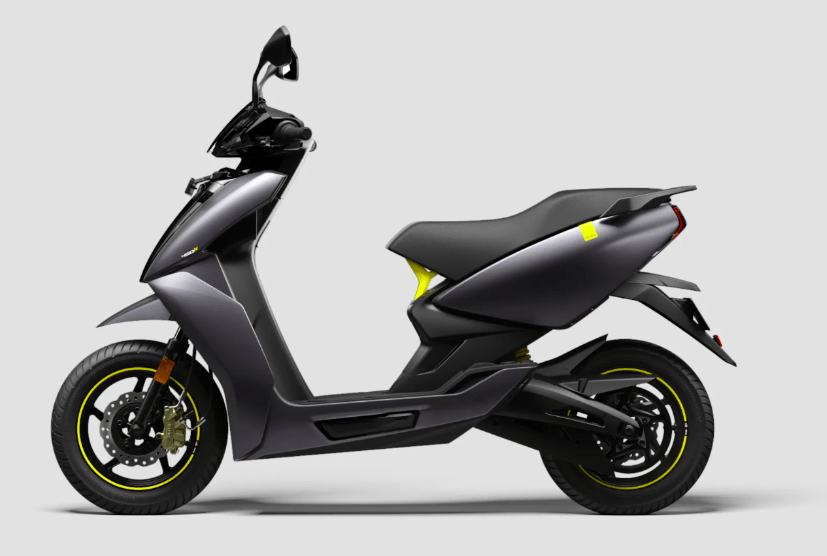
The Ather Scooter

We were visiting India recently and saw a good friend who bought an electric scooter. The scooter looked smart and had a whole host of nice features.

But what struck me was the conversation about why their family chose to do this.

The scooter costs 50% more than gas/petrol alternatives. However, it more than pays for itself on a day-to-day basis thanks to the relative cost of electricity.

Ather Energy, the company producing these bikes, is understandably experiencing explosive growth. As they grow, they’ll continue to invest in charging points around the city – making the ownership experience better and better.

This is the sort of conversation that gets me very excited. We’re moving very quickly from buying electric vehicles to accelerate a decarbonized future to buying them because they make economic sense. We’re seeing this play out quickly all over the world.

Here’s a chart from The Financial Times (hits a paywall) on total cost of ownership of EVs in Europe. Aside from a few exceptions, EVs are already either cheaper or comparable. This trend is only going to accelerate.

And that’s setting aside the driving experience. We first leased an EV 4 years ago and then replaced it by buying another last year. And our experience is like that of most EV owners – we will never go back.

Electric cars are better in every way – they accelerate better, they get better over time with software upgrades, and enable automatic driver-based customization that makes the overall experience. VC Fred Wilson said it eloquently in his post – “Is it a computer or a car?”

Maybe a month later, the Tesla arrived and I drove it into the parking garage to show the garage attendant how to drive and charge the car. He sat behind the wheel while I described the features of the car and when I was done he said to me “Mr. Wilson, they have combined an iPhone with a car!“

I love that story because never a truer word has been spoken.

I was thinking about that when I was recently describing how my new Rivian Truck handles off-road driving. It isn’t four-wheel drive, it isn’t all-wheel drive, it is any-wheel drive. There are four electric motors, one on each wheel, and depending on how the truck is performing, different amounts of power are delivered to each and every wheel. The software determines which wheels need what power and supplies it to that wheel in real-time.

Is the Tesla a car or a computer? Neither and a bit of both. Is the Rivian a truck or a computer? Neither and a bit of both.

When you rethink a system, like a car or a truck, as a computer first and foremost, amazing things become possible. Like over-the-air software upgrades which continue to add new features to our Tesla eight years after I drove it into the parking garage for the first time.

We have seen this story play out across many devices in our lives; phones, TVs, watches, thermostats, smoke alarms, light switches, etc, etc. It is an enormous shift in how things are designed and made and it is playing out right in front of us.

EVs are a big part of the story around the transformation of our energy grid. As more of the grid gets powered by renewables in the next decade, they help us deliver a double whammy – by moving our transportation energy needs away from Carbon along with our daily energy needs.

Seeing Ather Energy’s scooters in Chennai got me very excited. I am rooting for their success.

10 questions – Annual Reflection 2022

The 10 question annual reflection is a longstanding ALearningaDay tradition. I recommend doing it in 3 steps:

i) Carve out an hour in the coming days to “look back and look forward.” It helps to do this in a quiet place with no distractions or interruptions.

ii) Work with a list of 10 questions that make you think. For a starter list, I’ve shared the 10 questions I asked myself below (also available to print as a doc or PDF by downloading from this folder).

iii) Archive your questions and notes for next year. Check in with them over the course of the year and read them before you start next year’s reflection. Looking at what was top-of-mind a few years later is also guaranteed to make you grin. :-)


10 Questions – Annual Reflection 2022

1. What are the top 2 themes/memories/moments I will remember 2022 for? 

2. What were the 2 biggest lessons I learnt in 2022?

3. We learn from a mix of 3 sources – i) taking action and reflecting on our experiences, ii) people, and iii) books/courses or synthesized information. What did my mix look like in 2022? What would I do differently in 2023? 

i) Action + reflection:

ii) People:

iii) Books/synthesized info:

4. Looking back at how I spent my time in 2022, what were the top 2-3 themes/buckets x processes/outcomes I prioritized (Examples: Career – prioritized ABC project or getting a raise, Health – prioritized more outdoor exercise or losing 10 pounds)? Did what I prioritize align with what I intended to prioritize/were there any surprises? 

5. What are the top 2 themes/buckets x processes/outcomes I intend to prioritize in 2023? 

6. What do I most need to learn in 2023 and how do I plan to do this? 

7. What are habits/checkpoints I have in place to recommit to my priorities? (E.g. weekly/monthly check in)

8. What have I got planned in 2023 to prioritize renewal and memorable experiences (e.g. holiday plans, weekend activities, hobbies)?

9. Health, money, and relationships are foundational to the quality of our lives on this planet. What are my guiding principles or habits as I think of these dimensions in 2023?

Health:

Money:

Relationships:

10. Do I have a personal philosophy, a set of principles or virtues that I want to live my life by? If not, would I consider putting together a first version?

And, if I do have them, what have I learnt about them in my attempts to live them? Do I plan to evolve them in 2023?

 [Notes:

  • “What I value” can be a way of stating our personal philosophy/principle. 
  • Virtues are values we actually embody. Inspired by the code of the Samurais, the difference is what we believe (values) vs. what we do (virtues).
  • Our values become virtues when living them costs us money, time, or something valuable]