
“It’s so hard to forget pain, but it’s even harder to remember sweetness. We have no scar to show for happiness. We learn so little from peace.” | Chuck Palahniuk
This resonated.
“It’s so hard to forget pain, but it’s even harder to remember sweetness. We have no scar to show for happiness. We learn so little from peace.” | Chuck Palahniuk
This resonated.
I came across a summary of Robert Greene’s 48 Laws of Power in a newsletter recently. Here are 3 ideas that I found myself reflecting on –
On anger — Don’t express it directly. Channel it into your work and productivity. Anger expressed directly often leads to irrational behavior and words you later regret.
On trust — Never completely trust people right away, no matter how nice or competent they seem. Look closely for subtle cracks and inconsistencies in their character before investing time and energy into the relationship.
On criticism — Don’t take criticism personally. Look at it from the outside, as valuable feedback that can help you improve. The more open you are to criticism, the more you will learn.
I read the book more than a decade ago. I was early in my career and remember finding the book a bit dark. For a few days, I kept an eye out for power games everywhere. But, Robert Greene is a talented writer. And the book had insights and well researched wisdom on dealing with human problems.
As I reflect on the difference in my naivete and idealism today relative to that period, I think more of it would have resonated if I read it now. :-)
Every time I think Morgan Housel can’t possibly raise the bar with a post, he does. This is his post – “How I Think About Debt” in full.
Japan has 140 businesses that are at least 500 years old. A few claim to have been operating continuously for more than 1,000 years.
It’s astounding to think what these businesses have endured – dozens of wars, emperors, catastrophic earthquakes, tsunamis, depressions, on and on, endlessly. And yet they keep selling, generation after generation.
These ultra-durable businesses are called “shinise,” and studies of them show they tend to share a common characteristic: they hold tons of cash, and no debt. That’s part of how they endure centuries of constant calamities.
I love the quote from author Kent Nerburn that, “Debt defines your future, and when your future is defined, hope begins to die.”
Not only does hope begin to die, but the number of outcomes you can endure does, too.
Let’s say this represents volatility over your life. Not just market volatility, but life world and life volatility: recessions, wars, divorces, illness, moves, floods, changes of heart, etc.
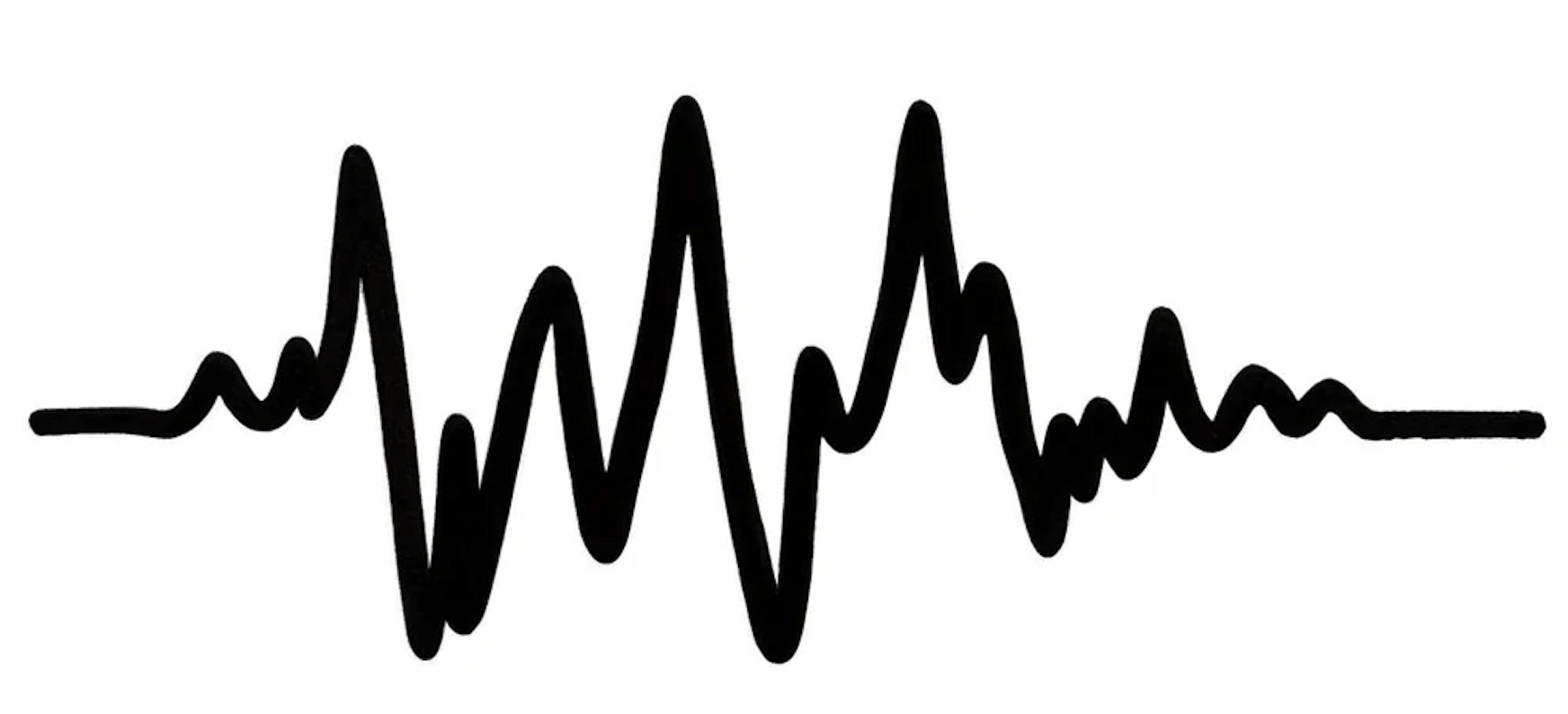
With no debt, the number of volatile events you can withstand throughout life might fall within a range that looks like this:
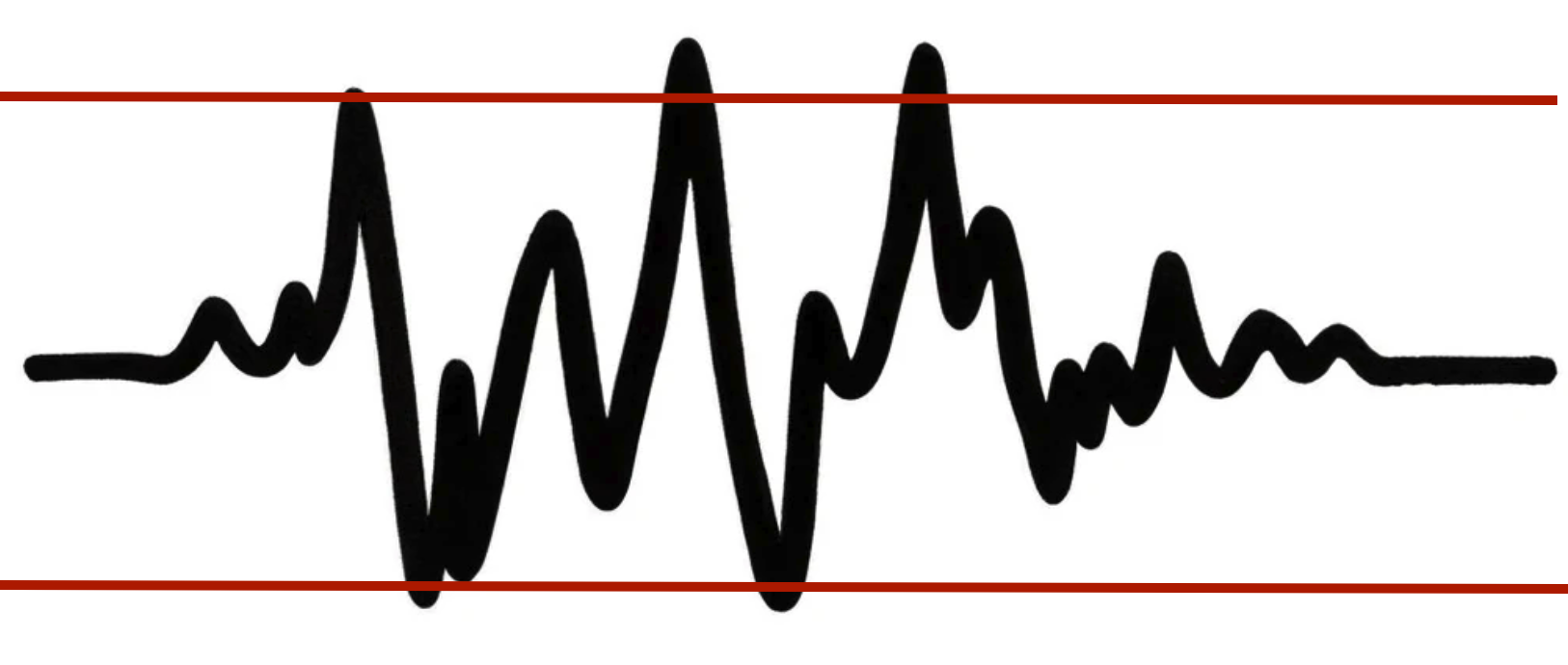
A few extreme events might do you in, but you’re pretty durable.
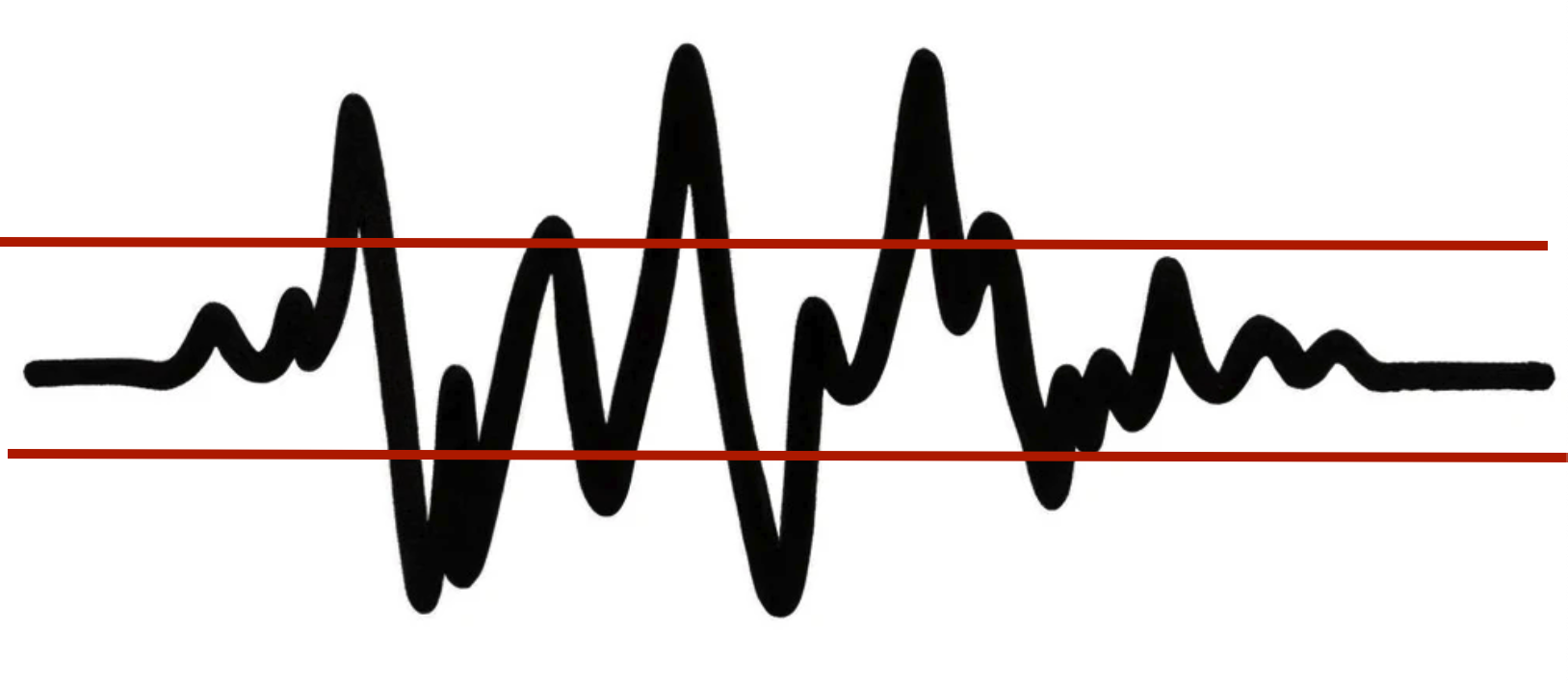
With more debt, the range of what you can endure shrinks:
And with tons of debt, it tightens even more:
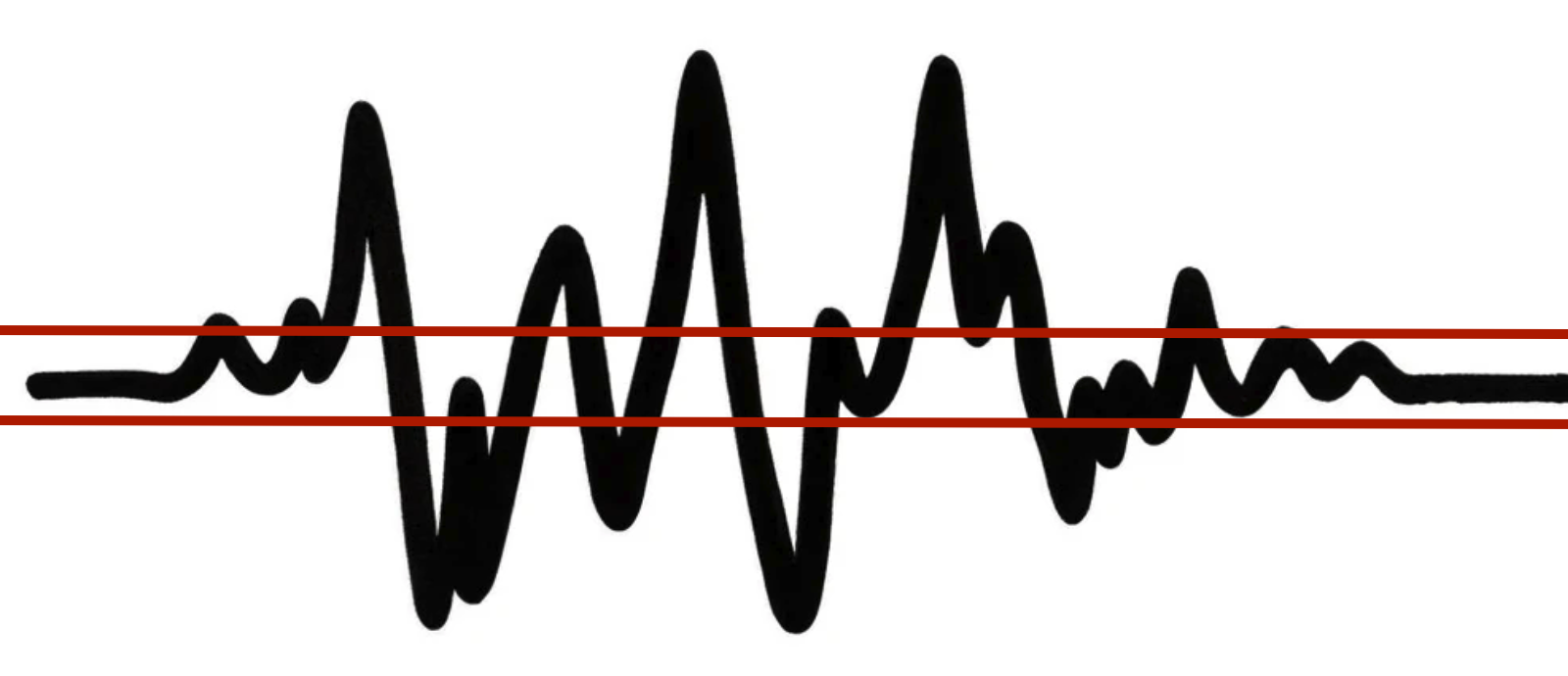
I think this is the most practical way to think about debt: As debt increases, you narrow the range of outcomes you can endure in life.
That’s so simple. But it’s different from how debt is typically viewed, which is a tool to pull forward demand and leverage assets, where the only downside is the cost of capital (the interest rate).
Two things are important when you view debt as a narrowing of endurable outcomes.
One is you start to ponder how common volatility is.
I hope to be around for another 50 years. What are the odds that during those 50 years I will experience one or more of the following: Wars, recessions, terrorist attacks, pandemics, bad political decisions, family emergencies, unforeseen health crises, career transitions, wayward children, and other mishaps?
One-hundred percent. The odds are 100%.
When you think of it like that, you take debt’s narrowing of survivable outcomes seriously.
The other is you think about the kinds of volatile events that could do you in.
Financial volatility is an obvious one – you find yourself unable to make your debt payments. But there’s also psychological volatility, where for whatever reason you can’t mentally endure your job any longer. There’s family volatility, which can be anything from divorce to caring for a relative. There’s child volatility, which could fill a book. Health volatility, political volatility, on and on. The world’s a wild place.
I’m not an anti-debt zealot. There’s a time and place, and used responsibly it’s a wonderful tool.
But once you view debt as narrowing what you can endure in a volatile world, you start to see it as a constraint on the asset that matters most: having options and flexibility.
Brilliant. Thank you Morgan.
“I will face my fear. I will permit it to pass over me and through me. And when it has gone past I will turn the inner eye to see its path. Where the fear has gone there will be nothing. Only I will remain.” ― Frank Herbert, Dune
We don’t make good decisions when we react to fear. It is an emotion that often gets the better of us.
This note is such a beautiful way to think about fear. It treats it like a strong gush of wind while conveying agency (“I will permit it to pass”) and permanency (“Only I will remain”).
Permit it to pass indeed.
I was a renter for over a decade and experienced many renter stories second-hand thanks to tales from friends. I mentally classified homeowners and apartment management companies in two categories – the short-cut takers and the long-term investors.
The difference between the two was simple. When faced with a choice, the former took a shortcut – typically the cheapest available quick fix. The latter, on the other hand, did their best to make the right long-term choice.
Both did so consistently. And it showed in the homes they rented out and in the renter experience. The former nickle-and-dimed renters and the latter were a pleasure to work with. They weren’t a pleasure to work with because they expected a yelp review. That’s just who they were.
This idea extends well outside the realm of renting homes. It applies to relationships, to building products, and to decisions we make in our lives.
Quick short-term fixes are a drug that are easy to get addicted to. They also work like drugs – ruining the long-term health of the people involved.
The best thing we can do for ourselves is to surround ourselves with people who unerringly make the right long-term call.
Then let osmosis do its thing.
I remember a question from a few years ago after one of my many posts sharing optimism about renewable energy – “What about energy storage?”
Renewable energy – cheap and clean energy from the universe – works like magic. But, depending on the source, you can’t depend on it 24 x 7 because it isn’t, for example, sunny every hour of the day.
Ergo energy storage. We need the ability to store excess energy from the sun (for example) so we can use it for our consumption when we need it. The key here is mass-production. As we produce more batteries, we’ll get better thanks to “learning curves.”
Given how important it is, it is awesome to see this exponential chart that shows global battery storage capacity additions. A large part of this addition is the 14 million new electric cars around the world.

But that’s not all. As more grids tap into the cheapest energy available (solar!), they’re installing battery capacity as well. 2 weeks ago, for example, battery storage became the biggest source of supply in the evening peak in the California grid. Notice how battery takes over after solar power during the day.

An exponential transition in the works. It’s exciting stuff.
It also mirrors how we power our home. More on that another day.
We were on a break during a day of skiing recently when I saw an old man in the table behind us. Skiing is a tough sport full body workout. So I’m always intrigued when I see folks who are in their sixties.
This person looked older than most others I’d seen. So I asked him if he wouldn’t mind sharing his age. He said he was 78.
I almost fell off my chair.
I asked him if he had been skiing since he was a child. That was the only plausible explanation I could come up with.
He shared that he only started learning when he was 61. His wife encouraged him to learn so they could take a trip with their kids (and now grandkids) every year. They make it from the UK to North America once every year for this trip. And he was the oldest student at ski school this year.
I shared my admiration for his commitment to fitness, family, and learning, and we went onto enjoy our respective meals.
I found it incredible to reflect on his accomplishment. He was on top of a stunning mountain (literally and figuratively), enjoying time with his family, pushing himself physically and mentally, embracing the risk that comes with any activity at his age, learning, and living. This is while over 95% of folks in his age group would likely be doing something sedentary or, worse, watching television.
I always feel grateful when I meet role-models like this gentleman. I wasn’t particularly fit as a child. I didn’t run very fast (or long) and didn’t train in any sport – something I always wished I did. I’d studied in 7 schools by the time I was in 8th grade. All that moving meant there wasn’t much opportunity to train either. And by the time, I got to high school and stayed in the same place, it was too late. Growing up in India, that’s when you give up sport to study to make it to a good college.
It was only during my undergraduate years did I fully appreciate the joy I got from playing sport and staying fit. And, since then, I’ve been obsessed with a simple idea. As I get older, I want to keep climbing the fitness percentile for my cohort.
I wasn’t the fittest 15 year old around. But I’d sure likely to be among the fittest 60 year olds by the time I get there.
And people like this 78 year old gentleman remind me of just how much fun that can be.
“When someone responds in a way you didn’t expect, ask them, “What did you hear me say?” Most of the time, the other person heard something incorrect. Follow up with “I’m glad I asked; let me try that again.” | Prof Carole Robin
This resonated.
I need to start doing this – both when I am experiencing an unexpectedly reaction and when I’m reacting unexpectedly myself.
A friend and I caught up recently after a while just before she heads off onto a different phase in her life and career.
As we shared updates about what had happened these past months, we talked about the things we were grateful for and then talked about the associated trade-offs.
Because there always are trade-offs. Her choices – different as they were – came with different trade-offs from mine. But they existed all the same.
The beauty in framing the conversation about the trade-offs is that we talked about which trade-offs we had made peace with and which trade-offs we were still struggling to deal with. We talked about how these trade-offs felt in comparison to everything that was good.
Conversations about trade-offs have a way of capturing the nuances in this life.
And the nuances are where the richness and meaning lie.
“Some days you’re the pigeon, some days you’re the statue.”
There are a few ideas that have been staples on this blog since the very beginning. This is one of them because of its wisdom and practicality.
Some days have a way of springing one unpleasant surprise after another. Best to move on, get a good night of sleep, and hit reset.

