Responsibility and Initiative

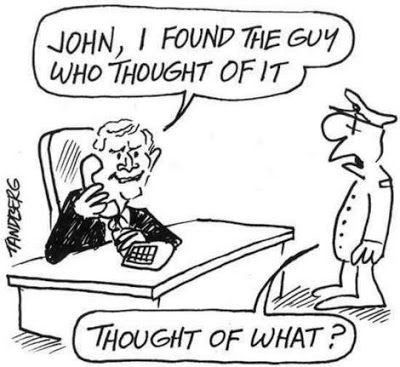
I sometimes think of life as a journey of taking more responsibility. The only way of making a sustained positive difference is to take responsibility for what you do.

Whether you are the CEO of a huge multi national, the best Professor in the world, the best researcher in the world, the best blogger in the world or the best sportsman in the world, it’s all about taking responsibility and delivering the goods consistently.

And every professional journey is one which involves proving that we are capable of more responsibility. And, at the end of the day, it’s the one question your boss probably asks before promoting you – ‘Are you capable of handling the additional responsibility?’

Responsibility is typically painted as a very serious thing in the hands of the wise while initiative is painted as a youthful trait. When we think responsibility, we often think grey hair and wisdom while, when we think of initiative, we imagine a young youthful person with lots of women. ‘

The funny thing is that one cannot exist without the other. At the end of the day, the big outcome of taking initiative is proving that we are capable of responsibility and the big outcome of more responsibility is the display of initiative.

It’s a curious dichotomy. But it sure exists.

And it typically means a couple of things. If you have moved to a position of great responsibility, remember that taking initiative never stops. It’s your display of initiative that got you there.

And if you are looking to move to a position of more responsibility, show lots of initiative. Ask for more, do more, take some risks, fail a bit, respond well and show yourself capable.

The big problem with taking initiatives, of course, is that failure is guaranteed. Maybe that’s why the ability to not fear but to respond to failure creatively, constructively and correctively may be amongst the most valuable traits of them all..

Bijan Sabet, Partner at Spark Capital: Interview XII – Real Leader Interviews

The most amazing benefit of doing these interviews (for me) has been finding a nice excuse to speak to some truly amazing people and understand what makes them tick.

Bijan is one of those people we should all be thanking! He’s been helping businesses get better by investing in them, advising them as a member of their board of directors and probably most importantly, believing in them when the world rubbished them on first glance. The result is an incredible group of businesses he’s supported through their early days – Twitter, Tumblr, Foursquare are of course the most popular of the bunch. The other’s are making it to popularity and success as well. If you have heard of the ‘Draw Something’ game that has become a phenomenon in recent weeks, that’s from OMGPOP, also an investment Bijan has led for his firm, Spark Capital.


That’s not really why I interviewed Bijan though. I’ve been following Bijan’s blog for a few months now and I feel I’ve come to get to know an amazing person. And I simply couldn’t wait to get to know him further.. 

About Bijan: Bijan Sabet has been a General Partner at Spark Capital since its inception in 2005.

imageBijan led Spark’s investments at Twitter, Tumblr, Boxee, Foursquare , Stack Exchange, ExFM, OMGPOP, Bug Labs. , SendMe, Runkeeper and Academia.edu.  He also led the investment in thePlatform (acquired by Comcast) and was on the board at Next New Networks (acquired by Google).

Prior to joining Spark, Bijan was Senior Vice President, Corporate Development of GameLogic(acquired by Scientific Games, NASDAQ:SGMS) after serving as an Entrepreneur-in-Residence at Charles River Ventures (CRV). Before his work at CRV, Bijan was Vice President, Business Development and Product Management at Moxi Digital
Previously, Bijan was an early member at WebTV Networks, which introduced the first true convergence digital consumer product, combining Internet TV, interactive TV, digital TV, digital video recording and games into an integrated consumer electronics device.
Rohan: What is the story of your career so far?

Bijan:
I grew up in New York and went to school in Boston. Later, I went to Boston College. And in 1991, I went to my first
Macworld in San Francisco and I was just blown away. It was my first time in Silicon Valley as an adult! I think I was there as a little child. I did not remember much of it.

A few months later I quit my job and I packed everything I wanted in my hatchback. Four days later, I drove from Boston to San Francisco. I got a little studio apartment. I was there for 10 years and I made my career there! I initially worked at a few start-ups. But the one that changed my life was WebTV Networks. I joined them before Microsoft acquired the company and ran business development. For a number of things, it was really exciting. A couple of months later it was acquired and I stayed with Microsoft for a little while. I’m really not a big company guy! Along with the founder of WebTV and couple of other WebTV folks, we created a company called Moxi Digital that we eventually sold to Paul Allen. It was not a successful WebTV by any means. We had a great idea and it had some problems. It was an easy ride to WebTV and a not-so great ride from Moxi Digital. It was still an amazing experience!

I got married in Silicon Valley. We had our first daughter in San Francisco and our families were all back east. Ten years later, we decided to move back home. I did not know anybody out there. But, eventually, I got introduced to the folks at Charles River Ventures (CRV). One of the guys I met at CRV was Santo Politi. He was a partner there and we just hit it off like peanut butter and jelly. We were interested in the same things! I had no desire to be a venture capitalist but I wanted to work with him.

Later, he decided he wanted to leave CRV. We became quite close to our other foudding partners and they were looking to build a new type of venture capital firm. They basically asked me to come along. I had no track record as a VC, they still gave me a shot and I took it. I really thought about it as another start-up. We were building a company from scratch. Yes we raised the fund and everything else. Nobody ever heard Spark Capital in 2005 and I am sure people today never heard of it either (haha). And we just went to work! I really considered this as the best entrepreneurial decision I ever made. A lot of people wondered whether I was good at it or if I would suck at it. I said there was only one way to find out. So that’s kind of why I did it. And I have fallen in love with it!

Rohan: How was the shift in mindset from being in start-ups to becoming a VC?

Bijan:
When you are an entrepreneur you only work on things that you love! I think there are some VCs that invest in things that they love and also in things that they think will be good investments. For me however, I decided that the only way of doing something is by investing in things I was passionate about, things that I know something about, things that I have experience in and things I care about. 
There are a lot of things in the world that I cared about but I needed to limit and focus on things that were interesting to me. These are things that I wake up everyday excited to do. If another venture firm ever called me and said ‘Hey, I think you should be a VC here’ and if they were a life sciences firm I would not do it. Simply because I don’t know anything about it and its not something I would be passionate about.

Rohan: How was the experience of building your firm? How did you guys do it?

Bijan: It wasn’t one thing I think, it was a combination of things. I had lived in Silicon Valley for ten years and that had helped. Even though I am in Boston now, I made a lot of investments in Silicon Valley and New York. I met Fred Wilson before Spark, he had invested in a good friend’s company. We met through Steve Cain. I met Biz at twitter. My friend Rueben who I worked with at WebTV, works with Android. He introduced me to Biz. It was all through the network I had formed. Also, frankly blogging and twitter changed my life. They enabled me to have a voice and to meet a lot of people just like I met you!

Rohan: True, this blogging thing IS amazing. So, what are some defining moments in your life?

Bijan: It’s hard to under emphasis that the relationship with my kids and my wife is a defining moment. They mean more to me than anything else! They’ve had an endless impact on my life. And you know it’s a juggle to be involved in your family and at work. At the end of the day family means more to me than anything else!

Rohan: How do you juggle between your family and work? Do you keep any routines?

Bijan: I think it’s not easy. It’s a commitment to trying to make everything work. You know there are moments where you are trying to make everything happy but it’s just about commitment! And I can only give up my sleep for that! It’s being a husband, a dad and a VC. For the last 6 years sleep has been giving. I am having the best time!

I don’t do e-mails on Saturdays. If I am doing e-mail on a Saturday then something is really wrong in the universe. I try not to do emails on Sundays too. By Sunday night, I am sucked back into the work but I try to stick to my boundaries! I used to keep my phone with me during lunch and dinner. I was trying to be in the moment and in the present but now my kids have started loving Foursquare and checking-in for me. So leaving my phone behind is no longer an option! I really try to separate my work life from my personal life. When I am working, I am working and when I am not, I am not. I have tried to take more vacations. It’s a process, and you have to get used to it. I used to suck at it and now I am getting a bit better!

Rohan: What does the future look for you in 10 years from now, in your opinion?

Bijan: Things move so much faster than you think in start-ups. I look at very big companies and their scale like Twitter and Tumblr. In their first year they had less than a million users. I think Tumblr had 400,000 users and Twitter had more than that but it wasn’t huge. We have this company called OMGPOP that I wrote about. In 20 days they have 8 million users on one game (Draw Something). That’s because the iPhone wasn’t invented when Twitter or Tumblr was. All the new technology that’s coming in is just more ways for us to connect. It’s also just getting to a point where it’s hard to predict the acceleration.

Things that you used to think were faster are a lot faster now. When you ask about ten years from now I think about how much we are in the early days of those things. I say things about how many people in the world are going to have connected devices. It may feel like it’s a ridiculous number. But when you think about it in this context, its less ridiculous. We are working in the tech sector and start-ups are the future here. That’s why I am really excited about what’s happening in Stack Overflow and Codeacademy. I think this is the area of development we should all be excited about and celebrate! I think it’s going to be an important fabric of our global economy.

Rohan: Any advice that you would have for the aspiring leaders out there?

Bijan: What I have seen with leaders is that they are brave and take a chance. All of the leaders we end up doing business with, investing in and working with – they all have different skills but they are really brave people. It’s so hard to do what they do. It’s hard to take a chance and do things. I think that’s the essential attribute. Other things are critical but you should have this to be a successful leader.

There were just so many learning points in it for me! Thanks Bijan, for taking the time! It was an absolute pleasure getting to know you.

More to follow, as always, with Real Leader interviews..

From your Real Leaders team – Dhanya, EB and Yours Truly

On Day Care Centre Norms

This week’s book learning is from ‘Predictable Irrationality’ by Dan Ariely.

Continuing on last week’s learning on social and market norms. A few years ago, a group of Professors studied a day care centre in Israel. The centre faced a problem of parents showing up late to pick their kids up. As this involved a social contract, parents who showed up late felt were guilty about it and tried being punctual!

As an experiment, the Professors introduced a fine for a group of parents who showed up late. As soon as this was done, the social norms were replaced by market norms. The result, however, was that there was a significant decline in parents showing up on time. Since they were being fined, they frequently chose to be late with no guilt!

Few weeks later, the day care centre removed the fine. Now, they were back to the social norm.

But, the behaviour didn’t change amongst the test group..

The conclusion the researchers came to was that the collision of a social and market norm results in the market norm taking precedence. Eg: Lawyers were happy to provide free services to the elderly but unwilling to do so at a reduced rate..

So, when building a culture within our teams and companies, the conclusion seems to be that we are better off building them around social norms vs market norms. Of course, the question is whether that is the right conclusion?

clip_image001

A friend pointed out that the most successful businesses in the world are family run businesses – a mix of social and market norms. And modern management has repeatedly shown that the best teams have an intersection of these kinds of norms thanks to close personal relationships being forged amongst team members.

These two stories bring forth an interesting insight into behavior and I’m still thinking about how to apply them. Look forward to your thoughts in the comments..

Here’s to keeping a watch out for social and cultural norms in action this week!

Lighting a Spark in Education #predictingthefuture

The world has changed. Times have changed. Our education system hasn’t.

We’re still taught what to learn instead of focusing on how to learn.

The biggest value in education is for people to understand how they function. Every one of us learns differently. The current system works like a lottery. It works for a few who walk out with confidence a true understanding of how to learn. The rest walk out with a clear understanding of all the things they think they are not good at.

Luckily, the times are changing. We are in a golden period of sorts in terms of understanding basic concepts like behaviour, happiness, intelligence and probably most importantly, understanding how to manage ourselves. Relatively new fields like behavioural economics are make the waves.

And, as I was thinking about this and bouncing these ideas with many around me, I feel the following big shifts in our thinking will happen.

Energy will be THE focus. We will move away from time management and focus on energy management. We will understand how to think of a day in terms of our energy instead of thinking of a day in terms of time.

How I work will take precedence over how stuff works. This is where the magic lies. Education will be reshaped to help us understand how WE work and focus less on how stuff works.

Focus on ‘different’ versus ‘intelligent’. The easy option is to look at a person and judge them as intelligent or not. That’s how we’re schooled. And we automatically do the same for ourselves (surprise surprise). The issue, of course, is that we are extremely hard when it comes to judging ourselves.

We will begin to focus on understanding our different gifts. We are already beginning to see this. Susan Cain gave a powerful talk on the power of introverts. The principles in her talk are right out of Myers Briggs, who was just way ahead of her time. Again, it links back to understanding how we get our energy and how we work.

A Learning a Day or Fluid Mindset. There are already many studied being made on mindset. What we are learning now is that our intelligence is NOT fixed. The more we do, the more we can do. The more we can do, the better we will start doing what we already do. Maximizing our potential and being the best we can be will be our focus.

I am obviously optimistic when I call that ‘a learning a day’ but it is something I envision will be taught in schools. Kids need to realize that they only get better. It took me 19 years to understand that and then a couple more years to understand that I must stop judging myself harshly. It’s all about figuring out how we work and that’s hard enough. We learn as we go. We fail a lot. But, thank god for that because the more we fail, the smarter we get.

This is the future in my eyes. It is not going to be easy to make these systemic changes. We are going to face a lot of resistance. That’s life though.

On the bright side, change is the only constant thing in this world. The dinosaurs go away and the world moves on.

It’s only a matter of time. The future is bright.

Rahul Dravid. Respect.

As an kid growing up in India, cricket was the sport you simply had to follow. It is a sport most parts of the world don’t know much about but back home, cricket is a religion of sorts. If you’ve ever been to the UK and gotten a feel of the passion people here have for football, then you’ll have an inkling about how Indians feel about cricket.

It’s been many years now since I stopped following cricket regularly. I still check in on the scores once in a while and I did of course watch the last 3 games leading to the world cup win in 2011 but that’s more or less it. I’ve moved on in a way. Football is all I have time for these days.

The wonderful thing about sport for me is that it throws up unparalleled drama, heroes, villains, victims, beneficiaries – you name it and sport has it. And amidst all this drama, you have some incredibly gifted human beings carry out their craft and make watching it worthwhile. You experience their passion, their pain, their joy and their love for what they do. Over time, you watch most of these men of genius wilt under the spotlight of the media and cave in under the tremendous pressure on their young shoulders. The typical sportsman – arrogant, too rich to care and not worth emulating.

Then again, you have exceptions every once in a while. You see men who don’t take their excellence for granted, who don’t forget that Lady Luck isn’t one for long term relationships, who remember that their power comes with great responsibility and who, at the end of the day, remember that what defines them is beyond what they do. It’s who they are.

They become heroes. Every sport has it’s share. Whether it’s Sampras, Federer and Nadal in tennis or Maldini, Xavi and Scholes in football, we are witness to some truly amazing men of character. And as I was growing up as kid back home watching cricket, I was fortunate to witness a crop of players who went on to become legends of the game.

Rahul Dravid was one of them.

The other fascinating thing about sporting legends who are worthy role models is that they are typically of two very distinct kinds. The first kind are the geniuses. These were born to play the game and they did. Of course, they worked really hard. But, as hard as it was for them, it was also easy. They inspire awe.

The second kind are the gritty ones. These are the ones who fought their way through. They persisted when most others quit. They grew up surrounded by those who had talents they knew they would never possess. But, they never gave up. They persisted. They played for their teams. They made it on grit. They were the fighters who tasted success thanks to pure strength of will. And they tend to be great role models, for they inspire hope.

Rahul Dravid belonged to the second kind. He didn’t just belong to the second kind. He was the second kind. Watching Rahul Dravid approach a game was like watching an intense statistician go about his work. You never doubted his focus. You never doubted his application or intelligence. You saw the anger on his face when his concentration slipped. You felt the tension when he was going through a bad spell. And you just hoped he wasn’t being too hard on himself. He was the sort of person who would not have been out of place in a boardroom or in a gathering of intellectuals. Dignified, focused, determined, gritty, classy – Rahul Dravid stood for all these things. 

He decided to bow out in typical fashion – no fanfare, no last game tributes and the like. ‘I know this is the time.’ – he said in typical understatement. And with a typically dignified press conference, he bid farewell.

Accomplished writers have written great tributes. I couldn’t add much to what they’ve said even if I wanted to.

So, I’ll just say thank you. Thank you Rahul, for doing what great role models do – for giving the many of us who weren’t necessarily born with obvious god given talent the hope that with dedication, determination, persistence and hard work – we could make a difference.. just like you did.

It’s easy to forget that you are only 38. While you may have finished your journey as a sportsman, in many ways, you are just getting started.

Onwards and upwards then. I join many in wishing you well knowing fully well that you will be incredibly successful in whatever you choose to do thanks to everything you stand for.

Respect.

The Answers Don’t Matter

We grow up in a world where the importance of the ‘right’ answer is reinforced constantly. Our education shapes us and we take what we learn (well, some of it at least) to the working world.

Call it ‘figuring it out’ or ‘cracking the nut’, that’s what the smartest students do best. See a question. Identify the kind of problem. Recall a formula or method used before. Solve the answer. Well done. That’s very smart.

It’s all about the answers. It’s all about solving problems. And it’s a skill we generally pick up, to varying degrees of excellence. Then, depending on the kind of career we are on, we probably problem solve and analyse our way up. That’s when we hit the big wall.

We suddenly find out that the process of finding an answer doesn’t really matter. The answer? Even less so.

To climb the wall, we need to do something we haven’t done for a long time – ask the right questions. That’s where real value is. That’s where the magic lies.

Great answers never change lives. Great questions do. Questions lead. Answers follow.

As kids, we get this right. We ask many questions. And then, over time, we stop asking them as we get sucked into the illusion of finding answers. Perhaps that stems from our human need for (the illusion of) control. Answers close out all the possibilities and leave us with one option.

The reality, of course, is that the possibilities are endless. And what we do and where we go depends entirely on the questions we ask.

Thank god Newton paused to ask a question while he amidst answering some..

Doing It Wrong, Relentlessly

Seth Godin had a post yesterday that resonated with me.


Doing it wrong, relentlessly

According to this post by Neil Patel, I blog incorrectly–missing on at least 7 of his twelve rules.

On purpose.

I’m not writing to maximize my SEO or conversion or even my readership. I’m writing to do justice to the things I notice, to the ideas in my head and to the people who choose to read my work.

The interesting lesson: One way to work the system is to work the system. The other way is to refuse to work it.


I couldn’t agree more. One way to approach something is to seek to optimize the experience. There are many ways to do that as a blogger – optimize your search engine optimization, comment on as many blogs as you can to spread your net wide etc etc.

I tend to shudder at optimization because it tends to bring with it a limited view of what the journey can bring us. Continuing on the blogging example – our purpose, all of a sudden, becomes to optimize page views. I just don’t find it inspiring. Maybe it’s because I find it hard to believe that we can genuinely care about being popular above all else.

There are a couple of problems with that. If we aren’t insanely good at what we do, the popularity isn’t likely to last. And, if our focus is popularity, the chances of becoming insanely good take a dive.

We only have 24 hours in a day and, while the days are long, the years are typically very short. If we don’t spend the time we have doing things we care about, what are we doing?

I guess it comes down to that wonderful question Clayton Christensen once asked, How will you measure your life?

My view – don’t do it only because it will look good. Do it because you care.. it shows.

The Reverse Golden Rule

I just read a very nice note from an acquaintance/old friend on Facebook. It was one of those notes that had me nodding as I was reading it. It took me about two minutes and I was just about to close the tab on it.

I paused. ‘Why am I not telling him so?’ said a voice in my head

‘Why bother? Would it make a difference?’

‘What if you had been in his place? ‘

‘Touche. No excuses then.’

I spent an extra minute thinking about what I wanted to say and did. And at that moment, I realized how much of an effort contributing takes, particularly when you know the person. 

A close friend of mine had an interesting theory about social media. We were discussing the modern ability of building followership thanks to blogs, twitter etc. His insight was that you can only do that if you have more new/online friend followers than existing friend followers. You will grow the moment the ratio tips.

Interesting, isn’t it?

His rational was that existing friends friends who like the content you create are less likely to do things that help your presence – retweet, comment, share, like etc. Essentially, existing friends are happier reading versus contributing. And that’s not only because it takes effort. There’s just some social baggage that tends to hold us back..

Today, I fully appreciated the wisdom behind his point. I also know that, even as a new/online friend, the switch to contributing was a tough jump.

And I thought I’d write in to let you guys know that I really appreciate the effort so many of you make to write about your meaningful experiences, learnings and stories in the comments. The past month or so has been a real treat with a few comments on every post and I work hard to make sure I keep up the commitment from my side too. Even on days like today when I’m behind on my email, I work to make sure that I have replied to every comment.

image

It’s my way of saying ‘I love you guys too!’ :-) And again, thank you. There are few things that equal the excitement of getting a reaction on something you share – your additional thoughts, points of views, criticisms, thank you’s – they all count!

I also thought about a note I received from a regular reader of this blog over the weekend. She mentioned that she always sets out to comment but is always stopped by company policy that makes Disqus/social media inaccessible. I bet she’s not alone. Thanks to those of you who write in every once in a while sharing your thoughts. Those emails never fail to make my day. (Of course, I’m hoping you guys will take your phone out and comment in the future.. haha.)

The final thought that came to mind was about the golden rule. We often think of the golden rule when we think of things we should not do. We shouldn’t do to others what we wouldn’t want done to us, after all.

I find that I very rarely think of it in terms of things I should do. And, like today, I found that that small question inspired a small change in behavior, a rush of gratitude and then the post for the day.

Must do more often.

Life Lessons from the 2 Hour Commute

Over the past 2 months, I’ve regularly been on a 2 hour commute to work. And yes, that’s 2 hours one way. And no, it’s not exactly 2 hours. It’s probably around 1 hour 45 minutes but 2 hours sounds a tad more heroic.

It isn’t a long term thing of course. If it was, I would have shifted closer to my new temporary place of work. But I’ve had a few meaningful lessons through this experience.

The first lesson is an understanding of the effect something can have on your mind. It took about two weeks before the commute stopped becoming a big deal in my head. Two whole weeks! The learning here was to ignore stuff my mind blows out of proportion.

The second lesson is that this is a truly wonderful time to be alive. Thanks to technology, I have enough and more to do during this time – listen to audio books, clear out my email, catch up on my google reader, make phone calls among others. Spoilt for choice really.

The third lesson is that choices are not good for happiness. They make us unhappy. This was evident in my first couple of weeks when I was toying with the idea of finding a place close to the new workplace temporarily. Every day, the debate raged – should I? should I not? There wasn’t a clear answer. So, I was wisely advised to shut down the other option and get on with it. And of course, revisit it if necessary.

The fourth lesson is the the amazing thing about making decisions. Decisions close doors. And if there’s a problem, you can make another decision to change things anyway.

The fifth lesson is the power of context. In 1 hour 45 minutes, you can take a round trip around Singapore (more or less). But, 1 hour 45 minutes only gets you from the centre to one end of London. Thanks to the average commute in London being 1 hour 15 minutes, this doesn’t feel all that bad. However, in Singapore, this would be madness.

I remember a similar experience in the middle east where driving 2 hours every day was seen as no big deal.

It’s all relative.

This final lesson is the most important one. It’s the magic of perspective. My mom told me a story in the early days when I was still struggling with the idea of the commute.

There was a monk who decided to climb a peak so he could meditate right on top. It took him 1 painful week to climb up but the experience on top was incredible. So, he did it again. And again and again until climbing up the peak was no big deal. Whether something is a  mountain or molehill depends your perspective.

I think she made the story up to suit the situation. But, it turned out to be one hell of a story. Our perspective does indeed make all the difference in the world.

Oh, and finally, I also find myself smiling at the amazing story value this experience would have. Imagine telling my grandkids ‘When I was your age, I used to commute 2 hours and never complain..’

Now THAT would be fun..

Cycling for Water with Milaap – Loan a Little, Change a Lot

Three years or so ago, I was on my way back to university by the MRT in Singapore. I met Anoj, a fellow university student who was in his final semester after a long time. We didn’t know each other too well and had had a bit of a stormy acquaintanceship in the past (haha). Luckily, that didn’t get in the way of us talking about our plans of the future.

He spoke of an idea he was working on – Microfinance to help India’s poor. They were about to begin with a pilot to see if the idea was feasible before embarking on the journey full time.

Three years later, Milaap has gone on to raise $200,000 and change 4,000 lives. All this with a 100% repayment rate. If that isn’t amazing, I don’t know what is!

The concept is simple – Nagendra, a 35 year old, needs around $1000 of capital to set up a handicraft business to manufacture bags and cushions. The capital would enable him to purchase raw materials and now, thanks to Milaap, he has access to lenders who would enable him to have the money. He expects to pay it back in monthly instalments over the next 2 years.

Or let’s take a more pressing issue – water. Milaap estimates that 500 million people, 50% of India’s population, do not have access to clean drinking water. And just a loan of $24 could help provide drinking water for a person for life.

This is of course not charity. You can choose to think of it as such but at the current moment, the loan repayment rate has been 100%.

2 friends of mine decided to take it a step further yesterday. Vikram and Shiva cycled 24 km in a campaign to raise awareness for water. Their employers have agreed to match the first $1,500 received. Here’s a video of an exhausted Vikram explaining why they did it.

So, if you are sitting at your desk wondering about how you might be able to change things without donating massive amounts to charity, I hope you will consider loaning a small amount to a borrower who stands for a cause you would like to loan to – entrepreneurship, water, health – there are many who need your help.

And as you have seen, the numbers required are not big by any stretch of the imagination.

Loan a little. Change a lot. I hope you will consider it. :-)

Hope you have a great start to the week.