Filler words

Sort of
Uhhh
Like
Kind of
Right
Basically
Honestly
Uhm

These are the filler words I’ve found myself using in order of frequency.

I noticed last week in a conversation with a wiser acquaintance that he used no filler words. None. Zilch. And, this was a normal conversation. We spoke about a bunch of topics and I asked him a couple of questions that definitely made him think. Even then, he spoke with a clarity that felt inspiring.

So, I’ve resolved to cut out filler words. They’ve largely seeped into my language out of habit and association. This journey will likely take a long while as it means undoing some very old habits.

But, it has begun with an increased awareness around how I speak. And, I’m excited about growing through this process of learning to think and communicate with clarity.

Less than I hoped, more than I expected

There’s always going to be tension between hopes and expectations. It is natural to hope that our current efforts will all pay off handsomely. It doesn’t do us much good to expect it to pay off.

The way to circumvent this is through non-attachment. Dream all you like. But, don’t get attached to the dream. Instead, understand what it takes to go forth in the direction of these dreams and direct all energy on the journey/process.

If the outcome is exactly what you hoped, savor it. It doesn’t happen often. If it is less than you hoped, that’s also great. It means you dreamt big.

However, let it always be more than you expected. High expectations are just a trap – very little good comes out of them.

(As always, this is easier said than done. But, if it sounds like the result of an enlightened zen-like state, it isn’t. We just have to be aware enough to catch ourselves falling into the expectation trap.)

Thinking about perception when responding to email

I know it has become fashionable to complain about email – “too many emails,” “I’m not able to focus,” etc. I, however, am yet to find a more useful communication tool for folks working in the connection economy. Until then, I’ll continue to love email and be thankful that it exists.

Email management is a skill I’ve consciously sought to learn over time. I’ve learnt that I like keeping an empty inbox. The big difference it has made in the past few years is that I stopped viewing my inbox as my to do list. Clearing email was a chore and I did whatever was in my inbox. Inbox zero changes the dynamic. Now, I own my task list and priorities and email just becomes a way to connect, communicate, and coordinate.

The inbox zero approach follows a simple logic –
1. If an email can be responded quickly (~2 mins), do it now.
2. If it takes longer, leave it in.
3. If it is not for you, re-direct.
4. If it is information necessary for others, forward.
5. If it signals a longer task that requires thinking, file into a “work-in-progress” folder and make sure it gets on your task list

This flow becomes so natural that you don’t stop to think about it. I have, however, realized that there used to be a limiting factor that stopped me from achieving this flow – it was the fear of perception. When I saw email coming in, I would wonder if I should respond because of variants of a question – “What would these people think – would they  think I had nothing useful to do except sit in front of my email?”

So, I’d wait – till I could assuage these doubts over perception.

Over time, I realized this was a pathetic waste of time. Most people don’t care. And, if you find people spending their time judging you instead of doing their work, I’d stay away from them. The beauty about getting into a flow with email is that you don’t waste any unnecessary time. Clearing email stops being a battle. It is just part of the flow. Sometimes, part of the flow is also acknowledging you won’t be able to do justice to every email and that you’ll make mistakes.

That’s okay. Like all things, this is all about process. Make peace with the process and enjoy it. That’s generally a sign that a thing will be done well.

Dametra Cafe – Product Review 5

One of my objectives with reviewing products is to mix regular reviews for conventional technology products with those of non-tech product and service experiences. And, today, I’d like to share the story of my experience with Dametra Cafe.

A few weeks ago, a couple of friends and I visited a small middle eastern restaurant called Dametra Cafe in a quaint little town called Carmel-by-the-sea. It had really good reviews and we waited 30 mins to get in. The appetizers and main course were really good. The service, however, was excellent – the waitress was friendly and attentive and, midway through our meal, the owner came and checked in to see if we were doing okay. Always a nice touch.

As we were nearing the end of the meal – the owner came out again, this time with a stringed instrument. He said the chef would be joining him for a Spanish song that translated to “To live and to love.” For 4 of us friends who were seeing each other after a very long time, this was almost the perfect song for that moment. Score again. Thus, they began. It had a catchy tune and, within moments, we were all clapping and singing along. (the clip below is of the first part of the song – the our voices got louder once we learnt the simple chorus)

Dametra

And, after all of this, we were also treated to desserts on-the-house to round it all up.

There were 2 important product insights I took away –
1. Simple freebies go a long way. The free desserts probably didn’t cost them much. They may even have them built in to the price. It didn’t matter. It was a simple and nice touch. Nickle-and-diming customers for every little thing never results in a pleasant experience.

2. Let the product have personality. I touched on this idea in my product review of “The Skimm” – personality plays a big role in the product resonating with customers. There were two interesting notes about this musical experience. First, a friend who I shared this experience remembered having lunch at the exact place and seeing the owner burst into song. It didn’t resonate as much with him as it did with me. That’s part and parcel of bringing personality to your product. You win some and you lose some.

Second, all it took for this lunch to be special was that personal touch. As you can tell from the video, the owner and the chef weren’t great singers. But, they clearly enjoyed it and brought themselves to their little performance. So, we couldn’t help but join. That bit of personality transformed a a meal to an experience, one that was undoubtedly among the best meal experiences I’ve had in a very long time…

A quick note on doing these product reviews – I started writing this as I wanted to understand how to build great products and services. A first step to doing that is learning to “see” and learning to be aware of greatness. And, just thinking about these product review posts has led me to find myself noticing products more and feeling a lot more aware as I use products. It is amazing what our minds notice once we simply decide to do so…

Fewer words

I was on a team call recently when one of the members of our team began speaking about an email I’d drafted. She felt the email didn’t work and we had spoken about it earlier and agreed. So, I had a smile on my face as she began describing her feelings about the email. As is probably normal, she was attempting to explain how she felt to the rest without hurting my feelings.

Three sentences later, I decided to interrupt her and just say – “Guys, the point here is that my email sucked. We need to fix it. It shouldn’t be me as I have no passion for the subject.”

We added a quick discussion on why the situation arose, laughed and moved on. Directness takes fewer words.

A friend recently remarked that he doesn’t muck about with hints because hints are a luxury fast growth cannot afford. I noticed this yesterday as I watched this situation. It demonstrated the effect a lack of candor can have on a team. Being direct was just easier on the both of us. And, this directness came from trust we’ve built over months of working with each other.

Over the years, I’ve learnt that directness and candor don’t come easily because they require receivers to develop thicker skins and require the givers to be willing to be unpopular when they call a spade a spade. This stuff may be painful in the short term but the trust borne out of this makes it all incredibly sweet in the long term. Trust is the environment within which great teams are built.

At the very least, you have fewer words and more action.

Expert predictions – The 200 words project

284 experts on political and economic trends were asked to make simple black-and-white predictions on their respective areas of expertise. The economists were asked about future economic growth while political experts were asked about future outcomes of elections. These experts all made their living by making predictions. By 2003, 82000+ predictions were collected.

The results?
– Even the best forecasters did worse than the “base rates,” e.g., predicting that an economy will grow at 2.8% given we know it has been growing at 2.8% over the last 5 years
– Extra education or experience (e.g. a P.hD) didn’t boost accuracy
– Media attention did prove predictive. Experts who made more predictions on TV and the radio performed significantly worse.

So, Chip and Dan Heath suggest that we watch out for “expert” predictions when we make decisions in our lives. Experts are best leveraged to understand the likelihood of events occurring based on the past (a.k.a. base rates). Once we have that data, it is best we prepare for various scenarios, then go out and test our assumptions and let the facts stand up for themselves.

ExpertPredictionsSource and thanks to: www.EBSketchin.com

Because we’re so poor at predicting the future, we need to treat the future as a spectrum of possibilities. The future is not a point, but a range. – Chip Heath and Dan Heath

Source and thanks to: Decisive by Chip Heath and Dan Heath

Shifting in progress

I wrote about ongoing difficulties with my hosting provider last week. After a few months of considering a switch in providers, I let my frustration guide action and signed up for an account with InMotionHosting. Funnily, while InMotionHosting was recommended to me by a trusted friend, I also received a serendipitous note from one of you recommending them. I’m looking forward to how this all unfolds.

I plan to get to the shifting tomorrow morning. So, please expect a few issues in the coming few days – I hope to get most of the key stuff sorted tomorrow. But, if you have any difficulties getting the email/feeds, you’ll know I’ve likely messed something up. :)

2 small lessons from this experience –

1. I’ve received 5 emails from my soon-to-be previous hosting provider in the last 24 hours alone requesting feedback on last week’s exchange.

Hosting feedback
I
 didn’t get to my product review post this week but this is as good a lesson as any – DON’T do this. It should have been abundantly clear that I was frustrated from my 30+ email exchange. This might just be an automated process but there’s really no excuse for this barrage.

2. Always consult a smart friend before and when you make decisions that matter. It is amazing how much good advice there is around you and how much trouble good advice can avoid. As a general rule, when you make important decisions, seek help from a smart friend or two.

2 characteristics of systems that work in the long run

1. Built-in flexibility. Sometimes, once you plunge into a project, you realize that the original plans don’t work. And, every once in a while, even if the original plans work, they need to be de-prioritized. Openness to change is critical. To take a personal example, a rigid exercise regime that offers no break will fail.

2. Predictable tracking. Predictable tracking is how we ensure if we are taking executing as per plan and, if we are, if our actions are still contributing to progress. No tracking -> no accountability -> no progress. And, going back to the exercise example, whether you make progress or not, check in with yourself every week. What gets measured gets done.

The B2C2B era and its implications for us

Tom Tunguz had a great post introducing B2C2B (business-to-consumer-to-business) companies. The image below explains the idea –

B2C2BThe best way to understand this is to see what happened with the iPhone. In the 80s and 90s, all B2B productivity applications needed to be approved by 1 central corporate gatekeeper – the head of IT. IBM’s initial success in making Windows the corporate standard was attributed to that all powerful line – “No one ever got fired for buying an IBM.” This was a time when computing was necessarily expensive.

Over time, however, thanks to advances in technology and the Moore’s law, personal computing became inexpensive. So, consumers were soon able to crunch spreadsheets and store data at home. By the mid 2000s, enterprise apps weren’t better than consumer apps. In fact, in many cases, they were worse.

The iPhone flipped the old model of B2B sales completely. The product was so good that consumers who fell in love with it began badgering their IT departments to allow them to plug into the official network (that had become easier too). And, soon, the iPhone became a corporate standard across leading companies without Apple having to negotiate with any IT department. The iPhone as just the beginning – we’ve seen this across the board with companies who’ve had tremendous success with B2C2B.

There are a few interesting implications of this shift –
1. Every consumer facing enterprise productivity company in the future will need to grasp this concept and design applications that appeal to customers. The only companies that can escape this effect, for now, are companies that work on the back end.

2. That said, Amazon Web Services, AWS, is a prime (apt word when referring to Amazon) example of the B2C2B phenomenon and a role model for companies working on back end infrastructure. A cornerstone of AWS’ success has been customer love. It has made the lives of startups and entrepreneurs so much better. And, it has been rewarded with more trust as these startups and entrepreneurs have become successful. It, in turn, has proved itself worthy of that trust by providing the back end for companies such as Netflix and Dropbox.

3. Speaking of Dropbox, Dropbox’s move to Enterprise was inevitable. There’s a lot of money to be made selling to companies. And, Dropbox’s success was definitely an illustration of the B2C2B idea. Users loved Dropbox and found ways to use it within their teams at work. Over time, it made sense for corporate IT to embrace Dropbox. However, it is in that step that Dropbox had a few teething troubles. Corporate IT managers wanted more admin and security controls. This, in turn, underscores the challenges with B2C2B. Previously, you could just build products that kept corporate IT managers happy. Now, they have to feel in control AND the users have to love it, too.

4. Companies like Uber are experiencing this effect, too. Uber is already expensed more than taxi cabs. How long before companies strike enterprise level deals with Uber without Uber having to go seek them out?

5. For every positive story, there are companies that have experienced the pain caused by this shift. Microsoft Exchange is a prime example. Too many Exchange users complained about their unhappiness with having to manually archive their Microsoft email every 2 months because space limits on Exchange were outdated. So, there’s been a continuous shift to Gmail. Again, users love it. Companies follow.

6. Speaking of Microsoft, I wouldn’t extrapolate Microsoft Exchange’s troubles to Office. Despite advances made by all Office competitors, including Google Docs, Microsoft Excel and OneNote are still outstanding. And, PowerPoint does its job. (Word, however, is a travesty – can someone fix that?) It is great that Microsoft is proactively figuring out how to make using Office easier in the cloud. They are still the leaders here and the lead is theirs to lose.

7. As cool as “B2C2B” sounds, this isn’t a new world shift. Investment banks and management consulting firms have pursued this strategy for a very long time. There’s a reason that the Goldman’s and McKinsey’s of the world have “client first” written all over their walls. User satisfaction has led to company adoption in all of professional services. Aside from the fact that treating people well is simply the right thing to do, for professional service firms, treating people well is source of competitive advantage. Most of these alumni become future clients.

That said, there is a crucial point of difference. In the case of the internet, aside from the fact that network effects are more powerful (professional services have network effects, too), marginal cost is zero.

8. Google, Facebook, LinkedIn and Twitter are probably the 4 most influential B2C2B companies of the internet era. Their success is built on the same blueprint – build products that users engage on and customers (advertisers in all cases and others like recruiters in the case of LinkedIn) will follow. It makes sense that media was among the first industries to feel the power of the B2C2B shift. The first sign of customer love is their attention. Companies that do well to capture attention will continue to drive the online advertising market size upward. And, this, in turn, illustrates why valuations for consumer internet companies are off the roof. They are, after all, no longer “consumer” internet companies.

9. That, in turn, is why Facebook’s acquisition of Instagram could be among the best tech acquisition deals ever. Photos and messaging dominate attention in the mobile era. While Whatsapp has a few global competitors, Instagram helps Facebook dominate the world of photos. That’s incredible value of 1 billion dollars.

10. In “How Google Works” by Jonathan Rosenberg and Eric Schmidt, Jonathan and Eric share examples of many decisions Google made that resulted in a loss of revenue for Google but were still executes as they agreed it would be great for the user. I think those examples don’t share the complete picture. Sure, it might have lost revenue in the short run. But, in the long run, B2C2B dictates that the user’s love is far more important for long term revenue. So, keeping the user first isn’t a competitive advantage, it is a competitive necessity.

11. We are in an era where “customer is king” is, for the first time in history, very close to being true. We have more B2C2B companies than ever before and more will be created in the coming decade. Thus, it follows that the B2C2B companies will likely experience most success under leadership that cares about. Now, it isn’t just about what the product can do. It, truly is, about how the product makes the user feel.

12. I’ll finish up with a provocative point. There was a rush of people flocking towards entrepreneurship in the last decade as everyone seemed to be vying to be the next Facebook. For the many who were working for large corporations shipping products to nameless and faceless organizations, building products for human beings they could see, touch and feel felt really empowering. We are social animals after all. And, we want our work to count. Change enough people’s lives and you will change the world, after all. This has resulted in a chain reaction of schools and politicians emphasizing the importance of entrepreneurship. All of this is good. With the advent of B2C2B, however, I would assert that a few of those assumptions will, and should, be challenged. While the gains of creating a startup that goes on to become the next Facebook are, indeed, outsized, I would argue that there are more opportunities than ever before to touch the lives of real customers. That’s what the B2C2B era has done for us.

What makes this all interesting is that the rules of engagement in this era are shifting really quickly. This is why “preferred qualifications” list in technology jobs read like a description for superwomen/men. Entrepreneurship and innovation are mentioned as required traits too often in too many job descriptions. It shouldn’t be surprising, though. With all these shifts, being able to learn, empathize with customers and build products and services that resonate are more important than ever before. And, that’s why I believe schools need to spend time on discussions around “being entrepreneurial” vs. “being an entrepreneur.” We don’t need more companies. We need better companies.

B2C2B, to me, is among the most profound shifts we’ve seen in the past few years. What makes this all incredibly exciting is that this is all just the beginning…

Redirecting focus

I find myself in a near constant battle with my mind to keep it focused on things I control. Granted, I’m probably more attention deficit than the average person. But, my mind’s desire to seek out and dwell on situations, relationships and possible future scenarios over which I have no control and which always take me down an unhappy path never ceases to amaze me.

I have only found one way to solve this – constantly work to redirect focus to myself.

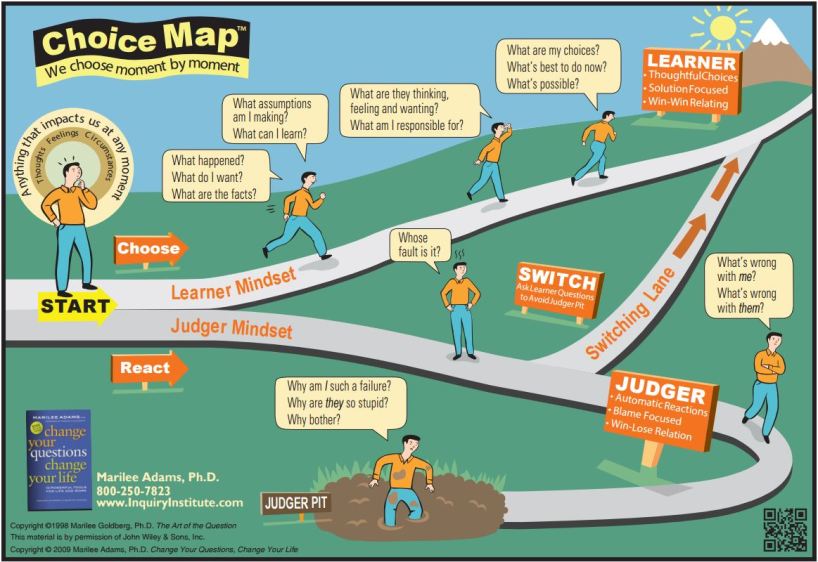
Self centeredness is a dirty word in our time. I understand that. I’m in search for a new term – maybe “self focus” – to describe my workaround. The idea is simple – the more time I spend on thinking about stuff outside myself, the more helpless, discontent and unhappy I become. I see my role as that of a driver steering my mind towards thinking about what my priorities are, what I need to get done and how I can do them better.

My mind control program simply reads – when in doubt, redirect focus to self and spend time visualizing and thinking about things you control. Our actions, then, follow these thoughts.

And, that’s where the good stuff lies.

Or, at least, that’s been my limited experience.