
#OurWorldIsAwesome – Edition 18
Mount Aspiring National Park is New Zealand’s third largest national park, covering 3,562 square kilometres. It’s part of the Te Wahipounamu World Heritage Site and is home to 100 permanent glaciers.
The park is named after Mount Aspiring – at 3,033 metres, it’s the only peak over 3,000 metres outside Mount Cook National Park. The Māori name is Tititea, meaning “glistening peak.” It’s often called “the Matterhorn of the South” due to its pyramid shape.
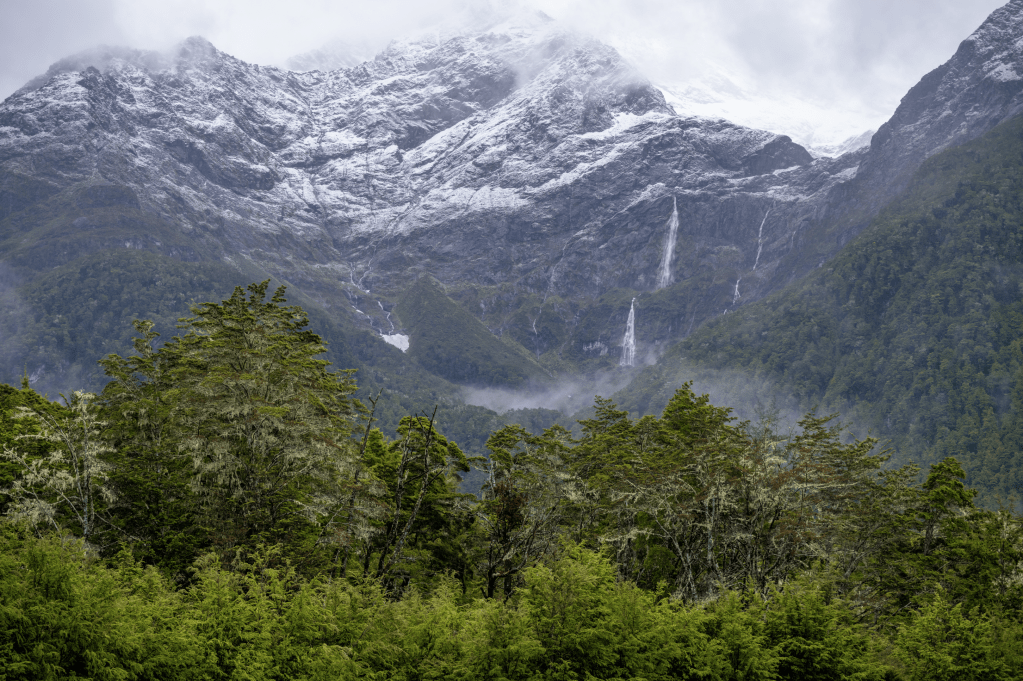
We only spent an afternoon in the park itself, hiking a small portion of the Routeburn Track. Most of the time in Glenorchy, it was raining heavily. And even in the small time we had, we were completely drenched.
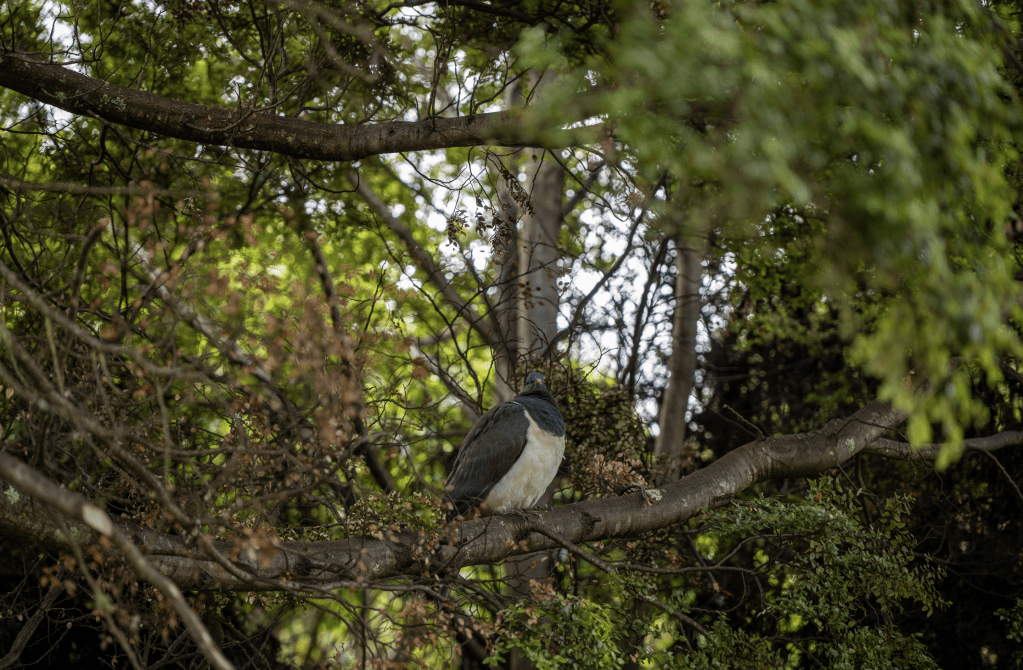
But we were struck by how gorgeous it was. The water gushing near the track. The spectacular views. The beautiful old beech forest with its local birds. This was a kereru or a local wood pigeon – it is massive.
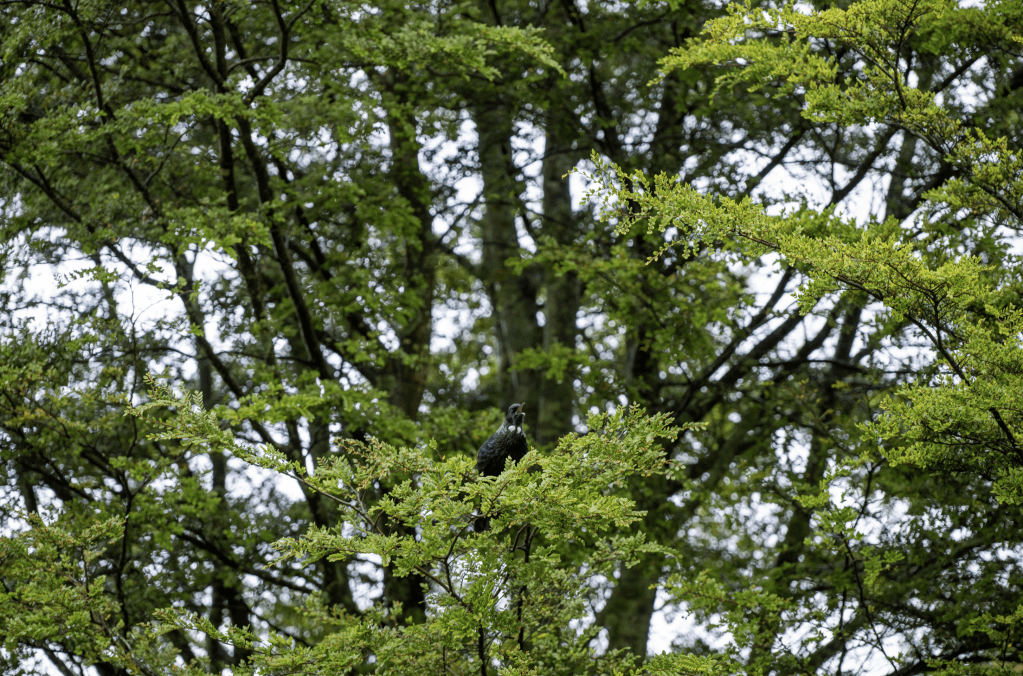
And this is the Tui – whose call reminded us of R2D2.
We spent more time in the surrounding Glenorchy area. And what an area it is.
The Dart River Valley and the region around Glenorchy are so popular as filming locations that it’s often referred to as “rural Hollywood.” The area was used extensively in the Lord of the Rings trilogy—the Dart Valley became Isengard, Saruman’s on-screen home.
A native beech forest near a place literally called Paradise became Lothlorien, the magical forest home of the elven queen Galadriel.
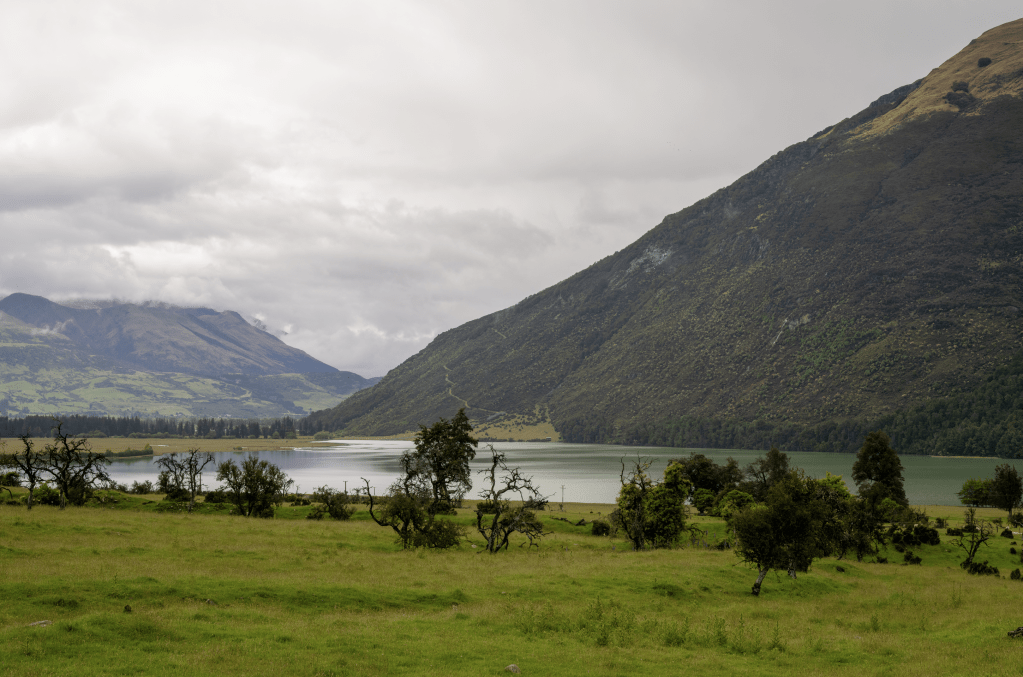
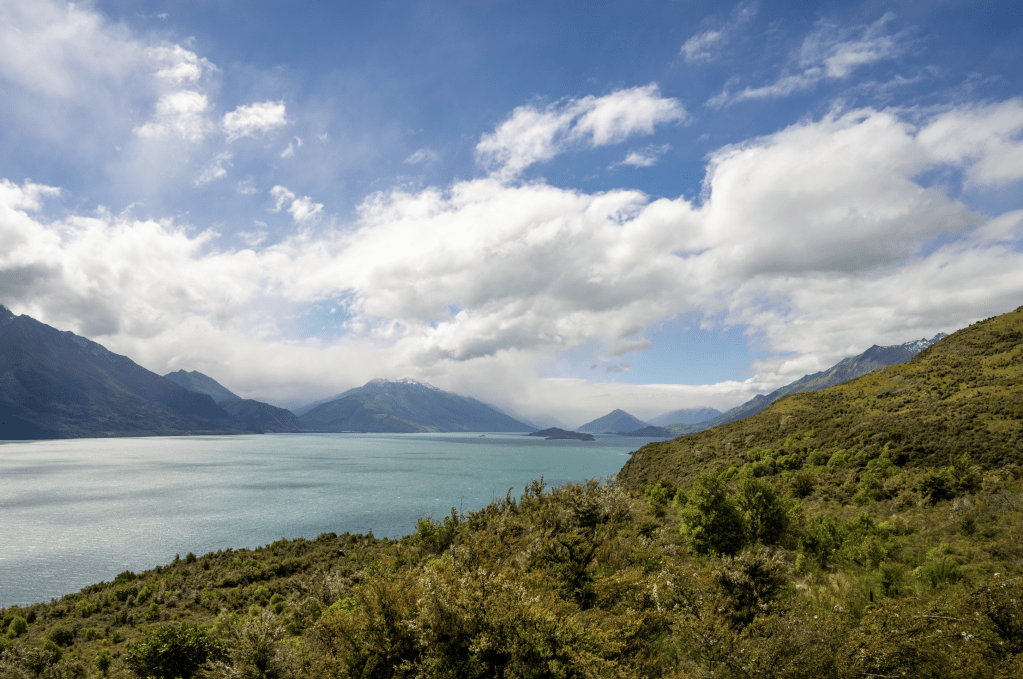
The drive from Queenstown to Glenorchy along Lake Wakatipu has been voted one of the top 10 drives in the world. And it lives up to the hype with beautiful views of the Lake Wakatipu.
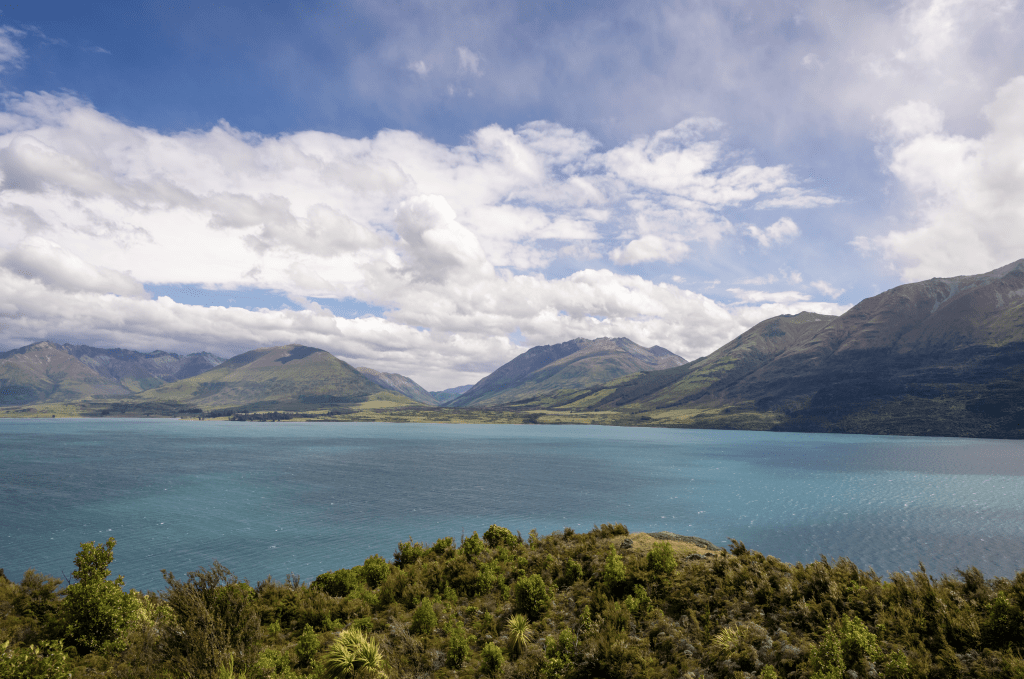
This was one of those parks and surrounding areas where I would love to come back and spend more time – and hopefully experience it in less rainy conditions.
Gorgeous nevertheless.
 A Learning a Day