Over the past year, I’ve made a series of changes to improve my metabolic health. It’s hard to pinpoint which one has had the biggest impact – I’ve become stricter about sleep, and my food habits have definitely improved.
But if I had to pick one change that has likely mattered more than the rest, it’s walking.
It started simply: parking half a mile away from the office, taking the stairs no matter how many floors.
Then came short walking breaks between meetings, 1:1 walks (both live and replacing video), and walks to think through problems or dictate blog posts in the evening with the goal of walking at least 2500 steps after dinner.
As a family, we also added a post-dinner walk most nights.
All of that has added up. I began the year averaging about 8,000 steps a day. That number is close to 16,000 now. And I can feel the difference.
Walking is a wonder drug. It regulates our blood sugar, strengthens our heart, and steadies our mind – one of the simplest, most reliable medicines we have.
It’s remarkable how something as simple as walking can quietly transform how you feel – one step at a time.
I subscribe to the Collaborative Fund’s blog and really look forward to their posts because the most beautiful of them are written by Morgan Housel. One of their recent posts struck multiple chords and I assumed it was another Morgan Housel masterpiece… until I realized it was written by a Ted Lamade. I’m sharing in full as it is worth the read – thank you for a wonderful piece of work, Ted.
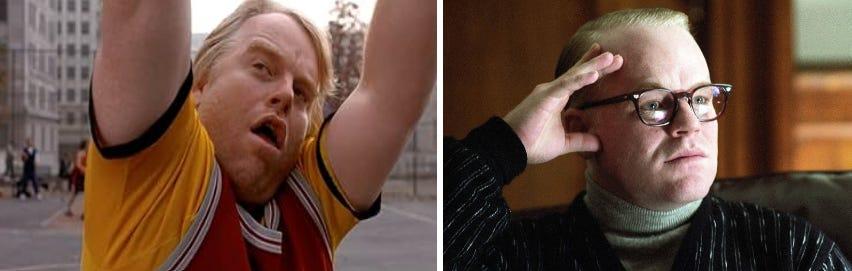
After winning a Golden Globe in 2006, Phillip Seymour Hoffman replied to a question about how he got to this moment in his life.
Nearly two decades later, his response is more relevant than ever.
“Even if you are auditioning for something you know you don’t like or are never going to get, whenever you get a chance to act in a room that someone else has paid for, it is a free chance to practice your craft. And in that moment, you should act as well as you can because if you leave that room and you have done this, there is no way the people who watched you will forget it. That is the only advice I have because it is always about that — if you are given the chance to act, take those words and bring them alive; and if you do that, something will ultimately transpire.”
This mindset explains how within two years, Hoffman played Sandy Lyle in Along Came Polly and Truman Capote in Capote, winning an Oscar for the latter.
Retired United States Navy General William McRaven echoed a similar sentiment in his book, The Wisdom of the Bullfrog, writing,
“I found in my career that if you take pride in the little jobs, people will think you worthy of the bigger jobs.”
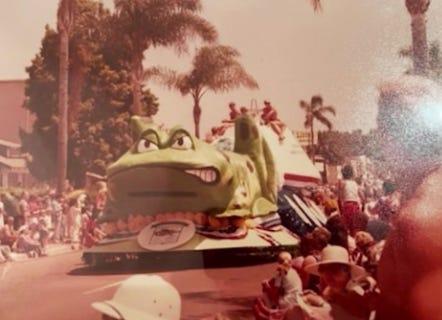
He illustrated this point with a story from early in his career when rather than being assigned to lead a mission, he was tasked with building a float that would represent the Navy SEALs (often referred to as “frogmen”) in the Fourth of July parade.
After receiving the assignment, McRaven was admittedly dejected. In his mind, he had joined the Navy SEALs to lead missions, not build parade floats. But a seasoned team member offered him a quiet piece of advice, saying:
“Sooner or later we all have to do things we do not want to. But if you are going to do it, do it right. Build the best damn Frog Float you can.”
McRaven took the message to heart, pouring himself into the task and the float went on to win first prize in its category.
Over time, McRaven would lead far more consequential missions, including commanding the Joint Special Operations Command (JSOC) and later the U.S. Special Operations Command (SOCOM), which oversees all U.S. special operations forces, including the Navy SEALs, Army Green Berets, and Air Force Pararescue.
Unfortunately, I didn’t appreciate this lesson enough early in my career. As an example, after graduating from business school, I thought I could come right in and impart my newly found wisdom, when I should have been a better listener and executed the mundane tasks with as much vigor as the more interesting ones.
Fortunately, I don’t think I am alone. If I had to guess, anyone reading this can point to a similar moment in their career.
The thing is, this happens to all of us. Even the very best.
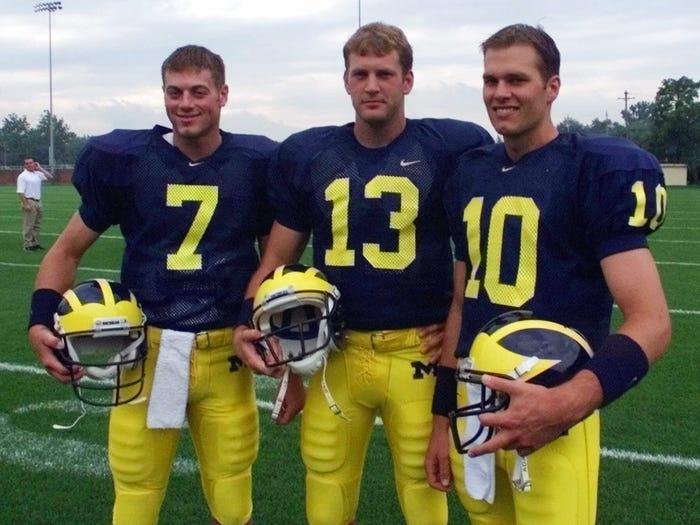
Look no further than Tom Brady, who has admitted he was consumed by this mentality early in his career at Michigan.
After his sophomore season, Brady was buried on the depth chart, only getting one or two reps per practice. As a result, he expressed his frustration to the coaches, to which head coach Lloyd Carr responded,
“Brady, I want you to stop worrying about what all the other players on our team are doing. All you do is worry about what the starter is doing, what the second guy is doing, what everyone else is doing. You don’t worry about what you are doing. You came here to be the best. If you’re going to be the best, you have to beat out the best.”
Carr then suggested Brady meet with Greg Harden, a counselor in the athletic department.
Once again, Brady vented his frustration — complaining about getting limited reps.
Harden’s advice was simple:
“Just focus on doing the best you can with those two reps. Make them as perfect as you possibly can. Then focus on the next two, and the next two, and the next two.”
How did Brady respond?
In his words,
“So, that’s what I did. They would put me in for those two reps, and man, I would sprint out there like it was the Super Bowl. I’d shout, ‘Let’s go boys! Here we go! What play we got?!?’ And I started to do really well with those two reps because I brought enthusiasm and energy. Soon, I was getting four reps. Then ten, and before you knew it, with this new mindset that Greg had instilled in me — to focus on what you can control, to focus on what you’re getting, not what anyone else is getting. To treat every rep like it’s the Super Bowl — eventually, I became the starter.”
We all know how Brady’s story played out from here, and it all started with two reps.
Last spring, my then eight-year-old son was wrestling with getting to play very limited minutes, so I read him this story about Brady. After sitting in silence for a few seconds, he looked up at me and said, “Tom Brady barely played too??”
To which I responded, “Yeah bud, like you. You just gotta make the best of your chances you’re given.”
After leaving his room that night, I thought to myself — I would give just about anything to be able to go back in time and tell my younger self this.
Would I have listened?
I hope so, but if this is a hard concept for adults to grasp, I imagine it’s even more difficult for kids.
Nonetheless, I wish I had appreciated this fact of life earlier. The fact is, someone is almost always watching, so it’s worth treating everything you do with purpose and pride. And, even if no one has their eyes on you, it is still a chance to “practice your craft”. To improve. To build strong habits.
Since time is limited, we only get so many opportunities.
We might as well take advantage of each one we get.
A product team’s success in building good products is usually a function of velocity – iterating quickly in the right direction. While the right direction is a function of product strategy, the ability to iterate is often a function of the “tech stack” – i.e., the set of technologies used to power the product.
We’re seeing a lot of news about the world’s “power tech” stack of late – as every country and company races to keep up with the AI revolution. The best likely impact of the AI race is likely going to be the knock-on effects of cheap electricity. Cheap electricity can then power the production of all kinds of critical technology.
The country that’s gotten this memo is China. Ensuring there is cheap electric power enables dominance across key aspects of manufacturing – from batteries to drones to robots. And the benefits compound across many of these bets.
China has also been leading the way in building additional capacity for the past 2 decades. Again, you see the compounding impact in their curve.
And a big part of this recent compounding is driven by the fact that China installed more than twice as much solar capacity in the first half of 2025 as the rest of the world combined. That’s crazy scale.
Other countries are adopting too. Spain has invested heavily in wind and solar in the past 5 years. Now, Spain’s electricity costs are a whopping 30% lower and the difference is illustrated beautifully by the difference between its prices and that of the price of gas (which drives electricity prices elsewhere in Europe).
Pakistan offers another example. After struggling with energy issues for decades, they’ve gone all in on solar.
Here’s a way to put this all in perspective. This data is from 2024.
Pakistan has become the third-largest importer of Chinese solar modules, acquiring a staggering 13GW in the first half of this year alone. To give you some international comparisons, the UK is only on course to add 1.5-2GW of solar capacity this year. In 2023, the US economy added 32GW of solar capacity.
This likely means Pakistan will be the sixth-largest installer of solar panels this year. But in local terms, it is more significant. The country’s entire electrical generation capacity was only 46GW in 2023.
In other words, in just six months, Pakistan imported solar capacity equivalent to 30% of its total electricity generation capacity – an absolutely staggering amount.
As they continue to invest, they’re able to reduce their dependence on imported natural gas – so much so that their Petroleum minister recently said LNG demand has peaked.
The key here is that energy wealth translates to income.
All this to say that the race that’s redefining this decade is how quickly countries embrace cheap electricity. It is the core component of the power tech stack of this century.
We recently watched Nonnas, a Vince Vaughn movie based on a true story about a New York restaurant staffed entirely by grandmothers (or Nonnas) as chefs.
The film follows the team’s journey through the classic phases of storming, norming, and performing. The four grandmothers begin with conflict and chaos, then slowly learn to understand and respect one another until they become a truly cohesive team.
Beyond the obvious lesson about the process of storming, norming, and performing in team development, what struck me most was the role of setbacks in that process.
Teams that rely on a single leader often crumble when things fall apart. But great teams discover that leadership can and should come from different places at different times.
Setbacks test resolve. They reveal character. And they remind everyone that when the moment comes, anyone can step up to lead.
That was on full display at Nonnas. And it was a wonderful reminder of what makes teams great.
There are seasons in life when you can see clearly months – even a year – ahead. The path feels steady.
And then there are other times when clarity shrinks to a few weeks, a few days, or even just the next 24 hours.
It just depends on the nature of uncertainty you’re dealing with.
When you or someone close to you faces a health challenge, your world narrows to getting through today or tomorrow.
During transitions – a job change, a move, a loss – you might only see what needs to get done this week. If you’ve just had a baby, you might not be thinking beyond the month.
The key is knowing which zone you’re in and setting expectations accordingly. Frustration often comes from expecting a long horizon of clarity when your circumstances only allow a short one.
The important thing is to calibrate our expectations – low enough that we always give reality a shot at exceeding them.
The Works in Progress newsletter had a thoughtful article by Deena Mousa on AI and radiologists.
Radiology accounts for the vast majority of AI medical devices cleared for use. As advances in AI showed positive progress in studying scans, Geoffrey Hinton – Turing Award winner and one of the fathers of the modern AI wave – declared in 2016 that ‘people should stop training radiologists now’.
However, the opposite has happened.
“In 2025, American diagnostic radiology residency programs offered a record 1,208 positions across all radiology specialties, a four percent increase from 2024, and the field’s vacancy rates are at all-time highs. In 2025, radiology was the second-highest-paid medical specialty in the country, with an average income of $520,000, over 48 percent higher than the average salary in 2015.”
As Deena explains, there are three things that explain this.
First, while models beat humans on benchmarks, the standardized tests designed to measure AI performance, they struggle to replicate this performance in hospital conditions. Most tools can only diagnose abnormalities that are common in training data, and models often don’t work as well outside of their test conditions.
Second, attempts to give models more tasks have run into legal hurdles: regulators and medical insurers so far are reluctant to approve or cover fully autonomous radiology models.
Third, even when they do diagnose accurately, models replace only a small share of a radiologist’s job. Human radiologists spend a minority of their time on diagnostics and the majority on other activities, like talking to patients and fellow clinicians.
She also calls out “Jevon’s paradox” – the cheaper something becomes, the more likely we are to use it.
In many jobs, tasks are diverse, stakes are high, and demand is elastic. When this is the case, we should expect software to initially lead to more human work, not less. The lesson from a decade of radiology models is neither optimism about increased output nor dread about replacement. Models can lift productivity, but their implementation depends on behavior, institutions and incentives. For now, the paradox has held: the better the machines, the busier radiologists have become.
She makes a beautiful point as she extrapolates her lessons learnt from this.
Artificial intelligence is rapidly spreading across the economy and society. But radiology shows us that it will not necessarily dominate every field in its first years of diffusion — at least until these common hurdles are overcome. Exploiting all of its benefits will involve adapting it to society, and society’s rules to it.
At age 26 in 1960, Jane Goodallbegan immersive, long-term fieldwork studying wild chimpanzees in Gombe Stream National Park in Tanzania.
Her approach was unconventional – she named them (vs. numbered them), observed behavior with minimal interference, and allowed patterns to emerge.
Her observations shattered preconceived notions – she observed that chimps used tools, exhibited personality, formed complex social bonds, and even engaged in violence. Many of these were thought to be exclusively human actions and her findings pushed the boundaries of how we define “human.”
She became a wildlife activist for the rest of her life – showcasing remarkable energy giving talks around the world for most of the year.
I appreciated her approach to talking about the climate crisis. She cautioned against doom and gloom and instead urged us to make better systemic choices – “Focus on the present and make choices today whose impact will build over time.”
We had a short conversation about Jane Goodall the day before we learnt she passed.
She was in Los Angeles and had been scheduled to meet with students and teachers on Wednesday to launch the planting of 5,000 trees around wildfire burn zones in the Los Angeles area.
Even as she passed, she was making choices whose impact will build over time.



 A Learning a Day