John Ondrasik – “Five for Fighting” – on music, song writing and work ethic

John Ondrasik

After giving you a preview of this interview 2 weeks back, we have the real thing.

John Ondrasik is very inspiring – he is an Applied Science and Math major from Berkeley while also being a successful singer and songwriter. He sings under the moniker “Five for Fighting.” I reached out to John as I love his music. After 7 months since I first emailed his wonderful agent, Steve, we finally spoke. John’s video wasn’t working but I didn’t want to risk missing him for another 7 months. What followed was a wonderful 25 minutes. I hope you enjoy it as much as the team did.

My favorite bits –

“I think I was always into my music and was passionate about music, but I was also pragmatic enough to realize that there might not be a career at the end of the tunnel. In school I was very focused on the math and the sciences. The deal with my parents was that they would continue to support my music as long as I had a back-up plan. That was going to college and getting a degree where I could get a real job one day.”

“I am one of those 20 year overnight success stories where I worked 20,000 hours before I made a penny doing this.”

“As a young songwriter (and I tell this to other songwriters all the time) the key is to write a lot of songs, and I was. I was writing hundreds of songs a year. Not many good ones, but “Superman” was just one of those songs.”

“I think it’s almost harder sometimes to write that second song that is not just a copy of your hit, but a song that takes the next step. “100 Years” took almost a year to get right.”

“As much as you can talk about talent and inspiration and all that stuff, I’m a true believer in work ethic. If I’m not writing or playing, nothing’s happening.”

“Inspiration can come from painful places. Most of the good songs come from painful places, introspection, and integrity.”

”It certainly is a process, and it’s a very frustrating process because, at the end of the day, what sounds very simple is very hard to create.”

”You have to have an ego, but you also have to realize that it’s not all about you. You have to remember what got you there.”

“Even with technology, it costs $50,000-$200,000 to make a record when you hire mixers and engineers and musicians. Then you have to promote your record and it’s not free to hire a band, it’s not free to go on a TV show for people to hear you.
(With piracy,) I’m concerned that it’s becoming so hard to make a living at music unless you’re a superstar that music will become more of a hobby and the true singer/songwriters that can become part of the culture will be factored out just because there’s no income stream and there’s no career. I am concerned about it. I think it’s a big problem.”

I write my best lyrics when I’m not staring at the page. I’ll put my headphones on and go for a two hour hike, and I’ll write lyrics. I find that staying active, staying healthy, and working out trigger those endorphins which stimulate the creativity too.”

Even at my cynical old age, I do love the idea of starting from nothing and creating something. It doesn’t have to be just a song. It can be a poem, a book, a business, entrepreneurship. I love that spirit of starting with a blank slate and then ending up with something. It doesn’t even have to be great because I truly believe that the joy is in the journey.”

Full transcript, as always, on RealLeaders.tv

What’s his story?

A friend and I were having lunch the other day at a restaurant. We were being attended to by a very courteous person who was easily twice my age. He called me “sir” twice.

This tugged at my heartstrings.

“What’s his story?”- I wondered. I always ask myself that when I see people who are my parent’s age working hard in hospitality. The hours are long, the work is hard, the customers can often be rude and thankless – what led them there?

When I ask myself that question, I realize that, 95% of the time, the answer is simply that they were just born in tough circumstances. Ours is a society largely constructed by people of privilege to ensure their progeny remain privileged. Yes, things have gotten better..but, for the most part, where you begin plays a huge role in determining where you end up – especially in poorer countries.

Moments like this always make me take stock. They remind me how lucky I am to have had the kind of privilege I’ve had. They remind me that it is very important to be kind, empathetic, and to give others a chance. They also remind me that I have absolutely no right whatsoever to complain. Sure, we all have our challenges but that doesn’t give us the right to be self centered. All this privilege comes with a responsibility to be humble and to work hard to make this world a better place.

All this reflection came from that simple question – “What’s his story?” – it is one I should ask more often.

Clause 126 – No Brown M&Ms – The 200 words project

Here’s this week’s 200 word idea from Decisive by Chip Heath and Dan Heath

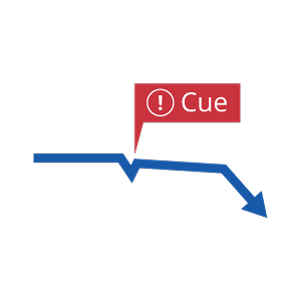
At a time when concert safety wasn’t guaranteed, Van Halen did a 100 big concerts a year. Since their equipment required complex set up and high attention to detail, they needed a simple way to ensure their own safety. So, buried deep within their contract in clause 126 was a request that a plate of M&Ms be kept in the dressing room. However, the plate shouldn’t contain any brown M&Ms.

Thus, when Van Halen found a brown M&M in their dressing room, they cancelled the concert. They knew their event manager hadn’t really read through their contract and could be liable to make bigger mistakes.

Similarly, Ray Rothrock, a venture capitalist, checks if an entrepreneur has had more than 5 secretaries in the past 5 years – his brown M&M test. And, venture capitalist Hunter Walk sees a red flag if senior executive hires can’t bring over their employees from other companies.

Let’s look at setting up our “brown M&Ms” or triggers for decisions e.g. if we haven’t seen a movie with our spouse in 30 days, it’s probably a sign we aren’t investing enough in our relationship.

clip_image001
Source and thanks to: www.EBSketchin.com

‘Sometimes, the hardest part about a good decision is knowing a good decision needs to be made.’ | Chip Heath and Dan Heath

Turning on our internal Captain Spock

I came across this idea in an article about procrastination by Heidi Halvorson recently and liked it. One of her ideas to fight procrastination was – “Make like Spock and ignore your feelings.  They’re getting in your way.”

If you haven’t watched Star Trek, Captain Spock is a person who only acts based on logic. His planet and race consider emotions to be a weakness.

I think this is a powerful idea. We all have our ups, downs, disappointments, joys, and frustration. But, we also have a responsibility to be the best we can be and keep our commitments to our family, friends, colleagues, and the world. And, we can’t keep our commitments based on our moods and feelings. We keep our commitments no matter what. At least, that’s the whole point.

I struggle with this one a lot. Six years of writing this blog has changed the way I look at situations and has greatly increased the amount of happiness I experience. But, every once a while, there comes a situation that challenges this resolve. And, I think this idea is a great reminder that it’s okay, important even, to turn on our internal Captain Spock. Ignore the feelings – be great, love, laugh, learn, and live.

There’s a reason all of these are verbs. As we live our moments, so we live our lives..

3 ideas to help your productivity today

Lot to do and not enough time? Here are 3 ideas that might help –

  1. Put on your headphones and block out noise. Some music that makes you feel productive doesn’t work.
  2. Try shifting to a different environment. Test a different room, a different part of the office or even working from home.
  3. Put on a recurring 5 min timer. We get a lot done when we’re constantly reminded of time slipping by. This is especially useful on tasks where we need to “just get it done.”

Finally, keep this list nearby for the next time you’re getting frustrated at your productivity.

The “I’ve failed” kind of friend

Whether this is a peer friendship, a senior-junior friendship or a mature parent-child friendship, it is hardest to be the kind of friend to whom the other person can come to and just say – “I’ve failed.”

Failure comes with all sorts of fear – especially a fear of judgment. And, in close relationships, the sorts of judgment we fear are the “I told you so” or “You aimed too high” kind.

So, how to be that kind of friend? Be the kind of person who is willing to put yourself out there and say “I tried that and I failed. It sucks.” It always sucks at first. We slowly come to realize it is no big deal. We just have to learn to relax, pick up the pieces, and move on.

The alternative is to attempt to hide these failures with secrets and lies – a recipe for unhappiness. You owe it to your loved ones to make it easy for them to come to you for support. Focus on creative, constructive, and corrective action. And, as is the case with these things, start by doing so yourself first.

Just get it done

3 rules that help me get stuff done –

1. Never mind who was supposed to do it. If it isn’t done and if it is within your power to do it, don’t faff around sending reminders (unless you’re trying to make a point. If you are, see point 2) – just do it yourself.

2. Have a bit of unexpected down time? Take out your to do list. If you don’t have one, make one and get on with it. No posturing, no acting busy. Just get it done.

3. Never mind who gets the credit. Just get it done.

Finally, I have realized that it helps most if you, in the words of Stephen R Covey, “be a light, not a judge.” If you are really looking to set an example, don’t do so by castigating your team for not getting stuff done. Set the example by.. just getting it done.

Where does this lead to?

It always starts with that one cigarette.

In the spirit of asking the right questions, the choice of whether to ask ourselves the “Shall I do it just this once?” or “Where will this lead to?” makes all the difference in the world.

Studies have shown that the biggest reason people don’t save is because they forget that they will grow old someday. The short term weighs heavily in most of our automatic decisions. Habitually asking “Where does this lead to” could be among the most important things we do.

The nothing alternative – a procrastination hack – The 200 words project

Here’s this week’s 200 word idea from “Willpower” by Roy Baumeister and John Tierney.

Given our tendency to do everything except the most important task on our list, some writers and researchers have experimented with putting their most important task as task #2 just to trick their brain.

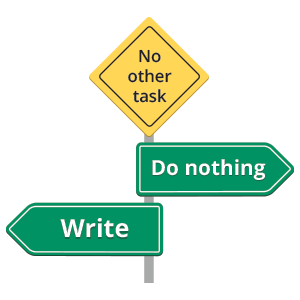
However, as far as procrastination hacks go, writer Raymond Chandler had an interesting process for writing that involved methodically waiting for inspiration.  Chandler’s process had 2 simple rules –

1. He would set aside 4 hours every day to write
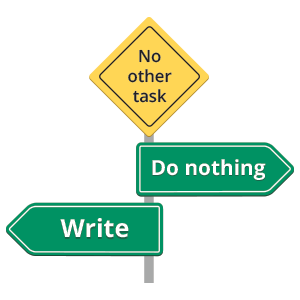
2. He could either write or do nothing. He was allowed to stand on his head or look out of the window but he couldn’t do anything that counted as a task (e.g. admin).

And, thus, we have a simple idea against procrastination – we set aside time to do one and only one thing. Justifying not doing important tasks by doing less important admin is no longer allowed. It’s all or nothing.

clip_image001Source and thanks to: www.EBSketchin.com

‘Anyone can do any amount of work providing it isn’t the work he is supposed to be doing at the moment.’ | Robert Benchley