
I am in trouble. Please help me prioritize

So you’re overwhelmed. There’s way too much to do. There are too many things you are involved in..
The common advice of all the ‘Get-it-done‘ Guru’s is ‘Say NO’ to all tasks you don’t want/you don’t need to do/ you know you can’t complete.

Saying ‘No’ is easier said than done.

What if all the people you are saying ‘No’ to are your bosses/superiors at work?
You stand much greater risk pissing them off and trying your productivity tips in your inevitable job hunt after you’ve been fired.
If you are not near the top, I would recommend a ‘I am in trouble. Please help me prioritize’ approach. Let all those bosses who you are accountable to know that you’re being squeezed and need help prioritizing. And unless you’re being managed by a really bad boss (let’s face it, there are a few of those out there), you’ll generally get help.
Best of luck with that!
PS: If you don’t, that’s what you’ll term as a ‘life experience’ and learn lots from it. If that happens, do just send me a note on rohan [at] rohanrajiv [dot] com and I’ll be happy to share it on this blog! ;)
What’s the point of being popular? – Seth Godin

You’d think that it’s the most important thing in the world. Homecoming queen, student body president, the most Facebook friends, Oscar winner, how many people are waiting in line at the book signing…

Popular is almost never a measure of impact, or genius, or art. Popular rarely correlates with guts, hard work or a willingness to lead (and be willing to be wrong along the way).

I’ll grant you that being popular (at least on one day in November) is a great way to get elected President. But in general, the search for popular is wildly overrated, because it corrupts our work, eats away at our art and makes it likely we’ll compromise to please the anonymous masses.

Worth considering is the value of losing school elections and other popularity contests. Losing reminds you that the opinion of unaffiliated strangers is worthless. They don’t know you, they’re not interested in what you have to offer and you can discover that their rejection actually means nothing. It will empower you to even bigger things in the future…

When you focus on delighting an audience you care about, you strip the masses of their power.

Another brilliant piece by Godin. He seems to be on a roll this week! :)

On the day everyone is pleased… – Seth Godin

On that day, the day that everyone notices your work, approves and lets you know, then what will happen?

We spend an incredible amount of time and psychic energy planning and working for that day, but why? It will never arrive, and even if it does, it’s not clear that anything special happens.

Perhaps the approval of every person in the entire world doesn’t need to be the goal of your work.


Thank you, Seth Godin – for making blogging an art form.

Transition

New location.

Re-installed OS. (tons of issues accompanying it thanks to Google Desktop annoyances)
Tons of things to do.
Heavy work week ahead.
Trying to find some order amidst chaos.
Stopping and taking a break doesn’t seem to be an option.
Trying to remind myself that order and predictability is ahead.
I am probably kidding myself.
Reminded of Transitions..

On Simple Checklists

This week’s learning draws inspiration from ‘The Checklist Manifesto’ by Atul Gawande-


I had promised more Checklist learnings from the fascinating piece of work by Atul Gawande. So, here is another..

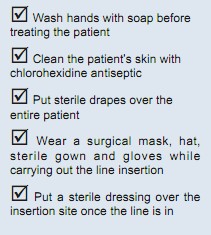
In 2001, Peter Pronovost, a critical care specialist at John Hopkins Hospital, became frustrated about the incidence of infections that arose after injections in intensive care. He came up with this simple checklist of the steps which had to be taken to avoid infections:

Many of our first reactions to this would probably be smiling at how basic this list is. Pronovost followed it up by authorizing nurses to stop doctors from injecting the patient if they skipped a point on the checklist.

The impact over 15 months?

8 Deaths prevented.
43 infections avoided.
$2 million saved.

“We don’t like checklists. They can be painstaking. They’re not much fun. But I don’t think the issue here is mere laziness. There’s something deeper, more visceral going on when people walk away not only from saving lives but from making money. It somehow feels beneath us to use a checklist, an embarrassment, It runs counter to deeply held beliefs about how the truly great among us — those we aspire to be — handle situations of high stakes and complexity. The truly great are daring. They improvise. They do not have protocols and checklists. Maybe our idea of heroism needs updating.” — Atul Gawande

A close friend and I are working on an app on iPhone/Android platforms for easy checklist creation. Will keep you updated!

Until then, hope you have fun making simple checklists at work this week!